Results by title
7 books match the query 'Anthropologist'
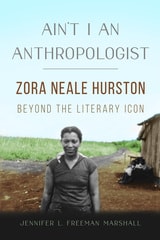
Ain't I an Anthropologist
Zora Neale Hurston Beyond the Literary IconJennifer L. Freeman Marshall
University of Illinois Press, 2023
Perceptive and original, Ain’t I an Anthropologist is an overdue reassessment of Zora Neale Hurston’s place in American cultural and intellectual life.
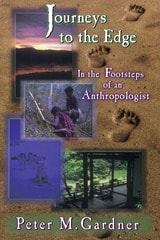
Journeys to the Edge
In the Footsteps of an AnthropologistPeter M. Gardner
University of Missouri Press, 2013
Because Gardner’s primary research since 1962 has been with hunter-gatherers, much of his story transpires either in the equatorial jungle of south India or more than one hundred miles beyond the end of the road in Canada’s Northwest Territories. Other ventures transport readers to Japan and back to India, allowing them to savor ancient sights and sounds. Gardner closes the book with a journey of quite another sort, as he takes us into the world of nature, Taoist philosophy, and the experimental treatment of advanced cancer.
Throughout this fast-moving book, Gardner deftly describes the goals and techniques of his research, as well as his growing understanding of the cultures to which he was exposed. Few personal accounts of fieldwork describe enough of the research to give a complete sense of the experience in the way this book does. Anyone with an interest in travel and adventure, including the student of anthropology as well as the general reader, will be totally intrigued by Gardner’s story, one of a daily existence so very different from our own.
Julian Steward and the Great Basin
The Making of an AnthropologistRichard O Clemmer
University of Utah Press, 1999
Julian Steward and the Great Basin is a critical assessment of Steward’s work, the factors that influenced him, and his deep effect on American anthropology. Steward (1902–1972) was one of the foremost American exponents of cultural ecology, the idea that societies evolve in adaptation to their human and natural environments. He was also central in shaping basic anthropological constructs such as "hunter-gatherer" and "adaptation." But his fieldwork took place almost entirely in the Great Basin.
In one sense, the phases of Steward’s career epitomize the successive schools of anthropological theory and practice. Each chapter explores a different aspect of his work ranging from early efforts at documenting trait distributions to his later role in the development of social transformation theory, area studies, and applied anthropology.
Julian Steward and the Great Basin also corrects long-standing misperceptions that originated with Steward about lifeways of the Indians living between the Great Plains and California. It charts new directions for research, demanding a more exacting study of environmental conditions, material adaptations, and organizational responses, as well as an appreciation of the ideological and humanistic dimensions of Basin Life.
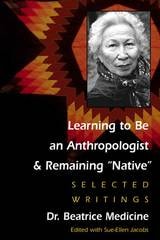
LEARNING TO BE AN ANTHROPOLOGIST
SELECTED WRITINGSDr. Beatrice Medicine
University of Illinois Press, 2001
For half a century, Dr. Medicine has defied stereotypes, racism, and sexism in her life and work while combating the reductive, patronizing views of Native Americans perpetuated by mainstream anthropologists. This retrospective collection reflects her unswerving commitment to furthering Native Americans' ability to speak for themselves and deal with the problems of contemporary life.
Learning to Be an Anthropologist and Remaining "Native" includes Medicine's clear-eyed views of assimilation, bilingual education, and the adaptive strategies by which Native Americans have conserved and preserved their ancestral languages. Her discussions of sex roles in contemporary Native American societies encompass homosexual orientation among males and females and the "warrior woman" role among Plains Indians as one of several culturally accepted positions according power and prestige to women. The volume also includes Medicine's thoughtful assessments of kinship and family structures, alcoholism and sobriety, the activism implicit in the religious ritual of the Lakota Sioux Sun Dance, and the ceremonial uses of Lakota star quilts.
"The Native American is possibly the least understood ethnic minority in contemporary American society," Medicine observes. Her decades of deliberate, generous, dedicated work have done much to reveal the workings of Native culture while illuminating the effects of racism and oppression on Indian families, kinship units, and social and cultural practices.

Nurturing Doubt
From Mennonite Missionary to Anthropologist in the Argentine ChacoElmer S. Miller
University of Illinois Press, 1995
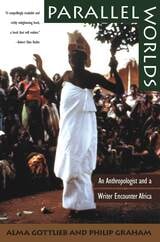
Parallel Worlds
An Anthropologist and a Writer Encounter AfricaAlma Gottlieb and Philip Graham
University of Chicago Press, 1994
"A remarkable look at a remote society [and] an engaging memoir that testifies to a loving partnership . . . compelling."—James Idema, Chicago Tribune
Sex, Sexuality, and the Anthropologist
Edited by Fran Markowitz and Michael Ashkenazi
University of Illinois Press, 1999
Sex, Sexuality, and the Anthropologist recounts the real-life experiences of anthropologists who are forced to acknowledge that their hosts in the field view them as gendered beings in a social context, not as asexual, objective observers. Far from controlling the research environment and defining the terms of interviewer-informant relationships, these researchers find they must engage in a process of negotiating their position—including their sexual position—within the communities they study.
Ranging from public baths in Austria to lesbian bars in Taiwan and from Mexico to Nigeria to Finland to Japan, Sex, Sexuality, and the Anthropologist raises critical questions about ethnographers' reflexivity, subjectivity, and detachment, confronting the challenge of a holistic approach to the anthropological enterprise.