Results by title
20 books match the query 'Anti-imperialist movements'
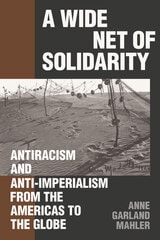
A Wide Net of Solidarity
Antiracism and Anti-Imperialism from the Americas to the GlobeAnne Garland Mahler
Duke University Press, 2025
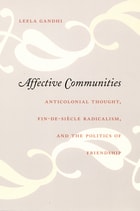
Affective Communities
Anticolonial Thought, Fin-de-Siecle Radicalism, and the Politics of FriendshipLeela Gandhi
Duke University Press, 2006
Gandhi weaves together the stories of a number of South Asian and European friendships that flourished between 1878 and 1914, tracing the complex historical networks connecting figures like the English socialist and homosexual reformer Edward Carpenter and the young Indian barrister M. K. Gandhi, or the Jewish French mystic Mirra Alfassa and the Cambridge-educated Indian yogi and extremist Sri Aurobindo. In a global milieu where the battle lines of empire are reemerging in newer and more pernicious configurations, Affective Communities challenges homogeneous portrayals of “the West” and its role in relation to anticolonial struggles. Drawing on Derrida’s theory of friendship, Gandhi puts forth a powerful new model of the political: one that finds in friendship a crucial resource for anti-imperialism and transnational collaboration.
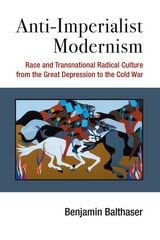
Anti-Imperialist Modernism
Race and Transnational Radical Culture from the Great Depression to the Cold WarBenjamin Balthaser
University of Michigan Press, 2015
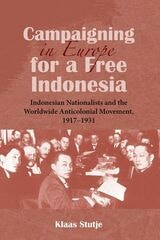
Campaigning in Europe for a Free Indonesia
Indonesian Nationalists and the Worldwide Anticolonial Movement, 1917–1932Klaas Stutje
National University of Singapore Press, 2019
Formations of Colonial Modernity in East Asia
Tani E. Barlow, ed.
Duke University Press, 1997
Demonstrating an impatience with social science models of knowledge, the contributors show that binary categories focused on during the Cold War are no longer central to the project of history writing. By bringing together articles previously published in the journal positions: east asia cultures critique, editor Tani Barlow has demonstrated how scholars construct identity and history, providing cultural critics with new ways to think about these concepts—in the context of Asia and beyond.
Chapters address topics such as the making of imperial subjects in Okinawa, politics and the body social in colonial Hong Kong, and the discourse of decolonization and popular memory in South Korea. This is an invaluable collection for students and scholars of Asian studies, postcolonial studies, and anthropology.
Contributors. Charles K. Armstrong, Tani E. Barlow, Fred Y. L. Chiu, Chungmoo Choi, Alan S. Christy, Craig Clunas, James A. Fujii, James L. Hevia, Charles Shiro Inouye, Lydia H. Liu, Miriam Silverberg, Tomiyama Ichiro, Wang Hui
From the Tricontinental to the Global South
Race, Radicalism, and Transnational SolidarityAnne Garland Mahler
Duke University Press, 2018
Indians and Mestizos in the "Lettered City"
Reshaping Justice, Social Hierarchy, and Political Culture in Colonial PeruAlcira Duenas
University Press of Colorado, 2010
Scholars have long assumed that Spanish rule remained largely undisputed in Peru between the 1570s and 1780s, but educated elite Indians and mestizos challenged the legitimacy of Spanish rule, criticized colonial injustice and exclusion, and articulated the ideas that would later be embraced in the Great Rebellion in 1781. Their movement extended across the Atlantic as the scholars visited the seat of the Spanish empire to negotiate with the king and his advisors for social reform, lobbied diverse networks of supporters in Madrid and Peru, and struggled for admission to religious orders, schools and universities, and positions in ecclesiastic and civil administration.
Indians and Mestizos in the "Lettered City" explores how scholars contributed to social change and transformation of colonial culture through legal, cultural, and political activism, and how, ultimately, their significant colonial critiques and campaigns redefined colonial public life and discourse. It will be of interest to scholars and students of colonial history, colonial literature, Hispanic studies, and Latin American studies.

Leon Trotsky
Writings in ExileLeon Trotsky
Pluto Press, 2012
Leon Trotsky was a key political figure of the twentieth century – a leader of the Russian Revolution, founder of the Red Army, author of books on literature, history, morality and politics.
Leon Trotsky: Writings in Exile contains some of his most insightful and penetrating works. Exiled and isolated by Stalin, Trotsky used the only weapon he had left – words. In these writings he defends the 1917 revolution, warns prophetically of fascism and analyses anti-colonial movements in the global south.
This collection gives a sense of the real Trotsky – passionate, humanist, Marxist. It will introduce the writings of one of history's great revolutionaries to a new generation.
Monetary Authorities
Capitalism and Decolonization in the American Colonial PhilippinesAllan E. S. Lumba
Duke University Press, 2022
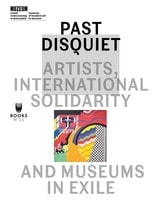
Past Disquiet
Artists, International Solidarity and Museums in ExileEdited by Kristine Khouri and Rasha Salti
Museum of Modern Art in Warsaw, 2018
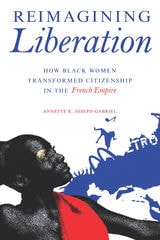
Reimagining Liberation
How Black Women Transformed Citizenship in the French EmpireAnnette K. Joseph-Gabriel
University of Illinois Press, 2019
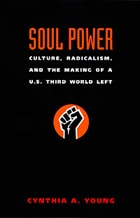
Soul Power
Culture, Radicalism, and the Making of a U.S. Third World LeftCynthia A. Young
Duke University Press, 2006
Young analyzes a range of U.S. figures and organizations, examining how each deployed Third World discourse toward various cultural and political ends. She considers a trip that LeRoi Jones, Harold Cruse, and Robert F. Williams made to Cuba in 1960; traces key intellectual influences on Angela Y. Davis’s writing; and reveals the early history of the hospital workers’ 1199 union as a model of U.S. Third World activism. She investigates Newsreel, a late 1960s activist documentary film movement, and its successor, Third World Newsreel, which produced a seminal 1972 film on the Attica prison rebellion. She also considers the L.A. Rebellion, a group of African and African American artists who made films about conditions in the Watts neighborhood of Los Angeles. By demonstrating the breadth, vitality, and legacy of the work of U.S. Third World Leftists, Soul Power firmly establishes their crucial place in the history of twentieth-century American struggles for social change.
The Common Cause
Postcolonial Ethics and the Practice of Democracy, 1900-1955Leela Gandhi
University of Chicago Press, 2014
Reframing the way we think about some of the most consequential political events of the era, Gandhi presents moral imperfectionism as the lost tradition of global democratic thought and offers it to us as a key to democracy’s future. In doing so, she defends democracy as a shared art of living on the other side of perfection and mounts a postcolonial appeal for an ethics of becoming common.
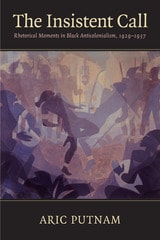
The Insistent Call
Rhetorical Moments in Black Anticolonialism, 1929-1937Aric Putnam
University of Massachusetts Press, 2012
Throughout the nineteenth century, African heritage played an important role in black America, as personal memories and cultural practices continued to shape the everyday experience of people of African descent living under the shadow of slavery. Resisting efforts to de-Africanize their values, customs, and beliefs, Black Americans invoked their African roots in public arguments about their identity and place in the “new” world. At the outset of the twentieth century many still saw Africa primarily as the source of a common cultural and spiritual past. But after the 1920s, the meaning of African heritage changed as people of African descent expressed new relationships between themselves, the United States, and the African Diaspora.
In The Insistent Call, Aric Putnam studies the rhetoric of newspapers, literature, and political pamphlets that expressed this shift. He demonstrates that as people of African descent debated the United States' occupation of Haiti, the Liberian labor crisis, and the Italian invasion of Ethiopia, they formed a new collective identity, one that understood the African Diaspora in primarily political rather than cultural terms. In addition to uncovering a neglected period in the history of Black rhetoric, Putnam shows how rhetoric that articulates the interests of a population not defined by the boundaries of a state can still motivate collective action and influence policies.
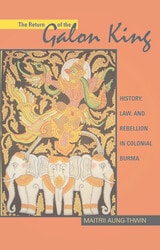
The Return of the Galon King
History, Law, and Rebellion in Colonial BurmaMaitrii Aung-Thwin
Ohio University Press, 2010
In late 1930, on a secluded mountain overlooking the rural paddy fields of British Burma, a peasant leader named Saya San crowned himself King and inaugurated a series of uprisings that would later erupt into one of the largest anti-colonial rebellions in Southeast Asian history. Considered an imposter by the British, a hero by nationalists, and a prophet-king by area-studies specialists, Saya San came to embody traditional Southeast Asia’s encounter with European colonialism in his attempt to resurrect the lost throne of Burma.
The Return of the Galon King analyzes the legal origins of the Saya San story and reconsiders the facts upon which the basic narrative and interpretations of the rebellion are based. Aung-Thwin reveals how counter-insurgency law produced and criminalized Burmese culture, contributing to the way peasant resistance was recorded in the archives and understood by Southeast Asian scholars.
This interdisciplinary study reveals how colonial anthropologists, lawyers, and scholar-administrators produced interpretations of Burmese culture that influenced contemporary notions of Southeast Asian resistance and protest. It provides a fascinating case study of how history is treated by the law, how history emerges in legal decisions, and how the authority of the past is used to validate legal findings.
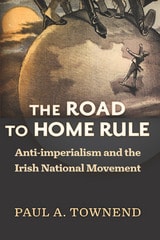
The Road to Home Rule
Anti-imperialism and the Irish National MovementPaul A. Townend
University of Wisconsin Press, 2016
Paul Townend shows that a growing critique of British imperialism shaped a rapidly evolving Irish political consciousness and was a crucial factor giving momentum to the Home Rule and Land League campaigns. Examining newspaper accounts, the rich political cartoons of the era, and the rhetoric and actions of Irish nationalists, he argues that anti-imperialism was a far more important factor in the formation of the independence movement than has been previously recognized in historical scholarship.
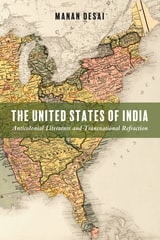
The United States of India
Anticolonial Literature and Transnational RefractionManan Desai
Temple University Press, 2020
The United States of India shows how Indian and American writers in the United States played a key role in the development of anticolonial thought in the years during and immediately following the First World War. For Indians Lajpat Rai and Dhan Gopal Mukerji, and Americans Agnes Smedley, W.E.B. Du Bois, and Katherine Mayo, the social and historical landscape of America and India acted as a reflective surface. Manan Desai considers how their interactions provided a “transnational refraction”—a political optic and discursive strategy that offered ways to imagine how American history could shed light on an anticolonial Indian future.
Desai traces how various expatriate and immigrant Indians formed political movements that rallied for American support for the cause of Indian independence. These intellectuals also developed new forms of writing about subjugation in the U.S. and India. Providing an examination of race, caste, nationhood, and empire, Desai astutely examines this network of Indian and American writers and the genres and social questions that fomented solidarity across borders.
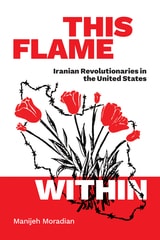
This Flame Within
Iranian Revolutionaries in the United StatesManijeh Moradian
Duke University Press, 2022
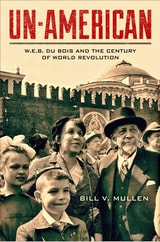
Un-American
W.E.B. Du Bois and the Century of World RevolutionBill V Mullen
Temple University Press, 2015
Un-American is Bill Mullen’s revisionist account of renowned author and activist W.E.B. Du Bois’s political thought toward the end of his life, a period largely dismissed and neglected by scholars. He describes Du Bois’s support for what the Communist International called “world revolution” as the primary objective of this aged radical’s activism. Du Bois was a champion of the world’s laboring millions and critic of the Cold War, a man dedicated to animating global political revolution.
Mullen argues that Du Bois believed that the Cold War stalemate could create the conditions in which the world powers could achieve not only peace but workers’ democracy. Un-American shows Du Bois to be deeply engaged in international networks and personal relationships with revolutionaries in India, China, and Africa. Mullen explores how thinkers like Karl Marx, Jawaharlal Nehru, Mohandas Gandhi, and C.L.R. James helped him develop a theory of world revolution at a stage in his life when most commentators regard him as marginalized. This original political biography also challenges assessments of Du Bois as an American “race man.”
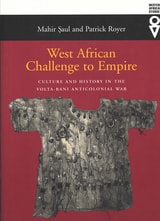
West African Challenge To Empire
Culture and History in the Volta-Bani Anticolonial WarMahir Saul
Ohio University Press, 2002
West African Challenge to Empire examines the anticolonial war in the Volta and Bani region in 1915–16. It was the largest challenge that the French ever faced in their West African colonial empire, and one of the largest armed oppositions to colonialism anywhere in Africa. How such a movement could be organized in the face of European technological superiority despite the fact that this region is generally described as having consisted of rival villages and descent groups is a puzzle. In this jointly written book the two authors provide a detailed political and military history of this event based on archival research and ethnographic fieldwork. Using cultural and sociological analysis, it probes the origins of the movement, its internal organization, its strategy, and the reasons for its initial success and why it spread.
In 2001 the authors of West African Challenge to Empire were awarded the Amaury Talbot Prize for African Anthropology by the Royal Anthropological Institute.