Results by title
15 books match the query 'Approaches'
Affective Computing Applications using Artificial Intelligence in Healthcare
Methods, approaches and challenges in system designM. Murugappan
The Institution of Engineering and Technology, 2024
Approaches to Homer
Edited by Carl A. Rubino and Cynthia W. Shelmerdine
University of Texas Press, 1983
Modern Homeric scholarship is distinguished by a dazzling diversity of approaches. That diversity is brilliantly displayed in this volume, in which nine well-known classicists approach the Homeric poems from the various perspectives of archaeology, economic history, philosophy, literary criticism, linguistics, and Byzantine history.
Several essays are primarily concerned with what the Homeric poems teach us about the past. Richard Hope Simpson, for example, reviews the controversy sparked by his and John F. Lazenby's 1970 argument that the Catalogue of Ships in the Iliad accurately reflects the geography of Mycenean Greece. Using archaeology as just one of his starting points, Gregory Nagy reflects upon the death and funeral of Sarpedon as described in the Iliad. Our understanding of the word áté is enhanced by E. D. Francis, who closely examines its prehistory.
Norman Austin's elegant and original discussion of tone in the Odyssey's Cyclops tale is animated by both psychoanalytic theory and his work with two practitioners of optometric visual training. Writing of Odysseus, James M. Redfield dubs that hero "the economic man" and links certain tensions in the Odyssey to the actual economic concerns of Greece in the late eighth century BC. Both Ann L. T. Bergren and Mabel L. Lang concern themselves with problems of narrative in the Homeric epics.
Like Hope Simpson, C. J. Rowe updates a controversy—in this instance, the many objections raised to Arthur Adkins' influential 1960 study of moral values in Homer. Gareth Morgan provides a fascinating glimpse of the Homeric scholarship of another day by focusing on the work of the astonishing John Tzetzes in twelfth-century Byzantium.

Approaches to Liaison Librarianship
Robin Canuel
Assoc of College & Research Libraries, 2021
Approaches to Lifespan Writing Research
Generating an Actionable CoherenceRyan J. Dippre
University Press of Colorado, 2020
Copublished with CSU Open Press
This edited collection builds on the three themes that emerged from the 2018 inaugural lifespan writing conference—identity, society, and theory—to further the study of writing through the lifespan. The contributors to this collection provide a framework within which the reader can develop a dynamic, interdisciplinary, multifaceted understanding of the limits and possibilities of studying lifespan writing. Recognizing that such research requires methodological rigor and flexibility as well as theoretical precision and adaptability, Approaches to Lifespan Writing Research draws on a range of methodological and theoretical approaches, from autoethnography to longitudinal structural equation modeling. This methodological and theoretical flexibility reflects the challenges inherent in studying lifespan writing—in particular, the need to develop an integrated framework that enables the “translation” of research findings for use by other lifespan writing researchers. Approaches to Lifespan Writing Research begins that process.
This book is also available as an open access ebook through the WAC Clearinghouse
Approaches to Social Theory
Stewart Lindenberg
Russell Sage Foundation, 1986
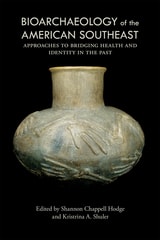
Bioarchaeology of the American Southeast
Approaches to Bridging Health and Identity in the PastEdited by Shannon Chappell Hodge and Kristrina A. Shuler
University of Alabama Press, 2018
Building on the 1991 publication What Mean These Bones? Studies in Southeastern Bioarchaeology, this new edited collection from Shannon Chappell Hodge and Kristrina A. Shuler marks steady advances over the past three decades in the theory, methodology, and purpose of bioarchaeology in the southeastern United States and across the discipline. With a geographic scope that ranges from Louisiana to South Carolina and a temporal span from early prehistory through the nineteenth century, the coverage aims to be holistic.
Bioarchaeology of the American Southeast: Approaches to Bridging Health and Identity in the Past is organized into two main parts. The first, “Context and Culture History in Bioarchaeology,” focuses on the fundamentals of archaeology—figuring out who lived at an archaeological site, when they lived there, what they did, and how they lived their lives.
This builds the framework that allows archaeologists to answer deeper questions, such as the ones addressed in the second part, “Social Identities in Bioarchaeology.” Here contributors explore questions of identity, ethnicity, gender and the status of women, social status, class, power and exploitation, migration, and conflict. These chapters implement and contribute to anthropological theory and showcase improved methods, such as innovative statistical analyses, and incorporate newer technology, including a DNA and geographic information system applications.
Conflict Resolution in the Twenty-first Century
Principles, Methods, and ApproachesJacob Bercovitch and Richard Jackson
University of Michigan Press, 2009
Conflict Resolution in the Twenty-first Centuryis not only an essential introduction for students and scholars, it is a must-have guide for the men and women entrusted with creating stability and security in our changing world.
Considering Maus
Approaches to Art Spiegelman's "Survivor's Tale" of the HolocaustDeborah R. Geis
University of Alabama Press, 2007
The first collection of critical essays on Maus, the searing account of one Holocaust survivor's experiences rendered in comic book form.
In 1992, Art Spiegelmans two-volume illustrated work Maus: A Survivor’s Tale was awarded a special-category Pulitzer Prize. In a comic book form, Spiegelman tells the gripping, heart-rending story of his father's experiences in the Holocaust. The book renders in stark clarity the trials Spiegelman's father endured as a Jewish refugee in the ghettos and concentration camps of Poland during World War II, his American life following his immigration to New York, and the author's own troubled sense of self as he grapples with his father's history. Mixing autobiography, biography, and oral history in the comic form, Maus has been hailed as a daring work of postmodern narration and as a vivid example of the power of the graphic narrative.
Now, for the first time in one collection, prominent scholars in a variety of fields take on Spiegelman's text and offer it the critical and artistic scrutiny it deserves. They explore many aspects of the work, including Spiegelman’s use of animal characters, the influence of other "comix" artists, the role of the mother and its relation to gender issues, the use of repeating images such as smoke and blood, Maus's position among Holocaust testimonials, its appropriation of cinematic technique, its use of language and styles of dialect, and the implications of the work’s critical and commercial success.
Informed readers in many areas of study, from popular culture and graphic arts to psychoanalysis and oral history, will value this first substantial collection of criticism on a revered work of literature.
Explaining Process and Change
Approaches to Evolutionary EconomicsUlrich Witt, Editor
University of Michigan Press, 1992
Fourteen Landing Zones
Approaches to Vietnam War LiteraturePhilip K. Jason
University of Iowa Press, 1991
It is in the spirit of the LZ that the essayists in Fourteen Landing Zones approach the writings of the Vietnam War. These fourteen diverse and powerful works by some of today's leading critics in Vietnam studies begin to answer the question of how we will filter the writings of the Vietnam War—including fiction, poetry, drama, and memoirs. What will survive the process of critical acclaim and societal affirmation—and why? Included is an incisive introduction by Jason that provides an overview of the burgeoning body of Vietnam War literature and its peculiar life in the literary and academic marketplace. This strong, often emotional volume will be of particular importance to all those interested in the literature of the Vietnam War, contemporary literature, and contemporary culture and history.
Postclassical Narratology
Approaches and AnalysesJan Alber
The Ohio State University Press, 2010
In this volume, an international group of contributors presents new perspectives on narrative. Using David Herman’s 1999 definition of "postclassical narratology" from Narratologies: New Perspectives on Narrative Analysis (OSUP) as their launching point, these eleven essayists explore the various ways in which new approaches overlap and interrelate to form new ways of understanding narrative texts.
Postclassical narratology has reached a new phase of consolidation but also continued diversification. This collection therefore discriminates between what one could call a critical but frame-abiding and a more radical frame-transcending or frame-shattering handling of the structuralist paradigm. Postclassical Narratology: Approaches and Analyses discusses a large variety of different aspects of narrative, such as extensions of classical narratology, new generic applications (autobiography, oral narratives, poetry, painting, and film), the history of narratology, the issue of fictionality, the role of cognition, and questions of authorship and authority, as well as thematic matters related to ethics, gender, and queering. Additionally, it uses a wide spectrum of critical approaches, including feminism, psychoanalysis, media studies, the rhetorical theory of narrative, unnatural narratology, and cognitive studies. In this manner the essays manage to produce new insights into many key issues in narratology.The contributors also demonstrate that narratologists nowadays see the object of their research as more variegated than was the case twenty years ago: they resort to a number of different methods in combination when approaching a problem, and they tend to ground their analyses in a rich contextual framework.
Proof-of-Stake for Blockchain Networks
Fundamentals, challenges and approachesCong T. Nguyen
The Institution of Engineering and Technology, 2024
Re/Writing the Center
Approaches to Supporting Graduate Students in the Writing CenterSusan Lawrence
Utah State University Press, 2018
The essays in this volume show how to navigate the divide between traditional writing center theory and practices, developed to support undergraduate writers, and the growing demand for writing centers to meet the needs of advanced graduate writers. Contributors address core assumptions of writing center pedagogy, such as the concept of peers and peer tutoring, the emphasis on one-to-one tutorials, the positioning of tutors as generalists rather than specialists, and even the notion of the writing center as the primary location or center of the tutoring process. Re/Writing the Center offers an imaginative perspective on the benefits writing centers can offer to graduate students and on the new possibilities for inquiry and practice graduate students can inspire in the writing center.
Contributors: Laura Brady, Michelle Cox, Thomas Deans, Paula Gillespie, Mary Glavan, Marilyn Gray, James Holsinger, Elena Kallestinova, Tika Lamsal, Patrick S. Lawrence, Elizabeth Lenaghan, Michael A. Pemberton, Sherry Wynn Perdue, Doug Phillips, Juliann Reineke, Adam Robinson, Steve Simpson, Nathalie Singh-Corcoran, Ashly Bender Smith, Sarah Summers, Molly Tetreault, Joan Turner, Bronwyn T. Williams, Joanna Wolfe
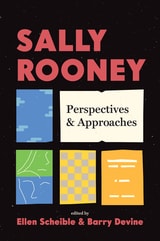
Sally Rooney
Perspectives and ApproachesEllen Scheible
Bucknell University Press, 2026
Bestselling Irish novelist Sally Rooney has emerged as the defining voice of a generation, a cultural phenomenon whose spare, intelligent prose and sharp social insight have reshaped contemporary fiction and sparked a global conversation about intimacy, politics, and the millennial condition. This new collection brings together contributors from a wide range of disciplines to offer fresh critical readings of Rooney’s influential novels, alongside adaptable strategies for teaching her work in today’s undergraduate and graduate classrooms. The essays situate Rooney within literary traditions from Romantic poetry to the bildungsroman and the contemporary campus novel, while engaging with contemporary topics such as gender politics, late capitalism, and media adaptation. Providing accessible yet rigorous frameworks for exploring Rooney’s fiction, this volume confirms her significance not only within contemporary literary studies but also as a cultural force whose work reaffirms the relevance of the humanities in the twenty-first-century classroom.
Published by Bucknell University Press. Distributed worldwide by Rutgers University Press.
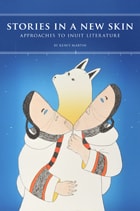
Stories in a New Skin
Approaches to Unuit LiteratureKeavy Martin
University of Manitoba Press, 2012