Results by title
7 books match the query 'Aptheker, Herbert'

"The Most Dangerous Communist in the United States"
A Biography of Herbert ApthekerMurrell Gary
University of Massachusetts Press, 2015
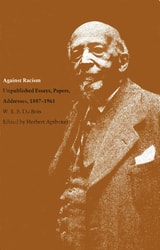
Against Racism
Unpublished Essays, Papers, Addresses, 1887–1961W.E.B. Du Bois
University of Massachusetts Press, 1985
A collection of essays, papers, and addresses which explains the author's views on racism.

Prayers for Dark People
W.E.B. Du Bois
University of Massachusetts Press, 1980
A collection of prayers written by Du Bois for students at Atlanta University, thoughtfully compiled and introduced by Herbert Aptheker. These prayers are deeply committed to paying attention to and caring for the inner lives of Black Americans. Biblical familiarity and agnosticity are both present in these autobiographical writings, uplifting the hopes and practices of W. E. B. Du Bois's life, while meditating on the still relevant question of how to make “a good life for all.”
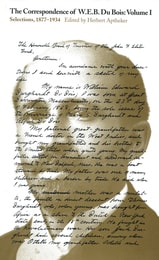
The Correspondence of W.E.B. Du Bois, Volume I
Selections, 1877–1934W.E.B. Du Bois
University of Massachusetts Press, 1997
Scholar, author, editor, teacher, reformer, and civil rights leader, W.E.B. Du Bois (1868–1963) was a major figure in American life and one of the earliest proponents of equality for Black Americans. He was a founder and leader of the Niagara Movement, the NAACP, and the Pan-African Movement; a progenitor of the 1920s Harlem Renaissance; an advocate of anticolonialism, anti-imperialism, unionism, and equality for women; and a champion of the rights of oppressed people around the world.
The three-volume Correspondence of W.E.B. Du Bois offers a unique perspective on Du Bois's experiences and views. In recognition of the significance of the Correspondence, the final volume was named a Best Book of the Year by the New York Times Book Review.
Herbert Aptheker has provided an introduction and notes to each volume, illuminating the circumstances and identifying the personalities involved in the correspondence. A long time friend and colleague of Du Bois, Aptheker is a well-known historian of the African American experience. In 1939 and again in 1969, he won the history award given by the Association for the Study of Negro Life and History. Among his most prominent works are American Negro Slave Revolts and the three-volume Documentary History of the Negro People in the United States.

The Correspondence of W.E.B. Du Bois, Volume II
Selections, 1934–1944W.E.B. Du Bois
University of Massachusetts Press, 1997
Scholar, author, editor, teacher, reformer, and civil rights leader, W.E.B. Du Bois (1868–1963) was a major figure in American life and one of the earliest proponents of equality for black Americans. He was a founder and leader of the Niagara Movement, the NAACP, and the Pan-African Movement; a progenitor of the 1920s Harlem Renaissance; an advocate of anticolonialism, anti-imperialism, unionism, and equality for women; and a champion of the rights of oppressed people around the world.
The three-volume Correspondence of W.E.B. Du Bois offers a unique perspective on Du Bois's experiences and views. In recognition of the significance of the Correspondence, the final volume was named a Best Book of the Year by the New York Times Book Review.
Herbert Aptheker has provided an introduction and notes to each volume, illuminating the circumstances and identifying the personalities involved in the correspondence. A long time friend and colleague of Du Bois, Aptheker is a well-known historian of the African American experience. In 1939 and again in 1969, he won the history award given by the Association for the Study of Negro Life and History. Among his most prominent works are American Negro Slave Revolts and the three-volume Documentary History of the Negro People in the United States.
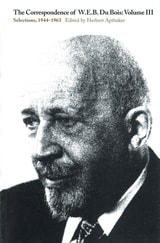
The Correspondence of W.E.B. Du Bois, Volume III
Selections, 1944–1963W.E.B. Du Bois
University of Massachusetts Press, 1997
Scholar, author, editor, teacher, reformer, and civil rights leader, W.E.B. Du Bois (1868–1963) was a major figure in American life and one of the earliest proponents of equality for black Americans. He was a founder and leader of the Niagara Movement, the NAACP, and the Pan-African Movement; a progenitor of the 1920s Harlem Renaissance; an advocate of anticolonialism, anti-imperialism, unionism, and equality for women; and a champion of the rights of oppressed people around the world.
The three-volume Correspondence of W.E.B. Du Bois offers a unique perspective on Du Bois's experiences and views. In recognition of the significance of the Correspondence, the final volume was named a Best Book of the Year by the New York Times Book Review.
Herbert Aptheker has provided an introduction and notes to each volume, illuminating the circumstances and identifying the personalities involved in the correspondence. A long time friend and colleague of Du Bois, Aptheker is a well-known historian of the African American experience. In 1939 and again in 1969, he won the history award given by the Association for the Study of Negro Life and History. Among his most prominent works are American Negro Slave Revolts and the three-volume Documentary History of the Negro People in the United States.

“The Most Dangerous Communist in the United States”
A Biography of Herbert ApthekerGary Murrell
University of Massachusetts Press, 2015
When J. Edgar Hoover declared Herbert Aptheker “the most dangerous Communist in the United States,” the notorious FBI director misconstrued his true significance. In this first book-length biography of Aptheker (1915–2003), Gary Murrell provides a balanced yet unflinching assessment of the controversial figure who was at once a leading historian of African America, radical political activist, literary executor of W. E. B. Du Bois, and lifelong member of the American Communist Party. Although blacklisted at U.S. universities, Aptheker published dozens of books, including the groundbreaking American Negro Slave Revolts (1943) and the monumental seven-volume Documentary History of the Negro People (1951–1994). He also edited four volumes of the correspondence and unpublished writings of Du Bois, an achievement that Eric Foner, writing in the New York Times Book Review, called “a milestone in the coming of age of Afro-American history.”
As Murrell shows, Aptheker the historian was inseparable from Aptheker the leading Communist Party intellectual, polemicist, and agitator. During the 1960s, his ability to rouse and inspire both black and white student radicals made him one of the few Old Leftists accepted by the New Left. Aptheker had joined the CPUSA during its heyday in the 1930s, convinced that only through the party's leadership could fascism be defeated and true liberation be achieved: he ended his affiliation five decades later in 1991 after the collapse of socialism in the Soviet Union and Eastern Europe.
In an afterword, Bettina Aptheker adds to Murrell's narrative by illuminating her mother Fay's vital contributions to her father's work and by affirming the particularly devastating challenges of life in a family dedicated to radical political and social change.