Results by title
17 books match the query 'Arabian Peninsula'
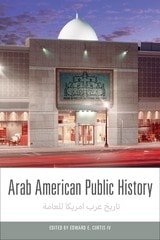
Arab American Public History
Edited by Edward E. Curtis IV
Temple University Press, 2026
Arab American Public History is an invitation to engage more deeply with Arab American communities. Chapters examine Arab Americans’ origins, ethnic identities, and efforts to belong in America through case studies of the community’s food cultures, genealogy research, cultural production, and neighborhood enclaves.
The first formal study of Arab American public history, this exciting volume charts various ways Arab Americans have interpreted their past as a source of defiant humanity, cultural enfranchisement, social solidarity, and political power.
Contributors: Reem Awad-Rashmawi, Chloe Bordewich, Richard M. Breaux, Maria F. Curtis, Lydia Harrington, Randa A. Kayyali, Matthew Jaber Stiffler, Rebecca K. Shrum, and the editor
In the series History and the Public
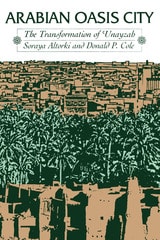
Arabian Oasis City
The Transformation of 'UnayzahBy Soraya Altorki and Donald P. Cole
University of Texas Press, 1989
Vast social change has occurred in the Middle East since the oil boom of the mid-1970s. As the first anthropological study of an urban community in Saudi Arabia since that oil boom, Arabian Oasis City is also the first to document those changes.
Based on extensive interviews and participant observation with both men and women, the authors record and analyze the transformation that has occurred in this ancient oasis city throughout the twentieth century: the creation of the present Saudi Arabian state and of a new national economy based on the export of oil and the economic boom brought about by the dramatic increases in the price of oil following the October 1973 Arab-Israeli War. In addition, the authors reveal the changes brought about by the fall in the price of oil beginning in 1982 and analyze the problems confronting ‘Unayzah in its aftermath.
By demonstrating that the area was not exclusively dominated by tribalism and Bedouin nomads, this empirical case study destroys stereotypical views about Saudi Arabia. Indeed, it proves the existence—prior to the coming of the modern Saudi Arabian state— of surplus agricultural and craft production and the full development of local, regional, and long-distance trade networks. It shows that women, although veiled, played active roles in work outside the household. The social impact of change over the years is, however, profound—especially the gradual replacement of the extended family by the nuclear family, changing patterns of husband-wife relationships, the impact of self-earned income on the status of women, and the emergence of a new middle class of employees and entrepreneurs. Because of the high degree of gender segregation in this area of research, Altorki and Cole give us a fortunate collaboration between a Saudi Arabian female scholar and an American male scholar experienced in research in the Middle East.
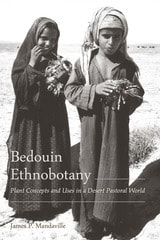
Bedouin Ethnobotany
Plant Concepts and Uses in a Desert Pastoral WorldJames P. Mandaville
University of Arizona Press, 2011
Bedouin Ethnobotany offers the first detailed study of plant uses among the Najdi Arabic–speaking tribal peoples of eastern Saudi Arabia. It also makes a major contribution to the larger project of ethnobotany by describing aspects of a nomadic peoples’ conceptual relationships with the plants of their homeland.
The modern theoretical basis for studies of the folk classification and nomenclature of plants was developed from accounts of peoples who were small-scale agriculturists and, to a lesser extent, hunter-gatherers. This book fills a major gap by extending such study into the world of the nomadic pastoralist and exploring the extent to which these patterns are valid for another major subsistence type. James P. Mandaville, an Arabic speaker who lived in Saudi Arabia for many years, focuses first on the role of plants in Bedouin life, explaining their uses for livestock forage, firewood, medicinals, food, and dyestuffs, and examining other practical purposes. He then explicates the conceptual and linguistic aspects of his subject, applying the theory developed by Brent Berlin and others to a previously unstudied population. Mandaville also looks at the long history of Bedouin plant nomenclature, finding that very little has changed among the names and classifications in nearly eleven centuries.
This volume includes a CD-ROM featuring more than 340 color images of the people, the terrain, and nearly all of the plants mentioned in the text as well as an audio file of a traditional Bedouin song and its translation and analysis.
An essential volume for anyone interested in the interaction between human culture and plant life, Bedouin Ethnobotany will stand as a definitive source for years to come.
Dispatches from the Arab Spring
Understanding the New Middle EastPaul Amar
University of Minnesota Press, 2013
The Arab Spring unleashed forces of liberation and social justice that swept across North Africa and the Middle East with unprecedented speed, ferocity, and excitement. Although the future of the democratic uprisings against oppressive authoritarian regimes remains uncertain in many places, the revolutionary wave that started in Tunisia in December 2010 has transformed how the world sees Arab peoples and politics. Bringing together the knowledge of activists, scholars, journalists, and policy experts uniquely attuned to the pulse of the region, Dispatches from the Arab Spring offers an urgent and engaged analysis of a remarkable ongoing world-historical event that is widely misinterpreted in the West.
Tracing the flows of protest, resistance, and counterrevolution in every one of the countries affected by this epochal change—from Morocco to Iraq and Syria to Sudan—the contributors provide ground-level reports and new ways of teaching about and understanding the Middle East in general, and contextualizing the social upheavals and political transitions that defined the Arab Spring in particular. Rejecting outdated and invalid (yet highly influential) paradigms to analyze the region—from depictions of the “Arab street” as a mindless, reactive mob to the belief that Arab culture was “unfit” for democratic politics—this book offers fresh insights into the region’s dynamics, drawing from social history, political geography, cultural creativity, and global power politics. Dispatches from the Arab Spring is an unparalleled introduction to the changing Middle East and offers the most comprehensive and accurate account to date of the uprisings that profoundly reshaped North Africa and the Middle East.
Contributors: Sheila Carapico, U of Richmond; Nouri Gana, UCLA; Toufic Haddad; Adam Hanieh, SOAS/U of London; Toby C. Jones, Rutgers U; Anjali Kamat; Khalid Medani, McGill U; Merouan Mekouar; Maya Mikdashi, NYU; Paulo Gabriel Hilu Pinto, U Federal Fluminense, Brazil; Jillian Schwedler, Hunter College, CUNY; Ahmad Shokr; Susan Slyomovics, UCLA; Haifa Zangana.
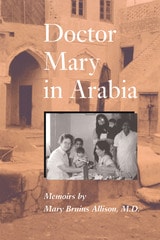
Doctor Mary in Arabia
MemoirsBy Mary Bruins Allison
University of Texas Press, 1994
Until fairly recently, Arab women rarely received professional health care, since few women doctors had ever practiced in Arabia and their culture forbade them from consulting male doctors. Not surprisingly, Dr. Mary Bruins Allison faced an overwhelming demand when she arrived in Kuwait in 1934 as a medical missionary of the Reformed Church of America. Over the next forty years, "Dr. Mary" treated thousands of women and children, faithfully performing the duties that seemed required of her as a Christian—to heal the sick and seek converts.
These memoirs record a fascinating life. Dr. Allison briefly describes her upbringing and her professional training at Women's Medical College of Pennsylvania. She then focuses on her experiences in Kuwait, where women of all classes, including royalty, flocked to her care. In addition to describing many of her cases, Dr. Allison paints a richly detailed picture of life in Kuwait both before and after the discovery of oil transformed the country. Her recollections include invaluable details of women's lives in the Middle East during the early and mid-twentieth century. They add a valuable chapter to the story of modern medicine, to the largely unsuccessful efforts of the Christian church to win converts in the Middle East, and to the opportunities and limitations that faced American women of the period.
Dr. Allison also worked briefly in Bahrain, Qatar, Oman, and India, and she includes material on each country. The introduction situates her experiences in the context of Middle Eastern and medical developments of the period.

Hend and the Soldiers
By Badriah Albeshr, translated by Sanna Dhahir
University of Texas Press, 2017
Hend is a young Saudi Arabian woman struggling to challenge her conservative society, which is represented by various soldiers, real and metaphorical, in her life. After a failed arranged marriage to an army officer, she is determined to establish herself as a writer and make her own choices in love. Her mother, a firm supporter of their society’s traditional norms, works to block her efforts. As Hend engages with her mother, stories of her past and those of other female relatives reveal the extent of the suffering previous generations of women have endured while living in such a patriarchal society. Hend also comes to understand how such traditions have adversely affected the men in her family, including one brother who flees to the West and another who finds comradeship among the members of al-Qaeda.
Badriah Albeshr represents a growing number of women writers from the Arabian Peninsula who refuse to shy away from the taboo topics of religion and sexuality, which makes Hend and the Soldiers a valuable read for those seeking insights into the complexities surrounding these issues.
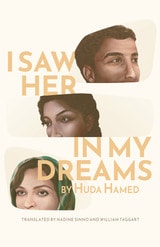
I Saw Her in My Dreams
Huda Hamed, translated by Nadine Sinno & William Taggart
University of Texas Press, 2022
I Saw Her in My Dreams is a powerful novel about interpersonal and systemic violence, examined through the lens of a relationship between Zahiyya, an anxious middle-class Omani artist, and Faneesh, the Ethiopian domestic worker she hires. When Zahiyya’s husband Amer, a novelist, leaves for Zanzibar in search of his biological mother, Zahiyya is left to confront her anxieties and prejudices. Both Zahiyya and Faneesh begin to suffer a recurring nightmare, prompting Zahiyya to read Fanheesh’s diaries in search of answers. Alone and afraid, Zahiyya reads excerpts from Amer’s novel, written from his father’s diaries about living in Zanzibar, where he fell in love with Amer’s mother, a Zanzibari woman whose absence still haunts him. Weaving between multiple perspectives and stories within stories, the novel explores honestly—but without sensationalizing or self-Orientalizing—the anti-Blackness that has endured in the Arab world and elsewhere.
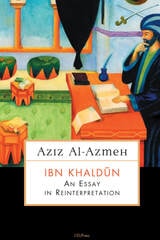
Ibn Khaldun
An Essay in ReinterpretationAziz Al-Azmeh
Central European University Press, 2003
Since its publication in 1981, this book has established itself as the major new interpretation of the historical concept of Ibn Khaldûn, the great figure of Arab-Islamic letters and of historical thought overall--a figure generally thought to be on a par with Thucydides, Vico, Herder and others of similar stature.
The author has eschewed the ahistorical interpretations to which Ibn Khaldûn has normally been subjected, both by authors who have sought unduly to modernise his thought, and by those who sought to freeze it in stereotypical models of Islamic philosophy.
Ibn Khaldûn is not only a true historical source of his time; he is also taken as the unchallenged sociological and cultural interpreter of medieval North Africa and much of medieval and modern Arab-Islamic culture as well. The validity of his discourse is considered to be so universal as to confer upon his ideas the status of progenitor--or, at least, anticipator--of a great variety of modern ideas.
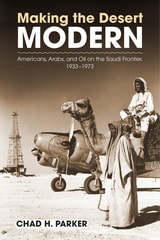
Making the Desert Modern
Americans, Arabs, and Oil on the Saudi Frontier, 1933–1973Chad Parker
University of Massachusetts Press, 2015
In 1933 American oilmen representing what later became the Arabian American Oil Company (Aramco) signed a concession agreement with the Saudi Arabian king granting the company sole proprietorship over the oil reserves in the country's largest province. As drilling commenced and wells proliferated, Aramco soon became a major presence in the region. In this book Chad H. Parker tells Aramco's story, showing how an American company seeking resources and profits not only contributed to Saudi “nation building” but helped define U.S. foreign policy during the early Cold War.
In the years following World War II, as Aramco expanded its role in Saudi Arabia, the idea of “modernization” emerged as a central component of American foreign policy toward newly independent states. Although the company engaged in practices supportive of U.S. goals, its own modernizing efforts tended to be pragmatic rather than policy-driven, more consistent with furthering its business interests than with validating abstract theories. Aramco built the infrastructure necessary to extract oil and also carved an American suburb out of the Arabian desert, with all the air-conditioned comforts of Western modern life. At the same time, executives cultivated powerful relationships with Saudi government officials and, to the annoyance of U.S. officials, even served the monarchy in diplomatic disputes. Before long the company became the principal American diplomatic, political, and cultural agent in the country, a role it would continue to play until 1973, when the Saudi government took over its operation.
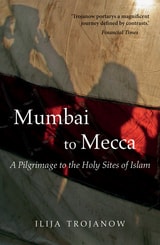
Mumbai To Mecca
A Pilgrimage to the Holy Sites of IslamIlija Trojanow
Haus Publishing, 2017
This book presents Ilija Trojanow’s journey from Mumbai to Mecca in the tradition of the rihla, one of the oldest genres of classical Arabic literature, describing the Hajj, the pilgrimage to the holy sites of Islam. Every Muslim, regardless of geographical location, is implored by tradition to undertake the Hajj at least once in their life if they are able. Trojanow, with the help of his friends, donned the ihram, the traditional garb of the pilgrim, and joined the hundreds of thousands of Muslims who each year go on the Hajj. Over the course of a mere three weeks he experienced a tradition dating back over a thousand years. This personal and enlightening account will provide insights not only for Muslims who have yet to embark on the Hajj, but for those who have already made the journey and want to see a different perspective on it. Mumbai to Mecca also presents a unique glimpse into this pivotal tradition for those non-Muslims who remain barred from the most holy Muslim sites.
the pilgrimage to the holy sites of Islam, through the eyes of a Westener, but with the heart of a Muslim.
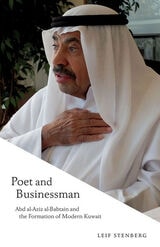
Poet and Businessman
Abd al-Aziz al-Babtain and the Formation of Modern KuwaitLeif Stenberg
Gingko, 2022
This book reviews and analyzes the modern history of Kuwait through the life of Abd al-Aziz Sa‘ud al-Babtain, a wealthy businessman, philanthropist, and poet. He is the head of a large, influential international cultural foundation based in Kuwait City. Abd al-Aziz’s life story tightly interweaves with modern discussions on the history of the state of Kuwait. There are very few books taking a collective grip on the history of the state of Kuwait. Likewise, there are very few studies about the generation of Gulf individuals who experienced, benefitted from, and even suffered from the discovery of oil, and who has been a crucial part of socioeconomic and cultural developments in countries like Kuwait in recent history. By constructing a cohesive overview of the modern history of Kuwait enriched by the life of an individual that has lived through the better part of that particular history, this book fills a lacuna in contemporary scholarship on the Middle East, and especially the Arabian or the Persian Gulf.
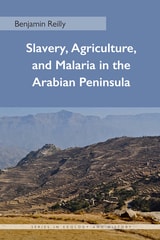
Slavery, Agriculture, and Malaria in the Arabian Peninsula
Benjamin Reilly
Ohio University Press, 2015
In Slavery, Agriculture, and Malaria in the Arabian Peninsula, Benjamin Reilly illuminates a previously unstudied phenomenon: the large-scale employment of people of African ancestry as slaves in agricultural oases within the Arabian Peninsula. The key to understanding this unusual system, Reilly argues, is the prevalence of malaria within Arabian Peninsula oases and drainage basins, which rendered agricultural lands in Arabia extremely unhealthy for people without genetic or acquired resistance to malarial fevers. In this way, Arabian slave agriculture had unexpected similarities to slavery as practiced in the Caribbean and Brazil.
This book synthesizes for the first time a body of historical and ethnographic data about slave-based agriculture in the Arabian Peninsula. Reilly uses an innovative methodology to analyze the limited historical record and a multidisciplinary approach to complicate our understandings of the nature of work in an area that is popularly thought of solely as desert. This work makes significant contributions both to the global literature on slavery and to the environmental history of the Middle East—an area that has thus far received little attention from scholars.
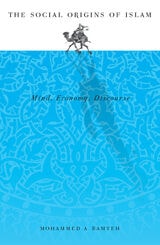
Social Origins Of Islam
Mind, Economy, DiscourseMohammed Bamyeh
University of Minnesota Press, 1999
Explores the genesis of Islam for insight into the nature of ideological transformation.
The story of the origins of Islam provides a rich and suggestive example of sweeping cultural transformation. Incorporating both innovation and continuity, Islam built upon the existing cultural patterns among the peoples of the Arabian peninsula even as it threatened to eradicate these same patterns. In this provocative interdisciplinary study, Mohammed A. Bamyeh combines perspectives from sociology, literary studies, anthropology, and economic history to examine the cultural ecology that fostered Islam.
Highlighting the pivotal connections in pre-Islamic society between the emergence of certain economic practices (such as trade and money-based exchange), worldview (as rendered in pre-Islamic literature and theology), and the reconfiguration of transtribal patterns of solidarity and settlement, Bamyeh finds in the genesis of Islam a sophisticated model for examining ideological transformation in general.At the heart of Bamyeh’s enterprise are close readings of both the Qur’an and the pre-Islamic poetry that preceded it. Bamyeh uncovers in these texts narrative and pedagogical content, poetic structure, use of metaphor, and historical references that are suggestive of societies in transition. He also explores the expressive limits of the pre-Islamic literature and its transmutation into Qur’anic speech in the wake of social transformation. Emphasizing the organic connections between belief structures, economic formations, and modes of discourse in pre-Islamic Arabia, The Social Origins of Islam explains how various material and discursive changes made the idea of Islam possible at a particular point in history. More broadly, it persuasively demonstrates how grand cultural shifts give rise to new systems of faith.
The Hashemites
The Dream of ArabiaRobert McNamara
Haus Publishing, 2010

The Optics of Ibn al-Haytham Books IV–V
On Reflection and Images Seen by ReflectionAbdelhamid I. Sabra
University of London Press, 2023
Ibn al-Haytham was perhaps the greatest mathematician and physicist of the medieval Arabic/Islamic world. The most famous book in which he applied his scientific method is his Optics, through which he dealt with both the mathematics of rays of light and the physical aspects of the eye in seven comprehensive books. His rethinking of the entire science of optics set the scene for the whole of the subsequent development of the subject, influencing figures such as William of Ockham, Kepler, Descartes, and Christaan Huygens. The immense work of editing, translating into English, and commenting on this work was undertaken by Abdelhamid I. Sabra. This English translation of Books IV–V was completed by Sabra just before his death in 2013 with an introduction and critical analysis. It has been extensively revised by Jan Hogendijk.
The Sheltered Quarter
A Tale of a Boyhood in MeccaBy Hamza Bogary
University of Texas Press, 1991
Hamza Bogary describes a bygone way of life that has now irreversibly disappeared. He speaks of life in Mecca before the advent of oil. Only partly autobiographical, the memoir is nevertheless rich in remembered detail based on Bogary's early observations of life in Mecca. He has transformed his knowledge into art through his sense of humor, empathy, and remarkable understanding of human nature. This work not only entertains; it also informs its readers about the Arabia of the first half of the twentieth century in a graphic and fascinating way. The narrator, young Muhaisin, deals with various aspects of Arabian culture, including education, pilgrimages, styles of clothing, slavery, public executions, the status of women, and religion. Muhaisin is frank in his language and vivid in his humor. The reader quickly comes to love the charming and mischievous boy in this universal tale.
They Die Strangers
By Mohammad Abdul-Wali
University of Texas Press, 2002
They Die Strangers, a novella and thirteen short stories, is the first full-length work of the distinguished Yemeni writer Mohammad Abdul-Wali to appear in English. Abdul-Wali died tragically in an aviation accident, and his stories were collected after his death by the translators Abubaker Bagader and Deborah Akers.
Abdul-Wali was born in Ethiopia of Arab Yemeni parents. His stories, filled with nostalgia and the bitterness of exile, deal with the common experiences of Yemenis like himself who are caught between cultures by the displacements of civil war or labor migration. His characters include women left behind, children raised without fathers, and men returning home after years of absence. He explores the human condition through the eyes of the oppressed and disenfranchised and is particularly sympathetic to the plight of women.