Results by title
37 books match the query 'Archaeologists'
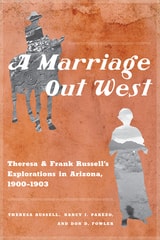
A Marriage Out West
Theresa and Frank Russell’s Explorations in Arizona, 1900–1903Theresa Russell, Nancy J. Parezo, and Don D. Fowler
University of Arizona Press, 2020
During their brief marriage, the Russells surveyed almost all of Arizona Territory, traveling by horse over rugged terrain and camping in the back of a Conestoga wagon in harsh environmental conditions. Nancy J. Parezo and Don D. Fowler detail the grit and determination of the Russells’ unique collaboration over the course of three field seasons. Delivering the first biographical account of Frank Russell’s life, this book brings detail to his life and work from childhood until his death in 1903. Parezo and Fowler analyze the important contributions Theresa and Frank made to the bourgeoning field of archaeology and Akimel O’odham (Pima) ethnography. They also offer never-before-published information on Theresa’s life after Frank’s death and her subsequent career as a professor of English literature and philosophy at Stanford University.
In 1906 Theresa Russell published In Pursuit of a Graveyard: Being the Trail of an Archaeological Wedding Journey, a twelve-part serial in Out West magazine. Theresa’s articles constituted an experiential narrative based on field journals and remembrances of life in the northern Southwest. The work offers both a biography and a seasonal field narrative that emphasized personal experiences rather than traditional scientific field notes. Included in A Marriage Out West, Theresa’s writing provides an invaluable participant’s perspective of early 1900s American archaeology and ethnography and life out West.
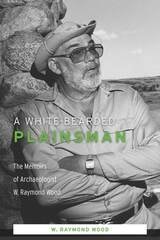
A White-Bearded Plainsman
The Memoirs of Archaeologist W. Raymond WoodW. Raymond Wood
University of Utah Press, 2011
W. Raymond Wood played a leading role in the early days of Great Plains archaeology. In A White-Bearded Plainsman, he tells how his own career emerged, as the discipline of Plains archaeology developed during the post-World War II era. Readers will learn of the childhood influences that lead Wood to pursue the path of archaeologist, and of the events and people that shaped his professional life. In addition to telling Wood’s personal story, the book provides an intellectual history of the discipline of mid-continental archaeology over the last half century. It will thus be valuable to students and scholars in the field, as it describes how the paradigms in Plains and midwestern prehistory have changed over time. To understand the discipline, one must understand the cultural and intellectual underpinnings that shaped it. Wood’s book helps map for a new generation of archaeologists from whence they’ve come, and his role in the developments along the way.
Accidental archaeologist
memoirs of Jesse D. JenningsJesse David Jennings
University of Utah Press, 1994
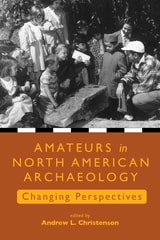
Amateurs in North American Archaeology
Changing PerspectivesEdited by Andrew L. Christenson
University of Utah Press, 2025
Until the mid-twentieth century, professional archaeologists readily worked alongside amateur or avocational archaeologists—those who did not have an academic, professional, or governmental affiliation. However, the gulf between professionals and amateurs has grown in recent decades, and amateurs are now often viewed more warily and are even conflated with looters. Amateurs in North American Archaeology traces the trajectory of this change, noting its implications for archaeological studies across the continent.
The volume’s contributors discuss time periods, noteworthy individuals, archaeological societies, and geographical regions, offering a wide-ranging perspective on a topic that is frequently overlooked. Though the book evaluates the past, it also makes crucial claims for the future of effective, inclusive archaeological study, emphasizing the importance of diverse perspectives and alternate interpretations.
Archaeologists as Activists
Can Archaeologists Change the World?Edited by M. Jay Stottman
University of Alabama Press, 2011
Could archaeologists benefit contemporary cultures and be a factor in solving world problems? Can archaeologists help individuals? Can archaeologists change the world? These questions form the root of “archaeology activism” or “activist archaeology”: using archaeology to advocate for and affect change in contemporary communities.
Archaeologists currently change the world through the products of their archaeological research that contribute to our collective historical and cultural knowledge. Their work helps to shape and reshape our perceptions of the past and our understanding of written history. Archaeologists affect contemporary communities through the consequences of their work as they become embroiled in controversies over negotiating the past and the present with native peoples. Beyond the obvious economic contributions to local communities caused by heritage tourism established on the research of archaeologists at cultural sites, archaeologists have begun to use the process of their work as a means to benefit the public and even advocate for communities.
In this volume, Stottman and his colleagues examine the various ways in which archaeologists can and do use their research to forge a partnership with the past and guide the ongoing dialogue between the archaeological record and the various contemporary stakeholders. They draw inspiration and guidance from applied anthropology, social history, public history, heritage studies, museum studies, historic preservation, philosophy, and education to develop an activist approach to archaeology—theoretically, methodologically, and ethically.
Archaeologists in Print
Publishing for the PeopleAmara Thornton
University College London, 2018
The image of the archaeologist as adventurous explorer of foreign lands, part spy, part foreigner, eternally alluring, solidified during this period. That legacy continues, undimmed, today.
Arkansas Archaeology
Essays in Honor of Dan and Phyllis MorseRobert C. Mainfort
University of Arkansas Press, 1999
By the Noble Daring of Her Sons
The Florida Brigade of the Army of TennesseeJonathan C. Sheppard
University of Alabama Press, 2012
A fascinating account of Floridians who served in the Confederate army and the changes to Florida society and politics that resulted from the state's Confederate experience
Until recently Florida’s Confederate soldiers have received scant attention. This volume explores the story of Florida soldiers going to war, families left behind, a white population fighting to maintain a society built on slavery, and a state torn by political and regional strife.
Before the war Florida’s inhabitants engaged in bitter political rivalries. Sheppard argues that prior to secession Florida citizens maintained regional loyalties rather than considering themselves “Floridians.” He argues that service in Confederate armies eased tensions between political factions and fostered solidarity among white Floridians. In this illuminated account, Sheppard also addresses the practices of prisoner parole and exchange, unit consolidation and its effects on morale and unit identity, politics within the Army of Tennessee, and conscription and desertion in the Southern armies. These issues come together to demonstrate the connection between the front lines and the home front.
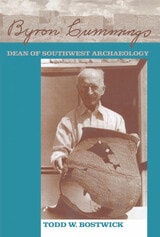
Byron Cummings
Dean of Southwest ArchaeologyTodd W. Bostwick
University of Arizona Press, 2006
This book presents the first comprehensive examination of Cummings’ life, offering readers a greater understanding of his trailblazing work. Todd Bostwick elucidates Cummings’ many intellectual and cultural contributions, investigates the controversies in which he was embroiled, and describes his battles to wrest control of Arizona archaeology from eastern institutions that had long dominated Southwest archaeology.
Cummings saw the Southwest as an American wilderness where the story of cultural development revealed by the archaeologist and anthropologist was as important as it was in Europe. Bostwick’s meticulous account of his life reflects his great reverence for the region and pays tribute to a man whose dedication, mentoring, and friendship have forever sealed his place as The Dean.
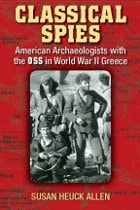
Classical Spies
American Archaeologists with the OSS in World War II GreeceSusan Heuck Allen
University of Michigan Press, 2013
“Classical Spies will be a lasting contribution to the discipline and will stimulate further research. Susan Heuck Allen presents to a wide readership a topic of interest that is important and has been neglected.”
—William M. Calder III, University of Illinois, Urbana-Champaign
Classical Spies is the first insiders’ account of the operations of the American intelligence service in World War II Greece. Initiated by archaeologists in Greece and the eastern Mediterranean, the network drew on scholars’ personal contacts and knowledge of languages and terrain. While modern readers might think Indiana Jones is just a fantasy character, Classical Spies disclosesevents where even Indy would feel at home: burying Athenian dig records in an Egyptian tomb, activating prep-school connections to establish spies code-named Vulture and Chickadee, and organizing parachute drops.
Susan Heuck Allen reveals remarkable details about a remarkable group of individuals. Often mistaken for mild-mannered professors and scholars, such archaeologists as University of Pennsylvania’s Rodney Young, Cincinnati’s Jack Caskey and Carl Blegen, Yale’s Jerry Sperling and Dorothy Cox, and Bryn Mawr’s Virginia Grace proved their mettle as effective spies in an intriguing game of cat and mouse with their Nazi counterparts. Relying on interviews with individuals sharing their stories for the first time, previously unpublished secret documents, private diaries and letters, and personal photographs, Classical Spies offers an exciting and personal perspective on the history of World War II.
Cosmopolitan Archaeologies
Lynn Meskell, ed.
Duke University Press, 2009
The contributors describe various forms of cosmopolitan engagement involving sites that span the globe. They take up the links between conservation, natural heritage and ecology movements, and the ways that local heritage politics are constructed through international discourses and regulations. They are attentive to how communities near heritage sites are affected by archaeological fieldwork and findings, and to the complex interactions that local communities and national bodies have with international sponsors and universities, conservation agencies, development organizations, and NGOs. Whether discussing the toll of efforts to preserve biodiversity on South Africans living near Kruger National Park, the ways that UNESCO’s global heritage project universalizes the ethic of preservation, or the Open Declaration on Cultural Heritage at Risk that the Archaeological Institute of America sent to the U.S. government before the Iraq invasion, the contributors provide nuanced assessments of the ethical implications of the discursive production, consumption, and governing of other people’s pasts.
Contributors. O. Hugo Benavides, Lisa Breglia, Denis Byrne, Chip Colwell-Chanthaphonh, Alfredo González-Ruibal, Ian Hodder, Ian Lilley, Jane Lydon, Lynn Meskell, Sandra Arnold Scham
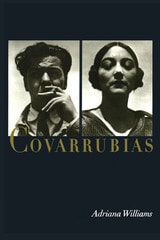
Covarrubias
By Adriana Williams
University of Texas Press, 1994
At the center of an artistic milieu as vital and exciting as the Left Bank of Paris or Greenwich Village, Rosa and Miguel Covarrubias knew almost everyone in the limelight of the 1930s and 1940s—Langston Hughes, Carl Van Vechten, John Huston, Diego Rivera, and Frida Kahlo, to name just a few. As fascinating themselves as any of their friends, the couple together fostered a renaissance of interest in the history and traditional arts of Mexico's indigenous peoples, while amassing an extraordinary collection of art that ranged from pre-Hispanic Olmec and Aztec sculptures to the work of Diego Rivera.
Written by a long-time friend of Rosa, this book presents a sparkling account of the life and times of Rosa and Miguel. Adriana Williams begins with Miguel's birth in 1904 and follows the brilliant early flowering of his artistic career as a renowned caricaturist for Vanity Fair and the New Yorker magazines, his meeting and marriage with Rosa at the height of her New York dancing career, and their many years of professional collaboration on projects ranging from dance to anthropology to painting and art collecting to the development of museums to preserve Mexico's pre-Columbian heritage. Interviewing as many of their friends as possible, Williams fills her narrative with reminiscences that illuminate Miguel's multifaceted talents, Rosa's crucial collaboration in many of his projects, and their often tempestuous relationship.
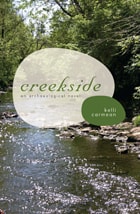
Creekside
An Archaeological NovelKelli Carmean
University of Alabama Press, 2010
Uncovering a frontier family’s secrets before progress wipes them away.
In Creekside, dedicated archaeologist Meg Harrington guides her students in a race against time to protect the legacy of the past before bulldozers rip it to shreds.
The setting is a Kentucky pasture slated for development—the construction of the new Creekside subdivision. Once, that same beautiful stretch of land was home to three generations who experienced love, loss, and tragedy in their log cabin beside the creek. It was here during the late 18th century that Estelle Mullins struggled to build her home on the dangerous frontier.
In Meg’s 21st-century world of archaeology we read about excavation techniques, daily experiences at a dig, tight construction deadlines, the use of heavy equipment, report writing, artifact analysis, damage from looters and collectors, and the reality of site destruction in the path of modern development. The depiction of Estelle’s frontier life includes Kentucky’s early Euro-American settlement of the Cumberland Gap, encounters with Shawnee defending their land, Protestant fragmentation, the rise of religious fundamentalism, the immigrant stampede down the Ohio River, and the persistent issue of class-based land ownership.
The two partially interwoven story lines link artifact and place, ancestors and descendants, the present and the past, and inspire us to explore the personal connections between them all in fresh and vital ways.
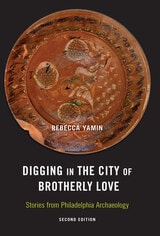
Digging in the City of Brotherly Love
Stories from Philadelphia ArchaeologyYamin, Rebecca
Temple University Press, 2023
Rebecca Yamin adds three new chapters that showcase several major discoveries from recent finds including unmarked early eighteenth-century burial grounds, one of which associated with the first African Methodist Episcopal (AME) Church, in the oldest part of the city; a nineteenth-century working-class neighborhood built along the path of what is now Route I-95 and was once home to Native American life; and the remains of two taverns found on the site of the current Museum of the American Revolution.
Yamin describes the research and state-of-the-art techniques used to study these exciting discoveries. In chronicling the value of looking into a city’s past, Digging in the City of Brotherly Love brings to life the people who lived in the early city and the people in the present who study them.
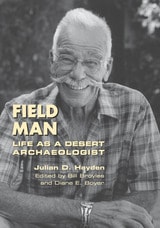
Field Man
Life as a Desert ArchaeologistJulian D. Hayden; Edited by Bill Broyles and Diane E. Boyer
University of Arizona Press, 2012
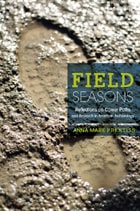
Field Seasons
Reflections on Career Paths and Research in American ArchaeologyAnna Marie Prentiss
University of Utah Press, 2012
In Field Seasons, Anna Marie Prentiss chronicles her experiences as an archaeologist, providing an insider’s look at the diverse cultures, personal agendas, and career pathways associated with American archaeology since the late twentieth century. As the narrative moves from her academic training to employment in government and private consulting to her eventual professorship at a state university, several themes emerge.
This book is about career paths. Its discussion of the diverse jobs within the archaeological profession makes it valuable to students seeking guidance about their career options. It also provides insight into the cultures of American archaeology, a discipline with many schools of thought and unique subcultures. The world of archaeological field technicians is quite different from that of government bureaucrats or academics. Prentiss also explores the elements of cultural change within archaeology while she reflects on her personal evolution throughout her thirty years within the discipline.
The book’s unique personal assessment of the state of American archaeology will appeal to a broad swath of students and professionals. Students will find it an entertaining road map to possible careers while professionals will find plenty of scholarly material concerning ethics, archaeological theory, and interpretations of the archaeological record.
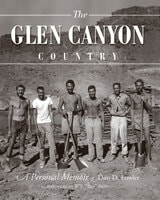
Glen Canyon Country, The
A Personal MemoirDon D Fowler
University of Utah Press, 2011
In his new book, The Glen Canyon Country, archaeologist Don D. Fowler shares the history of a place and the peoples who sojourned there over the course of several thousand years. To tell this story, he weaves his personal experience as a student working on the Glen Canyon Salvage Project with accounts of early explorers, geologists, miners, railroad developers, settlers, river runners, and others who entered this magical place. The book details the canyon’s story via historical and scientific summaries, biographical sketches, personal memoir, and previously unpublished photos of the land and its explorers.
Histories of Southeastern Archaeology
Edited by Shannon Tushingham, Jane Hill, and Charles H. McNutt
University of Alabama Press, 2002
Histories of Southeastern Archaeology originated as a symposium at the 1999 Southeastern Archaeological Conference (SEAC) organized in honor of the retirement of Charles H. McNutt following 30 years of teaching anthropology. Written for the most part by members of the first post-depression generation of southeastern archaeologists, this volume offers a window not only into the archaeological past of the United States but also into the hopes and despairs of archaeologists who worked to write that unrecorded history or to test scientific theories concerning culture.
The contributors take different approaches, each guided by experience, personality, and location, as well as by the legislation that shaped the practical conduct of archaeology in their area. Despite the state-by-state approach, there are certain common themes, such as the effect (or lack thereof) of changing theory in Americanist archaeology, the explosion of contract archaeology and its relationship to academic archaeology, goals achieved or not achieved, and the common ground of SEAC.
This book tells us how we learned what we now know about the Southeast's unwritten past. Of obvious interest to professionals and students of the field, this volume will also be sought after by historians, political scientists, amateurs, and anyone interested in the South.
Additional reviews:
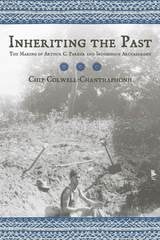
Inheriting the Past
The Making of Arthur C. Parker and Indigenous ArchaeologyChip Colwell-Chanthaphonh
University of Arizona Press, 2009
In Inheriting the Past, Chip Colwell-Chanthaphonh examines Parker’s winding career path and asks why it has taken generations for Native peoples to follow in his footsteps. Closely tracing Parker’s life through extensive archival research, Colwell-Chanthaphonh explores how Parker crafted a professional identity and negotiated dilemmas arising from questions of privilege, ownership, authorship, and public participation. How Parker, as well as the discipline more broadly, chose to address the conflict between Native American rights and the pursuit of scientific discovery ultimately helped form archaeology’s moral community.
Parker’s rise in archaeology just as the field was taking shape demonstrates that Native Americans could have found a place in the scholarly pursuit of the past years ago and altered its trajectory. Instead, it has taken more than a century to articulate the promise of an Indigenous archaeology—an archaeological practice carried out by, for, and with Native peoples. As the current generation of researchers explores new possibilities of inclusiveness, Parker’s struggles and successes serve as a singular reference point to reflect on archaeology’s history and its future.
Julian Steward and the Great Basin
The Making of an AnthropologistRichard O Clemmer
University of Utah Press, 1999
Julian Steward and the Great Basin is a critical assessment of Steward’s work, the factors that influenced him, and his deep effect on American anthropology. Steward (1902–1972) was one of the foremost American exponents of cultural ecology, the idea that societies evolve in adaptation to their human and natural environments. He was also central in shaping basic anthropological constructs such as "hunter-gatherer" and "adaptation." But his fieldwork took place almost entirely in the Great Basin.
In one sense, the phases of Steward’s career epitomize the successive schools of anthropological theory and practice. Each chapter explores a different aspect of his work ranging from early efforts at documenting trait distributions to his later role in the development of social transformation theory, area studies, and applied anthropology.
Julian Steward and the Great Basin also corrects long-standing misperceptions that originated with Steward about lifeways of the Indians living between the Great Plains and California. It charts new directions for research, demanding a more exacting study of environmental conditions, material adaptations, and organizational responses, as well as an appreciation of the ideological and humanistic dimensions of Basin Life.
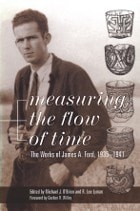
Measuring the Flow of Time
The Works of James A. Ford, 1935-1941James A. Ford, edited by R. Lee Lyman and Michael J. O'Brien
University of Alabama Press, 1999
This collection of Ford's works focuses on the development of ceramic chronology—a key tool in Americanist archaeology.
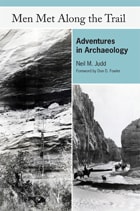
Men Met Along the Trail
Adventures in ArchaeologyNeil M Judd
University of Utah Press, 2009
Written at the request of young associates who felt Judd’s lifetime of experiences in the field could be both instructive and amusing, Men Met Along the Trail provides a glimpse of archaeology when it was an emerging field of study, evolving from simple curio collecting to technologically advanced radiocarbon dating and pollen analysis. Featuring more than thirty original photographs and a new foreword by Don D. Fowler, this book is entertaining and informative, offering readers a vibrant and colorful picture of the adventures to be found in early Southwestern archaeology.
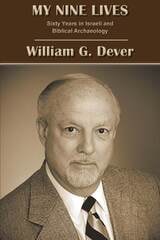
My Nine Lives
Sixty Years in Israeli and Biblical ArchaeologyWilliam G. Dever
SBL Press, 2020
Experience a lifetime of adventure
This autobiography of prominent American archaeologist William G. Dever is unabashedly his story, in which he offers candid, often brutally honest, reflections on his life and sixty-five-year career. Dever places himself in the midst of a remarkable generation of giants in archaeology in Israel during a period when the fields of biblical and Israeli archaeology were evolving. With technical expertise developed over a lifetime of working alongside four generations of Israeli and foreign excavators, he recalls their exploits and shares numerous personal stories that few others would know. His memoir concludes with a postscript on the likely future of biblical archaeology and an annotated bibliography for serious readers who wish to explore some of the scholarly literature to flesh out Dever’s narrative.
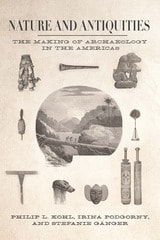
Nature and Antiquities
The Making of Archaeology in the AmericasEdited by Philip L. Kohl, Irina Podgorny, and Stefanie Gänger
University of Arizona Press, 2014
The volume breaks new ground by entreating archaeologists to acknowledge the importance of ways of knowing that resulted from the study of nature in the history of archaeology. Some of the contributions to this volume trace the part conventions, practices, and concepts from natural history and the natural sciences played in the history and making of the discipline. Others set out to uncover, reassemble, or adjust our vision of collections that research historians of archaeology have disregarded or misrepresented—because their nineteenth-century makers would refuse to comply with today’s disciplinary borders and study natural specimens and antiquities in conjunction, under the rubric of the territorial, the curious or the universal. Other contributions trace the sociopolitical implications of studying nature in conjunction with “indigenous peoples” in the Americas—inquiring into what it meant and entailed to comprehend the inhabitants of the American continent in and through a state of nature.
Philadelphia and the Development of Americanist Archaeology
Edited by Don Fowler and David R. Wilcox
University of Alabama Press, 2003
For two and a half centuries, Philadelphians have been actively involved in archaeological research. In particular, three vital and venerable cultural institutions—the American Philosophical Society (founded 1743), the Academy of Natural Sciences (founded 1812), and the University Museum of the University of Pennsylvania (founded 1893)—have nurtured the "systematic study of antiquities."
The ten essays in this volume focus on Philadelphians who were concerned with Americanist archaeology, or the "archaeology of the New World." As Europeans, and later, Euroamericans, spread across North, Central, and South America in the 16th through the 19th centuries, they encountered a bewildering variety of native peoples, customs, and languages, as well as tens of thousands of ancient ruins attesting to a long endemic culture history of obvious complexity.
The essays examine most of the key players in the development of the methods to study these phenomena. Enlightenment scholars such as Benjamin Smith Barton, Peter S. Duponceau, Thomas Jefferson, Daniel Garrison Brinton, John Wesley Powell, and Benjamin Rush all contributed to the surge of scientific study of America's prehistoric cultures. So did two pioneering women who have received scant attention to date—Sara Yorke Stevenson and Lucy W. Wilson—but whose work is well treated in this study. Other essays detail the varied contributions of C. C. Abbott, Frank Hamilton Cushing, Clarence B. Moore, Edgar Lee Hewett, and John L. Cotter. This volume should stimulate continued interest in the origins and history of archaeology and the relationship of Philadelphia patrons and institutions to scientific inquiry.
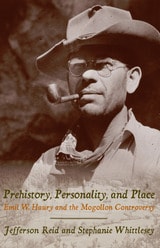
Prehistory, Personality, and Place
Emil W. Haury and the Mogollon ControversyJefferson Reid and Stephanie Whittlesey
University of Arizona Press, 2011
Reid and Whittlesey present the arguments and actions surrounding the Mogollon discovery, definition, and debate. Drawing on extensive interviews conducted with Haury before his death in 1992, they explore facets of the debate that scholars pursued at various times and places and how ultimately the New Archaeology shifted attention from the research questions of cultural affiliation and antiquity that had been at the heart of the controversy. In gathering the facts and anecdotes surrounding the debate, Reid and Whittlesey offer a compelling picture of an academician who was committed to understanding the unwritten past, who believed wholeheartedly in the techniques of scientific archaeology, and who used his influence to assist scholarship rather than to advance his own career.
Prehistory, Personality, and Place depicts a real archaeologist practicing real archaeology, one that fashioned from potsherds and pit houses a true understanding of prehistoric peoples. But more than the chronicle of a controversy, it is a book about places and personalities: the role of place in shaping archaeologists’ intellect and personalities, as well as the unusual intersections of people and places that produced resolutions of some intractable problems in Southwest history.
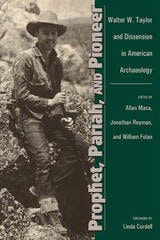
Prophet, Pariah, and Pioneer
Walter W. Taylor and Dissension in American ArchaeologyAllan Maca
University Press of Colorado, 2026
In his 1948 work A Study of Archeology, recently minted Harvard Ph.D. Walter W. Taylor delivered the strongest and most substantial critique of American archaeology ever published. He created many enemies with his dissection of the research programs of America's leading scholars, who took it as a personal affront. Taylor subsequently saw his ideas co-opted, his research pushed to the margins, and his students punished. Publicly humiliated at the 1985 Society for American Archaeology meeting, he suffered ridicule until his death in 1997.
Nearly everyone in the archaeological community read Taylor's book at the time, and despite the negative reaction, many were influenced by it. Few young scholars dared to directly engage and build on his "conjunctive approach," yet his suggested methods nevertheless began to be adopted and countless present-day authors highlight his impact on the 1960s formation of the "New Archaeology."
In Prophet, Pariah, and Pioneer, peers, colleagues, and former students offer a critical consideration of Taylor's influence and legacy. Neither a festschrift nor a mere analysis of his work, the book presents an array of voices exploring Taylor and his influence, sociologically and intellectually, as well as the culture of American archaeology in the second half of the twentieth century.
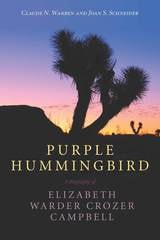
Purple Hummingbird
A Biography of Elizabeth Warder Crozer CampbellClaude N. Warren and Joan S. Schneider
University of Utah Press, 2016
Elizabeth Warder Crozer Campbell and her husband, William Campbell, found themselves forced to move to the Mojave Desert in 1924, its dry climate proving to be the best for William’s frail lungs burned by mustard gas in World War I. They camped at Twentynine Palm Oasis in what is now Joshua Tree National Park, homesteaded nearby, and became a central part of that early community. Life in the remote, stark landscape contrasted sharply with Elizabeth’s early years of wealth and privilege in Pennsylvania. Her resilient spirit made the best of what at first seemed like a bleak situation: she became an amateur archaeologist and explored the desert. A keen observer and independent thinker, she soon hypothesized that prehistoric people had lived in the California deserts along the shores of late Pleistocene lakes and waterways much earlier than was then believed. She devised a means for testing her hypothesis and found evidence to support it. Her interpretations, however, conflicted with the archaeological paradigm of the day and she was dismissed by formally trained archaeologists. Even so, she and her husband continued their work, convinced of the accuracy of her findings. Four decades later the archaeological establishment validated and accepted her ideas. Campbell’s research ultimately revolutionized archaeological thought, forming the basis of today’s landscape archaeology.
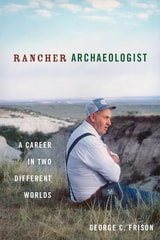
Rancher Archaeologist
A Career in Two Different WorldsGeorge Frison
University of Utah Press, 2014
In this memoir, Frison shares his life’s work and his atypical journey from rancher to professor and archaeologist. Herding cattle, chopping watering holes in sub-zero weather, and guiding hunters in the fall were very different than teaching classes, performing laboratory work, and attending faculty and committee meetings in air-conditioned buildings. But his practical and observational experience around both domestic and wild animals proved a valuable asset to his research. His knowledge of specific animal behaviors gave insight to his studies of the Paleoindians of the northern plains as he sought to understand how their stone tools were used most effectively for hunting and how bison jumps, mammoth kills, and sheep traps actually worked. Frison’s careful research and strong involvement in the scholarly and organizational aspects of archaeology made him influential not only as an authority on the prehistory of the northern plains but also as a leader in Wyoming archaeology and Northern American archaeology at large.
This book will appeal to both the professional and the lay reader with interests in archaeology, anthropology, paleontology, plains history, animal science, hunting, or game management. Frison’s shift from ranching into the academic world of archaeology serves as a reminder that you are never too old to change your life.
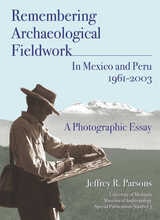
Remembering Archaeological Fieldwork in Mexico and Peru, 1961-2003
A Photographic EssayJeffrey R. Parsons
University of Michigan Press, 2019
Return To Babylon
B Fagan
University Press of Colorado, 2007
Sam Dellinger
Raiders of the Lost ArkansasRobert C. Mainfort
University of Arkansas Press, 2008
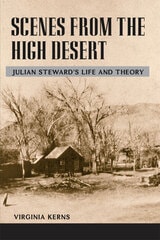
Scenes from the High Desert
JULIAN STEWARD'S LIFE AND THEORYVirginia Kerns
University of Illinois Press, 2002
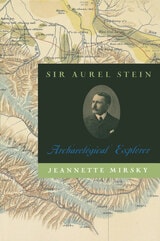
Sir Aurel Stein
Archaeological ExplorerJeannette Mirsky
University of Chicago Press, 1977
"[Mirsky] has digested the correspondence, and she quotes so skillfully that her book will save many people the trouble of reading Stein's own exhaustive and exhausting volumes. Definitive."—Larry McMurtry, Washington Post
"A first-rate and unique biography of one of the more significant explorers of Central Asia and the Indo-Iranian borderlands. . . . Mirsky has recreated not only the life of an intrepid explorer but the spirit of the times."—Choice
"Mirsky has performed a signal service in distilling the life, travels, and letters of Aurel Stein into a manageable, graceful, and meaningful synthesis."—Theodore A. Wertime, Technology and Culture
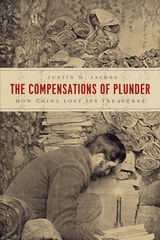
The Compensations of Plunder
How China Lost Its TreasuresJustin M. Jacobs
University of Chicago Press, 2020
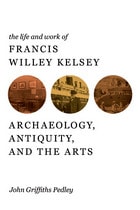
The Life and Work of Francis Willey Kelsey
Archaeology, Antiquity, and the ArtsJohn Griffiths Pedley
University of Michigan Press, 2011
President of the Archaeological Institute of America, professor at the University of Michigan from 1889 to 1927, and president of the American Philological Association, Francis Kelsey was crucially involved in the founding or growth of major educational institutions. He came to maturity in a period of great technological change in communications, transportation, and manufacturing. Kelsey took full advantage of such innovations in his ceaseless drive to promote education for all, to further the expansion of knowledge, and to champion the benefits of the study of antiquity.
A vigorous traveler around the United States, Europe, and the Mediterranean, Kelsey strongly believed in the value of personally viewing sites ancient and modern and collecting artifacts that could be used by the new museums and universities that were springing up in the United States. This collecting habit put him in touch with major financiers of the day, including Charles Freer, Andrew Carnegie, and J. P. Morgan, as he sought their help for important projects.
Drawing heavily on Kelsey's daily diaries now held at the University of Michigan's Bentley Historical Library, John Griffiths Pedley gives us a biography that records the wide-ranging activities of a gifted and energetic scholar whose achievements mirrored the creative and contributive innovations of his contemporary Americans.
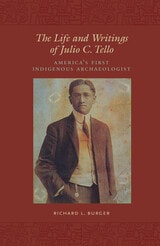
The Life and Writings of Julio C. Tello
America's First Indigenous ArchaeologistRichard L. Burger
University of Iowa Press, 2009
Tello’s vision remains unique, and his work has taken on additional interest as contemporary scholars have turned their attention to the relationship among nationalism, ethnicity, and archaeology. Unfortunately, many of his most important works were published in small journals or newspapers in Peru and have not been available even to those with a reading knowledge of Spanish. This volume thus makes available for the first time a broad sampling of Tello’s writings as well as complementary essays that relate these writings to his life and contributions.
Essays about Tello set the stage for the subsequent translations. Editor Richard Burger assesses his intellectual legacy, Richard Daggett outlines his remarkable life and career, and John Murra places him in both national and international contexts. Tello’s writings focus on such major discoveries as the Paracas mummies, the trepanation of skulls from Huarochirí, Andean iconography and cosmology, the relation between archaeology and nationhood, archaeological policy and preservation, and the role of science and museums in archaeology. Finally, the bibliography gives the most complete and accurate listing of Tello’s work ever compiled.
With its abundance of coups, wars, political dramas, class struggle, racial discrimination, looters, skulls, mummies, landslides, earthquakes, accusations, and counteraccusations, The Life and Writings of Julio C. Tello will become an indispensable reference for Andeanists.