Results by title

29 books match the query 'Archival materials'
cover of Advancing Preservation for Archives and Manuscripts

Advancing Preservation for Archives and Manuscripts

Elizabeth Joffrion

Society of American Archivists, 2020
[more]
cover of Afterlives of Indigenous Archives

Afterlives of Indigenous Archives

Edited by Ivy Schweitzer and Gordon Henry

Dartmouth College Press, 2019
Afterlives of Indigenous Archives offers a compelling critique of Western archives and their use in the development of “digital humanities.” The essays collected here present the work of an international and interdisciplinary group of indigenous scholars; researchers in the field of indigenous studies and early American studies; and librarians, curators, activists, and storytellers. The contributors examine various digital projects and outline their relevance to the lives and interests of tribal people and communities, along with the transformative power that access to online materials affords. The authors aim to empower native people to re-envision the Western archive as a site of community-based practices for cultural preservation, one that can offer indigenous perspectives and new technological applications for the imaginative reconstruction of the tribal past, the repatriation of the tribal memories, and a powerful vision for an indigenous future. This important and timely collection will appeal to archivists and indigenous studies scholars alike.
[more]
cover of Archival Arrangement and Description

Archival Arrangement and Description

Christopher J. Prom

Society of American Archivists, 2013
Trends in Archives Practice by the Society of American Archivists is a new, open-ended series of modules featuring brief, authoritative treatments — written and edited by top-level professionals — that fill significant gaps in archival literature. The goal of this modular approach is to build agile, user-centered resources. Each module will treat a discrete topic relating to the practical management of archives and manuscript collections in the digital age. The first three modules address archival arrangement and description and are designed to complement Kathleen D. Roe's book, ARRANGING AND DESCRIBING ARCHIVES AND MANUSCRIPTS. They include: MODULE 1 STANDARDS FOR ARCHIVAL DESCRIPTION Sibyl Schaefer and Janet M. Bunde Untangles the history of standards development and provides an overview of descriptive standards that an archives might wish to use. MODULE 2 PROCESSING DIGITAL RECORDS AND MANUSCRIPTS J. Gordon Daines III Builds on familiar terminology and models to show how any repository can take practical steps to process born-digital materials and to make them accessible to users. MODULE 3 DESIGNING DESCRIPTIVE AND ACCESS SYSTEMS Daniel A. Santamaria Implementation advice regarding the wide range of tools and software that support specific needs in arranging, describing, and providing access to analog and digital archival materials.
[more]
cover of Archives

Archives

Andrew Lison

University of Minnesota Press, 2019

How digital networks and services bring the issues of archives out of the realm of institutions and into the lives of everyday users


Archives have become a nexus in the wake of the digital turn. Electronic files, search engines, video sites, and media player libraries make the concepts of “archival” and “retrieval” practically synonymous with the experience of interconnected computing. Archives today are the center of much attention but few agendas. Can archives inform the redistribution of power and resources when the concept of the public library as an institution makes knowledge and culture accessible to all members of society regardless of social or economic status? This book sets out to show that archives need our active support and continuing engagement. 

This volume offers three distinct perspectives on the present status of archives that are at once in disagreement and solidarity with each other, from contributors whose backgrounds cut across the theory–practice divide. Is the increasing digital storage of knowledge pushing us toward a turning point in its democratization? Can archives fulfill their paradoxical potential as utopian sites in which the analog and the digital, the past and future, and remembrance and forgetting commingle? Is there a downside to the present-day impulse toward total preservation? 
[more]
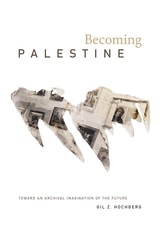
cover of Becoming Palestine: Toward an Archival Imagination of the Future

Becoming Palestine

Toward an Archival Imagination of the Future

Gil Z. Hochberg

Duke University Press, 2021
In Becoming Palestine, Gil Z. Hochberg examines how contemporary Palestinian artists, filmmakers, dancers, and activists use the archive in order to radically imagine Palestine's future. She shows how artists such as Jumana Manna, Kamal Aljafari, Larissa Sansour, Farah Saleh, Basel Abbas, and Ruanne Abou-Rahme reimagine the archive, approaching it not through the desire to unearth hidden knowledge, but to sever the identification of the archive with the past. In their use of archaeology, musical traditions, and archival film and cinematic footage, these artists imagine a Palestinian future unbounded from colonial space and time. By urging readers to think about archives as a break from history rather than as history's repository, Hochberg presents a fundamental reconceptualization of the archive's liberatory potential.
[more]
cover of Born-Digital Design Records

Born-Digital Design Records

Samantha Winn

Society of American Archivists, 2022
[more]
cover of Conserving Active Matter

Conserving Active Matter

Edited by Peter N. Miller and Soon Kai Poh

Bard Graduate Center, 2022

Considers the future of conservation and its connection to the human sciences. 

This volume brings together the findings from a five-year research project that seeks to reimagine the relationship between conservation knowledge and the humanistic study of the material world. The project, “Cultures of Conservation,” was supported by the Andrew W. Mellon Foundation and included events, seminars, and an artist-in-residence. 

The effort to conserve things amid change is part of the human struggle with the nature of matter. For as long as people have made things and kept things, they have also cared for and repaired them. Today, conservators use a variety of tools and categories developed over the last one hundred and fifty years to do this work, but in the coming decades, new kinds of materials and a new scale of change will pose unprecedented challenges. Looking ahead to this moment from the perspectives of history, philosophy, materials science, and anthropology, this volume explores new possibilities for both conservation and the humanities in the rethinking of active matter.
[more]
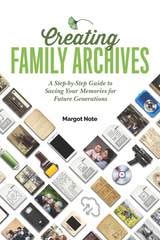
cover of Creating Family Archives: A Step-by-Step Guide to Saving Your Memories for Future Generations

Creating Family Archives

A Step-by-Step Guide to Saving Your Memories for Future Generations

Margot Note

Society of American Archivists, 2019
Not just a gift. It's history in the making. Family history is important. Photos, videos, aged documents, and cherished papers--these are the memories that you want to save. And they need a better home than a cardboard box. Creating Family Archives is a book written by an archivist for you, your family, and friends, taking you step-by-step through the process of arranging and preserving your own family archives. It’s the first book of its kind offered to the public by the Society of American Archivists. Gathering up the boxes of photos and years of video is a big job. But this fascinating and instructional book will make it easier and, in the end, much better.
[more]
cover of Digital Library Programs for Libraries and Archives: Developing, Managing, and Sustaining Unique Digital Collections

Digital Library Programs for Libraries and Archives

Developing, Managing, and Sustaining Unique Digital Collections

Aaron D. Purcell

American Library Association, 2016
[more]
cover of Engagement in the Digital Era

Engagement in the Digital Era

Christopher Prom

Society of American Archivists, 2020
[more]
cover of I, Digital: Personal Collections in the Digital Era

I, Digital

Personal Collections in the Digital Era

Christopher A. Lee

Society of American Archivists, 2011

When it comes to personal collections, we live in exciting times. Individuals are living their lives in ways that are increasingly mediated by digital technologies — digital photos and video footage, music, the social web, e-mail,and other day-to-day interactions. Although this mediation presents many technical challenges for long-term preservation, it also provides unprecedented opportunities for documenting the lives of individuals.

Ten authors — Robert Capra, Adrian Cunningham, Tom Hyry, Leslie Johnston, Christopher (Cal) Lee, Sue McKemmish, Cathy Marshall, Rachel Onuf, Kristina Spurgin, and Susan Thomas — share their expertise on the various aspects of the management of digital information in I, Digital: Personal Collections in the Digital Era.

The volume is divided in three parts:

  • Part 1 is devoted to conceptual foundations and motivations.
  • Part 2 focuses on particular types, genres, and forms of personal traces; areas of further study; and new opportunities for appraisal and collection.
  • Part 3 addresses strategies and practices of professionals who work in memory institutions.
  • Chapters explore issues,challenges, and opportunities in the management of personal digital collections, focusing primarily on born-digital materials generated and kept by individuals.

    Contributions to I, Digital represent the depth in thinking about how cultural institutions can grapple with new forms of documentation, and how individuals manage--and could better manage--digital information that is part of contemporary life.
    [more]
    cover of Information Activism: A Queer History of Lesbian Media Technologies

    Information Activism

    A Queer History of Lesbian Media Technologies

    Cait McKinney

    Duke University Press, 2020
    For decades, lesbian feminists across the United States and Canada have created information to build movements and survive in a world that doesn't want them. In Information Activism Cait McKinney traces how these women developed communication networks, databases, and digital archives that formed the foundation for their work. Often learning on the fly and using everything from index cards to computers, these activists brought people and their visions of justice together to organize, store, and provide access to information. Focusing on the transition from paper to digital-based archival techniques from the 1970s to the present, McKinney shows how media technologies animate the collective and unspectacular labor that sustains social movements, including their antiracist and trans-inclusive endeavors. By bringing sexuality studies to bear on media history, McKinney demonstrates how groups with precarious access to control over information create their own innovative and resourceful techniques for generating and sharing knowledge.
    [more]
    cover of Making Your Tools Work for You

    Making Your Tools Work for You

    Max Eckard

    Society of American Archivists, 2020
    [more]
    cover of Module 8: Becoming a Trusted Digital Repository

    Module 8

    Becoming a Trusted Digital Repository

    Steve Marks

    Society of American Archivists, 2015
    Digital records pose many challenges for archives, libraries, and museums; and behind them all lurks the shadow of trust. How can donors know that your repository will take good care of their digital files? How can people verify that the records they wish to use are authentic? How can they have confidence in being able to access obsolete file formats far into the future? These are difficult questions, but whatever the size or mission of your archives, you can move it closer to answering them and to being a trusted digital repository. Meeting the gold standard—ISO 16363 Audit and Certification of Trustworthy Digital Repositories—may seem like a far-off goal, but Module 8: Becoming a Trusted Digital Repository demystifies this complex standard. Module 8 demonstrates specific ways that your archives, library, or museum can identify gaps, improve digital operations, and plan for future enhancements so that you can indeed help it become a trusted digital repository.
    [more]
    cover of New Technologies and Renaissance Studies

    New Technologies and Renaissance Studies

    Edited by William R. Bowen and Raymond G. Siemens

    Iter Press, 2008

    Near the forefront of any examination of disciplinary pursuits in the academy today, among the many important issues being addressed is the role of computing and its integration into, and perhaps revolutionizing of, central methodological approaches. The series New Technologies in Medieval and Renaissance Studies addresses this context from both broad and narrow perspectives, with anticipated discussions rooted in areas including literature, art history, musicology, and culture in the medieval and Renaissance periods.

    The first volume of the series, New Technologies and Renaissance Studies, presents a collection of contributions to one ongoing forum for the dialogue which lies at the heart of the book series, the annual "conference within a conference" of the same name which takes place during the Renaissance Society of America gathering, dedicated specifically to the intersection of computational methods and Renaissance studies. Papers in this volume exemplify those fruitful and productive exchanges, from their inception at the 2001 meeting in Chicago to the 2005 meeting in Cambridge.
    [more]
    cover of New Technologies and Renaissance Studies II

    New Technologies and Renaissance Studies II

    Edited by Tassie Gniady, Kris McAbee, Jessica Murphy

    Iter Press, 2014

    Near the forefront of any examination of disciplinary pursuits in the academy today, among the many important issues being addressed is the role of computing and its integration into, and perhaps revolutionizing of, central methodological approaches. The series New Technologies in Medieval and Renaissance Studies addresses this context from both broad and narrow perspectives, with anticipated discussions rooted in areas including literature, art history, musicology, and culture in the medieval and Renaissance periods.

    In the fourth volume of the New Technologies in Medieval and Renaissance Studies series, volume editors Tassie Gniady, Kris McAbee, and Jessica Murphy bring together some of the best work from the New Technologies in Medieval and Renaissance Studies panels at the Renaissance Society of America (RSA) annual meetings for the years 2004–2010. These essays demonstrate a dedication to grounding the use of “newest” practices in the theories of the early modern period. At the same time, the essays are interested in the moment—the needs of scholars then, the theories of media that informed current understanding, and the tools used to conduct studies.
    [more]
    cover of New Technologies and Renaissance Studies III

    New Technologies and Renaissance Studies III

    Edited by Matthew Evan Davis and Colin Wilder

    Iter Press, 2022
    These essays explore problems with digital approaches to analog objects and offer digital methods to study networks of production, dissemination, and collection. Further, they reflect on the limitations of those methods and speak to a central truth of digital projects: unlike traditional scholarship, digital scholarship is often the result of collective networks of not only disciplinary scholars but also of library professionals and other technical and professional staff as well as students.
     
    [more]
    cover of New Technologies and Renaissance Studies IV: The Changing Shape of Digital Early Modern Studies

    New Technologies and Renaissance Studies IV

    The Changing Shape of Digital Early Modern Studies

    Edited by Randa El Khatib and Caroline Winter

    Iter Press, 2025

    A collection of essays engaging with digital scholarship and new technologies.

    Contributors to this volume engage with digital scholarship in several ways: by creating digital projects, often in multidisciplinary, collaborative environments; by applying digital methodologies and tools to explore research questions; and by speculating about the potential directions that digital scholarship can take to tackle existing research areas that could benefit from new perspectives. Together, the chapters demonstrate how various digital approaches—from network analysis to web mapping, VR and AR technologies, digital editions, databases, and archives—are all contributing in creative and effective ways to expand our knowledge of the past, to help ask and answer questions at a scale that was unimaginable before the digital turn, and to reshape early modern studies in the twenty-first century. 
    [more]
    cover of Planning New and Remodeled Archival Facilities

    Planning New and Remodeled Archival Facilities

    Thomas P. Wilsted

    Society of American Archivists, 2007

    [more]
    cover of Preservation: Issues and Planning

    Preservation

    Issues and Planning

    Paul Banks

    American Library Association, 2000

    [more]
    cover of Preserving Archives & Manuscripts

    Preserving Archives & Manuscripts

    Mary Lynn Ritzenthaler

    Society of American Archivists, 2010

    The authoritative resource for archivists, manuscript curators, and other responsible for the preservation of archives, manuscripts, and historical collections. It covers the wide range of materials found in such holdings and addresses practical means of implementing preservation programs. The emphasis is on integrating preservation and archival management with a focus on storage, safe handling, and environmental issues. Many illustrations and extensive appendices complement the text. Ritzenthaler’s classic manual complements and augments Advancing Preservation for Archives and Manuscripts by Elizabeth Joffrion and Michèle V. Cloonan, published in 2020 as volume 5 in the Archival Fundamentals Series III.
    [more]
    cover of Preserving Our Heritage: Perspectives from Antiquity to the Digital Age

    Preserving Our Heritage

    Perspectives from Antiquity to the Digital Age

    Michele Valerie Cloonan

    American Library Association, 2015
    [more]
    cover of Putting Descriptive Standards to Work

    Putting Descriptive Standards to Work

    Christopher Prom

    Society of American Archivists, 2017
    Putting Descriptive Standards to Work, edited by Kris Kiesling and Christopher J. Prom, is the most recent addition to SAA’s Trends in Archives Practice series. The book consists of four modules: Module 17: Implementing DACS: A Guide to the Archival Content Standard by Cory L. Nimer, lead archivists through the provisions of Describing Archives: A Content Standard (DACS); Module 18: Using EAD3, by Kelcy Shepherd, introduces Encoded Archival Description Version EAD3; Module 19: Introducing EAC-CPF by Katherine M. Wisser, introduces Encoded Archival Context–Corporate Bodies, Persons, and Families (EAC-CPF); and Module 20: Sharing Archival Metadata, by Aaron Rubinstein, explores strategies for sharing archival metadata with researchers in the digital humanities and other archivists.
    [more]
    cover of Reference and Access for Archives and Manuscripts

    Reference and Access for Archives and Manuscripts

    Cheryl Oestreicher

    Society of American Archivists, 2020
    Cheryl Oestreicher is the head of Special Collections and Archives and associate professor at Boise State University. She has a PhD in modern history and literature from Drew University and an MLIS from Dominican University. She previously worked at Auburn Avenue Research Library on African American Culture and History at Emory University, the University of Chicago, Drew University, and Princeton University. Oestreicher has taught introduction to archives, archives management, reference, and research methods at Georgia State University, Clayton State University, and Boise State University. She has been actively involved in SAA by serving on the Publications Board, Manuscripts Section Steering Committee, 2016 Annual Meeting Program as co-chair, and the SAA-ACRL/RBMS Joint Task Force to Revise Statement on Access. She was the 2015 recipient of the Emerging Leaders Award. For the Academy of Certified archivists, she was a member of the Recertification Review Task Force and Nominating Committee, and serves on the Exam Development Committee focusing on Domain 3: Reference Services and Access. She has served as a grant reviewer for the Council on Library and Information Resources, National Historical Publications and Records Commission, and the National Endowment for the Humanities. She is a former editor of Provenance, the journal of the Society of Georgia Archivists.
    [more]
    cover of Rights in the Digital Era

    Rights in the Digital Era

    All rights reserved. No part of this publication may be reproduced, stored in a retrieval system, or transmitted in any form or by any means without prior permission from the publisher.

    Society of American Archivists, 2015

    About Rights in the Digital Era:

    MODULE 4
    Understanding Copyright Law
    Heather Briston
    Describes the main principles of copyright law and outlines strategies for addressing common issues, special topics, and digital projects.

    MODULE 5
    Balancing Access and Privacy in Manuscript Collections
    Menzi L. Behrnd-Klodt
    Introduces basic access and privacy laws, concepts, definitions, and professional ethical standards affecting manuscript materials and private and family papers.

    MODULE 6
    Balancing Access and Privacy in the Records of Organizations

    Menzi L. Behrnd-Klodt
    Introduces basic access and privacy laws, concepts, definitions, and professional ethical standards affecting the management of records created by organizations, businesses, agencies, and other entities.

    MODULE 7
    Managing Rights and Permissions

    Aprille C. McKay
    Provides practical guidance to help archivists transfer, clear, manage, and track rights information in analog and digital archives.

    About Trends in Archives Practice:

    This open-ended series by the Society of American Archivists features brief, authoritative treatments—written and edited by top-level professionals—that fill significant gaps in archival literature. The goal of this modular approach is to build agile, user-centered resources. Modules treat discrete topics relating to the practical management of archives and manuscript collections in the digital age. Select modules are clustered together by topic (as they are here) and are available in print or electronic format. Each module also is available separately in electronic format so that readers can mix and match modules that best satisfy their needs and interests. Stay on trend with Trends in Archives Practice!
    [more]
    cover of Teaching with Primary Sources

    Teaching with Primary Sources

    Christopher Prom

    Society of American Archivists, 2016
    Teaching With Primary Sources is part of the series Trends in Archives Practice. It includes three modules: Module 9: Contextualizing Archival Literacy by Elizabeth Yakel and Doris Malkmus Examines the evolving theory of archival literacy in relation to domain knowledge, primary source literacy, and information literacy to facilitate meaningful use of archival and manuscript collections. Module 10: Teaching With Archives: A Guide for Archivists, Librarians, and Educators by Sammie L. Morris, Tamar Chute, and Ellen Swain Provides practical guidance to archivists, librarians,and educators on teaching with archival materials,offering tips for beginners as well as seasoned instructors. Module 11: Connecting Students and Primary Sources: Cases and Examples by Tamar Chute, Ellen Swain, and Sammie L. Morris Offers readers an analytical guide and example assignments for teaching with primary materials, based heavily on first-hand case study accounts and interviews with practitioners and experts in the field. As Lisa Janicke Hinchliffe notes in the introduction, "These three modules present a wealth of resources for meeting the challenges of primary source literacy instruction. They can be read start-to-finish to build a foundation for practice. Or, they can be dipped into as needed by the busy educator who needs practical ideas or inspiration for that next instruction session."
    [more]
    cover of The Complete Guide to Personal Digital Archiving

    The Complete Guide to Personal Digital Archiving

    Brianna H. Marshall

    American Library Association, 2017
    [more]
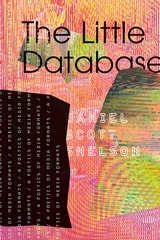
    cover of The Little Database: A Poetics of Media Formats

    The Little Database

    A Poetics of Media Formats

    Daniel Scott Snelson

    University of Minnesota Press, 2025

    A poetics for reading the everyday objects that populate a hard drive

    Bespoke online archives like PennSound and Eclipse host an astounding array of “old media” artifacts, posing a handcrafted counterpoint to the immense databases aggregated by digital titans like Google and Facebook. In The Little Database, Daniel Scott Snelson argues for the significance of these comparatively “small” collections, exploring how digital archives dramatically transform the artifacts they host and how they might help us better understand our own private collections in turn.

    Examining curated collections such as Textz, UbuWeb, and the Electronic Poetry Center, Snelson explores media-specific works by poets and artists, including William Carlos Williams, Tracie Morris, bill bissett, Nam June Paik, and Vicki Bennett. He develops creative tools and contingent methods for reading cultural data, whether found on the internet or in our own collections of TXT, JPG, MP3, and MOV artifacts, presenting case studies to show how these objects have come to find revised meaning in their digital contexts. Along the way, experimental poetic interludes give readers practical entry points into the creative practice of producing new meanings in any given little database.

    Inventive and interdisciplinary, The Little Database grapples with the digitized afterlives of cultural objects, showing how the past is continually reconfigured to shape the present. It invites readers to find playful and personal means for unpacking their own data collections, in the process discovering idiosyncratic ways to explore and connect with digital archives.

    Retail e-book files for this title are screen-reader friendly with images accompanied by short alt text and/or extended descriptions.

    [more]
    cover of Web 2.0 Tools and Strategies for Archives and Local History Collections

    Web 2.0 Tools and Strategies for Archives and Local History Collections

    American Library Association, 2010

    [more]