Results by title
2 books match the query 'Art, Aboriginal Australian'
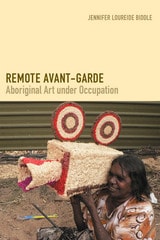
Remote Avant-Garde
Aboriginal Art under OccupationJennifer Loureide Biddle
Duke University Press, 2016
In Remote Avant-Garde Jennifer Loureide Biddle models new and emergent desert Aboriginal aesthetics as an art of survival. Since 2007, Australian government policy has targeted "remote" Australian Aboriginal communities as at crisis level of delinquency and dysfunction. Biddle asks how emergent art responds to national emergency, from the creation of locally hunted grass sculptures to biliterary acrylic witness paintings to stop-motion animation. Following directly from the unprecedented success of the Western Desert art movement, contemporary Aboriginal artists harness traditions of experimentation to revivify at-risk vernacular languages, maintain cultural heritage, and ensure place-based practice of community initiative. Biddle shows how these new art forms demand serious and sustained attention to the dense complexities of sentient perception and the radical inseparability of art from life. Taking shape on frontier boundaries and in zones of intercultural imperative, Remote Avant-Garde presents Aboriginal art "under occupation" in Australia today.
[more]
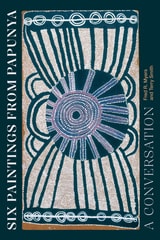
Six Paintings from Papunya
A ConversationFred R. Myers and Terry Smith
Duke University Press, 2024
In the early 1970s at Papunya, a remote settlement in the Central Australian desert, a group of Indigenous artists decided to communicate the sacred power of their traditional knowledge to the wider worlds beyond their own. Their exceptional, innovative efforts led to an outburst of creative energy across the continent that gave rise to the contemporary Aboriginal art movement that continues to this day. In their new book, anthropologist Fred Myers and art critic Terry Smith discuss six Papunya paintings featured in a 2022 exhibition in New York. They draw on several discourses that have developed around First Nations art—notably anthropology, art history, and curating as practiced by Indigenous and non-Indigenous interpreters. Their focus on six key paintings enables unusually close and intense insight into the works’ content and extraordinary innovation. Six Paintings from Papunya also includes a reflection by Indigenous curator and scholar Stephen Gilchrist, who considers the nature and significance of this rare transcultural conversation.
[more]