Results by title
16 books match the query 'Art, Latin American'
Baroque New Worlds
Representation, Transculturation, CounterconquestLois Parkinson Zamora and Monika Kaup, eds.
Duke University Press, 2010
Since Neobaroque reconstitutions necessarily reference the European Baroque, this volume begins with the reevaluation of the Baroque that evolved in Europe during the late nineteenth century and the early twentieth. Foundational essays by Friedrich Nietzsche, Heinrich Wölfflin, Walter Benjamin, Eugenio d’Ors, René Wellek, and Mario Praz recuperate and redefine the historical Baroque. Their essays lay the groundwork for the revisionist Latin American essays, many of which have not been translated into English until now. Authors including Alejo Carpentier, José Lezama Lima, Severo Sarduy, Édouard Glissant, Haroldo de Campos, and Carlos Fuentes understand the New World Baroque and Neobaroque as decolonizing strategies in Latin America and other postcolonial contexts. This collection moves between art history and literary criticism to provide a rich interdisciplinary discussion of the transcultural forms and functions of the Baroque.
Contributors. Dorothy Z. Baker, Walter Benjamin, Christine Buci-Glucksmann, José Pascual Buxó, Leo Cabranes-Grant, Haroldo de Campos, Alejo Carpentier, Irlemar Chiampi, William Childers, Gonzalo Celorio, Eugenio d’Ors, Jorge Ruedas de la Serna, Carlos Fuentes, Édouard Glissant, Roberto González Echevarría, Ángel Guido, Monika Kaup, José Lezama Lima, Friedrich Nietzsche, Mario Praz, Timothy J. Reiss, Alfonso Reyes, Severo Sarduy, Pedro Henríquez Ureña, Maarten van Delden, René Wellek, Christopher Winks, Heinrich Wölfflin, Lois Parkinson Zamora
Beyond Individualism
Portraying Collective Selfhood in Latin American Literature and ArtLois Parkinson Zamora
University of Chicago Press, 2025
Beyond Individualism examines the portrayal of collective identities over two centuries in Latin American literature and visual art. Lois Parkinson Zamora shows that many authors and artists are less concerned with singular selves than with selves-in-relation: less with individual autonomy than with communal affiliation. Their works—sometimes situated under the labels Neobaroque, magical realism, Surrealism, Expressionism, and idealism—resist the kind of psychological realism typical of European and North American novels, moving instead toward a wholly new kind of fiction.
Zamora calls this new Latin American form “archetypal realism” because its characters represent entities larger than themselves. They may embody entire communities, cultures, families, religious orders, or ideal planets. Through deft readings of collective characters in fiction by Gabriel García Márquez, Isabel Allende, Jorge Luis Borges, and more alongside the art of Diego Rivera, Remedios Varo, and Xul Solar, Zamora reveals a modernity based not on Enlightenment conceptions of selfhood but on community, collectivity, and kinship.
Channeling Knowledges
Water and Afro-Diasporic Spirits in Latinx and Caribbean WorldsRebeca L. Hey-Colón
University of Texas Press, 2023
2024 Honorable Mention, Isis Duarte Book Prize, Haiti/ Dominican Republic section, Latin American Studies Association
How water enables Caribbean and Latinx writers to reconnect to their pasts, presents, and futures.
Water is often tasked with upholding division through the imposition of geopolitical borders. We see this in the construction of the Rio Grande/Río Bravo on the US-Mexico border, as well as in how the Caribbean Sea and the Pacific Ocean are used to delineate the limits of US territory. In stark contrast to this divisive view, Afro-diasporic religions conceive of water as a place of connection; it is where spiritual entities and ancestors reside, and where knowledge awaits.
Departing from the premise that water encourages confluence through the sustainment of contradiction, Channeling Knowledges fathoms water’s depth and breadth in the work of Latinx and Caribbean creators such as Mayra Santos-Febres, Rita Indiana, Gloria Evangelina Anzaldúa, and the Border of Lights collective. Combining methodologies from literary studies, anthropology, history, and religious studies, Rebeca L. Hey-Colón’s interdisciplinary study traces how Latinx and Caribbean cultural production draws on systems of Afro-diasporic worship—Haitian Vodou, La 21 División (Dominican Vodou), and Santería/Regla de Ocha—to channel the power of water, both salty and sweet, in sustaining connections between past, present, and not-yet-imagined futures.
Collective Situations
Readings in Contemporary Latin American Art, 1995–2010Bill Kelley Jr. and Grant H. Kester, editors
Duke University Press, 2017
Contributors
Gavin Adams, Mariola V. Alvarez, Gustavo Buntinx, María Fernanda Cartagena, David Gutiérrez Castañeda, Fabian Cereijido, Paloma Checa-Gismero, Kency Cornejo, Raquel de Anda, Bill Kelley Jr., Grant H. Kester, Suzanne Lacy, Ana Longoni, Rodrigo Martí, Elize Mazadiego, Annie Mendoza, Alberto Muenala, Prerana Reddy, Maria Reyes Franco, Pilar Riaño-Alcalá, Juan Carlos Rodríguez
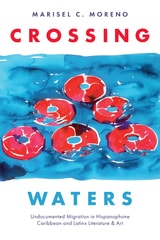
Crossing Waters
Undocumented Migration in Hispanophone Caribbean and Latinx Literature & ArtMarisel C. Moreno
University of Texas Press, 2022
2023 Honorable Mention, Isis Duarte Book Prize, Haiti/ Dominican Republic section (LASA)
2023 Winner, Gordon K. and Sybil Lewis Book Award, Caribbean Studies Association
An innovative study of the artistic representations of undocumented migration within the Hispanophone Caribbean
Debates over the undocumented migration of Latin Americans invariably focus on the southern US border, but most migrants never cross that arbitrary line. Instead, many travel, via water, among the Caribbean islands. The first study to examine literary and artistic representations of undocumented migration within the Hispanophone Caribbean, Crossing Waters relates a journey that remains silenced and largely unknown.
Analyzing works by novelists, short-story writers, poets, and visual artists replete with references to drowning and echoes of the Middle Passage, Marisel Moreno shines a spotlight on the plight that these migrants face. In some cases, Puerto Rico takes on a new role as a stepping-stone to the continental United States and the society migrants will join there. Meanwhile the land border between Haiti and the Dominican Republic, the only terrestrial border in the Hispanophone Caribbean, emerges as a complex space within this cartography of borders. And while the Border Patrol occupies US headlines, the Coast Guard occupies the nightmares of refugees.
An untold story filled with beauty, possibility, and sorrow, Crossing Waters encourages us to rethink the geography and experience of undocumented migration and the role that the Caribbean archipelago plays as a border zone.

Dimensions of the Americas
Art and Social Change in Latin America and the United StatesShifra M. Goldman
University of Chicago Press, 1994
Goldman's extensive introduction provides an up-to-date chronology of modern Latin American art; a history of "social art history" in the United States; and synopses of recent theoretical and historical writings by major scholars from Mexico, Cuba, Brazil, Peru, Uruguay, Chile, and the United States. In her essays, Goldman discusses a vast array of topics including: the influence of the Mexican muralists on the American continent; the political and artistic significance of poster art and printmaking in Cuba, Puerto Rico, and among Chicanos; the role of women artists such as Guatemalan painter Isabel Ruiz; and the increasingly important role of politics and multinational businesses in the art world of the 1970s and 1980s. She explores the reception of Latin American and Latino art in the United States, focusing on major historical exhibits as well as on exhibits by artists such as Chilean Alfredo Jaar and Argentinian Leandro Katz. Finally, she examines the significance of nationalist and ethnic themes in Latin American and Latino art.
Written in a straightforward style equally accessible to specialists, students, and general audiences, this book will become essential reading for anyone interested in understanding the importance of Latin American art and the complex dynamic shaping it.
Encounters in Video Art in Latin America
Elena Shtromberg
J. Paul Getty Trust, The, 2023
The emergence of video art in Latin America is marked by multiple points of development, across more than a dozen artistic centers, over a period of more than twenty-five years. When it was first introduced during the 1960s, video was seen as empowering: the portability of early equipment and the possibility of instant playback allowed artists to challenge and at times subvert the mainstream media. Video art in Latin America was—and still is—closely related to the desire for social change. Themes related to gender, ethnic, and racial identity as well as the consequences of social inequality and ecological disasters have been fundamental to many artists’ practices.
This compendium explores the history and current state of artistic experimentation with video throughout Latin America. Departing from the relatively small body of existing scholarship in English, much of which focuses on individual countries, this volume approaches the topic thematically, positioning video artworks from different periods and regions throughout Latin America in dialogue with each other. Organized in four broad sections—Encounters, Networks and Archives, Memory and Crisis, and Indigenous Perspectives—the book’s essays and interviews encourage readers to examine the medium of video across varied chronologies and geographies.
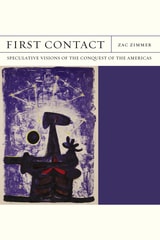
First Contact
Speculative Visions of the Conquest of the AmericasZac Zimmer
Northwestern University Press, 2025
Examining the power of speculative fiction to reimagine historical accounts of the conquest of the Americas
The historical conquest of the Americas resides at the core of all first-contact narratives, which stage colonization and resistance in the generic guise of speculative fiction. Starting from this axiom, First Contact: Speculative Visions of the Conquest of the Americas moves through a corpus of Mexican novels, Andean visual arts practices, and other cultural artifacts that have dramatized counterfactual narratives. Reimagining the early colonial period’s historiography from a south-to-north directionality while inventing parallel realities, these texts, which are concerned with limit cases, alterities, and alternative temporalities, refuse any reliance on the imperial ontologies of European expansion. Zac Zimmer examines these works to explore the slippage that exists between science fiction as the exemplary genre of the modern, colonial reality and literary speculation as an aesthetic tool that can be used to imagine other possible worlds. First Contact thus poses a foundational question: Can we understand the conquest as an originary world-historical event without eclipsing the other cosmologies that existed, and continue to exist, within the contact zone? Can we decolonize the speculative imagination itself?
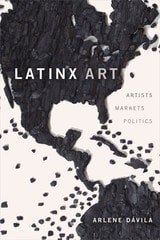
Latinx Art
Artists, Markets, and PoliticsArlene Dávila
Duke University Press, 2020
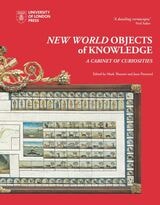
New World Objects of Knowledge
A Cabinet of CuriositiesEdited by Mark Thurner and Juan Pimentel
University of London Press, 2021
From the late fifteenth century to the present day, countless explorers, conquerors, and other agents of empire have laid siege to the New World, plundering and pilfering its most precious artifacts and treasures. Today, these natural and cultural products—which are key to conceptualizing a history of Latin America—are scattered in museums around the world.
With contributions from a renowned set of scholars, New World Objects of Knowledge delves into the hidden histories of forty of the New World’s most iconic artifacts, from the Inca mummy to Darwin’s hummingbirds. This volume is richly illustrated with photos and sketches from the archives and museums hosting these objects. Each artifact is accompanied by a comprehensive essay covering its dynamic, often global, history and itinerary. This volume will be an indispensable catalog of New World objects and how they have helped shape our modern world.
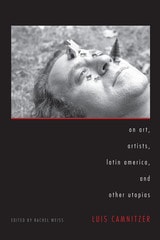
On Art, Artists, Latin America, and Other Utopias
By Luis Camnitzer
University of Texas Press, 2009
Artist, educator, curator, and critic Luis Camnitzer has been writing about contemporary art ever since he left his native Uruguay in 1964 for a fellowship in New York City. As a transplant from the "periphery" to the "center," Camnitzer has had to confront fundamental questions about making art in the Americas, asking himself and others: What is "Latin American art"? How does it relate (if it does) to art created in the centers of New York and Europe? What is the role of the artist in exile? Writing about issues of such personal, cultural, and indeed political import has long been an integral part of Camnitzer's artistic project, a way of developing an idiosyncratic art history in which to work out his own place in the picture.
This volume gathers Camnitzer's most thought-provoking essays—"texts written to make something happen," in the words of volume editor Rachel Weiss. They elaborate themes that appear persistently throughout Camnitzer's work: art world systems versus an art of commitment; artistic genealogies and how they are consecrated; and, most insistently, the possibilities for artistic agency. The theme of "translation" informs the texts in the first part of the book, with Camnitzer asking such questions as "What is Latin America, and who asks the question? Who is the artist, there and here?" The texts in the second section are more historically than geographically oriented, exploring little-known moments, works, and events that compose the legacy that Camnitzer draws on and offers to his readers.
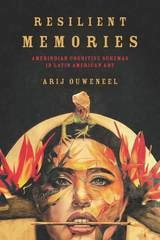
Resilient Memories
Amerindian Cognitive Schemas in Latin American ArtArij Ouweneel
The Ohio State University Press, 2018
Exploring works ranging in popularity, from Alfonso Cuarón’s Y Tu Mamá También to the paintings of Peruvian artists Claudia Coca and Jorge Miyagui, and from Mexican Zapatistas to hip-hop, Ouweneel details the ways in which artists interact with the embodied memory of the community but also assert their own place within it as crucial, furthering their audiences’ understanding of and interaction with existing cultural schemas. In this way, Ouweneel shows that memories must serve the present or they will be forgotten.
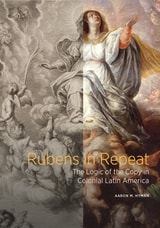
Rubens in Repeat
The Logic of the Copy in Colonial Latin AmericaAaron M. Hyman
J. Paul Getty Trust, The, 2021
Winner of the Latin American Studies Association's 2022 Best Book in Colonial Latin American Studies.
This book examines the reception in Latin America of prints designed by the Flemish artist Peter Paul Rubens, showing how colonial artists used such designs to create all manner of artworks and, in the process, forged new frameworks for artistic creativity.
Peter Paul Rubens (1577–1640) never crossed the Atlantic himself, but his impact in colonial Latin America was profound. Prints made after the Flemish artist’s designs were routinely sent from Europe to the Spanish Americas, where artists used them to make all manner of objects.
Rubens in Repeat is the first comprehensive study of this transatlantic phenomenon, despite broad recognition that it was one of the most important forces to shape the artistic landscapes of the region. Copying, particularly in colonial contexts, has traditionally held negative implications that have discouraged its serious exploration. Yet analyzing the interpretation of printed sources and recontextualizing the resulting works within period discourse and their original spaces of display allow a new critical reassessment of this broad category of art produced in colonial Latin America—art that has all too easily been dismissed as derivative and thus unworthy of sustained interest and investigation. This book takes a new approach to the paradigms of artistic authorship that emerged alongside these complex creative responses, focusing on the viceroyalties of New Spain and Peru in the seventeenth and eighteenth centuries. It argues that the use of European prints was an essential component of the very framework in which colonial artists forged ideas about what it meant to be a creator.
The Art of Solidarity
Visual and Performative Politics in Cold War Latin AmericaEdited by Jessica Stites Mor and Maria del Carmen Suescun Pozas
University of Texas Press, 2018
The Cold War claimed many lives and inflicted tremendous psychological pain throughout the Americas. The extreme polarization that resulted from pitting capitalism against communism held most of the creative and productive energy of the twentieth century captive. Many artists responded to Cold War struggles by engaging in activist art practice, using creative expression to mobilize social change. The Art of Solidarity examines how these creative practices in the arts and culture contributed to transnational solidarity campaigns that connected people across the Americas from the early twentieth century through the Cold War and its immediate aftermath.
This collection of original essays is divided into four chronological sections: cultural and artistic production in the pre–Cold War era that set the stage for transnational solidarity organizing; early artistic responses to the rise of Cold War polarization and state repression; the centrality of cultural and artistic production in social movements of solidarity; and solidarity activism beyond movements. Essay topics range widely across regions and social groups, from the work of lesbian activists in Mexico City in the late 1970s and 1980s, to the exchanges and transmissions of folk-music practices from Cuba to the United States, to the uses of Chilean arpilleras to oppose and protest the military dictatorship. While previous studies have focused on politically engaged artists or examined how artist communities have created solidarity movements, this book is one of the first to merge both perspectives.
The Inordinate Eye
New World Baroque and Latin American FictionLois Parkinson Zamora
University of Chicago Press, 2006
The New World Baroque combines indigenous, African, and European forms of expression, and, in the early decades of the twentieth century, Latin American writers began to recuperate its visual structures to construct an alternative account of modernity, using its hybrid forms for the purpose of creating a discourse of “counterconquest”—a postcolonial self-definition aimed at disrupting entrenched power structures, perceptual categories, and literary forms.
Zamora engages this process, discussing a wide range of visual forms—Baroque façades and altarpieces, portraits of saints and martyrs (including the self-portraits of Frida Kahlo), murals from indigenous artisans to Diego Rivera—to elucidate works of fiction by Borges, Carpentier, Lezama Lima, Sarduy, Garro, García Márquez, and Galeano, and also to establish a critical perspective external to their work. Because visual media are “other” to the verbal economy of modern fiction, they serve these writers (and their readers) as oblique means by which to position their fiction culturally, politically, and aesthetically.
The first study of its kind in scope and ambition, The Inordinate Eye departs radically from most studies of literature by demonstrating how transcultural conceptions of the visual image have conditioned present ways of seeing and reading in Latin America.
Thirteen Ways of Looking at Latino Art
Ilan Stavans, Jorge J. E. Gracia
Duke University Press, 2014