Results by title
18 books match the query 'Art patronage'

African Royal Court Art
Michèle Coquet
University of Chicago Press, 1998
More than ornamentation, royal objects embodied the strength and status of African rulers. The gold-plated stools of the Ashanti, the delicately carved ivory bracelets of the Edo-these objects were meant not simply to adorn but to affirm and enhance the power and prestige of the wearer. Unlike the abstract style frequently seen in African ritual art, realism became manifest in courtly arts. Realism directly linked the symbolic value of the object-a portrait or relief-with the physical person of the king. The contours of the monarch's face, his political and military exploits rendered on palace walls, became visual histories, the work of art in essence corroborating the ruler's sovereign might.
Richly illustrated and wonderfully detailed, Coquet's influential volume offers both a splendid visual presentation and an authoritative analysis of African royal arts.
"[This] beautiful and exciting book emphasizes the skillful court art of the Benin, Dahomey, and the Kongo. A very interesting and unusual approach to the art of the continent that has been too easily situated 'outside of history.'"—Le Figaro

Andrea del Castagno and His Patrons
John R. Spencer
Duke University Press, 1991
Through careful and detailed archival research, Spencer creates a fascinating portrait of Castagno’s patronage as a web, at the center of which was Cosimo de’ Medici, who constituted the focal point of a network of business partnerships, real estate transactions, loans, and special privileges in which the artist’s patrons were enmeshed. The author constructs partial biographies of unknown and lesser-known patrons to show the relation of these patrons to each other and to the artist, demonstrating the degree to which artistic production in Renaissance Italy was tied to politics and economics.
Spencer discusses each of Castagno’s extant and some of his lost paintings, dating the works with greater accuracy than ever before. His understanding of the patrons and of the motivations behind the commissions makes it possible for Spencer to bring new interpretations to many of these works. This book offers a deeper understanding of a particular artist’s life and work while also exploring the larger question of the unique relationship between private patrons and independent artists in the Italian Renaissance.
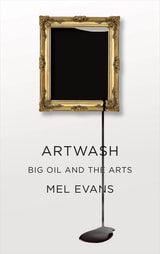
Artwash
Big Oil and the ArtsMel Evans
Pluto Press, 2015
Reflecting on the role and function of art galleries, Artwash considers how the association with oil money might impede these institutions in their cultural endeavors. Outside the gallery space, Mel Evans examines how corporate sponsorship of the arts can obscure the strategies of corporate executives to maintain brand identity and promote their public image through cultural philanthropy. Ultimately, Evans sounds a note of hope, presenting ways artists themselves have challenged the ethics of contemporary art galleries and examining how cultural institutions might change.
Bureaucratizing the Muse
Public Funds and the Cultural WorkerSteven C. Dubin
University of Chicago Press, 1987
Bureaucratizing the Muse is a study of the Chicago AIR program. By its very nature art is a nonrational process, even at times antirational, and the idea of organizing artists in this kind of work environment was an unusual one. Steven C. Dubin's account is a fascinating story of the tensions between struggling artists who need a paycheck but fear the compromise of their art and bureaucrats who need to produce measurable results.
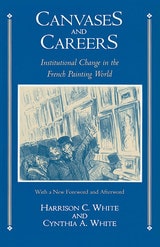
Canvases and Careers
Institutional Change in the French Painting WorldHarrison C. White and Cynthia A. White
University of Chicago Press, 1993
Originally published in 1965, this ground-breaking work is a classic piece of empirical research in the sociology of art. In this edition, Harrison C. White's new Foreword compares the marketing approaches of two contemporary painters, while Cynthia A. White's new Afterword reviews recent scholarship in the field.
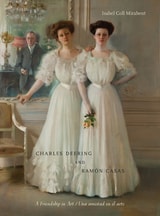
Charles Deering and Ramón Casas / Charles Deering y Ramón Casas
A Friendship in Art / Una amistad en el arteIsabel Coll Mirabent
Northwestern University Press, 2012
This lavishly illustrated, bilingual art book presents drawings by Ramón Casas in the Charles Deering McCormick Library of Special Collections at the Northwestern University Library and oil paintings by Casas from private collections and the Art Institute of Chicago.
Charles Deering and Ramón Casas follows the development and dramatic dissolution of a three-way friendship that connected the Spanish painter Ramón Casas (1866–1932); the Chicago industrialist Charles Deering (1852–1927), who was a collector and admirer of Casas’s work as well as a patron of Northwestern University; and the Spanish artist Miguel Utrillo (1862–1934), Casas’s lifelong friend and the father of the French painter Maurice Utrillo.
Casas introduced Deering to Sitges, a beach town near Barcelona, Spain, where the latter created a palatial estate with a museum to house his art collection. Miguel Utrillo served as director of the museum. The text explores the treasures housed at Maricel and what happened among the three men that led Casas to abandon Utrillo and Deering to depart Spain, taking his art collection with him.

Culture Incorporated
Museums, Artists, And Corporate SponsorshipsMark W. Rectanus
University of Minnesota Press, 2002
An exposé of the hidden costs of corporate funding of the arts
Photographer Annie Leibowitz collaborates with American Express on a portrait exhibition. Absolut Vodka engages artists for their advertisements. Philip Morris mounts an "Arts Against Hunger" campaign in partnership with prominent museums. Is it art or PR, and where is the line that separates the artistic from the corporate? According to Mark Rectanus, that line has blurred. These mergers of art, business, and museums, he argues, are examples of the worldwide privatization of cultural funding.
In Culture Incorporated, Rectanus calls for full disclosure of corporate involvement in cultural events and examines how corporations, art institutions, and foundations are reshaping the cultural terrain. In turn, he also shows how that ground is destabilized by artists subverting these same institutions to create a heightened awareness of critical alternatives. Rectanus exposes how sponsorship helps maintain social legitimation in a time when corporations are the target of significant criticism. He provides wide-ranging examples of artists and institutions grappling with corporate sponsorship, including artists’s collaboration with sponsors, corporate sponsorship of museum exhibitions, festivals, and rock concerts, and cybersponsoring. Throughout, Rectanus analyzes the convergence of cultural institutions with global corporate politics and its influence on our culture and our communities.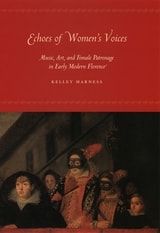
Echoes of Women's Voices
Music, Art, and Female Patronage in Early Modern FlorenceKelley Harness
University of Chicago Press, 2006
Through commissions, patrons sought to promote a vision of the world and their place in it. The unique social norms, laws, educational backgrounds, and life experiences of female patrons meant the expression of a worldview that differed significantly from that of their male counterparts. Joining exceptional archival research with telling analysis of significant examples of music, art, and drama, Kelley Harness challenges the prevailing view that Florence saw a political and artistic decline during this period. She argues convincingly that the female domination of these years brought forth artistic patronage that was both continuous and well-conceived.

Edith
The Rogue Rockefeller McCormickAndrea Friederici Ross
Southern Illinois University Press, 2021
WINNER, 2021 Chicago Writers Association Book of the Year in Traditional Nonfiction!
Chicago’s quirky patron saint
This thrilling story of a daughter of America’s foremost industrialist, John D. Rockefeller, is complete with sex, money, mental illness, and opera divas—and a woman who strove for the independence to make her own choices. Rejecting the limited gender role carved out for her by her father and society, Edith Rockefeller McCormick forged her own path, despite pushback from her family and ultimate financial ruin.
Young Edith and her siblings had access to the best educators in the world, but the girls were not taught how to handle the family money; that responsibility was reserved for their younger brother. A parsimonious upbringing did little to prepare Edith for life after marriage to Harold McCormick, son of the Reaper King Cyrus McCormick. The rich young couple spent lavishly. They purchased treasures like the jewels of Catherine the Great, entertained in grand style in a Chicago mansion, and contributed to the city’s cultural uplift, founding the Chicago Grand Opera. They supported free health care for the poor, founding and supporting the John R. McCormick Memorial Institute for Infectious Diseases. Later, Edith donated land for what would become Brookfield Zoo.
Though she lived a seemingly enviable life, Edith’s disposition was ill-suited for the mores of the time. Societal and personal issues—not least of which were the deaths of two of her five children—caused Edith to experience phobias and panic attacks. Dissatisfied with rest cures, she ignored her father’s expectations, moved her family to Zurich, and embarked on a journey of education and self-examination. Edith pursued analysis with then-unknown Carl Jung. Her generosity of spirit led Edith to become Jung’s leading patron. She also supported up-and-coming musicians, artists, and writers, including James Joyce as he wrote Ulysses.
While Edith became a Jungian analyst, her husband, Harold, pursued an affair with an opera star. After returning to Chicago and divorcing Harold, Edith continued to deplete her fortune. She hoped to create something of lasting value, such as a utopian community and affordable homes for the middle class. Edith’s goals caused further difficulties in her relationship with her father and are why he and her brother cut her off from the family funds even after the 1929 stock market crash ruined her. Edith’s death from breast cancer three years later was mourned by thousands of Chicagoans.
Respectful and truthful, Andrea Friederici Ross presents the full arc of this amazing woman’s life and expertly helps readers understand Edith’s generosity, intelligence, and fierce determination to change the world
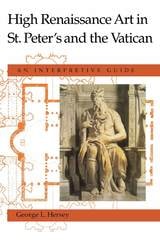
High Renaissance Art in St. Peter's and the Vatican
An Interpretive GuideGeorge L. Hersey
University of Chicago Press, 1993
Before starting the tour of individual works, Hersey describes how the treacherously shifting political and religious alliances of sixteenth-century Italy, France, and Spain played themselves out in the Eternal City. He offers vivid accounts of the lives and personalities of four popes, each a great patron of art and architecture: Julius II, Leo X, Clement VII, and Paul III. He also tells of the complicated rebuilding and expanding of St. Peter's, a project in which Bramante, Raphael, and Michelangelo all took part.
Having set the historical scene, Hersey then explores the Vatican's magnificent Renaissance art and architecture. In separate chapters, organized spatially, he leads the reader through the Cortile del Belvedere and Vatican Museums, with their impressive holdings of statuary and paintings; the richly decorated Stanze and Logge of Raphael; and Michelangelo's Last Judgment and newly cleaned Sistine Chapel ceiling. A fascinating final chapter entitled "The Tragedy of the Tomb" recounts the vicissitudes of Michelangelo's projected funeral monument to Julius II.
Hersey is never content to simply identify the subject of a painting or sculpture. He gives us the story behind the works, telling us what their particular themes signified at the time for the artist, the papacy, and the Church. He also indicates how the art was received by contemporaries and viewed by later generations.
Generously illustrated and complete with a useful chronology, High Renaissance Art in St. Peter's and the Vatican is a valuable reference for any traveler to Rome or lover of Italian art who has yearned for a single-volume work more informative and stimulating than ordinary guidebooks. At the same time, Hersey's many anecdotes and intriguing comparisons with works outside the Vatican will provide new insights even for specialists.
Literary and Artistic Patronage in Ancient Rome
Edited by Barbara K. Gold
University of Texas Press, 1982
Virgil, Horace, Catullus, Propertius—these are just a few of the poets whose work we would be without today were it not for the wealthy and powerful patrons upon whose support the Roman cultural establishment so greatly depended. Who were these patrons? What benefits did they give, to whom, and why? What effect did the support of such men as Maecenas and Pompey have on the lives and work of those who looked to them for aid?
These questions and others are addressed in this volume, which explores all the important aspects of patronage—a topic crucial to the study of literature and art from Homer to the present day. The subject is approached from various vantage points: literary, artistic, historical. The essayists reach conclusions that dispel the many misconceptions about Roman patronage derived from seventeenth- and eighteenth-century models in England and Europe.
An understanding of the workings of patronage is indispensable in helping us see how the Roman cultural establishment functioned in the four centuries of its flourishing and also in helping us read and enjoy specific poems and works of art. A book for all concerned with classical literature, art, and social history, Literary and Artistic Patronage in Ancient Rome not only deepens our understanding of the ancient world but also suggests important avenues for future exploration.
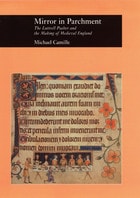
Mirror in Parchment
The Luttrell Psalter and the Making of Medieval EnglandMichael Camille
University of Chicago Press, 1998
The richly illuminated Luttrell Psalter was created for the English nobleman Sir Geoffrey Luttrell (1276-1345). Inexpensive mechanical illustration has since disseminated the book's images to a much wider audience; hence the Psalter's representations of manorial life have come to profoundly shape our modern idea of what medieval English people, high and low, looked like at work and at play. Alongside such supposedly truthful representations, the Psalter presents myriad images of fantastic monsters and beasts. These patently false images have largely been disparaged or ignored by modern historians and art historians alike, for they challenge the credibility of those pictures in the Luttrell Psalter that we wish to see as real.
In the conviction that medieval images were not generally intended to reflect daily life but rather to shape a new reality, Michael Camille analyzes the Psalter's famous pictures as representations of the world, imagined and real, of its original patron. Addressed are late medieval chivalric ideals, physical sites of power, and the boundaries of Sir Geoffrey's imagined community, wherein agricultural laborers and fabulous monsters play a similar ideological role. The Luttrell Psalter thus emerges as a complex social document of the world as its patron hoped and feared it might be.
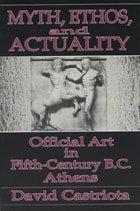
Myth, Ethos, and Actuality
Official Art in Fifth Century B.C. AthensDavid Castriota
University of Wisconsin Press, 1992
Using material remains, as well as the evidence of contemporary Greek history, rhetoric, and poetry, David Castriota interprets the Athenian monuments as vehicles of an official ideology intended to celebrate and justify the present in terms of the past.
Castriota focuses on the strategy of ethical antithesis that asserted Greek moral superiority over the “barbaric” Persians, whose invasion had been repelled a generation earlier. He examines how, in major public programs of painting and sculpture, the leading artists of the period recast the Persians in the guise of wild and impious mythic antagonists to associate them with the ethical flaws or weaknesses commonly ascribed to women, animals, and foreigners. The Athenians, in contrast, were compared to mythic protagonists representing the excellence and triumph of Hellenic culture.
Castriota’s study is innovative in emphasizing the ethical implication of mythic precedents, which required substantial alterations to render them more effective as archetypes for the defense of Greek culture against a foreign, morally inferior enemy. The book looks in new ways at how the patrons and planners sought to manipulate viewer response through the selective presentation or repackaging of mythic traditions.

People of the Wheat
Culture and Cultivation in North TexasRebecca Sharpless
University of Texas Press, 2026
How wheat growing, milling, and baking shaped the people and culture of North Texas.
In the national imaginary, America’s amber fields of grain lie in the country’s center, but for more than a century, they also grew across one pocket of the South: North Texas. From the 1840s to the 1970s, the state's agriculture, dominated in lore by cotton in the east and livestock in the open range, was heavily invested in the cultivation, processing, sale, and consumption of wheat. Recalling a forgotten history, Rebecca Sharpless shows how the rhythms of the wheat harvest—and the evolution of the milling, distribution, and baking industries—governed daily life in what is now known as the Dallas–Fort Worth Metroplex.
In the 1840s, Anglo settlers discovered that grain flourished in North Texas and quickly built an economy that included wheat in fields, mills, and kitchens. After the Civil War, hand labor gave way to mechanization, greatly increasing production. Commercial bakeries churned out novel confections, and big cities were built on the bounty of the countryside. In the second half of the twentieth century, as production moved northward, industrial milling and baking declined, but home baking boomed, flour advertising supported regional music, and wheat fortunes financed the region’s cultural life. Sharpless covers 150 years of wheat’s very human history and shows how the labor that cultivated it, the sustenance it provided, and the prosperity it generated left an indelible mark on the people and institutions of Texas.
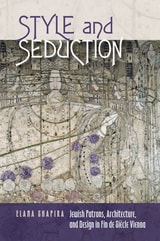
Style and Seduction
Jewish Patrons, Architecture, and Design in Fin de Siècle ViennaElana Shapira
Brandeis University Press, 2016
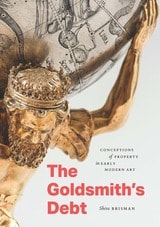
The Goldsmith's Debt
Conceptions of Property in Early Modern ArtShira Brisman
University of Chicago Press, 2026
In the sixteenth century, German goldsmiths played a unique role in articulating property claims and social values. These artisans shaped precious metals into visible expressions of domination, subordination, and obligation. The objects they crafted played a major role in the practices of exchange and inheritance that were reconfiguring a tumultuous economic landscape. Cities commissioned goldsmiths to transform revenue into goblets that could be given as diplomatic gifts or reconverted into currency in times of war, and courts used serving implements as promises of credit.
With The Goldsmith’s Debt, art historian Shira Brisman offers the first book-length study of the Nuremberg goldsmith Christoph Jamnitzer (1563–1618), who created elaborate gilded silver drinking cups that he crafted into unexpected forms, with designs ranging from racialized heads to mining scenes. Considering how works of art can shape a social order, Brisman explores what Jamnitzer’s etchings and goblets reveal about how goldsmiths shared ideas and how their patrons used commissioned works to legitimize their claims over land and the rights of others. Drawing on a range of textual and material evidence—including commentaries on Roman and customary laws, wills and civic statutes, printed designs, and firsthand study of lidded cups in dozens of major European institutions—this unprecedented study places the goldsmith at the heart of the era’s arguments about how people and lands should be subjugated. Brisman reveals the insidious side of these objects that were often used to advance socially conservative agendas, and she presents radical proposals for addressing inequity in the world of ornament prints.
The School of Prague
Thomas DaCosta Kaufmann
University of Chicago Press, 1988
Understanding the Arts and Creative Sector in the United States
Cherbo, Joni Maya
Rutgers University Press, 2008
Illuminating key issues and reflecting the rapid growth of the field of arts and cultural policy, this book will be of interest to students at both the undergraduate and graduate levels, to arts educators and management professionals, government agency and foundation officials, and researchers and academics in the cultural policy field.