Results by title

12 books match the query 'Ashes'
cover of Ashes and Diamonds

Ashes and Diamonds

Jerzy Andrzejewski

Northwestern University Press, 1997
Originally published in Poland in 1948, and acclaimed as one of the finest postwar Polish novels, Ashes and Diamonds takes place in the spring of 1945, as the nation is in the throes of its transformation to People' Poland. Communists, socialists, and nationalists; thieves and black marketeers; servants and fading aristocrats; veteran terrorists and bands of murderous children bewitched by the lure of crime and adventure—all of these converge on a provincial town's chief hotel, a microcosm of an uprooted world.
[more]
cover of Ashes of Immortality: Widow-Burning in India

Ashes of Immortality

Widow-Burning in India

Catherine Weinberger-Thomas

University of Chicago Press, 1999

"At last, she arrives at the fatal end of the plank . . . and, with her hands crossed over her chest, falls straight downward, suspended for a moment in the air before being devoured by the burning pit that awaits her. . . ." This grisly 1829 account by Pierre Dubois demonstrates the usual European response to the Hindu custom of satis sacrificing themselves on the funeral pyres of their husbands—horror and revulsion. Yet to those of the Hindu faith, not least the satis themselves, this act signals the sati's sacredness and spiritual power.

Ashes of Immortality attempts to see the satis through Hindu eyes, providing an extensive experiential and psychoanalytic account of ritual self-sacrifice and self-mutilation in South Asia. Based on fifteen years of fieldwork in northern India, where the state-banned practice of sati reemerged in the 1970s, as well as extensive textual analysis, Weinberger-Thomas constructs a radically new interpretation of satis. She shows that their self-immolation transcends gender, caste and class, region and history, representing for the Hindus a path to immortality.
[more]
cover of Ashes of Izalco

Ashes of Izalco

Claribel Alegría and Darwin J. Flakoll

Northwestern University Press, 1995
Written in two voices, Ashes of Izalco is a collaborative novel by Claribel Alegría and Darwin Flakoll, a love story set against the events of 1932, when thirty thousand Indians and peasants were massacred in Izalco, El Salvador. Ashes of Izalco brings together a Salvadoran woman and an American man who struggle over issues of love, loyalty, and sociopolitical injustice.
[more]
cover of Ashes of the Mind: War and Memory in Northern Literature, 1865-1900

Ashes of the Mind

War and Memory in Northern Literature, 1865-1900

Martin Griffin

University of Massachusetts Press, 2009

The memory of the American Civil War took many forms over the decades after the conflict ended: personal, social, religious, and political. It was also remembered and commemorated by poets and fiction writers who understood that the war had bequeathed both historical and symbolic meanings to American culture. Although the defeated Confederacy became best known for producing a literature of nostalgia and an ideological defensiveness intended to protect the South's own version of history, authors loyal to the Union also confronted the question of what the memory of the war signified, and how to shape the literary response to that individual and collective experience.

In Ashes of the Mind, Martin Griffin examines the work of five Northerners—three poets and two fiction writers—who over a period of four decades tried to understand and articulate the landscape of memory in postwar America, and in particular in that part of the nation that could, with most justification, claim the victory of its beliefs and values. The book begins with an examination of the rhetorical grandeur of James Russell Lowell's Harvard Commemoration Ode, ranges across Herman Melville's ironic war poetry, Henry James's novel of North-South reconciliation, The Bostonians, and Ambrose Bierce's short stories, and ends with the bitter meditation on race and nation presented by Paul Laurence Dunbar's elegy “Robert Gould Shaw.” Together these texts reveal how a group of representative Northern writers were haunted in different ways by the memory of the 
conflict and its fraught legacy.

Griffin traces a concern with individual and community loss, ambivalence toward victory, and a changing politics of commemoration in the writings of Lowell, Melville, James, Bierce, and Dunbar. What links these very different authors is a Northern memory of the war that became more complex and more compromised as the century went on, often replacing a sense of justification and achievement with a perception of irony and failed promise.

[more]
cover of Blooming through the Ashes: An International Anthology on Violence and the Human Spirit

Blooming through the Ashes

An International Anthology on Violence and the Human Spirit

Edited by Clifford Chanin and Aili McConnon

Rutgers University Press, 2008

The twentieth century is frequently characterized in terms of its unprecedented levels of bloodshed. More human beings were killed or allowed to die by human cause than ever before in history. The impact of the century’s carnage does not end with the lives that were taken; the atrocities continue to take their toll on those who survived, on those who bore witness, and on succeeding generations.

Blooming through the Ashes features over sixty writings about this historic violence and its aftermath in a global anthology that brings together the work of Nobel laureates Seamus Heaney, Toni Morrison, Czeslaw Milosz, Wole Soyinka, Elie Wiesel, Imre Kertesz, Alexandr Solzhenitsyn, Eugenio Montale, and Pablo Neruda. In non-fiction and fiction, these writers and others reflect on the litany of man-made violence that marred the twentieth century and that shadows the twenty-first, including the Holocaust, the Gulag, the Chinese Cultural Revolution, apartheid, repression in Latin America, genocides in Rwanda, Cambodia, and the attacks of 9/11.

The texts are arranged thematically, rather than by event, in order to highlight the shared themes of memory expressed across culture and geography. Starting with visceral reactions to a violent event, chapters proceed through recognitions of loss, and move into statements of public remembrance through which future generations attempt to understand the impact of past violence.
[more]
cover of Cloak of Ashes: The Women of Beowulf Book Three

Cloak of Ashes

The Women of Beowulf Book Three

Donnita L. Rogers

Arizona Center for Medieval and Renaissance Studies, 2000
[more]
cover of Fire under the Ashes: An Atlantic History of the English Revolution

Fire under the Ashes

An Atlantic History of the English Revolution

John Donoghue

University of Chicago Press, 2013

In Fire under the Ashes, John Donoghue recovers the lasting significance of the radical ideas of the English Revolution, exploring their wider Atlantic history through a case study of Coleman Street Ward, London. Located in the crowded center of seventeenth-century London, Coleman Street Ward was a hotbed of political, social, and religious unrest. There among diverse and contentious groups of puritans a tumultuous republican underground evolved as the political means to a more perfect Protestant Reformation. But while Coleman Street has long been recognized as a crucial location of the English Revolution, its importance to events across the Atlantic has yet to be explored.

Prominent merchant revolutionaries from Coleman Street led England’s imperial expansion by investing deeply in the slave trade and projects of colonial conquest. Opposing them were other Coleman Street puritans, who having crossed and re-crossed the ocean as colonists and revolutionaries, circulated new ideas about the liberty of body and soul that they defined against England’s emergent, political economy of empire. These transatlantic radicals promoted social justice as the cornerstone of a republican liberty opposed to both political tyranny and economic slavery—and their efforts, Donoghue argues, provided the ideological foundations for the abolitionist movement that swept the Atlantic more than a century later.

[more]
cover of From the Ashes of Disgrace

From the Ashes of Disgrace

Speier Hans

University of Massachusetts Press, 0
[more]
cover of From the Ashes of Sobibor: A Story of Survival

From the Ashes of Sobibor

A Story of Survival

Thomas Toivi Blatt, Foreward by Christopher R. Browning

Northwestern University Press, 1997

From the Ashes of Sobibor: A Story of Survival is an invaluable, firsthand account of a child's survival in a Nazi concentration camp in Poland during World War II. When the Germans invaded Poland on September 1, 1939, Thomas Toivi Blatt was twelve years old. He and his family lived in the largely Jewish town of Izbica in the Lublin district of Poland—the district that was to become the site of three major Nazi extermination camps: Belzec, Sobibor, and Majdanek. Blatt tells of the chilling events that led to his deportation to Sobibor, and of the six months he spent there before taking part in the now-famous uprising and mass breakout. Blatt's tale of escape, and of the five harrowing years spent eluding both the Nazis and anti-Semitic Polish nationalists, is gripping account of resilience and survival.

This edition also includes the author's interview with Karl Frenzel, a former Nazi commandant at Sobibor.
[more]
cover of Gathering the Ashes

Gathering the Ashes

Amritlal Nagar

Seagull Books, 2016

Most discussions of India’s First War of Independence from British colonial rule in 1857 have centered on the role played by the Mughal emperor, the nawab of Awadh, and other sundry members of mostly urban nobility. What has remained missing from this coverage is how ordinary people across the countryside experienced the rebellion and how they passed their stories down to the following generations. In 1957, eminent Hindi writer Amritlal Nagar set out to correct this, travelling through villages and towns scattered across India’s heartland and painstakingly gathering reminiscences and popular ballads about the revolt—its celebrated and unsung heroes, its survivors and martyrs, and where and how various battles were fought. Aging courtesans, bedridden octogenarians, and nameless singers poured their hearts out to Nagar, and the substantial volume he put together made it clear, even to the lay reader, that nothing can stop the spread of a revolution whose time has come.

Translated from Hindi for the first time by Mrinal Pande, Gathering the Ashes is a poignant look into history, enriched by Pande’s useful afterword and a reminiscence by Nagar’s son.
[more]
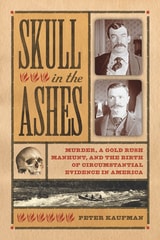
cover of Skull in the Ashes: Murder, a Gold Rush Manhunt, and the Birth of Circumstantial Evidence in America

Skull in the Ashes

Murder, a Gold Rush Manhunt, and the Birth of Circumstantial Evidence in America

Peter Kaufman

University of Iowa Press, 2013
On a February night in 1897, the general store in Walford, Iowa, burned down. The next morning, townspeople discovered a charred corpse in the ashes. Everyone knew that the store’s owner, Frank Novak, had been sleeping in the store as a safeguard against burglars. Now all that remained were a few of his personal items scattered under the body.
At first, it seemed to be a tragic accident mitigated just a bit by Novak’s foresight in buying generous life insurance policies to provide for his family. But soon an investigation by the ambitious new county attorney, M. J. Tobin, turned up evidence suggesting that the dead man might actually be Edward Murray, a hard-drinking local laborer. Relying upon newly developed forensic techniques, Tobin gradually built a case implicating Novak in Murray’s murder. But all he had was circumstantial evidence, and up to that time few murder convictions had been won on that basis in the United States.
Others besides Tobin were interested in the case, including several companies that had sold Novak life insurance policies. One agency hired detectives to track down every clue regarding the suspect’s whereabouts. Newspapers across the country ran sensational headlines with melodramatic coverage of the manhunt. Veteran detective Red Perrin’s determined trek over icy mountain paths and dangerous river rapids to the raw Yukon Territory town of Dawson City, which was booming with prospectors as the Klondike gold rush began, made for especially good copy.
Skull in the Ashes traces the actions of Novak, Tobin, and Perrin, showing how the Walford fire played a pivotal role in each man’s life. Along the way, author Peter Kaufman gives readers a fascinating glimpse into forensics, detective work, trial strategies, and prison life at the close of the nineteenth century. As much as it is a chilling tale of a cold-blooded murder and its aftermath, this is also the story of three ambitious young men and their struggle to succeed in a rapidly modernizing world.
[more]
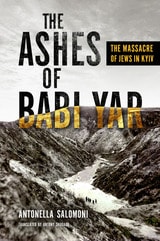
cover of The Ashes of Babi Yar: The Massacre of Jews in Kyiv

The Ashes of Babi Yar

The Massacre of Jews in Kyiv

Antonella Salomoni, Translated by Antony Shugaar

University of Wisconsin Press, 2025

On September 29 and 30, 1941, in one of the largest mass murders of the Holocaust, German troops massacred 33,771 Jews at the vast gorge located near Kyiv known as Babi Yar (Babij Jar). During and after the war, the territory was modified, redesigned, and converted in order to remove the physical signs of genocide, including the exhumation and incineration of thousands of bodies. In large part this erasure was the result of policies implemented by the Soviet regime, which refused to accept that there had been a “special war” against Jews. 

Beginning with an explication of the mass murders and their aftermath, Antonella Salomoni examines the afterlife of a massacre whose physical remains were intentionally hidden. She focuses especially on how the arts—prose, poetry, music, architecture, and painting—shaped a collective narrative that, despite repression, played a crucial role in preserving the history and memory of the genocide.
[more]