Results by title
1272 books match the query 'Asia' and 110 start with a
A Certain Age
Colonial Jakarta through the Memories of Its IntellectualsRudolf Mrázek
Duke University Press, 2010
When Mrázek began his interviews, he expected to discuss phenomena such as the transition from colonialism to postcolonialism. His interviewees, however, wanted to share more personal recollections. Mrázek illuminates their stories of the past with evocative depictions of their late-twentieth-century surroundings. He brings to bear insights from thinkers including Walter Benjamin, Bertold Brecht, Le Corbusier, and Marcel Proust, and from his youth in Prague, another metropolis with its own experience of passages and revolution. Architectural and spatial tropes organize the book. Thresholds, windowsills, and sidewalks come to seem more apt as descriptors of historical transitions than colonial and postcolonial, or modern and postmodern. Asphalt roads, homes, classrooms, fences, and windows organize movement, perceptions, and selves in relation to others. A Certain Age is a portal into questions about how the past informs the present and how historical accounts are inevitably partial and incomplete.
A Chinese Rebel beyond the Great Wall
The Cultural Revolution and Ethnic Pogrom in Inner MongoliaTJ Cheng, Uradyn E. Bulag, and Mark Selden
University of Chicago Press, 2023
During the Great Leap Forward, as hundreds of thousands of Chinese famine refugees headed to Inner Mongolia, Cheng Tiejun arrived in 1959 as a middle school student. In 1966, when the PRC plunged into the Cultural Revolution, he joined the Red Guards just as Inner Mongolia’s longtime leader, Ulanhu, was purged. With the military in control, and with deepening conflict with the Soviet Union and its ally Mongolia on the border, Mongols were accused of being nationalists and traitors. A pogrom followed, taking more than 16,000 Mongol lives, the heaviest toll anywhere in China.
At the heart of this book are Cheng’s first-person recollections of his experiences as a rebel. These are complemented by a close examination of the documentary record of the era from the three coauthors. The final chapter offers a theoretical framework for Inner Mongolia’s repression. The repression’s goal, the authors show, was not to destroy the Mongols as a people or as a culture—it was not a genocide. It was, however, a “politicide,” an attempt to break the will of a nationality to exercise leadership of their autonomous region. This unusual narrative provides urgently needed primary source material to understand the events of the Cultural Revolution, while also offering a novel explanation of contemporary Chinese minority politics involving the Uyghurs, Tibetans, and Mongols.
A Christian Samurai
William J. Farge
Catholic University of America Press, 2016
A County of Culture
Twentieth-Century China Seen from the Village Schools of Zouping, ShandongStig Thogersen
University of Michigan Press, 2002
A County of Culture demonstrates how changes in educational policies have exerted considerable influence on social life in Zouping, from the macro level of nation building and state formation to the micro level of individual careers. It also shows that the rural population has been far from being a passive object of reform, and that it has been extremely difficult for educational reformers to achieve their goals as a result of the social, economic, and mental realities of China's villages. The fate of educational reforms has thus been decided in the tension between two poles: the visions of educational planners and reformers on the one hand, and the expectations of the rural population on the other.
Not only pertinent to specialists of Chinese education, this book will also be useful to anyone interested in state-society relations in modern China and to students of comparative education and rural development.
Stig Thøgersen is Associate Professor of Chinese Language and Society, University of Aarhus.
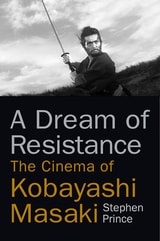
A Dream of Resistance
The Cinema of Kobayashi MasakiPrince, Stephen
Rutgers University Press, 2017
A Dream of Resistance is the first book in English to explore Kobayashi’s entire career, from the early films he made at Shochiku studio, to internationally-acclaimed masterpieces like The Human Condition, Harakiri, and Samurai Rebellion, and on to his final work for NHK Television. Closely examining how Kobayashi’s upbringing and intellectual history shaped the values of his work, Stephen Prince illuminates the political and religious dimensions of Kobayashi’s films, interpreting them as a prayer for peace in troubled times. Prince draws from a wealth of rare archives, including previously untranslated interviews, material that Kobayashi wrote about his films, and even the young director’s wartime diary. The result is an unprecedented portrait of this singular filmmaker.
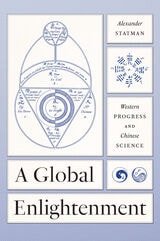
A Global Enlightenment
Western Progress and Chinese ScienceAlexander Statman
University of Chicago Press, 2023
The Enlightenment gave rise not only to new ideas of progress but consequential debates about them. Did distant times and places have anything to teach the here and now? Voltaire could believe that they did; Hegel was convinced that they did not. Early philosophes praised Chinese philosophy as an enduring model of reason. Later philosophes rejected it as stuck in the past. Seeking to vindicate ancient knowledge, a group of French statesmen and savants began a conversation with the last great scholar of the Jesuit mission to China. Together, they drew from Chinese learning to challenge the emerging concept of Western advancement.
A Global Enlightenment traces this overlooked exchange between China and the West to make compelling claims about the history of progress, notions of European exceptionalism, and European engagement with Chinese science. To tell this story, Alexander Statman focuses on a group of thinkers he terms “orphans of the Enlightenment,” intellectuals who embraced many of their contemporaries’ ideals but valued ancient wisdom. They studied astronomical records, gas balloons, electrical machines, yin-yang cosmology, animal magnetism, and Daoist medicine. And their inquiries helped establish a new approach to the global history of science.
Rich with new archival research and fascinating anecdotes, A Global Enlightenment deconstructs two common assumptions about the early to late modern period. Though historians have held that the idea of a mysterious and inscrutable East was inherent in Enlightenment progress theory, Statman argues that it was the orphans of the Enlightenment who put it there: by identifying China as a source of ancient wisdom, they turned it into a foil for scientific development. But while historical consensus supposes that non-Western ideas were banished from European thought over the course of the Enlightenment, Statman finds that Europeans became more interested in Chinese science—as a precursor, then as an antithesis, and finally as an alternative to modernity.
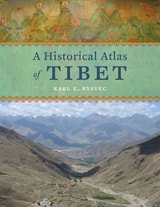
A Historical Atlas of Tibet
Karl E. Ryavec
University of Chicago Press, 2015
Cradled among the world’s highest mountains—and sheltering one of its most devout religious communities—Tibet is, for many of us, an ultimate destination, a place that touches the heavens, a place only barely in our world, at its very end. In recent decades Western fascination with Tibet has soared, from the rise of Tibetan studies in academia to the rock concerts aimed at supporting its independence to the simple fact that most of us—far from any base camp—know exactly what a sherpa is. And yet any sustained look into Tibet as a place, any attempt to find one’s way around its high plateaus and through its deep history, will yield this surprising fact: we have barely mapped it. With this atlas, Karl E. Ryavec rights that wrong, sweeping aside the image of Tibet as Shangri-La and putting in its place a comprehensive vision of the region as it really is, a civilization in its own right. And the results are absolutely stunning.
The product of twelve years of research and eight more of mapmaking, A Historical Atlas of Tibet documents cultural and religious sites across the Tibetan Plateau and its bordering regions from the Paleolithic and Neolithic times all the way up to today. It ranges through the five main periods in Tibetan history, offering introductory maps of each followed by details of western, central, and eastern regions. It beautifully visualizes the history of Tibetan Buddhism, tracing its spread throughout Asia, with thousands of temples mapped, both within Tibet and across North China and Mongolia, all the way to Beijing. There are maps of major polities and their territorial administrations, as well as of the kingdoms of Guge and Purang in western Tibet, and of Derge and Nangchen in Kham. There are town plans of Lhasa and maps that focus on history and language, on population, natural resources, and contemporary politics.
Extraordinarily comprehensive and absolutely gorgeous, this overdue volume will be a cornerstone in cartography, Asian studies, Buddhist studies, and in the libraries or on the coffee tables of anyone who has ever felt the draw of the landscapes, people, and cultures of the highest place on Earth.
A History of Modern Singapore, 1819-2005
Constance Turnbull
National University of Singapore Press, 2020
A Journey through Afghanistan
David Chaffetz
University of Chicago Press, 2002
A Journey to the East
Li Gui's A New Account of a Trip Around the GlobeCharles Desnoyers
University of Michigan Press, 2004
A representative to the U.S. Centennial in Philadelphia, Li Gui went on to style himself as the first Chinese official to circle the globe, and his travel diary offers a revealing window into the Chinese view of the West in the late nineteenth century. As the first full-length English translation of this landmark excursion, A Journey to the East provides a welcome addition to primary source material on this time period.
Li Gui's experiences traveling through the United States offer a unique perspective on the newest technological and urban developments of the day in Philadelphia, New York, Washington, D.C., and other major U.S. cities. In his day, these observations on Japan, the United States, Great Britain, France, and their colonial possessions helped the Chinese government construct a more accurate picture of imperial power and statecraft abroad. Later, the diary became required reading for reformers and revolutionaries from Li Hongzhang to Mao Zedong.
Li's journal also provides rich material for exploring a number of theoretical issues stemming from the Sino-foreign encounter. He devotes considerable space to debunking the views of his colleagues regarding the importance of technology, finance, and communication. Most striking of all are his thoughts on gender and education, which place him within the ranks of "progressive" thinkers in any nineteenth-century society.
Undoubtedly important to China specialists, A Journey to the East will also appeal to anyone with an interest in American history, Asian studies, world history and Asian-American studies.
Charles Desnoyers is Associate Professor and Chair in the Department of History and Director of Asian Studies at La Salle University.
A Macao Narrative
Austin Coates
Hong Kong University Press, 2009
A Matter of Rats
A Short Biography of PatnaAmitava Kumar
Duke University Press, 2014
Kumar's ruminations on one of the world's oldest cities, the capital of India's poorest province, are also a meditation on how to write about place. His memory is partial. All he has going for him is his attentiveness. He carefully observes everything that surrounds him in Patna: rats and poets, artists and politicians, a girl's picture in a historian's study, and a sheet of paper on his mother's desk. The result is this unique book, as cutting as it is honest.
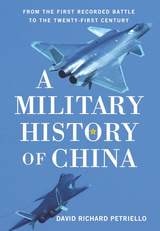
A Military History of China
From the First Recorded Battles to the Twenty-First CenturyDavid Richard Petriello
Westholme Publishing, 2018
The twenty-first century has been labeled the “Pacific Century,” both in terms of economics as well as military affairs. While South Korea and Japan have stagnated in these aspects, the growth of China since 1980 is unprecedented in modern history. While its economic achievements are both well known and studied, the rapid development of its military is not. In A Military History of China: From the First Recorded Battle to the Twenty-First Century, historian David Richard Petriello provides the first English language account of China’s martial history. China’s military prowess extends across the centuries, and includes the invention or first use of gunpowder, landmines, rocket launchers, armored cavalry, repeating crossbows, multistage rockets, and chemical weapons—in many cases, long before the West.
Illustrated with more than one hundred maps and figures, the book traces the general military history of China from the Neolithic Age to the present day. Particular attention is paid to specific battles, military thinkers, the impact of geography on warfare in China, and the role played by technology. Likewise, the work examines the underlying philosophy of why China goes to war. Because China’s military weakness over the past two centuries compared to the West has given a false sense of China’s potential, a thorough knowledge of the men, battles, tactics, geography, strategies, philosophy, and experiences of war throughout Chinese history are vital to prepare students, scholars, soldiers, and politicians for the return of China as a major innovative and global military power.
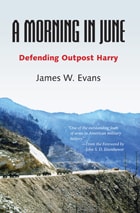
A Morning in June
Defending Outpost HarryJames W. Evans, with a foreword by John S. D. Eisenhower
University of Alabama Press, 2010
Exploring the strategic and human dimensions of the defense of Outpost Harry.
By June 1953 the Korean War, marked at the outset by extremely fluid advances and retreats up and down the peninsula, had settled into position warfare very near the original pre-war demarcation line between North and South Korea. At this point both sides were fighting to win a peace, to achieve incremental advantages that could be translated into gains at the peace negotiations in Panmunjom. The battle at Outpost Harry devolved into hand-to-hand combat during a period of constant, intense fighting that lasted two days. The author, although seriously wounded that night, refused evacuation and remained on the hill to successfully lead his company in defense of the outpost. It wasn’t romantic; it wasn’t chivalrous; and many died or were badly wounded. Some of the survivors never fully overcame the mental and physical damage they suffered during the nightmare.
With this book, one of those scarred by that experience recounts the events of the battle and his lifelong efforts to deal with the residual horrors. The Korean Conflict may be called "the forgotten war" by some, but not by those who were on the front lines.
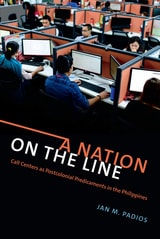
A Nation on the Line
Call Centers as Postcolonial Predicaments in the PhilippinesJan M. Padios
Duke University Press, 2018
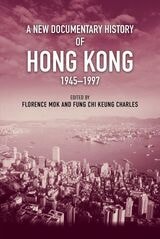
A New Documentary History of Hong Kong, 1945–1997
Edited by Florence Mok and Fung Chi Keung Charles
Hong Kong University Press, 2025
Through analyzing newly released archival records from the National Archives in London and the Public Records Office in Hong Kong, A New Documentary History of Hong Kong, 1945–1997 provides an updated and improved understanding of basic aspects of the city such as governance, economy, society, and culture. It also aims to investigate topics that are under-explored in previous sourcebooks, such as race and diasporas, gender and familial relations, medicine and healthcare, and environment and natural disasters. Overall, this book offers an innovative and comprehensive long-term perspective of Hong Kong’s colonial history.
A New Sun Rises Over the Old Land
A Novel of Sihanouk’s CambodiaSuon Sorin
National University of Singapore Press, 2020
First published in 1961, eight years after Cambodia gained independence from French colonial rule, A New Sun Rises Over the Old Land is an iconic work of modern Khmer literature, a singularly illuminating document of the new nation. This is one of the first English translations of a modern Khmer novel, and the text is accompanied by an extended introduction that situates the author in his historical and artistic context and examines the novel’s literary value.
A New World in the Making
Life and Architecture in Tropical AsiaTay Kheng Soon
National University of Singapore Press, 2023
According to architect Tay Kheng Soon, the time has come to change and build a new world. The feeling has impelled him to write this book, bringing together memoir and writings on identity, landscape and belonging, and on architecture and urbanism. Born in British-ruled Singapore, Soon was deeply engaged in the debates about building a new world that attended the end of colonialism. His focus, but far from his only concern, was Singapore's built environment—and its spiritual one—since the early 1960s. A New World in the Making is a must-read reflection on tropical Asia, on architecture and urbanism, and on looking ahead to the always urgent task of building a new world.
A Night in the Emperor's Garden
A True Story of Hope and Resilience in AfghanistanQais Akbar Omar and Stephen Landrigan
Haus Publishing, 2015
An actress visiting from Paris casually proposed to some Afghan actors in Kabul: Why not put on a play? The challenges were huge. It had been thirty years since men and women had appeared on stage together in Afghanistan. Was the country ready for it? Few Afghan actors had ever done theater. Did they even know how? They had performed only in films and television dramas.
Still, a company of actors gathered—among them a housewife, a policewoman, and a street kid turned film star. With no certainty of its outcome, they set out on a journey that would have life-changing consequences for all of them, and along the way lead to A Night in the Emperor’s Garden.
A Primer for Teaching Indian Ocean World History
Ten Design PrinciplesEdward A. Alpers and Thomas F. McDow
Duke University Press, 2024
A Primer for Teaching Pacific Histories
Ten Design PrinciplesMatt K.Matsuda
Duke University Press, 2020
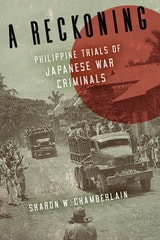
A Reckoning
Philippine Trials of Japanese War CriminalsSharon W. Chamberlain
University of Wisconsin Press, 2019
Chamberlain highlights the differing views of Filipinos and Japanese about the trials. The Philippine government aimed to show its commitment to impartial proceedings with just outcomes. In Japan, it appeared that defendants were selected arbitrarily, judges and prosecutors were biased, and lower-ranking soldiers were punished for crimes ordered by their superior officers. She analyzes the broader implications of this divergence as bilateral relations between the two nations evolved and contends that these competing narratives were reimagined in a way that, paradoxically, aided a path toward postwar reconciliation.
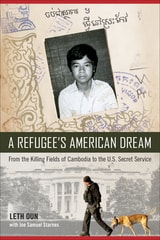
A Refugee's American Dream
From the Killing Fields of Cambodia to the U.S. Secret ServiceLeth Oun with Joe Samuel Starnes
Temple University Press, 2023
“I saw many killed. I almost starved. But I escaped to refugee camps in Thailand and eventually made it to the U.S.” Thus begins Leth Oun’s poignant and vivid memoir. A survivor of the Cambodian Killing Fields—having spent a torturous three years, eight months, and ten days imprisoned by the Khmer Rouge—Oun thrived in America, learning English, becoming a citizen, and working as an officer in the United States Secret Service Uniformed Division.
In A Refugee’s American Dream, Oun shares hard memories of Cambodia, where his father was executed, and his family enslaved in labor camps.
Following the fall of the Khmer Rouge, Oun survived a year of homelessness then nearly four years in refugee camps. Arriving in America, 17 and penniless, Oun struggled, washing dishes at a Chinese restaurant for $3.15 an hour. Still, he persevered, graduating from Widener University and completing thousands of hours of training to pursue a career in the Secret Service.
While on President Obama’s protection team, he returns to Cambodia after 32 years, reunites with family, and bonds with Reik, the Secret Service dog he handles. Through his most difficult moments, Oun displays truly inspiring resilience that ultimately leads to great achievements.
The authors’ proceeds will go to help Cambodians in need
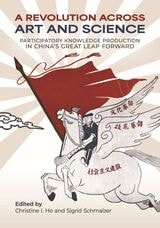
A Revolution Across Art and Science
Participatory Knowledge Production in China’s Great Leap ForwardEdited by Christine I. Ho and Sigrid Schmalzer
Hong Kong University Press, 2026
This volume examines the role of mass knowledge production—whether artistic, scientific, or technical—in China’s Great Leap Forward.
A Revolution Across Art and Science examines how laborers reimagined knowledge during a high point of radicalism in modern Chinese history. Encouraged to become curators, historians, writers, artists, technicians, scientists, and other kinds of experts, Chinese workers and peasants were mobilized to produce new knowledge in the humanities and sciences. Moving beyond the economic questions that have dominated most previous scholarship on the Great Leap Forward, this volume explores the cultural dimensions of the movement to establish the significance of mass knowledge production. Through ten case studies authored by emerging scholars, this volume offers a simultaneously empathetic and critical inquiry into PRC history and its impact on ongoing efforts to democratize knowledge around the world.

A Rule of Property for Bengal
An Essay on the Idea of Permanent SettlementRanajit Guha
Duke University Press, 1996
By proclaiming the Permanent Settlement in 1793, the British hoped to promote a prosperous capitalist agriculture of the kind that had developed in England. The act renounced for all time the state’s right to raise the assessment already made upon landowners and thus sought to establish a system of property that was, in the British view, necessary for the creation of a stable government. Guha traces the origins of the Permanent Settlement to the anti-feudal ideas of Phillip Francis and the critique of feudalism provided by physiocratic thought, the precursor of political economy. The central question the book asks is how the Permanent Settlement, founded in anti-feudalism and grafted onto India by the most advanced capitalist power of the day became instrumental in the development of a neo-feudal organization of landed property and in the absorption and reproduction of precapitalist elements in a colonial regime.
Guha’s examination of the British attempt to mold Bengal to the contours of its own society without an understanding of the traditions and obligations upon which the Indian agrarian system was based is a truly pioneering work. The implications of A Rule of Property for Bengal remain rich for the current discussions from the postcolonialist perspective on the meaning of modernity and enlightenment.
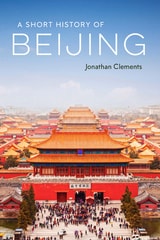
A Short History of Beijing
Jonathan Clements
Haus Publishing, 2022
Before China’s capital became a sprawling megacity and international center of business and culture, its fortunes fluctuated under a dozen dynasties. It has been a capital for several states, including those headed by Mongolian chiefs and the glorious Ming emperors, whose tombs can still be found on its outskirts. And before all that, it was a campsite for primitive hominids, known as the Peking Man. A Short History of Beijing tells the story of this remarkable city, from its more famous residents—Khubilai Khan, Marco Polo, and Chairman Mao—right up to the twenty-first century, as modern construction wiped out so much of the old city to make way for its twenty-million-strong population. Through his timely and intimate portrait of the world’s most populous capital city, Jonathan Clements reveals the history of China itself.
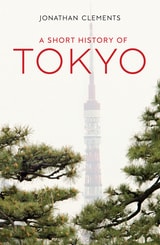
A Short History of Tokyo
Jonathan Clements
Haus Publishing, 2020
In this compact history, Jonathan Clements traces Tokyo’s fascinating story from the first forest clearances and the samurai wars to the hedonistic “floating world” of the last years of the Shogunate. He illuminates the Tokyo of the twentieth century with its destruction and redevelopment, boom and bust without forgoing the thousand years of history that have led to the Eastern Capital as we know it. Tokyo is so entwined with the history of Japan that it can be hard to separate them, and A Short History of Tokyo tells both the story of the city itself and offers insight into Tokyo’s position at the nexus of power and people that has made the city crucial to the events of the whole country.
A Short History of the Silk Road
Jonathan Clements
Haus Publishing, 2017
A Song for One or Two
Music and the Concept of Art in Early ChinaKenneth J. DeWoskin
University of Michigan Press, 1982
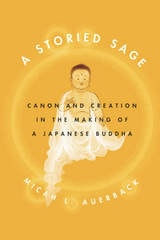
A Storied Sage
Canon and Creation in the Making of a Japanese BuddhaMicah L. Auerback
University of Chicago Press, 2016
Micah L. Auerback follows the changing fortune of the Buddha through the novel uses for the Buddha’s story in high and low culture alike, often outside of the confines of the Buddhist establishment. Auerback argues for the Buddha’s continuing relevance during Japan’s early modern period and links the later Buddhist tradition in Japan to its roots on the Asian continent. Additionally, he examines the afterlife of the Buddha in hagiographic literature, demonstrating that the late Japanese Buddha, far from fading into a ghost of his former self, instead underwent an important reincarnation. Challenging many established assumptions about Buddhism and its evolution in Japan, A Storied Sage is a vital contribution to the larger discussion of religion and secularization in modernity.
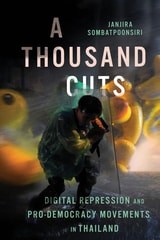
A Thousand Cuts
Digital Repression and Pro-Democracy Movements in ThailandJanjira Sombatpoonsiri
University of Wisconsin Press, 2027
In response to the 2020–21 youth-led protests throughout Thailand, which were largely fueled by discourse on digital platforms, the government launched a sweeping program of technological suppression. Smear campaigns were orchestrated to discredit young activists, laws were weaponized to criminalize their activities, and surveillance technologies were deployed to keep tabs on them.
In A Thousand Cuts, Janjira Sombatpoonsiri traces the historical development of repression in Thailand, detailing how “traditional” methods of repression have been merged with digital tools to maintain the status quo since 2005, when mass mobilization started to move online. By examining the adverse effects of digital repression on individual activists—their mental health, private lives, and socioeconomic resources—Sombatpoonsiri also offers one of the first systematic analyses of the “reception” side of repression, shedding light on its detrimental consequences for activists and mass movements as a whole.
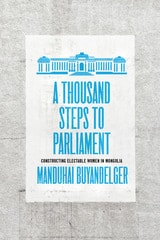
A Thousand Steps to Parliament
Constructing Electable Women in MongoliaManduhai Buyandelger
University of Chicago Press, 2022
Mongolia has often been deemed an “island of democracy,” commended for its rapid adoption of free democratic elections in the wake of totalitarian socialism. The democratizing era, however, brought alongside it a phenomenon that Manduhai Buyandelger terms “electionization”—a restructuring of elections from time-grounded events into a continuous neoliberal force that governs everyday life beyond the electoral period. In this way, electoral campaigns have come to substitute for the functions of governing, from social welfare to the private sector, requiring an accumulation of wealth and power beyond the reach of most women candidates. In A Thousand Steps to Parliament, Buyandelger shows how successful women candidates instead use strategies of self-polishing to cultivate charisma and a reputation for being oyunlag, or intellectful. This carefully crafted identity can be called the “electable self”: treating their bodies and minds as pliable and renewable, women candidates draw from the same practices of neoliberalism that have unsustainably commercialized elections. By tracing the complicated, contradictory paths to representation that women in Mongolia must walk, A Thousand Steps to Parliament holds a mirror up to democracies the world over, revealing an urgent need to grapple with the encroaching effects of neoliberalism in our global political systems.
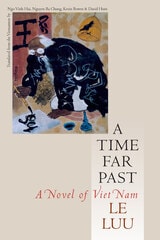
A Time Far Past
A Novel of Viet NamLe Luu
University of Massachusetts Press, 1997
In its intricate sketching of complicated alliances, personal debts, and human interactions, A Time Far Past explores the complex layering of family and village history and Party and feudal authority. It also paints a vivid picture of the vast dislocations in Vietnamese culture caused by the political and military turmoil of the Indochina wars.
A Time Far Past was enormously popular in Vietnam, where it was first published in 1986, selling more than 120,000 copies and winning that country's national prize for fiction.
A Time for Tea
Women, Labor, and Post/Colonial Politics on an Indian PlantationPiya Chatterjee
Duke University Press, 2001
Allowing personal, scholarly, and artistic voices to speak in turn and in tandem, Chatterjee discusses the fetishization of women who labor under colonial, postcolonial, and now neofeudal conditions. In telling the overarching story of commodity and empire, A Time for Tea demonstrates that at the heart of these narratives of travel, conquest, and settlement are compelling stories of women workers. While exploring the global and political dimensions of local practices of gendered labor, Chatterjee also reflects on the privileges and paradoxes of her own “decolonization” as a Third World feminist anthropologist. The book concludes with an extended reflection on the cultures of hierarchy, power, and difference in the plantation’s villages. It explores the overlapping processes by which gender, caste, and ethnicity constitute the interlocked patronage system of villages and their fields of labor. The tropes of coercion, consent, and resistance are threaded through the discussion.
A Time for Tea will appeal to anthropologists and historians, South Asianists, and those interested in colonialism, postcolonialism, labor studies, and comparative or international feminism.
Designated a John Hope Franklin Center book by the John Hope Franklin Seminar Group on Race, Religion, and Globalization.
A Village with My Name
A Family History of China's Opening to the WorldScott Tong
University of Chicago Press, 2017
A Village with My Name offers a unique perspective on the transitions in China through the eyes of regular people who have witnessed such epochal events as the toppling of the Qing monarchy, Japan’s occupation during World War II, exile of political prisoners to forced labor camps, mass death and famine during the Great Leap Forward, market reforms under Deng Xiaoping, and the dawn of the One Child Policy. Tong’s story focuses on five members of his family, who each offer a specific window on a changing country: a rare American-educated girl born in the closing days of the Qing Dynasty, a pioneer exchange student, an abandoned toddler from World War II who later rides the wave of China’s global export boom, a young professional climbing the ladder at a multinational company, and an orphan (the author’s daughter) adopted in the middle of a baby-selling scandal fueled by foreign money. Through their stories, Tong shows us China anew, visiting former prison labor camps on the Tibetan plateau and rural outposts along the Yangtze, exploring the Shanghai of the 1930s, and touring factories across the mainland.
With curiosity and sensitivity, Tong explores the moments that have shaped China and its people, offering a compelling and deeply personal take on how China became what it is today.
A World Transformed
The Politics of Culture in Revolutionary Vietnam, 1945-1965Kim N. B. Ninh
University of Michigan Press, 2002
The study covers the period from the Vietnamese communists' initial ascent to power in 1945 to the beginning of the escalation of the American involvement in the country's conflict in 1965, by which time a full-fledged socialist state had been in place in North Vietnam for eleven years. Through a nuanced examination of critical intellectual works, A World Transformed presents a complex view of a period fraught with contradictory possibilities and tensions that continue to resonate in Vietnam today. The extensive use of Vietnamese-language materials, access to archival data never before available, and innovative incorporation of literary and historical sources combine to make this study an invaluable depiction of the Vietnamese revolution.
Kim N. B. Ninh is Assistant Director of the Governance, Law, and Civil Society Programs, The Asia Foundation, San Francisco.
A World of Turmoil
The United States, China, and Taiwan in the Long Cold Warstephen hartnett
Michigan State University Press, 2021
Abiding by Sri Lanka
On Peace, Place, and PostcolonialityQadri Ismail
University of Minnesota Press, 2005
Abiding by Sri Lanka examines how the disciplines of anthropology, history, and literature treat the Sri Lankan ethnic conflict. Anthropology, Ismail contends, approaches Sri Lanka as an object from an “outside” and western point of view. History, addressing the conflict from the “inside,” abides by the place and so promotes change that is nationalist and exclusive. Neither of these fields imagines an inclusive community. Literature, Ismail argues, can.
With close readings of texts that “abide” by Sri Lanka, texts that have a commitment to it, Ismail demonstrates that the problems in Sri Lanka raise fundamental concerns for us all regarding the relationship between democracies and minorities. Recognizing the structural as well as political tendencies of representative democracies to suppress minorities, Ismail rethinks democracy by redefining the concept of the minority perspective, not as a subject-position of numerical insignificance, but as a conceptual space that opens up the possibility for distinction without domination and, ultimately, peace.
Qadri Ismail is associate professor of English at the University of Minnesota. He has also been a journalist in Sri Lanka.
Absolute Erotic, Absolute Grotesque
The Living, Dead, and Undead in Japan's Imperialism, 1895-1945Mark Driscoll
Duke University Press, 2010
Abundance
Sexuality’s HistoryAnjali Arondekar
Duke University Press, 2023
Across The Pacific
Asian Americans and GlobalizationEvelyn Hu-Dehart, E
Temple University Press, 2000
Members of the Asian American community have always been trans-Pacific, but are now more than ever, since the 1965 change in U.S. immigration law. Entering the U.S. at the culmination of the Civil Rights movement, Asians becoming Asian Americans have joined a self-consciously multicultural society. Asian economies roared onto the world stage, creating new markets while circulating capital and labor at an unprecedented scale and intensity, thereby helping drive the forces of modern globalization. These essays by well-known scholars in the field of Asian American studies consider such topics as the impact of new migrations on Asian American subjectivity and politics, Asian American activism and U.S. foreign policy, and the role of Asian Americans in Pacific Rim economies.
Considering issues of diaspora, transmigrancy, assimilation, institutionalized racism, and community, Across the Pacific covers such cutting-edge subjects as the cultural expressions of dislocation among contemporary Asian American writers, as well as the impact of the new migrations on Asian American subjectivity and politics.
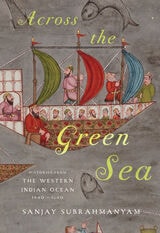
Across the Green Sea
Histories from the Western Indian Ocean, 1440-1640Sanjay Subrahmanyam
University of Texas Press, 2024
A history of two centuries of interactions among the areas bordering the western Indian Ocean, including India, Iran, and Africa.
Beginning in the mid-fifteenth century, the regions bordering the western Indian Ocean—“the green sea,” as it was known to Arabic speakers—had increasing contact through commerce, including a slave trade, and underwent cultural exchange and transformation. Using a variety of texts and documents in multiple Asian and European languages, Across the Green Sea looks at the history of the ocean from a variety of shifting viewpoints: western India; the Red Sea and Mecca; the Persian Gulf; East Africa; and Kerala.
Sanjay Subrahmanyam sets the scene for this region starting with the withdrawal of China's Ming Dynasty and explores how the western Indian Ocean was transformed by the growth and increasing prominence of the Ottoman Empire and the continued spread of Islam into East Africa. He examines how several cities, including Mecca and the vital Indian port of Surat, grew and changed during these centuries, when various powers interacted until famines and other disturbances upended the region in the seventeenth century. Rather than proposing an artificial model of a dominant center and its dominated peripheries, Across the Green Sea demonstrates the complexity of a truly dynamic and polycentric system through the use of connected histories, a method pioneered by Subrahmanyam himself.
Activist Archives
Youth Culture and the Political Past in IndonesiaDoreen Lee
Duke University Press, 2016
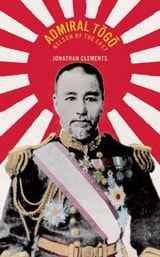
Admiral Togo
Nelson of the EastJonathan Clements
Haus Publishing, 2010
Advocacy after Bhopal
Environmentalism, Disaster, New Global OrdersKim Fortun
University of Chicago Press, 2001
Kim Fortun explores these claims by focusing on the dynamics and paradoxes of advocacy in competing power domains. She moves from hospitals in India to meetings with lawyers, corporate executives, and environmental justice activists in the United States to show how the disaster and its effects remain with us. Spiraling outward from the victims' stories, the innovative narrative sheds light on the way advocacy works within a complex global system, calling into question conventional notions of responsibility and ethical conduct. Revealing the hopes and frustrations of advocacy, this moving work also counters the tendency to think of Bhopal as an isolated incident that "can't happen here."
Affinities and Extremes
Crisscrossing the Bittersweet Ethnology of East Indies History, Hindu-Balinese Culture, and Indo-European AllureJames A. Boon
University of Chicago Press, 1990
Afghan Napoleon
The Life of Ahmad Shah MassoudSandy Gall
Haus Publishing, 2022
When the Soviets invaded Afghanistan in 1979, the forces of resistance were disparate. Many groups were caught up in fighting each other and competing for Western arms. The exception were those commanded by Ahmad Shah Massoud, the military strategist and political operator who solidified the resistance and undermined the Russian occupation, leading resistance members to a series of defensive victories.
Sandy Gall followed Massoud during Soviet incursions and reported on the war in Afghanistan, and he draws on this first-hand experience in his biography of this charismatic guerrilla commander. Afghan Napoleon includes excerpts from the surviving volumes of Massoud’s prolific diaries—many translated into English for the first time—which detail crucial moments in his personal life and during his time in the resistance. Born into a liberalizing Afghanistan in the 1960s, Massoud ardently opposed communism, and he rose to prominence by coordinating the defense of the Panjsher Valley against Soviet offensives. Despite being under-equipped and outnumbered, he orchestrated a series of victories over the Russians. Massoud’s assassination in 2001, just two days before the attack on the Twin Towers, is believed to have been ordered by Osama bin Laden. Despite the ultimate frustration of Massoud’s attempts to build political consensus, he is recognized today as a national hero.
Africa in the Indian Imagination
Race and the Politics of Postcolonial CitationAntoinette Burton
Duke University Press, 2016

After Yorktown
The Final Struggle for American IndependenceDon Glickstein
Westholme Publishing, 2016
Although most people think the American Revolution ended with the British surrender at Yorktown, Virginia, on October 19, 1781, it did not. The war spread around the world, and exhausted men kept fighting—from the Arctic to Arkansas, from India and Ceylon to Schenectady and South America—while others labored to achieve a final diplomatic resolution.
After Cornwallis’s unexpected loss, George III vowed revenge, while Washington planned his next campaign. Spain, which France had lured into the war, insisted there would be no peace without seizing British-held Gibraltar. Yet the war had spun out of control long before Yorktown. Native Americans and Loyalists continued joint operations against land-hungry rebel settlers from New York to the Mississippi Valley. African American slaves sought freedom with the British. Soon, Britain seized the initiative again with a decisive naval victory in the Caribbean against the Comte de Grasse, the French hero of Yorktown.
In After Yorktown: The Final Struggle for American Independence, Don Glickstein tells the engrossing story of this uncertain and violent time, from the remarkable American and French success in Virginia to the conclusion of the fighting—in India—and then to the last British soldiers leaving America more than two years after Yorktown. Readers will learn about the people—their humor, frustration, fatigue, incredulity, worries; their shock at the savage terrorism each side inflicted; and their surprise at unexpected grace and generosity. Based on an extraordinary range of primary sources, the story encompasses a fascinating cast of characters: a French captain who destroyed a British trading post, but left supplies for Indians to help them through a harsh winter, an American Loyalist releasing a captured Spanish woman in hopes that his act of kindness will result in a prisoner exchange, a Native American leader caught “between two hells” of a fickle ally and a greedy enemy, and the only general to surrender to both George Washington and Napoleon Bonaparte. Finally, the author asks the question we face today: How do you end a war that doesn’t want to end?
After the Post–Cold War
The Future of Chinese HistoryDai Jinhua
Duke University Press, 2018