Results by title

10 books match the query 'Asia, Central'
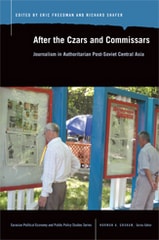
cover of After the Czars and Commissars: Journalism in Authoritarian Post-Soviet Central Asia

After the Czars and Commissars

Journalism in Authoritarian Post-Soviet Central Asia

Eric Freedman

Michigan State University Press, 2011
From Czarism and Bolshevism to the current post-communist era, the media in Central Asia has been tightly constrained. Though the governments in the region assert that a free press is permitted to operate, research has shown this to be untrue. In all five former Soviet republics of Central Asia, the media has been controlled, suppressed, punished, and often outlawed. This enlightening collection of essays investigates the reasons why these countries have failed to develop independent and sustainable press systems. It documents the complex relationship between the press and governance, nation-building, national identity, and public policy. In this book, scholars explore the numerous and broad-reaching implications of media control in a variety of contexts, touching on topics such as Internet regulation and censorship, press rights abuses, professional journalism standards and self-censorship, media ownership, ethnic newspapers, blogging, Western broadcasting into the region, and coverage of terrorism.
[more]
cover of Central Asia: One Hundred Thirty Years of Russian Dominance, A Historical Overview

Central Asia

One Hundred Thirty Years of Russian Dominance, A Historical Overview

Edward A. Allworth, ed.

Duke University Press, 1994

For centuries, Central Asia has been a leading civilization, an Islamic heartland, and a geographical link between West and East. After a long traditional history, it is now in a state of change. With the breakup of the Soviet Union in 1991, five newborn Central Asian states have emerged in place of the former Soviet Central Asia and Afghanistan. Central Asia provides the most comprehensive survey of the history of the impact of Russian rule upon the political, economic, social, intellectual, and cultural life of this diverse region. Together, these essays convey a sense of the region’s community as well as the divisive policies that have affected it for so long.
Now in its third edition (it was first published in 1967 and revised in 1989), this new edition of Central Asia has been updated to include a new preface, a revised and updated bibliography, and a final chapter that brings the book up to 1994 in considering the crucial problems that stem from a deprivation of sovereign, indigenous leadership over the past 130 years. This volume provides a broad and essential background for understanding what has led up to the late twentieth-century configuration of Central Asia.
[more]
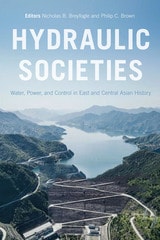
cover of Hydraulic Societies: Water, Power, and Control in East and Central Asian History

Hydraulic Societies

Water, Power, and Control in East and Central Asian History

Nicholas B. Breyfogle

Oregon State University Press, 2023

Hydraulic Societies explores the linked themes of water, power, state-building, and hydraulic control. Bringing together a range of ecological, geographical, chronological, and methodological perspectives, the essays in this book address the how humans have long harnessed water and sought to contain its destructive power for political, economic and social ends. Water defines every aspect of life and remains at the center of human activity: in irrigation and agriculture; waste and sanitation; drinking and disease; floods and droughts; religious beliefs and practices; fishing and aquaculture; travel and discovery; scientific study; water pollution and conservation; multi-purpose dam building; boundaries and borders; politics and economic life; and wars and diplomacy.  

From the earliest large irrigation works thousands of years ago, control over water has involved control over people, as the essays in this volume reflect. The intersections of water and political, economic, and social power historically span international as well as domestic politics and operate at scales ranging from the local to the global. The authors consider the role of water in national development schemes, water distribution as a tool of political power, international disputes over waterways and water supplies, and the place of water in armed conflicts. They explore the ways in which political power and social hierarchies have themselves been defined and redefined by water and its control, how state leaders legitimized their rule both culturally and economically through the control of water, and how water management schemes were a means to impose and refine colonial power.
[more]
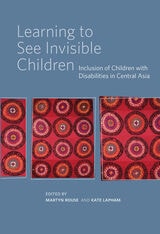
cover of Learning to See Invisible Children: Inclusion of Children with Disabilities in Central Asia

Learning to See Invisible Children

Inclusion of Children with Disabilities in Central Asia

Kate Lapham

Central European University Press, 2013
The path to inclusion for children with disabilities and other special education needs is long and complex. It has been claimed that inclusion is not a destination, but a process of increasing participation and reducing exclusion from the culture, curriculum and community of mainstream schools. This volume chronicles the journey toward greater inclusion of children with disabilities in Central Asia. Setting out upon this journey is an acknowledged policy goal in Kazakhstan, Kyrgyzstan, and Tajikistan so that all children are to participate in education, but it raises many questions and quandaries. It stirs the ghosts of social norms and traditions from the past that differ from place to place, even within the former Soviet Union. Central Asia presents particular challenges because of the economic, social, political and educational upheaval and disruption that has affected the region in the past two decades. These six case studies document the progress and challenges along the way through the stories of specific children, families, schools, and organizations across the region with the goal of keeping inclusion on policy agendas and in public discourses. It is a resource for scholars of the region, education researchers, and practitioners alike.
[more]
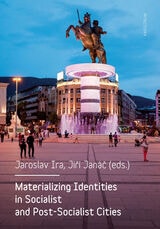
cover of Materializing Identities in Socialist and Post-Socialist Cities

Materializing Identities in Socialist and Post-Socialist Cities

Edited by Jaroslav Ira and Jirí Janác

Karolinum Press, 2017
Following the so-called “Material Turn” of historiography, this book explores the materialization of identity in urban space—specifically in Eastern Europe and Central Asia. Urban spaces played an important role in the formation of national identities in post-socialist successor states across the region, while at the same time the articulation of national identities markedly affected the appearance of these post-socialist cities. Beginning with an overview of socialist and post-socialist cities in recent urban history, contributors trace the post-socialist intertwining of space and identities in case studies that include Astana and Almaty in Kazakhstan, Chișinău and Tiraspol in Moldova, and Skopje in Macedonia, while also linking this phenomenon to socialist urbanism, as in postwar Minsk, Belarus.
[more]
cover of Muslims in Central Asia: Expressions of Identity and Change

Muslims in Central Asia

Expressions of Identity and Change

Jo-Ann Gross, ed.

Duke University Press, 1992

Central Asia is distinctive in its role as a frontier region in which a unique diversity of cultural, religious, and political traditions exist. This collection of essays by expert scholars in a range of disciplines focuses on the formation of ethnic, religious, and national identities in Muslim societies of Central Asia, thus furthering our general understanding of the history and culture of this significant region.
This study includes several geopolitical regions—Chinese Central Asia, Soviet Central Asia, Afghanistan, Transoxiana and Khurasan—and covers historical periods from the fifteenth century to the present. Drawing on scholarship in anthropology, religion, history, literature, and language studies, Muslims in Central Asia argues for an interdisciplinary, inter-regional dialog in the development of new approaches to understanding the Muslim societies in Central Asia. The authors creatively examine the social construction of identities as expressed through literature, Islamic discourse, historical texts, ethnic labels, and genealogies, and explore how such identities are formed, changed, and adopted through time.

Contributors. Hamid Algar, Muriel Atkin, Walter Feldman, Dru C. Gladney, Edward J. Lazzerini, Beatrice Forbes Manz, Christopher Murphy, Oliver Roy, Isenbike Togan
[more]
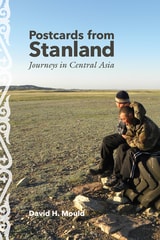
cover of Postcards from Stanland: Journeys in Central Asia

Postcards from Stanland

Journeys in Central Asia

David H. Mould

Ohio University Press, 2015

Central Asia has long stood at the crossroads of history. It was the staging ground for the armies of the Mongol Empire, for the nineteenth-century struggle between the Russian and British empires, and for the NATO campaign in Afghanistan. Today, multinationals and nations compete for the oil and gas reserves of the Caspian Sea and for control of the pipelines. Yet “Stanland” is still, to many, a terra incognita, a geographical blank.

Beginning in the mid-1990s, academic and journalist David Mould’s career took him to the region on Fulbright Fellowships and contracts as a media trainer and consultant for UNESCO and USAID, among others. In Postcards from Stanland, he takes readers along with him on his encounters with the people, landscapes, and customs of the diverse countries—Kazakhstan, Kyrgyzstan, Tajikistan, and Uzbekistan—he came to love. He talks with teachers, students, politicians, environmental activists, bloggers, cab drivers, merchants, Peace Corps volunteers, and more.

Until now, few books for a nonspecialist readership have been written on the region, and while Mould brings his own considerable expertise to bear on his account—for example, he is one of the few scholars to have conducted research on post-Soviet media in the region—the book is above all a tapestry of place and a valuable contribution to our understanding of the post-Soviet world.
[more]
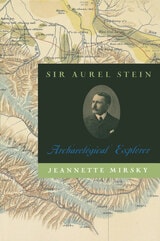
cover of Sir Aurel Stein: Archaeological Explorer

Sir Aurel Stein

Archaeological Explorer

Jeannette Mirsky

University of Chicago Press, 1977

An extraordinary man, who advanced human knowledge on many fronts, Sir Aurel Stein (1862-1943) pursued dramatic adventure with scientific purpose. Jeannette Mirsky has drawn from Stein's voluminous outpouring of books and articles as well as from his letters and unpublished archival materials to produce a lively and definitive biography of this archaeological explorer, geographer, historical topographer, and linguist.

"[Mirsky] has digested the correspondence, and she quotes so skillfully that her book will save many people the trouble of reading Stein's own exhaustive and exhausting volumes. Definitive."—Larry McMurtry, Washington Post

"A first-rate and unique biography of one of the more significant explorers of Central Asia and the Indo-Iranian borderlands. . . . Mirsky has recreated not only the life of an intrepid explorer but the spirit of the times."—Choice

"Mirsky has performed a signal service in distilling the life, travels, and letters of Aurel Stein into a manageable, graceful, and meaningful synthesis."—Theodore A. Wertime, Technology and Culture
[more]
cover of The End of Nomadism?: Society, State, and the Environment in Inner Asia

The End of Nomadism?

Society, State, and the Environment in Inner Asia

Caroline Humphrey and David Sneath

Duke University Press, 1999

Those who herd in the vast grassland region of Inner Asia face a precarious situation as they struggle to respond to the momentous political and economic changes of recent years. In The End of Nomadism? Caroline Humphrey and David Sneath confront the romantic, ahistorical myth of the wandering nomad by revealing the complex lives and the significant impact on Asian culture of these modern “mobile pastoralists.” In their examination of the present and future of pastoralism, the authors recount the extensive and quite sudden social, political, environmental, and economic changes of recent years that have forced these peoples to respond and evolve in order to maintain their centuries-old way of life.
Using extensive and detailed case studies comparing pastoralism in Siberian Russia, Mongolia, and Northwest China, Humphrey and Sneath explore the different paths taken by nomads in these countries in reaction to a changing world. In examining how each culture is facing not only different prospects for sustainability but also different environmental problems, the authors come to the surprising conclusion that mobility can, in fact, be compatible with a modern and urbanized world. While placing emphasis on the social and cultural traditions of Inner Asia and their fate in the post-Socialist economies of the present, The End of Nomadism? investigates the changing nature of pastoralism by focusing on key areas under environmental threat and relating the ongoing problems to distinctive socioeconomic policies and practices in Russia and China. It also provides lively contemporary commentary on current economic dilemmas by revealing in telling detail, for instance, the struggle of one extended family to make a living.
This book will interest Central Asian, Russian, and Chinese specialists, as well as those studying the environment, anthropology, sociology, peasant studies, and ecology.

[more]
cover of What Wars Leave Behind: The Faceless and the Forgotten

What Wars Leave Behind

The Faceless and the Forgotten

J. Malcolm Garcia

University of Missouri Press, 2014

They bear labels instead of names—noncombatant, unintended victim, collateral damage. Theirs are the blurred faces and forms seen in news footage shot from a moving vehicle. And when soldiers, media, and profiteers move on to the next conflict, they stay behind to cope amid the wreckage. They have stories to tell to anyone who will pause long enough to hear them.
In What Wars Leave Behind, J. Malcolm Garcia reveals the people and pain behind the statistics. He writes about impoverished families scraping by in Cairo’s city of the dead, ordinary Syrians pretending all is well as shells explode around them, and others caught in conflicts that rage long after the cameramen have packed up and gone away.
Garcia describes his travels in some of the world’s hotspots in Central Asia, the Middle East, and Africa. In a series of personal travel essays that read like short stories, he exposes the endless messiness of war and the failings of good intentions, and he traces their impact on the lives of natives in Afghanistan, Pakistan, Egypt, Kosovo, Chad, and Syria. He discovers amazing resilience among people who must struggle just to survive each day.
Garcia gives readers the sort of gritty detail learned from immersing himself in other cultures. He eats the food, drinks the tea, and endures the oppressive heat. These are the stories of how a middle-class guy from the Midwest with a social work degree learned to experience and embrace the cultures of Third World countries in conflict—and lived to tell the tale.
[more]