Results by title
10 books match the query 'Asian Americans in motion pictures'
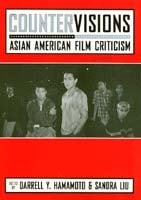
Countervisions
Darrell Hamamoto
Temple University Press, 2000
One of the anthology's key contributions is to trace the evolution of Asian American independent film practice over thirty years. Essays on the Japanese American internment and historical memory, essays on films by women and queer artists, and the reflections of individual film makers discuss independent productions as subverting or opposing the conventions of commercial cinema. But Countervisions also resists simplistic readings of "mainstream" film representations of Asian Americans and enumerations of negative images. Writing about Hollywood stars Anna May Wong and Nancy Kwan, director Wayne Wang, and erotic films, several contributors probe into the complex and ambivalent responses of Asian American audiences to stereotypical roles and commercial success. Taken together, the spirited, illuminating essays in this collection offer an unprecedented examination of a flourishing cultural production.

Ghostlife of Third Cinema
Asian American Film and VideoGlen M. Mimura
University of Minnesota Press, 2009
An interpretive history of Asian American independent media since the 1960s
Asian American filmmakers and video artists have created a substantial, diverse, and challenging body of work that reimagines the cultural and political representation of Asian Americans. Yet much of this work remains unknown.
For Glen M. Mimura, Asian American cinema is the spectral, ghostly return of the international film movement known as Third Cinema. Tracing contemporary Asian American cinema as a continuation of Third Cinema’s radical enterprise of making marginalized subjects visible in the First World, Ghostlife of Third Cinema examines such potent issues as diasporic identity, historical memory, and queer sexuality through sophisticated readings of a wide range of film and video projects, including Trinh T. Minh-ha’s experimental documentary Surname Viet Given Name Nam; avant-garde works by Japanese American filmmakers Rea Tajiri, Lise Yasui, and Janice Tanaka; and queer videos exploring the intersection of race, nation, and sexuality by Pablo Bautista, Ming-Yuen Ma, and Nguyen Tan Hoang. In Ghostlife of Third Cinema, Mimura confronts the ongoing erasure of Asian American independent media andilluminates its cultural and political significance today.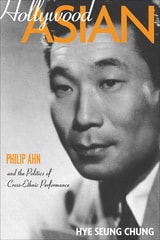
Hollywood Asian
Philip Ahn and the Politics of Cross-Ethnic PerformanceHye Seung Chung
Temple University Press, 2006
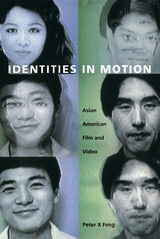
Identities in Motion
Asian American Film and VideoPeter X Feng
Duke University Press, 2002
Peter X Feng considers a wide range of works—from genres such as detective films to romantic comedies to ethnographic films, documentaries, avant-garde videos, newsreels, travelogues, and even home movies. Feng begins by examining movies about three crucial moments that defined the American nation and the roles of Asian Americans within it: the arrival of Chinese and Japanese women in the American West and Hawai’i; the incorporation of the Philippines into the U.S. empire; and the internment of Japanese Americans during World War II. In subsequent chapters Feng discusses cinematic depictions of ideological conflicts among Asian Americans and of the complex forces that compel migration, extending his nuanced analysis of the intersections of sexuality, ethnicity, and nationalist movements.
Identities in Motion illuminates the fluidity of Asian American identities, expressing the diversity and complexity of Asian Americans—including Filipinos, Indonesians, Chinese, Japanese, Vietnamese, Laotians, Indians, and Koreans—from the nineteenth to the twenty-first century.
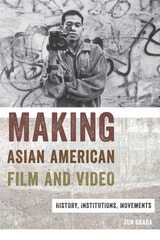
Making Asian American Film and Video
History, Institutions, MovementsOkada, Jun
Rutgers University Press, 2015
Racial Feelings
Asian America in a Capitalist Culture of EmotionJeffrey Santa Ana
Temple University Press, 2015
Santa Ana explores various forms of Asian American cultural production, ranging from literature and graphic narratives to film and advertising, to illuminate the connections between global economic relations and the emotions that shape aspirations for the good life. He illustrates his argument with examples including the destitute Filipino immigrant William Paulinha, in Han Ong’s Fixer Chao, who targets his anger on the capitalist forces of objectification that racially exploit him, and Nan and Pingpin in Ha Jin’s A Free Life, who seek happiness and belonging in America.
Racial Feelings addresses how Asian Americans both resist and rely on stereotypes in their writing and art work. In addition, Santa Ana investigates how capitalism shapes and structures an emotional discourse that represents Asians as both economic exemplars and threats.
Screening Asian Americans
Feng, Peter X
Rutgers University Press, 2002
This innovative essay collection explores Asian American cinematic representations historically and socially, on and off screen, as they contribute to the definition of American character. The history of Asian Americans on movie screens, as outlined in Peter X Feng’s introduction, provides a context for the individual readings that follow. Asian American cinema is charted in its diversity, ranging across activist, documentary, experimental, and fictional modes, and encompassing a wide range of ethnicities (Filipino, Vietnamese, Indian, Japanese, Korean, Chinese, and Taiwanese). Covered in the discussion are filmmakers—Theresa Hak Kyung Cha, Ang Lee, Trinh T. Minh-ha, and Wayne Wang—and films such as The Wedding Banquet, Surname Viet Given Name Nam, and Chan is Missing.
Throughout the volume, as Feng explains, the term screening has a twofold meaning—referring to the projection of Asian Americans as cinematic bodies and the screening out of elements connected with these images. In this doubling, film representation can function to define what is American and what is foreign. Asian American filmmaking is one of the fastest growing areas of independent and studio production. This volume is key to understanding the vitality of this new cinema.
The Movies of Racial Childhoods
Screening Self-Sovereignty in Asian/AmericaCeline Parreñas Shimizu
Duke University Press, 2024
Whitewashing the Movies
Asian Erasure and White Subjectivity in U.S. Film CultureDavid C Oh
Rutgers University Press, 2022
Yellow Future
Oriental Style in Hollywood CinemaJane Chi Hyun Park
University of Minnesota Press, 2010
Park provides a genealogy of oriental style through contextualized readings of popular films-from the multicultural city in Blade Runner and the Japanese American mentor in The Karate Kid to the Afro-Asian reworking of the buddy genre in Rush Hour and the mixed-race hero in The Matrix. Throughout these analyses Park shows how references to the Orient have marked important changes in American popular attitudes toward East Asia in the past thirty years, from abjection to celebration, invisibility to hypervisibility.