Results by title
11 books match the query 'Asian influences'
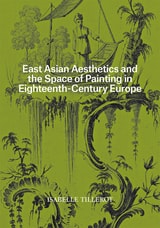
East Asian Aesthetics and the Space of Painting in Eighteenth-Century Europe
Isabelle Tillerot
J. Paul Getty Trust, The, 2024
This volume offers the first critical account of how European imports of East Asian textiles, porcelain, and lacquers, along with newly published descriptions of the Chinese garden, inspired a revolution in the role of painting in early modern Europe. With particular focus on French interiors, Isabelle Tillerot reveals how a European enthusiasm for East Asian culture and a demand for novelty transformed the dynamic between painting and decor. Models of space, landscape, and horizon, as shown in Chinese and Japanese objects and their ornamentation, disrupted prevailing design concepts in Europe. With paintings no longer functioning as pictorial windows, they began to be viewed as discrete images displayed on a wall—and with that, their status changed from decorative device to autonomous work of art.
This study presents a detailed history of this transformation, revealing how an aesthetic free from the constraints of symmetry and geometrized order upended paradigms of display, enabling European painting to come into its own.
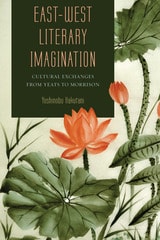
East-West Literary Imagination
Cultural Exchanges from Yeats to MorrisonYoshinobu Hakutani
University of Missouri Press, 2017
This study traces the shaping presence of cultural interactions, arguing that American literature has become a hybridization of Eastern and Western literary traditions. Cultural exchanges between the East and West began in the early decades of the nineteenth century as American transcendentalists explored Eastern philosophies and arts. Hakutani examines this influence through the works of Emerson, Thoreau, and Whitman. He further demonstrates the East-West exchange through discussions of the interactions by modernists such as Yone Noguchi, Yeats, Pound, Camus, and Kerouac.
Finally, he argues that African American literature, represented by Richard Wright, Ralph Ellison, Alice Walker, Toni Morrison, and James Emanuel, is postmodern. Their works exhibit their concerted efforts to abolish marginality and extend referentiality, exemplifying the postmodern East-West crossroads of cultures. A fuller understanding of their work is gained by situating them within this cultural conversation. The writings of Wright, for example, take on their full significance only when they are read, not as part of a national literature, but as an index to an evolving literature of cultural exchanges.
Edith and Winnifred Eaton
Chinatown Missions and Japanese RomancesDominika Ferens
University of Illinois Press, 2002
Arguing that Edith as much as Winnifred constructed her persona along with her pen name, Ferens considers the fiction of both Eaton sisters as ethnography. Edith and Winnifred Eaton suggests that both authors wrote through the filter of contemporary ethnographic discourse on the Far East and also wrote for readers hungry for "authentic" insight into the morals, manners, and mentality of an exotic other.
Ferens traces two distinct discursive traditions–-missionary and travel writing–-that shaped the meanings of "China" and "Japan" in the nineteenth century. She shows how these traditions intersected with the unconventional literary careers of the Eaton sisters, informing the sober, moralistic tone of Edith's stories as well as Winnifred's exotic narrative style, plots, settings, and characterizations.
Bringing to the Eatons' writings a contemporary understanding of the racial and textual politics of ethnographic writing, this important account shows how these two very different writers claimed ethnographic authority, how they used that authority to explore ideas of difference, race, class and gender, and how their depictions of nonwhites worked to disrupt the process of whites' self-definition.
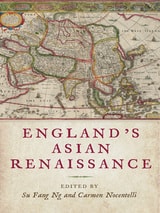
England's Asian Renaissance
Su Fang Ng
University of Delaware Press, 2022
Published by the University of Delaware Press. Distributed worldwide by Rutgers University Press.
Francophonie en Orient
Aux croisements France-Asie (1840-1940)Mathilde Kang
Amsterdam University Press, 2017
Go East, Young Man
Imagining the American West as the OrientRichard Francaviglia
Utah State University Press, 2011
Transference of orientalist images and identities to the American landscape and its inhabitants, especially in the West—in other words, portrayal of the West as the “Orient”—has been a common aspect of American cultural history. Place names, such as the Jordan River or Pyramid Lake, offer notable examples, but the imagery and its varied meanings are more widespread and significant. Understanding that range and significance, especially to the western part of the continent, means coming to terms with the complicated, nuanced ideas of the Orient and of the North American continent that European Americans brought to the West. Such complexity is what historical geographer Richard Francaviglia unravels in this book.
Since the publication of Edward Said’s book, Orientalism, the term has come to signify something one-dimensionally negative. In essence, the orientalist vision was an ethnocentric characterization of the peoples of Asia (and Africa and the “Near East”) as exotic, primitive “others” subject to conquest by the nations of Europe. That now well-established point, which expresses a postcolonial perspective, is critical, but Francaviglia suggest that it overlooks much variation and complexity in the views of historical actors and writers, many of whom thought of western places in terms of an idealized and romanticized Orient. It likewise neglects positive images and interpretations to focus on those of a decadent and ostensibly inferior East.
We cannot understand well or fully what the pervasive orientalism found in western cultural history meant, says Francaviglia, if we focus only on its role as an intellectual engine for European imperialism. It did play that role as well in the American West. One only need think about characterizations of American Indians as Bedouins of the Plains destined for displacement by a settled frontier. Other roles for orientalism, though, from romantic to commercial ones, were also widely in play. In Go East, Young Man, Francaviglia explores a broad range of orientalist images deployed in the context of European settlement of the American West, and he unfolds their multiple significances.

Ice Age Peoples of North America
Robonson Bonnichsen
Oregon State University Press, 1999
Oriental Shadows
The Presence of the East in Early American LiteratureJim Egan
The Ohio State University Press, 2011
Through the use of several iconic early American authors (Anne Bradstreet, James Kirkpatrick, Benjamin Franklin, and Edgar Allan Poe), Jim Egan’s Oriental Shadows: The Presence of the East in Early American Literature explores the presence of “the East” in American writing.
In bringing to light this largely overlooked archive of images within the American literary canon, Oriental Shadows suggests that the East played a key role in the emergence of a distinctively American literary tradition and, further, that early American identity was born as much from figures of the East as it was from the colonists’ encounters with the frontier.
Orientalism and Modernism
The Legacy of China in Pound and WilliamsZhaoming Qian
Duke University Press, 1995
Consulting rare and unpublished materials, Qian traces Pound’s and Williams’s remarkable dialogues with the great Chinese poets—Qu Yuan, Li Bo, Wang Wei, and Bo Juyi—between 1913 and 1923. His investigation reveals that these exchanges contributed more than topical and thematic ideas to the Americans’ work and suggests that their progressively modernist style is directly linked to a steadily growing contact and affinity for similar Chinese styles. He demonstrates, for example, how such influences as the ethics of pictorial representation, the style of ellipsis, allusion, and juxtaposition, and the Taoist/Zen–Buddhist notion of nonbeing/being made their way into Pound’s pre-Fenollosan Chinese adaptations, Cathay, Lustra, and the Early Cantos, as well as Williams’s Sour Grapes and Spring and All. Developing a new interpretation of important work by Pound and Williams, Orientalism and Modernism fills a significant gap in accounts of American Modernism, which can be seen here for the first time in its truly multicultural character.
The Imperialist Imaginary
Visions of Asia and the Pacific in American CultureJohn Eperjesi
Dartmouth College Press, 2014
The Orient of Style
Modernist Allegories of ConversionBeryl Schlossman
Duke University Press, 1991
Toward the end of Remembrance of Things Past, the narrator describes the act of creating a work of art as a conversion of sensation into a spiritual equivalent. By means of such allegories of “conversion,” Schlossman shows, the modernist artist disappeared within the work of art and left behind the trace of his sublime vocation, a vocation in which he was transformed, in Schlossman’s words, “into a kind of priest kneeling at the altar of beauty before the masked divinity of representation.”
The author shows how allegory—the representation of the symbolic as something real—was adapted by modernist writers to reflect subjectivity while masking an authorial origin. She reveals how modernist allegory arose, as Walter Benjamin suggests, at the crossroads of history, sociology, economics, urban architecture, and art—providing a kind of map of capitalism—and was produced through the eyes of a melancholic gazing at a “monument of absence.”