Results by title
15 books match the query 'Atlantic Ocean Region'
A Confluence of Transatlantic Networks
Elites, Capitalism, and Confederate Migration to BrazilLaura Jarnagin
University of Alabama Press, 2013
A Confluence of Transatlantic Network demonstrates how portions of interconnected trust-based kinship, business, and ideational transatlantic networks evolved over roughly a century and a half and eventually converged to engender, promote, and facilitate the migration of southern elites to Brazil in the post–Civil War era. Placing that migration in the context of the Atlantic world sharpens our understanding of the transborder dynamic of such mainstream nineteenth-century historical currents as international commerce, liberalism, Protestantism, and Freemasonry. The manifestation of these transatlantic forces as found in Brazil at midcentury provided disaffected Confederates with a propitious environment in which to try to re-create a cherished lifestyle.
Black Bodies, White Gold
Art, Cotton, and Commerce in the Atlantic WorldAnna Arabindan-Kesson
Duke University Press, 2021
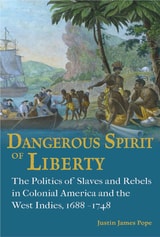
Dangerous Spirit of Liberty
The Politics of Slaves and Rebels in Early America and the West Indies, 1688-1748Justin James Pope
University of Missouri Press, 2024
Dangerous Spirit of Liberty's distinguishing feature is its focus on the role of communication in the development of a rebellious early eighteenth-century Atlantic. Most historians of slavery have presupposed that slave unrest was confined to small locales in the first half of the eighteenth century. In fact, slaves found ways to share news across provinces to great effect. Benefiting from research in the archives of Great Britain, Spain, Barbados, Bermuda, Jamaica, Antigua, the U.S. Virgin Islands, and the mainland United States, the book reveals new evidence of slave communication networks and shows how people of African ancestry shared rumors of emancipation and rebellion in this period. Slaves laboring in colonial commerce and working aboard ships helped foster an increasingly restive Black community. Banished slaves, convicted conspirators accused of plotting insurrection, carried their experiences with them in exile to neighboring colonies. By reconstructing the path of news, the book reveals rumors and reports that particularly resonated among slaves in the early eighteenth century.

Forty Miles from the Sea
Xalapa, the Public Sphere, and the Atlantic World in Nineteenth-Century MexicoRachel A. Moore
University of Arizona Press, 2011
Over the course of the nineteenth century, despite its inland location, Xalapa became an important Atlantic community as it came to represent both a haven and a place of fortification for residents of Veracruz. Yellow fever, foreign invasion, and domestic discord drove thousands of residents of Veracruz, as well as foreign travelers, to seek refuge in Xalapa. At the same time, these adverse circumstances prompted the Mexican government to use Xalapa as a bulwark against threats originating in the Atlantic.
The influence of the Atlantic world thus stretched far into central Mexico, thanks to both the instability of the coastal region and the desire of government officials to “protect” central Mexico from volatile Atlantic imports. The boundaries established at Xalapa, however, encouraged goods, information, and people to collect in the city and thereby immerse the population in the developments of the Atlantic sphere. Thus, in seeking to protect the center of the country, government authorities more firmly situated Xalapa in the Atlantic world. This connection would be trumped by national affiliation only when native residents of Xalapa became more comfortable with their participation in the Mexican public sphere later in the nineteenth century.
The interdisciplinary and comparative nature of this study will make it appeal to those studying Atlantic history, including historians of Britain, the United States, Latin America, and Africa, as well as those studying communication, print culture, and postal history more broadly.
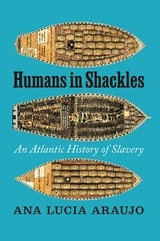
Humans in Shackles
An Atlantic History of SlaveryAna Lucia Araujo
University of Chicago Press, 2024
During the era of the Atlantic slave trade, more than twelve million enslaved Africans were forcibly transported to the Americas in cramped, inhumane conditions. Many of them died on the way, and those who survived had to endure further suffering in the violent conditions that met them onshore. Covering more than three hundred years, Humans in Shackles grapples with this history by foregrounding the lived experience of enslaved people in tracing the long, complex history of slavery in the Americas.
Based on twenty years of research, this book not only serves as a comprehensive history; it also expands that history by providing a truly transnational account that emphasizes the central role of Brazil in the Atlantic slave trade. Additionally, it is deeply informed by African history and shows how African practices and traditions survived and persisted in the Americas among communities of enslaved people. Drawing on primary sources including travel accounts, pamphlets, newspaper articles, slave narratives, and visual sources such as artworks and artifacts, Araujo illuminates the social, cultural, and religious lives of enslaved people working in plantations and urban areas, building families and cultivating affective ties, congregating and re-creating their cultures, and organizing rebellions.
Humans in Shackles puts the lived experiences of enslaved peoples at the center of the story and investigates the heavy impact these atrocities have had on the current wealth disparity of the Americas and rampant anti-Black racism.
Insignificant Things
Amulets and the Art of Survival in the Early Black AtlanticMatthew Francis Rarey
Duke University Press, 2023
Moving Home
Gender, Place, and Travel Writing in the Early Black AtlanticSandra Gunning
Duke University Press, 2021

New World Drama
The Performative Commons in the Atlantic World, 1649-1849Elizabeth Maddock Dillon
Duke University Press, 2014
Audiences in London eagerly watched the royal slave, Oroonoko, tortured on stage, while audiences in Charleston and Kingston were forbidden from watching the same scene. Audiences in Kingston and New York City exuberantly participated in the slaying of Richard III on stage, enacting the rise of the "people," and Native American leaders were enjoined to watch actors in blackface "jump Jim Crow." Dillon argues that the theater served as a "performative commons," staging debates over representation in a political world based on popular sovereignty. Her book is a capacious account of performance, aesthetics, and modernity in the eighteenth-century Atlantic world.
Oduduwa's Chain
Locations of Culture in the Yoruba-AtlanticAndrew Apter
University of Chicago Press, 2017
Focusing on Yoruba history and culture in Nigeria, Apter applies a generative model of cultural revision that allows him to identify formative Yoruba influences without resorting to the idea that culture and tradition are fixed. For example, Apter shows how the association of African gods with Catholic saints can be seen as a strategy of empowerment, explores historical locations of Yoruba gender ideologies and their variations in the Atlantic world, and much more. He concludes with a rousing call for a return to Africa in studies of the Black Atlantic, resurrecting a critical notion of culture that allows us to transcend Western inventions of African while taking them into account.
Reckoning with Slavery
Gender, Kinship, and Capitalism in the Early Black AtlanticJennifer L. Morgan
Duke University Press, 2021
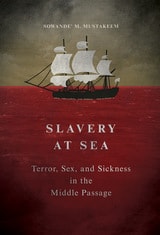
Slavery at Sea
Terror, Sex, and Sickness in the Middle PassageSowande M Mustakeem
University of Illinois Press, 2016
Sowande' Mustakeem's groundbreaking study goes inside the Atlantic slave trade to explore the social conditions and human costs embedded in the world of maritime slavery. Mining ship logs, records and personal documents, Mustakeem teases out the social histories produced between those on traveling ships: slaves, captains, sailors, and surgeons. As she shows, crewmen manufactured captives through enforced dependency, relentless cycles of physical, psychological terror, and pain that led to the the making--and unmaking--of enslaved Africans held and transported onboard slave ships. Mustakeem relates how this process, and related power struggles, played out not just for adult men, but also for women, children, teens, infants, nursing mothers, the elderly, diseased, ailing, and dying. Mustakeem offers provocative new insights into how gender, health, age, illness, and medical treatment intersected with trauma and violence transformed human beings into the world's most commercially sought commodity for over four centuries.

So Unimaginable a Price
Baldwin and the Black AtlanticJohn E. Drabinski
Northwestern University Press, 2026
James Baldwin’s nonfiction offers some of the most important and challenging thinking on the experience of race, history, and memory in the Black Atlantic world. Yet much of the scholarly literature on Baldwin’s writing reads his work from inside the sociocultural context of the United States, alongside key interlocutors like Richard Wright, Ralph Ellison, and Lorraine Hansberry. So Unimaginable a Price: Baldwin and the Black Atlantic shifts the critical frame, examining Baldwin’s work as part of a midcentury moment across the wider Atlantic world and tying his reflections to those of thinkers in the Caribbean and Africa to underscore the widening sense, as well as the particularity, of his critical claims. Who is Baldwin to the Atlantic world? And who, then, is Baldwin to the United States? John E. Drabinski recasts Baldwin as a Black Atlantic writer whose unique qualities as a thinker are enhanced by their similarities and differences with fellow writers of liberation in the global Black world.

The Afterlife of Reproductive Slavery
Biocapitalism and Black Feminism’s Philosophy of HistoryAlys Eve Weinbaum
Duke University Press, 2019

The Object of the Atlantic
Concrete Aesthetics in Cuba, Brazil, and Spain, 1868–1968Rachel Price
Northwestern University Press, 2014
The Object of the Atlantic is a wide-ranging study of the transition from a concern with sovereignty to a concern with things in Iberian Atlantic literature and art produced between 1868 and 1968. Rachel Price uncovers the surprising ways that concrete aesthetics from Cuba, Brazil, and Spain drew not only on global forms of constructivism but also on a history of empire, slavery, and media technologies from the Atlantic world. Analyzing Jose Marti’s notebooks, Joaquim de Sousandrade’s poetry, Ramiro de Maeztu’s essays on things and on slavery, 1920s Cuban literature on economic restructuring, Ferreira Gullar’s theory of the “non-object,” and neoconcrete art, Price shows that the turn to objects—and from these to new media networks—was rooted in the very philosophies of history that helped form the Atlantic world itself.
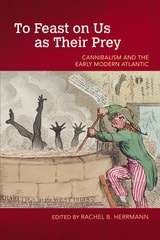
To Feast on Us as Their Prey
Cannibalism and the Early Modern AtlanticRachel B. Herrmann
University of Arkansas Press, 2019
Winner, 2020 Association for the Study of Food and Society Book Award, Edited Volume
Long before the founding of the Jamestown, Virginia, colony and its Starving Time of 1609–1610—one of the most famous cannibalism narratives in North American colonial history—cannibalism played an important role in shaping the human relationship to food, hunger, and moral outrage. Why did colonial invaders go out of their way to accuse women of cannibalism? What challenges did Spaniards face in trying to explain Eucharist rites to Native peoples? What roles did preconceived notions about non-Europeans play in inflating accounts of cannibalism in Christopher Columbus’s reports as they moved through Italian merchant circles?
Asking questions such as these and exploring what it meant to accuse someone of eating people as well as how cannibalism rumors facilitated slavery and the rise of empires, To Feast on Us as Their Prey posits that it is impossible to separate histories of cannibalism from the role food and hunger have played in the colonization efforts that shaped our modern world.