Results by title
24 books match the query 'Austen, Jane'
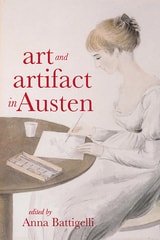
Art and Artifact in Austen
Anna Battigelli
University of Delaware Press, 2020
Published by University of Delaware Press. Distributed worldwide by Rutgers University Press.
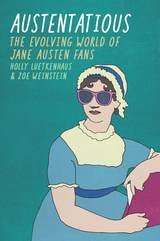
Austentatious
The Evolving World of Jane Austen FansHolly Luetkenhaus and Zoe Weinstein
University of Iowa Press, 2019
This book explores online fan spaces in search of “Janeites” all over the world to discover what fans are making, how fans are sharing their work, and why it matters that so many women and nonbinary individuals find a haven not only in Jane Austen, but also in Jane Austen fandom. In relatable chapters based on firsthand experience, the authors explore how Austen fandom has and continues to build communities around women, people of color, and the LGBTQ+ community. Whether Janeites are shrewdly picking up on the latent sexual tension between women in Emma or casting people of color in leading roles, Luetkenhaus and Weinstein argue that Austen fans are particularly adept at marrying fantasy and feminism.
Comic Faith
The Great Tradition from Austen to JoyceRobert M. Polhemus
University of Chicago Press, 1980
Constancy and the Ethics of Jane Austen's 'Mansfield Park'
Joyce Kerr Tarpley
Catholic University of America Press, 2010
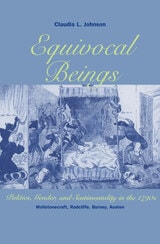
Equivocal Beings
Politics, Gender, and Sentimentality in the 1790s--Wollstonecraft, Radcliffe, Burney, AustenClaudia L. Johnson
University of Chicago Press, 1995
Demonstrating the interrelationships among politics, gender, and feeling in the fiction of this period, Johnson provides detailed readings of Wollstonecraft, Radcliffe, and Burney, and treats the qualities that were once thought to mar their work—grotesqueness, strain, and excess—as indices of ideological conflict and as strategies of representation during a period of profound political conflict. She maintains that the reactionary reassertion of male sentimentality as a political duty displaced customary gender roles, rendering women, in Wollstonecraft's words, "equivocal beings."
Haphazard Families
Romanticism, Nation, and the Prehistory of Modern AdoptionEric C. Walker
The Ohio State University Press, 2024
There are no provisions for adoption in English common law, and adoption wasn't legally formalized in England and Wales until 1926. But a century earlier, untimely adoptions navigated the new exceptionalism of childhood in Romanticism. In Haphazard Families, Eric C. Walker explores the history of the adopted child in Romantic-era England. Taking up the stories of both fictional and historical adoptees, he demonstrates how these children, diminished to nonpersons, shouldered the burden of social constructs of nation, family, gender, and class. Walker further demonstrates how Rousseau’s infamous failure to follow his own ideals of parenthood shaped British reactions in famous texts such as Frankenstein and Emma. Incorporating perspectives from Romantic scholarship and critical adoption studies and examining the stories of adopted children associated with Queen Caroline, Anna Letitia Barbauld, Jane Austen, the Wordsworth siblings, Mary Shelley, Charles and Mary Lamb, Letitia Landon, and others, Haphazard Families considers how Romantic constructions of childhood supply foundational structures of modern adoptee subjectivity.
Imagining Minds
The Neuro-Aesthetics of Austen, Eliot, and HardyKay Young
The Ohio State University Press, 2010
Jane Austen and Comedy
Erin Goss
Bucknell University Press, 2019
Published by Bucknell University Press. Distributed worldwide by Rutgers University Press.
Jane Austen's Cults and Cultures
Claudia L. Johnson
University of Chicago Press, 2012
Jane Austen completed only six novels, but enduring passion for the author and her works has driven fans to read these books repeatedly, in book clubs or solo, while also inspiring countless film adaptations, sequels, and even spoofs involving zombies and sea monsters. Austen’s lasting appeal to both popular and elite audiences has lifted her to legendary status. In Jane Austen’s Cults and Cultures, Claudia L. Johnson shows how Jane Austen became “Jane Austen,” a figure intensely—sometimes even wildly—venerated, and often for markedly different reasons.
Jane Austen's Names
Riddles, Persons, PlacesMargaret Doody
University of Chicago Press, 2015
In Jane Austen’s Names, Margaret Doody offers a fascinating and comprehensive study of all the names of people and places—real and imaginary—in Austen’s fiction. Austen’s creative choice of names reveals not only her virtuosic talent for riddles and puns. Her names also pick up deep stories from English history, especially the various civil wars, and the blood-tinged differences that played out in the reign of Henry VIII, a period to which she often returns. Considering the major novels alongside unfinished works and juvenilia, Doody shows how Austen’s names signal class tensions as well as regional, ethnic, and religious differences. We gain a new understanding of Austen’s technique of creative anachronism, which plays with and against her skillfully deployed realism—in her books, the conflicts of the past swirl into the tensions of the present, transporting readers beyond the Regency.
Full of insight and surprises for even the most devoted Janeite, Jane Austen’s Names will revolutionize how we read Austen’s fiction.
Jane Austen
A CompanionRoss, Josephine
Rutgers University Press, 2003
This illuminating, entertaining, up-to-date companion is the only general guide to Jane Austen, her work, and her world. Josephine Ross explores the literary scene during the time Austen's works first appeared: the books considered classics then, the "horrid novels" and romances, and the grasping publishers. She looks at the architecture and décor of Austen's era that made up "the profusion and elegance of modern taste." Regency houses for instance, Chippendale furniture, and "picturesque scenery." On a smaller scale she answers questions that may baffle modern readers. What, for example, was "hartshorn"? How did Lizzy Bennet "let down" her gown to hide her muddy petticoat? Ross shows us the fashions, and the subtle ways Jane Austen used clothes to express character. Courtship, marriage, adultery, class and "rank," mundane tasks of ordinary life, all appear, as does the wider political and military world.
This book will add depth to all readers' enjoyment of Jane Austen, whether confirmed addicts or newcomers wanting to learn about one of the world's most popular and enduring writers.
Jane Austen
Illustrated QuotationsEdited by the Bodleian Library
Bodleian Library Publishing, 2017
“You express so little anxiety about my being murdered under Ash Park Copse by Mrs. Hulbert’s servant, that I have a great mind not to tell you whether I was or not.”—from a letter to Cassandra, January 8, 1799
“Single women have a dreadful propensity for being poor, which is one very strong argument in favour of matrimony.”—from a letter to Fanny Knight, March 13, 1817
Much loved for the romantic plot lines and wryly amusing social commentary that spring from the pages of Pride and Prejudice, Mansfield Park, Emma, and her other novels Jane Austen was also a prolific letter writer and penned missives on many subjects. To her sister Cassandra she wrote with candid humor about the effects of the Peninsular War (“How horrible it is to have so many people killed! And what a blessing that one cares for none of them!”), about her dislike of parties and social obligations (“We are to have a tiny party here tonight. I hate tiny parties, they force one into constant exertion.”), and about her impressions of London (“Here I am once more in this scene of dissipation and vice, and I begin to find already my morals corrupted.”). Austen’s characters likewise offer commentary on topics like moral character, gender inequality, ageing, and the disappointments of marriage. In Pride and Prejudice, for example, Charlotte Lucas cautions Elizabeth Bennet, “It is better to know as little as possible of the defects of the person with whom you are about to pass your life.”
Drawing together fifty quotations from Jane Austen’s letters and novels with illustrations that illuminate everyday aspects of life in the Georgian era, this beautifully produced volume will make the perfect gift for Janeites.
Jane Austen
The Chawton LettersEdited by Kathryn Sutherland
Bodleian Library Publishing, 2017
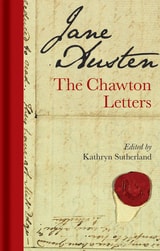
Brilliantly edited by Kathryn Sutherland, Jane Austen: The Chawton Letters uses Austen’s letters drawn from the collection held at Jane Austen’s House Museum at her former home in Chawton, Hampshire, to tell her life story. At age twenty-five, Austen left her first home, Steventon, Hampshire, for Bath. In 1809, she moved to Chawton, which was to be her home for the remainder of her short life. In her correspondence, we discover Austen’s relish for her regular visits to the shops and theaters of London, as well as the quieter routines of village life. We learn of her anxieties about the publication of Pride and Prejudice, her care in planning Mansfield Park, and her hilarious negotiations over the publication of Emma. (To her sister, Cassandra, Austen calls her publisher John Murray, “a Rogue, of course, but a civil one.”) Throughout, the Chawton letters testify to Jane’s close ties with her family, especially her sister, and the most moving letter is written by Cassandra just days after Jane’s death. The collection also reproduces pages from the letters in Austen’s own distinctive hand.
This collection makes a delightful modern-day keepsake from one of the world’s best-loved writers on the two-hundredth anniversary of her death.
Jane Austen
Women, Politics, and the NovelClaudia L. Johnson
University of Chicago Press, 1990
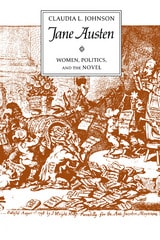
"By looking at the ways in which Austen domesticates the gothic in Northanger Abbey, examines the conventions of male inheritance and its negative impact on attempts to define the family as a site of care and generosity in Sense and Sensibility, makes claims for the desirability of 'personal happiness as a liberating moral category' in Pride and Prejudice, validates the rights of female authority in Emma, and stresses the benefits of female independence in Persuasion, Johnson offers an original and persuasive reassessment of Jane Austen's thought."—Kate Fullbrook, Times Higher Education Supplement
Jane Austen
Writer in the WorldEdited by Kathryn Sutherland
Bodleian Library Publishing, 2017
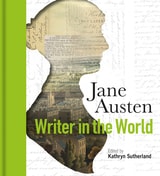
Brilliantly edited by Kathryn Sutherland, Jane Austen: Writer in the World offers a life story told through the author's personal possessions. In her teenage notebooks, literary jokes give a glimpse of her family’s shared love of reading and satire, which can be seen in the subtler humor of Austen’s published work. Pieces from Austen’s hand-copied collection of sheet music reveal how music was used to create networks far more intricate than the simple pleasures of home recital. A beautiful brown silk pelisse-coat, together with lively letters between Austen and Cassandra, give insight into her views on fashion. All feature in this lavishly illustrated collection, along with homemade booklets in which she composed her novels, portraits made of Austen during her lifetime, and much more. Also included are objects associated with the era in which Austen lived: newspaper articles, naval logbooks, and contemporary political cartoons, shedding light on Austen’s wider social and political worlds.
This collection makes a delightful modern-day keepsake from one of the world’s best-loved writers on the two-hundredth anniversary of her death.
Kicking Ass in a Corset
Jane Austen’s 6 Principles for Living and Leading from the Inside OutAndrea Kayne
University of Iowa Press, 2021
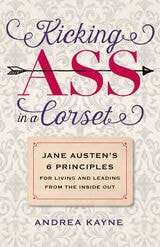
What can organizational leaders in business, education, government, and most any enterprise learn from an unemployed, unmarried woman who lived in patriarchal, misogynistic rural England more than 200 years ago? As it turns out, a great deal. In identifying the core virtues of Austen’s heroines—confidence, pragmatism, diligence, integrity, playfulness, and humility—Andrea Kayne uncovers the six principles of internally referenced leadership that, taken together, instruct women how to tap into a deep well-spring of personal agency and an internal locus of control no matter what is going on around them. Utilizing practical exercises, real-life case studies, and literary and leadership scholarship, Kicking Ass in a Corset maps out effective leadership that teaches readers how to tune out the external noise and listen to themselves so that they can truly live and lead from the inside out.
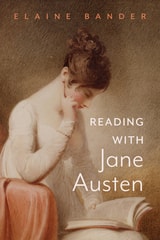
Reading with Jane Austen
Elaine Bander
Bucknell University Press, 2026
Jane Austen has more readers today than at any time in history. Many of Austen’s legions of fans, however, came to her novels after first seeing films or other adaptations made for twenty-first-century audiences. Austen herself conversely spent her literary career undermining romantic clichés and rethinking novel conventions. Confident that she and her contemporaries shared a common reading culture, Austen deliberately constructed her novels to set readerly expectations, only to disrupt or confound those expectations by challenging her readers’ assumptions and values. In Reading with Jane Austen, Elaine Bander carefully rereads the great author’s novels—beginning with her late work of juvenilia, “Catharine, or The Bower,” and ending with her final fragment, “Sanditon”—against the rich context of late Georgian literary and intellectual culture. In doing so, Bander invites us into the transformative experience that Austen intentionally designed for her earliest readers, adding new layers of appreciation for those who love her work.
Published by Bucknell University Press. Distributed worldwide by Rutgers University Press.
Elaine Bander speaking at the Atwater Library in Quebec (https://youtu.be/UeEjFOfp9cQ?si=Wv2hsLxkGK157WZI)
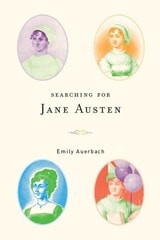
Searching for Jane Austen
Emily Auerbach
University of Wisconsin Press, 2004
In this beautifully illustrated and lively work, Auerbach surveys two centuries of editing, censoring, and distorting Austen’s life and writings. Auerbach samples Austen’s flamboyant, risqué adolescent works featuring heroines who get drunk, lie, steal, raise armies, and throw rivals out of windows. She demonstrates that Austen constantly tested and improved her skills by setting herself a new challenge in each of her six novels.
In addition, Auerbach considers Austen’s final irreverent writings, discusses her tragic death at the age of forty-one, and ferrets out ridiculous modern adaptations and illustrations, including ads, cartoons, book jackets, newspaper articles, plays, and films from our own time. An appendix reprints a ground-breaking article that introduced Mark Twain’s "Jane Austen," an unfinished and unforgettable essay in which Twain and Austen enter into mortal combat.
Some Words of Jane Austen
Stuart M. Tave
University of Chicago Press, 2019
Telling Complexions
The Nineteenth-Century English Novel and the BlushMary Ann O Farrell
Duke University Press, 1997
Although the blush was used to tell the truth of character and body, O’Farrell shows how it is actually undermined as a stable indicator of character in novels such as Pride and Prejudice, Persuasion, North and South, and David Copperfield. She reveals how these writers then moved on in search of other bodily indicators of mortification and desire, among them the swoon, the scar, and the blunder. Providing unique and creative insights into the constructedness of the body and its semiotic play in literature and in culture, Telling Complexions includes parallel examples of the blush in contemporary culture and describes ways that textualized bodies are sometimes imagined to resist the constraints imposed by such construction.
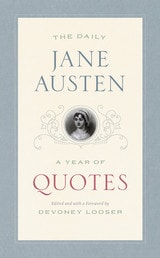
The Daily Jane Austen
A Year of QuotesJane Austen
University of Chicago Press, 2019
Devoney Looser, a.k.a. Stone Cold Jane Austen, has drawn 378 genuine, Austen-authored passages from across the canon, resulting in an anthology that is compulsively readable and repeatable. Whether you approach the collection on a one-a-day model or in a satisfying binge read, you will emerge wiser about Austen, if not about life. The Daily Jane Austen will amuse and inspire skeptical beginners, Janeite experts, and every reader in between by showcasing some of the greatest sentences ever crafted in the history of fiction.
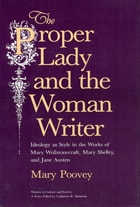
The Proper Lady and the Woman Writer
Ideology as Style in the Works of Mary Wollstonecraft, Mary Shelley, and Jane AustenMary Poovey
University of Chicago Press, 1984
"The proper lady was a handy concept for a developing bourgeois patriarchy, since it deprived women of worldly power, relegating them to a sanctified domestic sphere that, in complex ways, nourished and sustained the harsh 'real' world of men. With care and subtle intelligence, Poovey examines this 'guardian and nemesis of the female self' through the ways it is implicated in the style and strategies of three very different writers."—Rachel M. Brownstein, The Nation
"The Proper Lady and the Woman Writer is a model of . . . creative discovery, providing a well-researched, illuminating history of women writers at the turn of the nineteenth century. [Poovey] creates sociologically and psychologically persuasive accounts of the writers: Wollstonecraft, who could never fully transcend the ideology of propriety she attacked; Shelley, who gradually assumed a mask of feminine propriety in her social and literary styles; and Austen, who was neither as critical of propriety as Wollstonecraft nor as accepting as Shelley ultimately became."—Deborah Kaplan, Novel
Uncomfortable Situations
Emotion between Science and the HumanitiesDaniel M. Gross
University of Chicago Press, 2017
Science and the humanities typically offer two different paradigms for thinking about emotion—the first rooted in brain and biology, the second in a social world. With rhetoric as a field guide, Uncomfortable Situations establishes common ground between these two paradigms, focusing on a theory of situated emotion. Daniel M. Gross anchors the argument in Charles Darwin, whose work on emotion has been misunderstood across the disciplines as it has been shoehorned into the perceived science-humanities divide. Then Gross turns to sentimental literature as the single best domain for studying emotional situations. There’s lost composure (Sterne), bearing up (Equiano), environmental hostility (Radcliffe), and feeling mixed (Austen). Rounding out the book, an epilogue written with ecological neuroscientist Stephanie Preston provides a different kind of cross-disciplinary collaboration. Uncomfortable Situations is a conciliatory work across science and the humanities—a groundbreaking model for future studies.
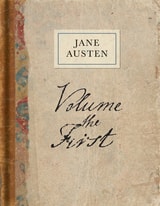
Volume the First
A FacsimileJane Austen
Bodleian Library Publishing, 2013