Results by title
22 books match the query 'Australian & Oceanian'
A World of Fiction
Digital Collections and the Future of Literary HistoryKatherine Bode
University of Michigan Press, 2018
Allegories of the Anthropocene
Elizabeth M. DeLoughrey
Duke University Press, 2019

At the Movies, Film Reviewing, and Screenwriting
Selective Affinities and Cultural MediationSteven Maras
Intellect Books, 2025
At the Movies, Film Reviewing, and Screenwriting discusses the interplay between film criticism and screenwriting, providing a different view on how reviewers engage with story and dialogue. Steven Maras draws on Pierre Bourdieu’s theories of cultural taste to examine film reviewing as a key site of cultural production, analyzing ten years of television scripts from At the Movies (2004–2014). Hosted by Australia’s most influential film critics Margaret Pomeranz and David Stratton, this long-running program shaped public discourse on cinema and left an indelible mark on Australian screen culture.
Studying the program’s broadcast scripts, this book addresses how film reviewing operates as both critique and storytelling. Of particular interest to media scholars, screenwriting researchers, and cinephiles alike, it provides fresh insights into the evolving role of criticism in contemporary screen culture. Engaging and deeply researched, this work rightfully emphasizes the cultural significance of movie criticism in film culture in Australia and beyond.
Bible, Borders, Belonging(s)
Engaging Readings from OceaniaJione Havea
SBL Press, 2014
Engaging voices crossing textual limits, race, and ethnic lines
In this collection of essays, scholars from Oceania open a new dialog regarding the vast, complex, and slippery nature of the Bible and the fluid meanings of borders and belongings. From belonging in a place, a group, or movement to belongings as material and cultural possessions, from borders of a text, discipline, or thought to borders of nations, communities, or bodies, the authors follow the currents of Oceania to the shores of Asia and beyond. Scholars contributing essays include Jeffrey W. Aernie, Merilyn Clark, Jione Havea, Gregory C. Jenks, Jeanette Mathews, Judith E. McKinlay, Monica Jyotsna Melanchthon, David J. Neville, John Painter, Kathleen P. Rushton, Ruth Sheridan, Nasili Vaka‘uta, and Elaine M. Wainwright. Michele A. Connolly, David M. Gunn, and Mark G. Brett provide responses to the essays.
Features:
- Discussion of the impacts of natural disasters and political and ecological upheavals on biblical interpretation and theological reflection
- Fourteen essays on texts in the Hebrew Bible and New Testament
- Three responses to the essays provide a range of views on the topics
Finding Meaning
Kaona and Contemporary Hawaiian LiteratureBrandy Nalani McDougall
University of Arizona Press, 2016
In this first extensive study of contemporary Hawaiian literature, Brandy Nalani McDougall examines a vibrant selection of fiction, poetry, and drama by emerging and established Hawaiian authors, including Haunani-Kay Trask, John Dominis Holt, Imaikalani Kalahele, and Victoria Nalani Kneubuhl. At the center of the analysis is a hallmark of Hawaiian aesthetics—kaona, the intellectual practice of hiding and finding meaning that encompasses the allegorical, the symbolic, the allusive, and the figurative.
With a poet’s attention to detail, McDougall interprets examples of kaona, guiding readers through olelo no'eau (proverbs), mo‘olelo (literature and histories), and mooku'auhau (genealogies) alongside their contemporary literary descendants, unveiling complex layers of Hawaiian identity, culture, history, politics, and ecology.
Throughout, McDougall asserts that “kaona connectivity” not only carries bright possibilities for connecting the present to the past, but it may also ignite a decolonial future. Ultimately, Finding Meaning affirms the tremendous power of Indigenous stories and genealogies to give activism and decolonization movements lasting meaning.
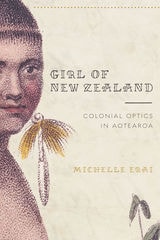
Girl of New Zealand
Colonial Optics in AotearoaMichelle Erai
University of Arizona Press, 2020
Viewed through Māori, feminist, queer, and film theories, Erai shows how images such as Girl of New Zealand (1793) and later images, cartoons, and travel advertising created and deployed a colonial optic. Girl of New Zealand reveals how the phantasm of the Māori woman has shown up in historical images, how such images shape our imagination, and how impossible it has become to maintain the delusion of the “innocent eye.” Erai argues that the process of ascribing race, gender, sexuality, and class to imagined bodies can itself be a kind of violence.
In the wake of the Me Too movement and other feminist projects, Erai’s timely analysis speaks to the historical foundations of negative attitudes toward Indigenous Māori women in the eyes of colonial “others”—outsiders from elsewhere who reflected their own desires and fears in their representations of the Indigenous inhabitants of Aotearoa, New Zealand. Erai resurrects Māori women from objectification and locates them firmly within Māori whānau and communities.
Iep Jaltok
Poems from a Marshallese DaughterKathy Jetnil-Kijiner
University of Arizona Press, 2017
As the seas rise, the fight intensifies to save the Pacific Ocean’s Marshall Islands from being devoured by the waters around them. At the same time, activists are raising their poetic voices against decades of colonialism, environmental destruction, and social injustice.
Marshallese poet and activist Kathy Jetnil-Kijiner’s writing highlights the traumas of colonialism, racism, forced migration, the legacy of American nuclear testing, and the impending threats of climate change. Bearing witness at the front lines of various activist movements inspires her work and has propelled her poetry onto international stages, where she has performed in front of audiences ranging from elementary school students to more than a hundred world leaders at the United Nations Climate Summit.
The poet connects us to Marshallese daily life and tradition, likening her poetry to a basket and its essential materials. Her cultural roots and her family provides the thick fiber, the structure of the basket. Her diasporic upbringing is the material which wraps around the fiber, an essential layer to the structure of her experiences. And her passion for justice and change, the passion which brings her to the front lines of activist movements—is the stitching that binds these two experiences together.
Iep Jāltok will make history as the first published book of poetry written by a Marshallese author, and it ushers in an important new voice for justice.
Image of Australia
Edited by Joseph Jones
University of Texas Press, 1962
Mapping Modernisms
Art, Indigeneity, ColonialismElizabeth Harney and Ruth B. Phillips, editors
Duke University Press, 2018
Contributors. Bill Anthes, Peter Brunt, Karen Duffek, Erin Haney, Elizabeth Harney, Heather Igloliorte, Sandra Klopper, Ian McLean, Anitra Nettleton, Chika Okeke-Agulu, Ruth B. Phillips, W. Jackson Rushing III, Damian Skinner, Nicholas Thomas, Norman Vorano
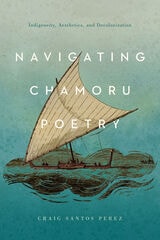
Navigating CHamoru Poetry
Indigeneity, Aesthetics, and DecolonizationCraig Santos Perez
University of Arizona Press, 2021
This book shows that CHamoru poetry has been an inspiring and empowering act of protest, resistance, and testimony in the decolonization, demilitarization, and environmental justice movements of Guåhan. Perez roots his intersectional cultural and literary analyses within the fields of CHamoru studies, Pacific Islands studies, Native American studies, and decolonial studies, using his research to assert that new CHamoru literature has been—and continues to be—a crucial vessel for expressing the continuities and resilience of CHamoru identities. This book is a vital contribution that introduces local, national, and international readers and scholars to contemporary CHamoru poetry and poetics.
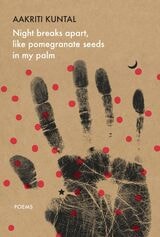
Night breaks apart, like pomegranate seeds in my palm
PoemsAakriti Kuntal
Seagull Books, 2025
What does it mean to exist within language—to shape it, and in turn, to be shaped by it? In Night breaks apart, like pomegranate seeds in my palm, Aakriti Kuntal crafts poems that unravel at the edges of self and myth, where language is neither home nor escape, but a threshold to something more elemental. Her verses move like water rolling and sifting through sediment, shifting between dream and flesh. Through intimate confessions and stark observations, she confronts the absurdity of suffering, the weight of the body, and the vast, unknowable machinery of the universe. Each poem resists easy meaning, instead offering raw honesty: language as both wound and salve.
For readers drawn to the introspective and the experimental, Kuntal’s poetry echoes the emotional depth of Ocean Vuong and the intellectual play of Anne Carson. This collection is for those who seek poetry not as answers, but as an experience—visceral, and unafraid to press against the limits of being.
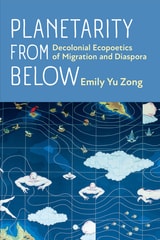
Planetarity from Below
Decolonial Ecopoetics of Migration and DiasporaEmily Yu Zong
University of Michigan Press, 2026
Through short stories, memoirs, speculative fiction, poetry, and documentary films, Zong unpacks a decolonial migrant ecopoetics, revealing a pluralist method of worldmaking—from Australia’s oceanic refugee camps, Indigenous Canadian land, and Chinese migrant worker sweatshops, to climate futures. These migrant ecologies imagine freedom “from below” not simply as individual survival or assimilation but as an unruly and contingent process of shared creativity with animals, waters, minerals, waste, and technology.
Shifting environmental ethics from individual morality to a political ecology of sustaining life in precarity, Zong introduces decolonial knowledges, imaginations, and praxes that help us expand justice and freedom beyond the human, asking how borderland subjectivities can open new possibilities for multispecies flourishing.
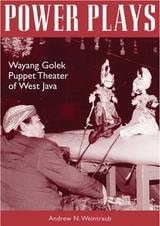
Power Plays
Wayang Golek Puppet Theater of West JavaAndrew N. Weintraub
Ohio University Press, 2004
Using interviews with performers, musical transcriptions, translations of narrative and song texts, and archival materials, author Andrew N. Weintraub analyzes the shifting and flexible nature of a set of performance practices called Padalangan, the art of the puppeteer. He focuses on “superstar” performers and the musical troupes that dominated wayang golek during the New Order political regime of former president Suharto (1966-98) and the ensuing three years of the post-Suharto period. Studies of actual performances illuminate stylistic and formal elements and situate wayang golek as a social process in Sundanese culture and society. Power Plays includes an interactive multimedia CD-ROM of wayang golek.
Power Plays shows how meanings about identity, citizenship, and community are produced through theater, music, language, and discourse. While based in ethnographic theory and methods, this book is at the center of a new synthesis emerging among ethnomusicology, anthropology, and cultural studies. Its cross-disciplinary approach will inspire researchers studying similar struggles over cultural authority and popular representation in culture and the performing arts.
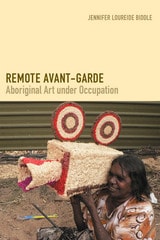
Remote Avant-Garde
Aboriginal Art under OccupationJennifer Loureide Biddle
Duke University Press, 2016
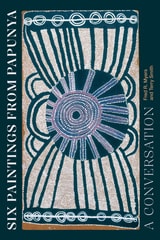
Six Paintings from Papunya
A ConversationFred R. Myers and Terry Smith
Duke University Press, 2024
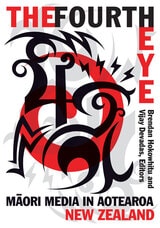
The Fourth Eye
Maori Media in Aotearoa New ZealandBrendan Hokowhitu
University of Minnesota Press, 2013
From the signing of the Treaty of Waitangi between Indigenous and settler cultures to the emergence of the first-ever state-funded Māori television network, New Zealand has been a hotbed of Indigenous concerns. Given its history of colonization, coping with biculturalism is central to New Zealand life. Much of this “bicultural drama” plays out in the media and is molded by an anxiety surrounding the ongoing struggle over citizenship rights that is seated within the politics of recognition. The Fourth Eye brings together Indigenous and non-Indigenous scholars to provide a critical and comprehensive account of the intricate and complex relationship between the media and Māori culture.
Examining the Indigenous mediascape, The Fourth Eye shows how Māori filmmakers, actors, and media producers have depicted conflicts over citizenship rights and negotiated the representation of Indigenous people. From nineteenth-century Māori-language newspapers to contemporary Māori film and television, the contributors explore a variety of media forms including magazine cover stories, print advertisements, commercial images, and current Māori-language newspapers to illustrate the construction, expression, and production of indigeneity through media.
Focusing on New Zealand as a case study, the authors address the broader question: what is Indigenous media? While engaging with distinct themes such as the misrepresentation of Māori people in the media, access of Indigenous communities to media technologies, and the use of media for activism, the essays in this much-needed new collection articulate an Indigenous media landscape that converses with issues that reach far beyond New Zealand.
Contributors: Sue Abel, U of Auckland; Joost de Bruin, Victoria U of Wellington; Suzanne Duncan, U of Otago; Kevin Fisher, U of Otago; Allen Meek, Massey U; Lachy Paterson, U of Otago; Chris Prentice, U of Otago; Jay Scherer, U of Alberta; Jo Smith, Victoria U of Wellington; April Strickland; Stephen Turner, U of Auckland.
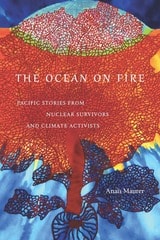
The Ocean on Fire
Pacific Stories from Nuclear Survivors and Climate ActivistsAnaïs Maurer
Duke University Press, 2024
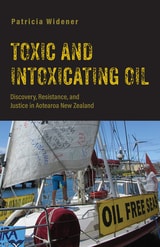
Toxic and Intoxicating Oil
Discovery, Resistance, and Justice in Aotearoa New ZealandPatricia Widener
Rutgers University Press, 2021
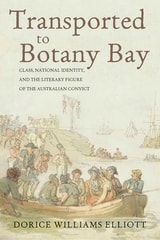
Transported to Botany Bay
Class, National Identity, and the Literary Figure of the Australian ConvictDorice Williams Elliott
Ohio University Press, 2019
Literary representations of British convicts exiled to Australia were the most likely way that the typical English reader would learn about the new colonies there. In Transported to Botany Bay, Dorice Williams Elliott examines how writers—from canonical ones such as Dickens and Trollope to others who were themselves convicts—used the figure of the felon exiled to Australia to construct class, race, and national identity as intertwined.
Even as England’s supposedly ancient social structure was preserved and venerated as the “true” England, the transportation of some 168,000 convicts facilitated the birth of a new nation with more fluid class relations for those who didn’t fit into the prevailing national image. In analyzing novels, broadsides, and first-person accounts, Elliott demonstrates how Britain linked class, race, and national identity at a key historical moment when it was still negotiating its relationship with its empire. The events and incidents depicted as taking place literally on the other side of the world, she argues, deeply affected people’s sense of their place in their own society, with transnational implications that are still relevant today.
Unnatural Narratology
Extensions, Revisions, and ChallengesEdited by Jan Alber and Brian Richardson
The Ohio State University Press, 2020
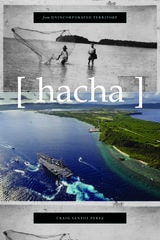
from unincorporated territory [hacha]
Craig Santos Perez
Omnidawn, 2017
from unincorporated territory [lukao]
Craig Santos Perez
Omnidawn, 2017