Results by title
26 books match the query 'Homelessness'

At Home in the World
Michael Jackson
Duke University Press, 1995
Something of a nomad himself, having lived in New Zealand, Sierra Leone, England, France, Australia, and the United States, Jackson is deft at capturing the ambiguities of home as a lived experience among the Warlpiri. Blending narrative ethnography, empirical research, philosophy, and poetry, he focuses on the existential meaning of being at home in the world. Here home becomes a metaphor for the intimate relationship between the part of the world a person calls "self" and the part of the world called "other." To speak of "at-homeness," Jackson suggests, implies that people everywhere try to strike a balance between closure and openness, between acting and being acted upon, between acquiescing in the given and choosing their own fate. His book is an exhilarating journey into this existential struggle, responsive at every turn to the political questions of equity and justice that such a struggle entails.
A moving depiction of an aboriginal culture at once at home and in exile, and a personal meditation on the practice of ethnography and the meaning of home in our increasingly rootless age, At Home in the World is a timely reflection on how, in defining home, we continue to define ourselves.

Beyond Homelessness
Frames Of ReferenceBenedict Giamo
University of Iowa Press, 1992
Homelessness is a haunting social problem that has, by all definitions, outgrown society's conventional solutions. Through their interviews with nine knowledgeable observers who range across the humanities, social and medical sciences, and human services, Giamo and Grunberg examines the nature and conditions of this ongoing crisis. No longer contained by traditional urban skid rows or state mental hospitals, homeless individuals now confront "normal" society face to face—and this "normal" society is at a loss for how to respond. The enormity of the problem has resulted in a stagnation of viable ideas, creating an industry with an endless litany of root cause and quick fix. But as these dialogues point out, there is no one root cause for the fact of homelessness. These timely, penetrating exhanges challenge established misconceptions of this problem.
Cast Out
Vagrancy and Homelessness in Global and Historical PerspectiveA. L. Beier
Ohio University Press, 2008
Throughout history, those arrested for vagrancy have generally been poor men and women, often young, able-bodied, unemployed, and homeless. Most histories of vagrancy have focused on the European and American experiences. Cast Out: Vagrancy and Homelessness in Global and Historical Perspective is the first book to consider the shared global heritage of vagrancy laws, homelessness, and the historical processes they accompanied.
In this ambitious collection, vagrancy and homelessness are used to examine a vast array of phenomena, from the migration of labor to social and governmental responses to poverty through charity, welfare, and prosecution. The essays in Cast Out represent the best scholarship on these subjects and include discussions of the lives of the underclass, strategies for surviving and escaping poverty, the criminalization of poverty by the state, the rise of welfare and development programs, the relationship between imperial powers and colonized peoples, and the struggle to achieve independence after colonial rule. By juxtaposing these histories, the authors explore vagrancy as a common response to poverty, labor dislocation, and changing social norms, as well as how this strategy changed over time and adapted to regional peculiarities.
Part of a growing literature on world history, Cast Out offers fresh perspectives and new research in fields that have yet to fully investigate vagrancy and homelessness. This book by leading scholars in the field is for policy makers, as well as for courses on poverty, homelessness, and world history.
Contributors:
Richard B. Allen
David Arnold
A. L. Beier
Andrew Burton
Vincent DiGirolamo
Andrew A. Gentes
Robert Gordon
Frank Tobias Higbie
Thomas H. Holloway
Abby Margolis
Paul Ocobock
Aminda M. Smith
Linda Woodbridge
Citizen Hobo
How a Century of Homelessness Shaped AmericaTodd DePastino
University of Chicago Press, 2003
In this eye-opening work of American history, Todd DePastino tells the epic story of hobohemia's rise and fall, and crafts a stunning new interpretation of the "American century" in the process. Drawing on sources ranging from diaries, letters, and police reports to movies and memoirs, Citizen Hobo breathes life into the largely forgotten world of the road, but it also, crucially, shows how the hobo army so haunted the American body politic that it prompted the creation of an entirely new social order and political economy. DePastino shows how hoboes—with their reputation as dangers to civilization, sexual savages, and professional idlers—became a cultural and political force, influencing the creation of welfare state measures, the promotion of mass consumption, and the suburbanization of America. Citizen Hobo's sweeping retelling of American nationhood in light of enduring struggles over "home" does more than chart the change from "homelessness" to "houselessness." In its breadth and scope, the book offers nothing less than an essential new context for thinking about Americans' struggles against inequality and alienation.
Derelict Paradise
Homelessness and Urban Development in Cleveland, OhioDaniel R. Kerr
University of Massachusetts Press, 2011
Seeking answers to the question, “Who benefits from homelessness?” this book takes the reader on a sweeping tour of Cleveland's history from the late nineteenth-century through the early twenty-first. Daniel Kerr shows that homelessness has deep roots in the shifting ground of urban labor markets, social policy, downtown development, the criminal justice system, and corporate power. Rather than being attributable to the illnesses and inadequacies of the unhoused themselves, it is a product of both structural and political dynamics shaping the city. Kerr locates the origins of today's shelter system in the era that followed the massive railroad rebellions of 1877. From that period through the Great Depression, business and political leaders sought to transform downtown Cleveland to their own advantage. As they focused on bringing business travelers and tourists to the city and beckoned upper-income residents to return to its center, they demolished two downtown working-class neighborhoods and institutionalized a shelter system to contain and control the unhoused and unemployed. The precedents from this period informed the strategies of the post–World War II urban renewal era as the "new urbanism" of the late twentieth century. The efforts of the city's elites have not gone uncontested. Kerr documents a rich history of opposition by people at the margins of whose organized resistance and everyday survival strategies have undermined the grand plans crafted by the powerful and transformed the institutions designed to constrain the lives of the homeless.
Down and Out in America
The Origins of HomelessnessPeter H. Rossi
University of Chicago Press, 1990
Down and Out in Los Angeles and Berlin
The Sociospatial Exclusion of Homeless PeopleJurgen von Mahs
Temple University Press, 2015
Drawing on fascinating ethnographic insights, von Mahs shows how homeless people in both cities face sociospatial exclusion-legal displacement for criminal activities, poor shelters in impoverished neighborhoods, as well as market barriers that restrict reintegration. Providing a necessary wake-up call, Down and Out in Los Angeles and Berlin addresses the critical public policy issues that can produce effective services to improve homeless people's chances for a lasting exit.
For a Liberatory Politics of Home
Michele Lancione
Duke University Press, 2023

Homeless Families
THE STRUGGLE FOR DIGNITYBarry Jay Seltser and Donald E. Miller
University of Illinois Press, 1993
Homeless In Paradise
A Map of the TerrainRobert Rosenthal
Temple University Press, 1993
Homeplaces
Dwelling and Habitability in Critical TimesJoão Biehl and Federico Neiburg, editors
Duke University Press, 2026
How to House the Homeless
Ingrid Gould Ellen
Russell Sage Foundation, 2010
Indigenous Homelessness
Perspectives from Canada, Australia, and New ZealandEvelyn J. Peters
University of Manitoba Press, 2016
My Eyes Feel They Need to Cry
Stories from the Formerly HomelessMartha Aladjem Bloomfield
Michigan State University Press, 2013
New Homeless And Old
Community and the Skid Row HotelCharles Hoch
Temple University Press, 1990

Of Others Inside
Insanity, Addiction And Belonging in AmericaDarin Weinberg, foreword by Bryan S. Turner
Temple University Press, 2005
Seeking to offer a new sociological understanding of the relationship between social exclusion and mental disability, Of Others Inside considers the general social conditions of homelessness, poverty, and social marginality in the U.S. Weinberg also explores questions about American perceptions of these conditions, and examines in great detail the social reality of mental disability and drug addiction without reducing people's suffering to simple notions of biological fate or social disorder.
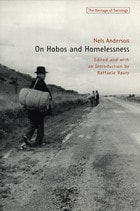
On Hobos and Homelessness
Nels Anderson
University of Chicago Press, 1998
On Hobos and Homelessness includes Anderson's rich and vibrant ethnographic work of a world of homeless men. He conducted his study on Madison street in Chicago, and we come to intimately know this portion of the 1920s hobo underworld—the harshness of vagrant life and the adventures of young hobos who come to the big city. This selection also includes Anderson's later work on the juvenile and the tramp, the unattached migrant, and the family. Like John Steinbeck's Depression-era observations, Anderson's writings express the memory of those who do not seem entitled to have memory, whose lives were expressed in temporary labor.
On The Bowery
Homelessness In SocietyBenedict Giamo
University of Iowa Press, 1989
As both theme and place, the Bowery has been rich in meaning, evocative in association, long in development, and representative of the inherent conflict between culture and subculture. This award-winning interdisciplinary study puts in perspective the social meaning and cultural significance of the Bowery from both historical and contemporary outlooks, spanning the fields of American literature and social history, culture studies, symbolic anthropology, ethnography, and social psychology. On the Bowery has special relevance in providing continuity for the systems of thought and methods of intervention that influence responses to the modern condition of homelessness in American cities today.
Over the Edge
The Growth of Homelessness in the 1980sMartha M. Burt
Russell Sage Foundation, 1992
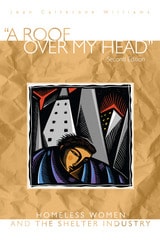
Roof Over My Head, Second Edition
Homeless Women and the Shelter IndustryJean Calterone Williams
University Press of Colorado, 2016
Based upon extensive ethnographic data, “A Roof Over My Head” examines the lives of homeless women who cope with domestic violence, low-income housing shortages, and poverty. The author draws upon interviews with homeless women, interviews with housed people, and, finally, evaluations of shelter services, philosophies, and policies to get at the causes and social constructions of homelessness. “A Roof Over My Head” is a groundbreaking study that unveils the centrality of abuse and poverty in homeless women’s lives and outlines ways in which societal responses can and should be more effective.
The second edition explores recent attempts to integrate homeless and battered women’s shelters and recent research on domestic violence as a cause of homelessness. It contains a new introduction that analyzes the most recent homeless policy developments and paints a picture of the homeless population today. With updated statistics and policy information throughout, the second edition of “A Roof Over My Head” illustrates why ending homelessness in the United States continues to present a thorny and complex challenge.

The Colonizing Self
Or, Home and Homelessness in Israel/PalestineHagar Kotef
Duke University Press, 2020

The Displaced of Capital
Anne Winters
University of Chicago Press, 2004
The long-awaited follow-up to The Key to the City—a finalist for the National Book Critics Circle Award in 1986—Anne Winters's The Displaced of Capital emanates a quiet and authoritative passion for social justice, embodying the voice of a subtle, sophisticated conscience.
The "displaced" in the book's title refers to the poor, the homeless, and the disenfranchised who populate New York, the city that serves at once as gritty backdrop, city of dreams, and urban nightmare. Winters also addresses the culturally, ethnically, and emotionally excluded and, in these politically sensitive poems, writes without sentimentality of a cityscape of tenements and immigrants, offering her poetry as a testament to the lives of have-nots. In the central poem, Winters witnesses the relationship between two women of disparate social classes whose friendship represents the poet's political convictions. With poems both powerful and musical, The Displaced of Capital marks Anne Winters's triumphant return and assures her standing as an essential New York poet.

The Ethics of Space
Homelessness and Squatting in Urban EnglandSteph Grohmann
HAU, 2020
Set against the backdrop of economic crisis, austerity, and a disintegrating British state, Steph Grohmann tells the story of a flourishing squatter community in the city of Bristol and how it was eventually outlawed by the state. The first ethnography of homelessness done by a researcher who was formally homeless throughout fieldwork, this volume explores the intersection between spatial existence, subjectivity, and ethics. The result is a book that rethinks how ethical views are shaped and constructed through our own spatial existences.

The Librarian's Guide to Homelessness
An Empathy-Driven Approach to Solving Problems, Preventing Conflict, and Serving EveryoneRyan Dowd
American Library Association, 2018
Homelessness is a perennial topic of concern at libraries. In fact, staff at public libraries interact with almost as many homeless individuals as staff at shelters do. Empathy and understanding, along with specific actionable advice that’s drawn from experience, makes all the difference in working with this group. In this book Dowd, executive director of a homeless shelter, spotlights best practices drawn from his own shelter’s policies and training materials. Filled with to-the-point guidance that will help frontline public library staff and managers understand and serve this population better, this resource
- includes facts about homelessness every librarian should know;
- debunks widespread myths about these individuals, explaining how they see themselves, what issues they struggle with, and how libraries can shift towards supporting them;
- shares de-escalation techniques like showing respect, ways to avoid making things personal, and using proper body language;
- walks readers through dealing with common issues like a sleeping patron, questionable hygiene, offensive behavior, and asking a patron to leave; and
- advises on how to provide backup to a colleague and when to call the police.
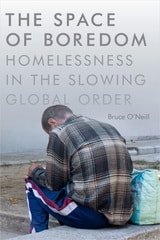
The Space of Boredom
Homelessness in the Slowing Global OrderBruce O'Neill
Duke University Press, 2017
The Value of Homelessness
Managing Surplus Life in the United StatesCraig Willse
University of Minnesota Press, 2015
It is all too easy to assume that social service programs respond to homelessness, seeking to prevent and understand it. The Value of Homelessness, however, argues that homelessness today is an effect of social services and sciences, which shape not only what counts as such but what will?or ultimately won’t?be done about it.
Through a history of U.S. housing insecurity from the 1930s to the present, Craig Willse traces the emergence and consolidation of a homeless services industry. How to most efficiently allocate resources to control ongoing insecurity has become the goal, he shows, rather than how to eradicate the social, economic, and political bases of housing needs. Drawing on his own years of work in homeless advocacy and activist settings, as well as interviews conducted with program managers, counselors, and staff at homeless services organizations in New York, Los Angeles, San Francisco, and Seattle, Willse provides the first analysis of how housing insecurity becomes organized as a governable social problem.
An unprecedented and powerful historical account of the development of contemporary ideas about homelessness and how to manage homelessness, The Value of Homelessness offers new ways for students and scholars of social work, urban inequality, racial capitalism, and political theory to comprehend the central role of homelessness in governance and economy today.