Results by title
10 books match the query 'Authors' spouses'
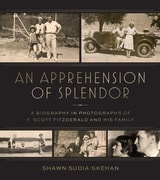
An Apprehension of Splendor
A Biography in Photographs of F. Scott Fitzgerald and His FamilyShawn Sudia-Skehan; Foreword by Jackson R. Bryer; Introduction by Eleanor Lanahan
University of Alabama Press, 2025
A unique collection of Fitzgerald family photographs, many never before published, hand selected by a curator of the Scott and Zelda Fitzgerald Museum.
Enter the Jazz Age glamour of F. Scott and Zelda Fitzgerald and their daughter, Scottie. An Apprehension of Splendor is a rich pictorial biography that illuminates the lives of this brilliant literary family in 344 rare photographs, 180 of which have never been published.
The Fitzgeralds are chiefly known from a small number of iconic, posed images, but the dashing couple and their daughter amassed hundreds of candid snapshots now housed in archives and university library collections throughout North America. These rare photos reveal the full, vivid lives behind the icons—a Buffalo boy cradling a velvety puppy, a jaunty southern gamine in the shade of a loblolly pine laughing at a secret, the stoic gloom of an enlistee in a scratchy woolen uniform, a plot taking shape in the mind of a fledgling writer with bed-tousled hair, an amorous young couple struggling to light a cigarette in the chiaroscuro of a Riviera beach, an unhappy baby tugged through the snow in a laundry basket lashed to a sled, and a myriad of other images that will rekindle fascination with the Fitzgeralds and their time.
With unparalleled access to the family’s personal papers and photographs, Shawn Sudia-Skehan, former director of acquisitions at the Scott and Zelda Fitzgerald Museum, handpicked and annotated this collection of images that brings readers closer to the Fitzgeralds than any other work. Readers of Tender Is the Night, The Beautiful and Damned, and many other works by F. Scott and Zelda will recognize some of the places and experiences that inspired their unforgettable fictions.
A captivating portrait of Jazz Age celebrity, young passion, and artistic ambition, An Apprehension of Splendor returns the perfume to the luminous flower of the Fitzgeralds.
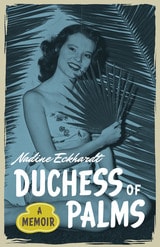
Duchess of Palms
A MemoirBy Nadine Eckhardt
University of Texas Press, 2009
A “fifties girl” tells the fascinating story of her marriages to novelist Billy Lee Brammer and Congressman Bob Eckhardt, and how these relationships propelled her into the multifaceted life she led on her own terms.
Child of the Great Depression, teenage "Duchess of Palms" beauty queen, wife of an acclaimed novelist and later of a brilliant U.S. congressman, and ultimately a successful single working woman and mother, Nadine Eckhardt has lived a fascinating life. In this unique, funny, and honest memoir, she recounts her journey from being a "fifties girl" who lived through the men in her life to becoming a woman in her own right, working toward her own goals.
Eckhardt's first marriage to writer Billy Lee Brammer gave her entrée to liberal political and literary circles in Austin and Washington, where she and Brammer both worked for Senator Lyndon B. Johnson. She describes the heady excitement of LBJ's world—a milieu that Brammer vividly captured in his novel The Gay Place. She next recalls her second marriage to Bob Eckhardt, whom she helped get elected to the U.S. House of Representatives, as well as her growing involvement with the counterculture of social protest, sexual revolution, and drug use. Eckhardt honestly recounts how the changing times changed her perception of herself, recalling that "I didn't know how to achieve for myself, only for others, and I felt ripped off and empty." This painful realization opened the door to a new life for Eckhardt. Her memoir concludes with a joyful description of her multifaceted later life as a restaurateur, assistant to Molly Ivins, writer, and center of a wide circle of friends.
Life of Lidian Jackson Emerson
Delores Bird Carpenter
Michigan State University Press, 2012
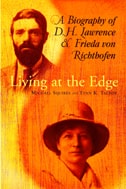
Living At The Edge
Biography Of D H Lawrence & Frieda Von RichthofenMichael Squires
University of Wisconsin Press, 2002
Living at the Edge follows the separate lives of Lawrence and Frieda up to their first meeting in 1912. Tracing their new life together, it depicts their grateful escape from the English Midlands; their discovery of exotic places where they made temporary homes—Italy, Cornwall, Australia, New Mexico, and Mexico; Lawrence’s courageous battle against illness; and, after his death in 1930, Frieda’s success in recreating the simple life on ranches near Taos, New Mexico, where she died in 1956.
At the center of their story is Lawrence’s literary career. Biographers Squires and Talbot see Lawrence’s major novels—The Rainbow, Women in Love, Lady Chatterley’s Lover—as a fresh way to understand his turbulent and conflicted life. They reveal the extreme care with which he rewrote his personal experience to satisfy his deepest needs, and they introduce the many influential people who entered the Lawrences’ lives and work. The rich materials from Frieda’s letters reveal a different Lawrence—more difficult as a man but more interesting as an artist; they also reveal a different Frieda—more vibrant as a woman, more substantial as a companion. This superb biography gives both Lawrence and Frieda striking new dimensions.

Memoir of Italo Svevo
Livia Veneziani Svevo
Northwestern University Press, 2001
Sophia Peabody Hawthorne
A Life, Volume 2, 1848-1871Patricia Dunlavy Valenti
University of Missouri Press, 2015
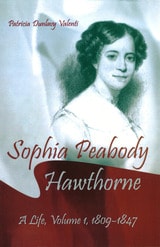
Sophia Peabody Hawthorne
A Life, Volume I, 1809-1847Patricia Dunlavy Valenti
University of Missouri Press, 2004
Sophia was born into an expansive, somewhat chaotic home in which women provided financial as well as emotional sustenance. She was a precocious, eager student whose rigorous education, in her mother’s and her sisters’ schools, began her association with the children of New England’s elite. Sophia aspired to become a professional, self-supporting painter, exhibiting her art and seeking criticism from established mentors. She relished an eighteen-month sojourn in Cuba. Nathaniel’s reclusive family, his reluctant early education, his anonymous pursuit of a career, and his relatively circumscribed life contrast markedly with the experience of the woman who became his wife and the mother of his children. Those differences resulted in a creative abrasion that ignited his fiction during the first years of their marriage.
The Picshuas of H. G. Wells
A Burlesque DiaryGene K. Rinkel and Margaret E. Rinkel
University of Illinois Press, 2000
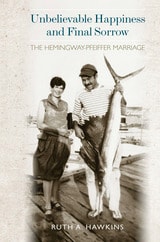
Unbelievable Happiness and Final Sorrow
The Hemingway-Pfeiffer MarriageRuth A. Hawkins
University of Arkansas Press, 2012
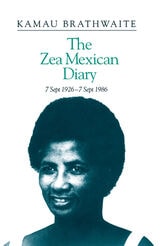
Zea Mexican Diary
7 September 1926—7 September 1986Kamau Brathwaite
University of Wisconsin Press, 1993
Zea Mexican is a tribute to Doris Brathwaite and an exploration of the creative potency of love. (The title comes from the name Brathwaite gave Doris, who was originally from Guyana of part Amerindian descent.) Exposing the intimacy of his marriage, this book is the closest Brathwaite has ever come to an autobiographical statement. In examining his life with Doris he found the courage to reveal something of his own character. But, more than an autobiography, Zea Mexican is an extraordinary work of literature, much of it written in the expressive “nation language” of Jamaica and the Caribbean. Brathwaite filters his pain through his poetic gift, presenting it to the reader with all the poignancy poetry conveys.