Results by title
15 books match the query 'Autism'
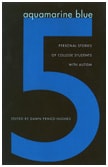
Aquamarine Blue 5
Personal Stories of College Students with AutismDawn Prince-Hughes
Ohio University Press, 2002
Rated Outstanding by the American Association of School Libraries
This is the first book to be written by autistic college students about the challenges they face. Aquamarine Blue 5 details the struggle of these highly sensitive students and shows that there are gifts specific to autistic students that enrich the university system, scholarship, and the world as a whole.
Dawn Prince-Hughes presents an array of writings by students who have been diagnosed with Asperger’s Syndrome or High-Functioning Autism, showing their unique ways of looking at and solving problems. In their own words, they portray how their divergent thinking skills could be put to great use if they were given an opportunity. Many such students never get the chance because the same sensitivity that gives them these insights makes the flicker of fluorescent lights and the sound of chalk on the board unbearable For simple—and easily remedied—reasons, we lose these students, who are as gifted as they are challenged.
Aquamarine Blue 5 is a showcase of the strength and resilient character of individuals with Asperger’s Syndrome. It will be an invaluable resource for those touched by this syndrome, their friends and families, and school administrators.
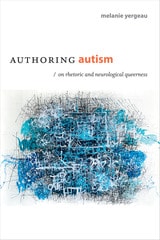
Authoring Autism
On Rhetoric and Neurological QueernessM. Remi Yergeau
Duke University Press, 2018
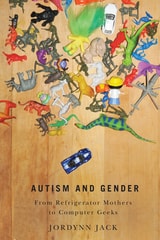
Autism and Gender
From Refrigerator Mothers to Computer GeeksJordynn Jack
University of Illinois Press, 2014
In Autism and Gender: From Refrigerator Mothers to Computer Geeks, Jack focuses on the ways gender influences popular discussion and understanding of autism's causes and effects. She identifies gendered theories like the “refrigerator mother” theory, for example, which blames emotionally distant mothers for autism, and the “extreme male brain” theory, which links autism to the modes of systematic thinking found in male computer geeks. Jack's analysis reveals how people employ such highly gendered theories to craft rhetorical narratives around stock characters--fix-it dads, heroic mother warriors rescuing children from autism--that advocate for ends beyond the story itself while also allowing the storyteller to gain authority, understand the disorder, and take part in debates.
Autism and Gender reveals the ways we build narratives around controversial topics while offering new insights into the ways rhetorical inquiry can and does contribute to conversations about gender and disability.
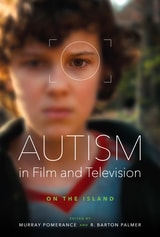
Autism in Film and Television
On the IslandEdited by Murray Pomerance and R. Barton Palmer
University of Texas Press, 2022
Global awareness of autism has skyrocketed since the 1980s, and popular culture has caught on, with film and television producers developing ever more material featuring autistic characters. Autism in Film and Television brings together more than a dozen essays on depictions of autism, exploring how autistic characters are signified in media and how the reception of these characters informs societal understandings of autism.
Editors Murray Pomerance and R. Barton Palmer have assembled a pioneering examination of autism’s portrayal in film and television. Contributors consider the various means by which autism has been expressed in films such as Phantom Thread, Mercury Rising, and Life Animated and in television and streaming programs including Atypical, The Bridge, Stranger Things, Star Trek: The Next Generation, and Community. Across media, the figure of the brilliant, accomplished, and “quirky” autist has proven especially appealing. Film and television have thus staked out a progressive position on neurodiversity by insisting on screen time for autism but have done so while frequently ignoring the true diversity of autistic experience. As a result, this volume is a welcome celebration of nonjudgmental approaches to disability, albeit one that is still freighted with stereotypes and elisions.
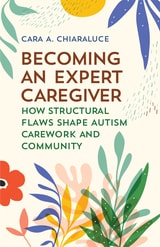
Becoming an Expert Caregiver
How Structural Flaws Shape Autism Carework and CommunityCara A. Chiaraluce
Rutgers University Press, 2025
Throughout the chapters in this book, the expert caregiver is one person who faces unbelievably daunting tasks of filling or reforming persistent institutional gaps, primarily in education and health care, and subverting ableist cultural norms. Without institutional support, answers to their questions, or pragmatic avenues to access resources, lay caregivers become the experts. Their trials and tribulations, especially when navigating the boundaries of professional/lay and private/public worlds, illuminate a type of carework that is increasingly relevant to a growing number of young families caring for neurodivergent, disabled, medically fragile, and/or chronically ill children. These stories offer a vivid picture of the often invisible complex challenges and structural forces that drive individuals to become expert caregivers in the first place.
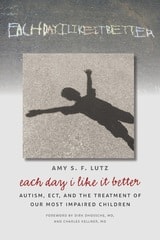
Each Day I Like It Better
Autism, ECT, and the Treatment of Our Most Impaired ChildrenAmy S. F. Lutz
Vanderbilt University Press, 2014
Each Day I Like It Better recounts the journeys of Jonah and seven other children and their families (interviewed by the author) in their quests for appropriate educational placements and therapeutic interventions. The author describes their varied, but mostly successful, experiences with ECT.
A survey of research on pediatric ECT is incorporated into the narrative, and a foreword by child psychiatrist Dirk Dhossche and ECT researcher and practitioner Charles Kellner explains how ECT works, the side effects patients may experience, and its current use in the treatment of autism, catatonia, and violent behavior in children.
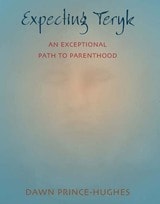
Expecting Teryk
An Exceptional Path to ParenthoodDawn Prince-Hughes
Ohio University Press, 2005
“Expecting Teryk is a rich and sumptuous work that speaks to the deeper realities and represents a unique viewpoint of experiences shared by all individuals who choose the path to parenthood.”—Disability, Pregnancy, and Parenthood
The period just prior to the birth of a child is a time of profound personal transformation for expectant parents. Expecting Teryk: An Exceptional Path to Parenthood is an intimate exploration, written in the form of a letter from a parent to her future son, that reclaims a rite of passage that modern society would strip of its magic.
Dawn Prince-Hughes, renowned author of Songs of the Gorilla Nation: My Journey through Autism, considers the ways being autistic might inform her parenting. She also candidly narrates her experience of becoming a parent as part of a lesbian couple—from meeting her partner to the questions they ask about their readiness to become parents and the practical considerations of choosing a sperm donor.
Expecting Teryk is viewed through the lens of autism as Prince-Hughes shares the unique way she sees and experiences the world—as well as her aching will to be fully present for her son. Contemplating the evolutionary traditions of parenting from both animal and human perspectives and the reassurances that nature offers, Expecting Teryk is a work of sensuous wonder that speaks to the deeper realities and archetypal experiences shared by all who embark on the journey of parenthood.
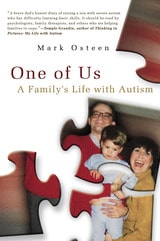
One of Us
A Family's Life with AutismMark Osteen
University of Missouri Press, 2010
In 1991, Mark Osteen and his wife, Leslie, were struggling to understand why their son, Cameron, was so different from other kids. At age one, Cam had little interest in toys and was surprisingly fixated on books. He didn’t make baby sounds; he ignored other children. As he grew older, he failed to grasp language, remaining unresponsive even when his parents called his name. When Cam started having screaming anxiety attacks, Mark and Leslie began to grasp that Cam was developmentally delayed. But when Leslie raised the possibility of an autism diagnosis, Mark balked. Autism is so rare, he thought. Might as well worry about being struck by lightning.
Since that time, awareness of autism has grown monumentally. Autism has received extensive coverage in the news media, and it has become a popular subject for film, television, and literature, but the disorder is frequently portrayed and perceived as a set of eccentricities that can be corrected with proper treatment. In reality, autism permanently wrecks many children’s chances for typical lives. Plenty of recent bestsellers have described the hardships of autism, but those memoirs usually focus on the recovery of people who overcome some or all of the challenges of the disorder. And while that plot is uplifting, it’s rare in real life, as few autistic children fully recover. The territory of severe autism—of the child who is debilitated by the condition, who will never be cured—has been largely neglected. One of Us: A Family’s Life with Autism tells that story.
In this book, Mark Osteen chronicles the experience of raising Cam, whose autism causes him aggression, insomnia, compulsions, and physical sickness. In a powerful, deeply personal narrative, Osteen recounts the struggles he and his wife endured in diagnosing, treating, and understanding Cam’s disability, following the family through the years of medical difficulties and emotional wrangling. One of Us thrusts the reader into the life of a child who exists in his own world and describes the immense hardships faced by those who love and care for him. Leslie and Mark's marriage is sorely tested by their son's condition, and the book follows their progress from denial to acceptance while they fight to save their own relationship.
By embracing the little victories of their life with Cam and by learning to love him as he is, Mark takes the reader down a road just as gratifying, and perhaps more moving, than one to recovery. One of Us is not a book about a child who overcomes autism. Instead, it’s the story of a different but equally rare sort of victory—the triumph of love over tremendous adversity.

Saving Ben
A Father's Story of AutismDan E. Burns
University of North Texas Press, 2009
See Sam Run
A Mother's Story of AutismPeggy Heinkel-Wolfe
University of North Texas Press, 2008
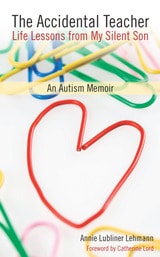
The Accidental Teacher
Life Lessons from My Silent SonAnnie Lubliner Lehmann
University of Michigan Press, 2009
"Jonah Lehmann is an accidental teacher of others, including his family and friends. This personal and touching account of Jonah's life is enlightening, especially to those coming to terms with similar challenges with autism and other cognitive disabilities. It was written with love to support research on autism, and I recommend it to anyone and everyone touched by those of us who are different."
---Patricia E. Kefalas Dudek, Legal Advocate for People with Disabilities
"I have never read a book about a disabled person that caught me from page one. I could not put this one down. Lehmann offers a profound perspective on living with the reality of a severely disabled child. This book will be required reading for students who take my class in Special Education Administration."
---Frances LaPlante-Sosnowsky, Associate Professor of Education at Wayne State University
"A story of the astonishing power of human love and family triumph over hardship. Lehmann's story, engaging and at times both heartbreaking and joyful, offers an intimate view of one mother's journey as she works with professionals and a blur of caregivers to assist the ever-changing needs of her son. I highly recommend it to seasoned professionals in the field of autism and students preparing for careers in special education."
---Janet E. Graetz, Assistant Professor of Human Development and Child Studies at Oakland University
A child teaches without intending to . . .
Having severe autism does not stop Annie Lehmann's son Jonah from teaching her some of life's most valuable lessons. The Accidental Teacher, a heartfelt memoir about self-discovery rather than illness, uses insight and humor to weave a tale rich with kitchen-table wisdom. It explains the realities of life with a largely nonverbal son and explores the frustrations and triumphs of the Lehmann family as Jonah grew into a young adult. This book is a must-read for anyone who has been personally touched by a major life challenge.
Annie Lubliner Lehmann, a freelance writer for more than twenty-five years, has published articles in many newspapers and magazines, including the New York Times and Detroit Free Press. She resides in Michigan with her husband and two of her three children. Her eldest son, who inspired this memoir, is now a young adult with autism who lives in a supervised home.
The Minor Gesture
Erin Manning
Duke University Press, 2016
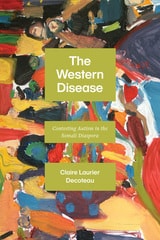
The Western Disease
Contesting Autism in the Somali DiasporaClaire Laurier Decoteau
University of Chicago Press, 2021
Because autism is an increasingly common diagnosis, North Americans are familiar with its symptoms and treatments. But what we know and think about autism is shaped by our social relationship to health, disease, and the medical system. In The Western Disease Claire Laurier Decoteau explores the ways that recent immigrants from Somalia to Canada and the US make sense of their children’s diagnosis of autism. Having never heard of autism before migrating to North America, they often determine that it must be a Western disease. Given its apparent absence in Somalia, they view it as Western in nature, caused by environmental and health conditions unique to life in North America.
Following Somali parents as they struggle to make sense of their children's illness and advocate for alternative care, Decoteau unfolds how complex interacting factors of immigration, race, and class affect Somalis’ relationship to the disease. Somalis’ engagement with autism challenges the prevailing presumption among Western doctors that their approach to healing is universal. Decoteau argues that centering an analysis on autism within the Somali diaspora exposes how autism has been defined and institutionalized as a white, middle-class disorder, leading to health disparities based on race, class, age, and ability. The Western Disease asks us to consider the social causes of disease and the role environmental changes and structural inequalities play in health vulnerability.
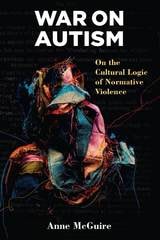
War on Autism
On the Cultural Logic of Normative ViolenceAnne McGuire
University of Michigan Press, 2016
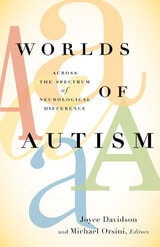
Worlds of Autism
Across the Spectrum of Neurological DifferenceJoyce Davidson
University of Minnesota Press, 2013
Since first being identified as a distinct psychiatric disorder in 1943, autism has been steeped in contestation and controversy. Present-day skirmishes over the potential causes of autism, how or even if it should be treated, and the place of Asperger’s syndrome on the autism spectrum are the subjects of intense debate in the research community, in the media, and among those with autism and their families. Bringing together innovative work on autism by international scholars in the social sciences and humanities, Worlds of Autism boldly challenges the deficit narrative prevalent in both popular and scientific accounts of autism spectrum disorders, instead situating autism within an abilities framework that respects the complex personhood of individuals with autism.
A major contribution to the emerging, interdisciplinary field of critical autism studies, this book is methodologically and conceptually broad. Its authors explore the philosophical questions raised by autism, such as how it complicates neurotypical understandings of personhood; grapple with the politics that inform autism research, treatment, and care; investigate the diagnosis of autism and the recognition of difference; and assess representations of autism and stories told by and about those with autism.
From empathy, social circles, and Internet communities to biopolitics, genetics, and diagnoses, Worlds of Autism features a range of perspectives on autistic subjectivities and the politics of cognitive difference, confronting society’s assumptions about those with autism and the characterization of autism as a disability.
Contributors: Dana Lee Baker, Washington State U; Beatrice Bonniau, Paris Descartes U; Charlotte Brownlow, U of Southern Queensland, Australia; Kristin Bumiller, Amherst College; Brigitte Chamak, Paris Descartes U; Kristina Chew, Saint Peter’s U, New Jersey; Patrick McDonagh, Concordia U, Montreal; Stuart Murray, U of Leeds; Majia Holmer Nadesan, Arizona State U; Christina Nicolaidis, Portland State U; Lindsay O'Dell, Open U, London; Francisco Ortega, State U of Rio de Janeiro; Mark Osteen, Loyola U, Maryland; Dawn Eddings Prince; Dora Raymaker; Sara Ryan, U of Oxford; Lila Walsh.