Results by title
8 books match the query 'Autobiographical fiction, American'
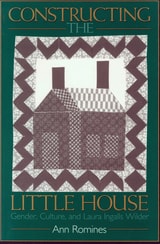
Constructing the Little House
Gender, Culture, and Laura Ingalls WilderAnn Romines
University of Massachusetts Press, 1997
Ann Romines interweaves personal observation with scholarly analysis to address these questions. Writing from a feminist perspective and drawing on resources of gender studies, cultural studies, and new historicist reading, she examines both the content of the novels and the process of their creation. She explores the relationship between mother and daughter working as collaborative authors and calls into question our assumptions about plot, juvenile fiction, and constructions of gender on the nineteenth-century frontier and in the Depression years when the Little House books were written.
This is a book that will appeal both to scholars and to general readers who might welcome an engaging and accessible companion volume to the Little House novels.
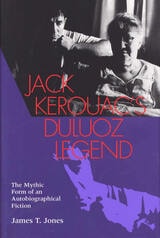
Jack Kerouac's Duluoz Legend
The Mythic Form of an Autobiographical FictionJames T. Jones
Southern Illinois University Press, 1999
In the only critical examination of all of Jack Kerouac's published prose, James T. Jones turns to Freud to show how the great Beat writer used the Oedipus myth to shape not only his individual works but also the entire body of his writing.
Like Balzac, Jones explains, Kerouac conceived an overall plan for his total writing corpus, which he called the Duluoz Legend after Jack Duluoz, his fictional alter ego. While Kerouac's work attracts biographical treatment—the ninth full-length biography was published in 1998—Jones takes a Freudian approach to focus on the form of the work. Noting that even casual readers recognize family relationships as the basis for Kerouac's autobiographical prose, Jones discusses these relationships in terms of Freud's notion of the Oedipus complex.
After establishing the basic biographical facts and explaining Freud's application of the Oedipus myth, Jones explicates Kerouac's novels of childhood and adolescence, focusing on sibling rivalry. Supporting his contention that the Beat writer worked according to a plan, Jones then shows how Kerouac revised The Town and the City (1950), his first published novel, in Vanity of Duluoz, the last novel published in his lifetime, to de-emphasize the death of the father. He treats three versions of Kerouac's road novel—including On the Road—as versions of Oedipus's fateful journey from Corinth to Thebes. And he argues that Pic, often considered peripheral to the Duluoz Legend, replicates the Oedipal themes.
Jones demonstrates that Maggie Cassidy, The Subterraneans, and Tristessa share a form that results from Kerouac's unresolved rivalry with his father for the love of his mother. He discusses Kerouac's replacement of the destructive brother figures in On the Road and Visions of Cody with the constructive hero of The Dharma Bums. He also shows how the Oedipal structure of the Duluoz Legend applies to Kerouac's nonfiction.
In the penultimate chapter, Jones explains how Big Sur, Kerouac's story of his alcohol-induced nervous breakdown, actually marks the climax of the Duluoz Legend. The alcoholism, Jones insists, is not the cause but a symptom of a breakdown brought on by his attachment to his mother. He shows how Kerouac's obsession with his family repeats Oedipal themes throughout the Duluoz Legend. Finally, he deals with Oedipal themes in Kerouac's nonnarrative work, including Old Angel Midnight, Some of the Dharma, The Scripture of the Golden Eternity, and several poems.
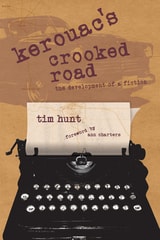
Kerouac's Crooked Road
The Development of a FictionTim Hunt
Southern Illinois University Press, 1996
Now a classic, Kerouac’s Crooked Road was one of the first critical works on the legendary Beat writer to analyze his work as serious literary art, placing it in the broader American literary tradition with canonical writers like Herman Melville and Mark Twain. Author Tim Hunt explores Kerouac’s creative process and puts his work in conversation with classic American literature and with critical theory.
This edition includes a new preface by the author, which takes a discerning look at the implications of the 2007 publication of the original typewriter scroll version of On the Road for the understanding of Kerouac and his novel. Although some critics see the scroll version of the novel as embodying Kerouac’s true artistic vision and the 1957 Viking edition as a commercialized compromise of that vision, Hunt argues that the two versions should not be viewed as antithetical but rather as discrete perspectives of a writer deeply immersed in writing as both performance and evolving process.
Hunt moves beyond the mythos surrounding the “spontaneous creation” of On the Road, which upholds Kerouac’s reputation as a cultural icon, to look more closely at an innovative writer who wanted to bridge the gap between the luscious, talk-filled world of real life and the sterilized version of that world circumscribed by overly intellectualized, literary texts, through the use of written language driven by effusive passion rather than sober reflection. With close, erudite readings of Kerouac’s major and minor works, from On the Road to Visions of Cody,Hunt draws on Kerouac’s letters, novels, poetry, and experimental drafts to position Kerouac in both historical and literary contexts, emphasizing the influence of writers such as Emerson, Melville, Wolfe, and Hemingway on his provocative work.
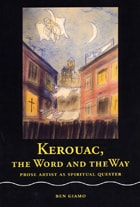
Kerouac, the Word and the Way
Prose Artist as Spiritual QuesterBen Giamo
Southern Illinois University Press, 2000
Kerouac was primarily a religious writer bent on testing and celebrating the profane depths and transcendent heights of experience and reporting both truly. Baptized and buried a Catholic, he was also heavily influenced by Buddhism, especially from 1954 until 1957 when he integrated traditional Eastern belief into several novels. Catholicism remained an essential force in his writing, but his study of Buddhism was serious and not solely in the service of his literary art. As he wrote to Malcolm Cowley in 1954, "Since I saw you I took up the study of Buddhism and for me it’s the word and the way I was looking for."
Giamo also seeks IT—"a vital force in the experience of living that takes one by surprise, suspending for the moment belief in the ‘real’ concrete grey everyday of facts of self and selfhood . . . its various meanings, paths, and oscillations: from romantic lyricism to ‘the ragged and ecstatic joy of pure being and from the void-pit of the Great World Snake to the joyous pain of amorous love, and, finally, from Catholic/Buddhist serenity to the onset of penitential martyrhood."
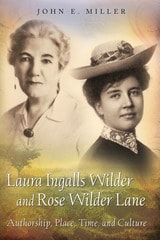
Laura Ingalls Wilder and Rose Wilder Lane
Authorship, Place, Time, and CultureJohn E. Miller
University of Missouri Press, 2008
Interpreting these writers in their larger historical and cultural contexts, Miller reconsiders their formidable artistic, political, and literary contributions to American cultural life in the 1930s. He looks at what was happening in 1932—from depression conditions and politics to chain stores and celebrity culture—to shed light on Wilder’s life, and he shows how actual “little houses” established ideas of home that resonated emotionally for both writers.
In considering each woman’s ties to history, Miller compares Wilder with Frederick Jackson Turner as a frontier mythmaker and examines Lane’s unpublished history of Missouri in the context of a contemporaneous project, Thomas Hart Benton’s famous Jefferson City mural. He also looks at Wilder’s Missouri Ruralist columns to assess her pre–Little House values and writing skills, and he readdresses her literary treatment of Native Americans. A final chapter shows how Wilder’s and Lane’s conservative political views found expression in their work, separating Lane’s more libertarian bent from Wilder’s focus on writing moralist children’s fiction.
These nine thoughtful essays expand the critical discussion on Wilder and Lane beyond the Little House. Miller portrays them as impassioned and dedicated writers who were deeply involved in the historical changes and political challenges of their times—and contends that questions over the books’ authorship do not do justice to either woman’s creative investment in the series. Miller demystifies the aura of nostalgia that often prevents modern readers from seeing Wilder as a real-life woman, and he depicts Lane as a kindred artistic spirit, helping readers better understand mother and daughter as both women and authors.
Male Call
Becoming Jack LondonJonathan Auerbach
Duke University Press, 1996
Jonathan Auerbach shows that London’s personal identity was not a basis of his literary success, but rather a consequence of it. Unlike previous studies of London that are driven by the author’s biography, Male Call examines how London carefully invented a trademark “self” in order to gain access to a rapidly expanding popular magazine and book market that craved authenticity, celebrity, power, and personality. Auerbach demonstrates that only one fact of London’s life truly shaped his art: his passionate desire to become a successful author. Whether imagining himself in stories and novels as a white man on trail in the Yukon, a sled dog, a tramp, or a professor; or engaging questions of manhood and mastery in terms of work, race, politics, class, or sexuality, London created a public persona for the purpose of exploiting the conventions of the publishing world and marketplace.
Revising critical commonplaces about both Jack London’s work and the meaning of “nature” within literary naturalism and turn-of-the-century ideologies of masculinity, Auerbach’s analysis intriguingly complicates our view of London and sheds light on our own postmodern preoccupation with celebrity. Male Call will attract readers with an interest in American studies, American literature, gender studies, and cultural studies.
Michael Martone
FictionsMichael Martone
University of Alabama Press, 2005
When the author becomes the story, the possibilities are endless.
Michael Martone, by Michael Martone, continues the author's giddy exploration of the parts of books nobody ever reads. Michael Martone is its own appendix, comprising fifty “contributors notes,” each of which identifies in exorbitant biographical detail the author of the other forty-nine. Full of fanciful anecdotes and preposterous reminiscences, Martone’s self-inventions include the multiple deaths of himself and all his family members, his Kafkaesque rebirth as a giant insect, and his stints as circus performer, assembly-line worker, photographer, and movie extra.
Expect no autobiographical consistency here. A note revealing Martone's mother as the ghost-writer of all his books precedes the note beginning, “Michael Martone, an orphan . . . “ We learn of Martone’s university career and sketchy formal education, his misguided caretaking of his teacher John Barth’s lawn, and his impersonation of a poor African republic in political science class, where Martone's population is allowed to starve as his more fortunate fellow republics fight over development and natural resource trading-cards.
The author of Michael Martone, whose other names include Missy, Dolly, Peanut, Bug, Gigi-tone, Tony's boy, Patty's boy, Junior's, Mickey, Monk, Mr. Martone, and “the contributor named in this note," proves as Protean as fiction itself, continuously transforming the past with every new attribution but never identifying himself by name. It is this missing personage who, from first note to last, constitutes the unformed subject of Michael Martone.
What's Your Road, Man?
Critical Essays on Jack Kerouac's On the RoadEdited by Hilary Holladay and Robert Holton
Southern Illinois University Press, 2008
The ten essays in this groundbreaking compilation cover a broad range of topics, employing a variety of approaches, including theoretical interpretations and textual and comparative analysis, to investigate such issues as race, class, gender, and sexuality, as well as the novel's historical and literary contexts. What's Your Road, Man? Critical Essays on Jack Kerouac's "On the Road" illustrates the richness of the critical work currently being undertaken on this vital American narrative.
Combining essays from renowned Kerouac experts and emerging scholars, What's Your Road, Man? draws on an enormous amount of research into the literary, social, cultural, biographical, and historical contexts of Kerouac's canonical novel. Since its publication in 1957, On the Road has remained in print and has continued to be one of the most widely read twentieth-century American novels.
Several essays enhance understanding of the book by comparing it with alternative versions of the text, like the original 1951 scroll manuscript and some of Kerouac's other novels, and with works by Kerouac's contemporaries such as Sylvia Plath's The Bell Jar. Further studies explore ethnicity, identity, and the novel's place in American literature as well as its relevance to twenty-first century readers.
On the Road has inspired readers for more than fifty years, and the new research included in What's Your Road, Man? introduces fresh perspectives on this classic work of American literature. Editors Hilary Holladay and Robert Holton have successfully woven little-known material with new understandings of familiar topics that will enlighten current and future generations of Kerouac enthusiasts and scholars for years to come.