Results by title
2 books match the query 'Autumn'
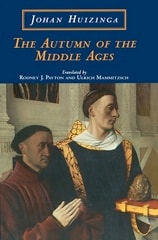
The Autumn of the Middle Ages
Johan Huizinga
University of Chicago Press, 1996
The Autumn of the Middle Ages is Johan Huizinga's classic portrait of life, thought, and art in fourteenth- and fifteenth-century France and the Netherlands. Few who have read this book in English realize that The Waning of the Middle Ages, the only previous translation, is vastly different from the original Dutch, and incompatible will all other European-language translations.
For Huizinga, the fourteenth- and fifteenth-century marked not the birth of a dramatically new era in history—the Renaissance—but the fullest, ripest phase of medieval life and thought. However, his work was criticized both at home and in Europe for being "old-fashioned" and "too literary" when The Waning of the Middle Ages was first published in 1919. In the 1924 translation, Fritz Hopman adapted, reduced and altered the Dutch edition—softening Huizinga's passionate arguments, dulling his nuances, and eliminating theoretical passages. He dropped many passages Huizinga had quoted in their original old French. Additionally, chapters were rearranged, all references were dropped, and mistranslations were introduced.
This translation corrects such errors, recreating the second Dutch edition which represents Huizinga's thinking at its most important stage. Everything that was dropped or rearranged has been restored. Prose quotations appear in French, with translations preprinted at the bottom of the page, mistranslations have been corrected.
"The advantages of the new translation are so many. . . . It is one of the greatest, as well as one of the most enthralling, historical classics of the twentieth century, and everyone will surely want to read it in the form that was obviously intended by the author." —Francis Haskell, New York Review of Books
"A once pathbreaking piece of historical interpretation. . . . This new translation will no doubt bring Huizinga and his pioneering work back into the discussion of historical interpretation." —Rosamond McKitterick, New York Times Book Review
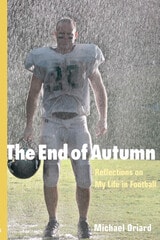
The End of Autumn
Reflections on My Life in FootballMichael Oriard
University of Illinois Press, 2009
After graduating, he signed with the Kansas City Chiefs and head coach Hank Stram. There he learned what it meant to be "owned." He rediscovered the game as it was played by grown men with families who were still treated like children and who dreaded nothing more than the end of their football careers. And without their fully realizing the consequences, every hard tackle inflicted its injury, some gradually growing into chronic conditions, some suddenly cutting a player's career short and ushering him off the field to be soon forgotten.
In this thoughtful narrative, Oriard describes the dreams of glory, the game day anxieties, the brutal training camps and harsh practices, his starry-eyed experience at Notre Dame, and the cold-blooded business of professional football. Told from the inside, the book leaves aside the hype and the pathos of the game to present a direct and honest account of the personal rewards but also the costs players paid to make others rich and entertained.
Originally published in 1982, The End of Autumn recounts the experiences of an ordinary player in a bygone era--before ESPN, before the Bowl Championship Series, before free agency and million-dollar salaries for NFL players. In a new afterword, Oriard reflects on the process of writing the book and how the game has changed in the thirty years since his "retirement" from football at the age of twenty-six.