Results by title
23 books match the query 'Baltic States'
A Pragmatic Alliance
Jewish-Lithuanian political cooperation at the beginning of the 20th centuryVladas Sirutavicius
Central European University Press, 2011
And They Lived Happily Ever After
Norms and Everyday Practices of Family and Parenthood in Russia and Eastern EuropeHelene Carlback
Central European University Press, 2012
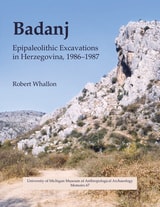
Badanj
Epipaleolithic Excavations in Herzegovina, 1986-1987Robert Whallon
University of Michigan Press, 2025
The purpose of the 1986-1987 excavations was to provide a more detailed picture of the individual occupation and other layers at Badanj, to define the faunal assemblages of these layers as indicators of the changing ecology of the site, and to place the site within its regional cultural context. The excavations exposed a sequence of some ten occupation levels, seven activity or refuse levels, covering a period from approximately 16,000 to 13,000 cal BP, from the latter part of the Oldest Dryas to the end of the Bølling-Allerød late glacial climatic phases.
Over this period, two phases of lithic typology were identified, as well as parallel changes in a specific kind of decorative beads. In terms of ecology, red deer (Cervus elaphus) consistently provided by far the majority of the meat consumed at the site, but secondary fauna shows a clear, gradual replacement of colder-climate species such as ibex and chamois by warmer-climate roe deer and wild pig. Combining both qualitative and quantitative aspects of lithic technology and typology, the reconstruction of the potential foraging areas around Badanj, and estimates of supportable population allows the site to be placed in a clear regional context, which can be extended to suggest a hypothetical regional organization of similar sites over the eastern coast of the Adriatic Sea.
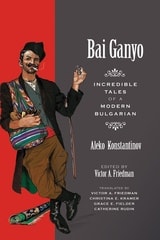
Bai Ganyo
Incredible Tales of a Modern BulgarianAleko Konstantinov
University of Wisconsin Press, 2010
Bai Ganyo has been translated into most European languages, but now Victor Friedman and his fellow translators have finally brought this Balkan masterpiece to English-speaking readers, accompanied by a helpful introduction, glossary, and notes.
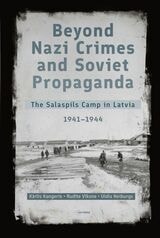
Beyond Nazi Crimes and Soviet Propaganda
The Salaspils Camp in Latvia, 1941-1944Karlis Kangeris
Central European University Press, 2027
The Salaspils camp near Riga, which was operated during the Nazi occupation of Latvia, has long been the subject ofcontrovery. Around 23,000 people were imprisoned there: half were political prisoners, labor resisters and convicted soldiers, the rest prisoners from special operations against civilians in Belarus, Russia and the Latgale region of Latvia. The death toll in the camp, including the number of Jews who died during construction, is well over 3,000 people.
Despite the relatively small size of this camp, it became a model for Russian remembrance policy. Soviet propaganda claimed that up to 100,000 prisoners were killed there, charged that children were used to extract blood, and greatly exaggerated the extent of the persecution of imprisoned lawbreakers and political dissidents . Salaspils became a myth in Russian-speaking society in Latvia that served to reinforce Soviet narratives of the “Great Patriotic War.”
The three authors drew on sources from the archives of Latvia, Germany and Russia and critically analyzed oral testimonies and earlier research to create a comprehensive account of the Salaspils camp in Nazi-occupied Latvia. Their book furthers the understanding of processes of deformation of collective memory and the techniques of memory politics from the Cold War to the present.
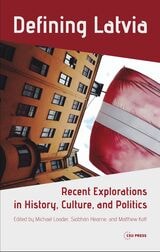
Defining Latvia
Recent Explorations in History, Culture, and PoliticsMatthew Kott
Central European University Press, 2022
In just over a century, Latvia has transitioned from imperial periphery to nation-state, then Soviet republic, and finally following the collapse of the Soviet Union to an independent republic. Defining Latvia brings together the latest research on the multiple social, political, and cultural contexts of Latvia throughout this turbulent period. Its ten chapters are written by leading political scientists, historians, and area studies specialists from across Europe and North America.
The volume moves beyond an exclusively political context to incorporate a variety of social and cultural perspectives, ranging from the experiences of Latvian mapmakers in the Russian Empire, to the participation of Latvians in the Wehrmacht and Red Army during World War II, Latvian national communism, and the development of extremist politics following Latvia’s accession to the European Union. Other chapters address developing trends in the fields of history and political science, including the history of antisemitism, memory, language politics, photography, and political extremism.
Based on the book’s temporal span from the nineteenth century to the present, the authors and editors of Defining Latvia understand the construction of Latvian identity as a continuous and interconnected process across significant political and ideological ruptures.
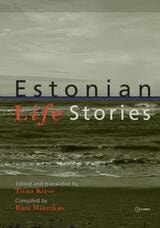
Estonian Life Stories
Tiina Kirss
Central European University Press, 2009
After a short period of independence, Estonia was occupied in World War II by the Red Army, then Nazi Germany, and again, for a lasting occupation, by the Soviets. No wonder that a greater part of the roughly one million Estonians had harshly eventful lives.
This anthology contains 25 selected life stories collected from Estonians who lived through the tribulations of the 20th century, and describe the travails of ordinary people under numerous regimes. The autobiographical accounts provide authentic perspectives on events of this period, where time is placed in the context of life-spans, and subjects grounded in personal experience. Most of the life stories reveal sufferings under foreign (Russian) oppression.
The volume is the product of a large-scale national project to record history by collecting autobiographical accounts, and a process of engaged selection for publication which followed. The variety of life-experiences recorded offers comparison across cultures, as well as an overview of the powerful neighbors as they relinquish and strengthen their hold on Estonia.
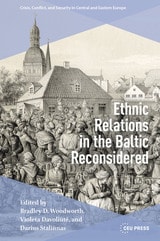
Ethnic Relations in the Baltic Reconsidered
Bradley D. Woodworth
Central European University Press, 2026
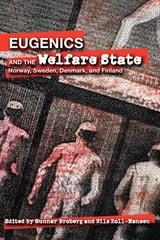
Eugenics and the Welfare State
Norway, Sweden, Denmark, and FinlandGunnar Broberg
Michigan State University Press, 2005
In 1997 Eugenics and the Welfare State caused an uproar with international repercussions. This edition contains a new introduction by Broberg and Roll-Hansen, addressing events that occurred following the original publication. The four essays in this book stand as a chilling indictment of mass sterilization practices, not only in Scandinavia but in other European countries and the United States--eugenics practices that remained largely hidden from the public view until recently. Eugenics and the Welfare State also provides an in-depth, critical examination of the history, politics, science, and economics that led to mass sterilization programs in Norway, Sweden, Denmark, and Finland; programs put in place for the "betterment of society" and based largely on the "junk science" of eugenics that was popular before the rise of Nazism in Germany. When the results of Broberg's and Roll-Hansen's book were widely publicized in August 1997, the London Observer reported, "Yesterday Margot Wallstrom, the Swedish Minister for Social Policy, issued a belated reaction to the revelations. She said: 'What went on is barbaric and a national disgrace.' She pledged to create a law ensuring that involuntary sterilisation would never again be used in Sweden, and promised compensation to victims." Ultimately, the Swedish government not only apologized to the many thousands who had been sterilized without their knowledge or against their will, but also put in place a program for the payment of reparations to these unfortunate victims.
Europe's Steppe Frontier, 1500-1800
William H. McNeill
University of Chicago Press, 1964
Forest Brothers
The Account of an Anti-Soviet Lithuanian Freedom Fighter, 1944–1948Translated and with an Introduction by Laima Vincė
Central European University Press, 2009
Foreword to The Past
A Cultural History of the Baltic PeopleEndre Bojtar
Central European University Press, 2000
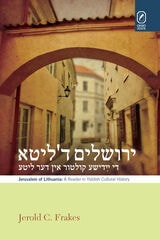
Jerusalem of Lithuania
A Reader in Yiddish Cultural HistoryJerold C. Frakes
The Ohio State University Press, 2011
Yerusholayim d’lite: di yidishe kultur in der lite (Jerusalem of Lithuania: A Reader in Yiddish Cultural History) by Jerold C. Frakes contains cultural, literary, and historical readings in Yiddish that vividly chronicle the central role Vilnius (Lithuania) played in Jewish culture throughout the past five centuries. It includes many examples of Yiddish literature, historiography, sociology, and linguistics written by and about Litvaks and includes work by prominent Yiddish poets, novelists, raconteurs, journalists, and scholars. In addition, Frakes has supplemented the primary texts with many short essays that contextualize Yiddish cultural figures, movements, and historical events.
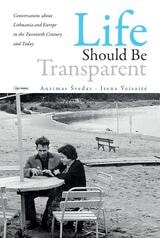
Life should be Transparent
Conversations about Lithuania and Europe in the Twentieth Century and TodayAurimas Svedas
Central European University Press, 2020
This book of thirteen conversations introduces us to the life of an exceptional person—theatre critic, Germanist, and long-time chair of the Open Lithuania Fund board—Irena Veisaitė. The dialogue between Lithuanian historian Aurimas Švedas and a woman who reflects deeply on her experiences reveals both one individual’s historically dramatic life and the fate of Europe and Lithuania in the twentieth century.
Through the complementary lenses of history and memory, we confront with Veisaitė the horrific events of the Holocaust, which brought about the end of the Lithuanian Jewish world. We also meet an array of world-class cultural figures, see fragments of legendary theatre performances, and hear meaningful words that were spoken or heard decades ago.
This book’s interlocutors do not so much seek to answer the question “What was it like?” but instead repeatedly ask each other: “What, how, and why do we remember? What is the meaning of our experiences? How can history help us to live in the present and create the future? How do we learn to understand and forgive?”
A series of Veisaitė’s texts, statements, and letters, presented at the end of the book suggest further ways of answering these questions.
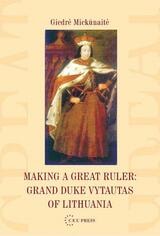
Making a Great Ruler
Grand Duke Vytautas of LithuaniaGiedre Mickunaite
Central European University Press, 2006
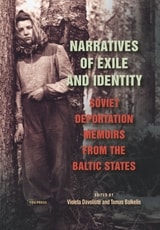
Narratives of Exile and Identity
Soviet Deportation Memoirs from the Baltic StatesTomas Balkelis
Central European University Press, 2018
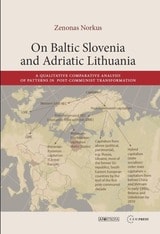
On Baltic Slovenia and Adriatic Lithuania
A Qualitative Comparative Analysis of Patterns in Post-Communist TransformationZenonas Norkus
Central European University Press, 2012
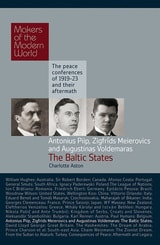
Piip, Meierovics & Voldemaras
The Baltic StatesCharlotte Alston
Haus Publishing, 2010
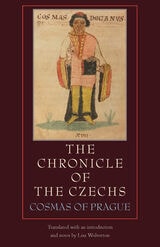
The Chronicle of the Czechs
Lisa Cosmas of Prague
Catholic University of America Press, 2009
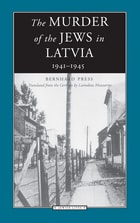
The Murder of the Jews in Latvia 1941-1945
Bernhard Press
Northwestern University Press, 2000
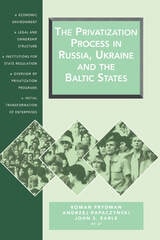
The Privatization Process in Russia, the Ukraine, and the Baltic States
Roman Frydman
Central European University Press, 1993
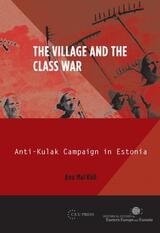
The Village and the Class War
Anti-Kulak Campaign in Estonia 1944-49Anu Mai Kõll
Central European University Press, 2013
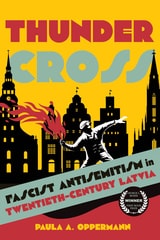
Thunder Cross
Fascist Antisemitism in Twentieth-Century LatviaPaula A. Oppermann
University of Wisconsin Press, 2025
Thunder Cross is the most comprehensive study of Latvia’s fascist movement in English to date, and the only work that investigates the often neglected continuities of fascist antisemitism after World War II. Formulated as an empirical case study, this book draws on international and interdisciplinary secondary literature and sources in seven languages to broaden our understanding of fascism, antisemitism, and mass violence from Germany and Italy to the larger European context.