Results by title
16 books match the query 'Bangladesh'

Bangladesh’s Changing Mediascape
From State Control to Market ForcesEdited by Brian Shoesmith, Jude William Genilo, and Md Asiuzzaman
Intellect Books, 2013
With contributions from a diverse group of media and communications scholars from around the globe, Bangladesh’s Changing Mediascape presents a pioneering study of the trends, patterns, and prospects shaping the contemporary Bangladeshi media. Among the many topics discussed here are the difference among specific media formats, including television, newspapers, radio, film, and photography; policy issues; and the challenge that new media poses to governance in a developing nation faced with innumerable economic, social, and political problems. Eschewing the currently dominant development communication model, the editors argue that market forces rather than planned state interventions will contribute to a more equitable communication environment.
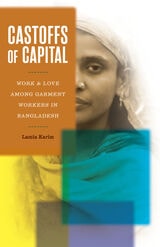
Castoffs of Capital
Work and Love among Garment Workers in BangladeshLamia Karim
University of Minnesota Press, 2022
FINALIST FOR THE GREGORY BATESON PRIZE FROM THE AMERICAN ANTHROPOLOGICAL ASSOCIATION
Dispelling stereotypes about garment workers in the global apparel industry
Castoffs of Capital examines how female garment workers experience their work and personal lives within the stranglehold of global capital. Drawing on fieldwork in Bangladesh, anthropologist Lamia Karim focuses attention onto the lives of older women aged out of factory work, heretofore largely ignored, thereby introducing a new dimension to the understanding of a female-headed workforce that today numbers around four million in Bangladesh.
Bringing a feminist labor studies lens, Castoffs of Capital foregrounds these women not only as workers but as mothers, wives, sisters, lovers, friends, and political agents. Focusing on relations among work, gender, and global capital’s targeting of poor women to advance its market penetration, Karim shows how women navigate these spaces by adopting new subject formations. She locates these women’s aspirations for the “good life” not only in material comforts but also in their longings for love and sexual fulfillment that help them momentarily forget the precarity of their existence under the shadow of capital.
Through richly detailed ethnographic studies, this innovative and beautifully written book examines the making and unmaking of these women’s wants and desires, loves and tribulations, hopes and despairs, and triumphs and struggles.

Discordant Development
Global Capitalism and the Struggle for Connection in BangladeshKaty Gardner
Pluto Press, 2012
What happens when a vast multinational mining company operates a gas plant situated close to four densely populated villages in rural Bangladesh? How does its presence contribute to local processes of ‘development’? And what do corporate claims of ‘community engagement’ involve? Drawing from author Katy Gardner’s longstanding relationship with the area, Discordant Development reveals the complex and contradictory ways that local people attempt to connect to, and are disconnected by, foreign capital.
Everyone has a story to tell: whether of dispossession and scarcity, the success of Corporate Social Responsibility, or imperialist exploitation and corruption. Yet as Gardner argues, what really matters in the struggles over resources is which of these stories are heard, and the power of those who tell them.
Based around the discordant narratives of dispossessed land owners, urban activists, mining officials and the rural landless, Discordant Development touches on some of the most urgent economic and political questions of our time, including resource ownership and scarcity, and the impact of foreign investment and industrialisation on global development.
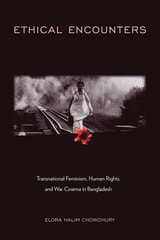
Ethical Encounters
Transnational Feminism, Human Rights, and War Cinema in BangladeshElora Halim Chowdhury
Temple University Press, 2022
Ethical Encounters is an exploration of the intersection of feminism, human rights, and memory to illuminate how visual practices of recollecting violent legacies in Bangladeshi cinema can conjure a global cinematic imagination for the advancement of humanity.
By examining contemporary, women-centered Muktijuddho cinema—features and documentaries that focus on the Bangladesh Liberation War of 1971—Elora Chowdhury shows how these films imagine, disrupt, and reinscribe a gendered nationalist landscape of trauma, freedom, and agency. Chowdhury analyzes Bangladeshi feminist films including Meherjaan, and Itihaash Konna (Daughters of History), as well as socially-engaged films by activist-filmmakers including Jonmo Shathi (Born Together), and Shadhinota (A Certain Liberation), to show how war films of Bangladesh can generate possibilities for gender justice.
Chowdhury argues that justice-driven films are critical to understanding and negotiating the layered meanings and consequences of catastrophic human suffering yet at the same time they hint at subjectivities and identities that are not reducible to the politics of suffering. Rather, they are key to creating an alternative and disruptive archive of feminist knowledge—a sensitive witnessing, responsible spectatorship, and just responsibility across time, and space.
Drawing on Black and transnational feminist critiques, Chowdhury explores questions around women’s place, social roles, and modes of participation in war as well as the visual language through which they become legible as victims/subjects of violence and agents of the nation. Ethical Encounters illuminates the possibilities of film as a site to articulate an ethics that acknowledges a founding violence of the birth of a nation, recuperates it even if in fragments, and imagines differently the irreconcilable relationship between humanity, liberty, and justice.
Microfinance and Its Discontents
Women in Debt in BangladeshLamia Karim
University of Minnesota Press, 2010
In 2006 the Grameen Bank of Bangladesh won the Nobel Peace Prize for its innovative microfinancing operations. This path-breaking study of gender, grassroots globalization, and neoliberalism in Bangladesh looks critically at the Grameen Bank and three of the leading NGOs in the country. Amid euphoria over the benefits of microfinance, Lamia Karim offers a timely and sobering perspective on the practical, and possibly detrimental, realities for poor women inducted into microfinance operations.
In a series of ethnographic cases, Karim shows how NGOs use social codes of honor and shame to shape the conduct of women and to further an agenda of capitalist expansion. These unwritten policies subordinate poor women to multiple levels of debt that often lead to increased violence at the household and community levels, thereby weakening women’s ability to resist the onslaught of market forces.
A compelling critique of the relationship between powerful NGOs and the financially strapped women beholden to them for capital, this book cautions us to be vigilant about the social realities within which women and loans circulate—realities that often have adverse effects on the lives of the very women these operations are meant to help.
Muslims in Motion
Islam and National Identity in the Bangladeshi DiasporaKibria, Nazli
Rutgers University Press, 2011
In Muslims in Motion, Nazli Kibria provides a comparative look at Bangladeshi Muslims in different global contexts--including Britain, the U.S., the Middle East, and Malaysia. Kibria examines international migrant flows from Bangladesh, and considers how such migrations continue to shape Islamization in these areas. Having conducted more than 200 in-depth interviews, she explores how, in societies as different as these, migrant Muslims, in their everyday lives, strive to achieve economic gains, sustain community and family life, and realize a sense of dignity and honor.
Muslims in Motion offers fresh insights into the prominence of Islam in these communities, especially an Islam defined by fundamentalist movements and ideologies. Kibria also focuses on the complex significance of nationality--with rich analyses of the diaspora, the role of gender and class, and the multiple identities of the migrants, she shows how nationality can be both a critical source of support and also of difficulty for many in their efforts to attain lives of dignity. By bringing to life a vast range of experiences, this book challenges prevailing stereotypes of Muslims.
River Life and the Upspring of Nature
Naveeda Khan
Duke University Press, 2023
Texts Of Power
Emerging Disciplines in Colonial BengalPartha Chatterjee
University of Minnesota Press, 1995
The case of Bengal illustrates the interaction of colonialism and modernity.
Bengal was the first “modern” province in India-the first, that is, to undergo a forced encounter with Western modernity. Beginning with this premise, the writers in Texts of Power consider what the case of Bengal says about the workings of Western modernity in a colonial setting.
A truly interdisciplinary effort, this collection probes questions of pedagogy, nationalism, and gender. Among the subjects explored are colonialist and nationalist surveillance of Bengali literature; the disposition of the nation’s art; the politics of child-rearing; the mapping of Calcutta; and the disciplining of historical memory. By applying the theoretical insights of recent historical and cultural studies to the specific circumstances of Bengal, the authors develop a new approach to Indian intellectual and cultural history. Their work makes a significant contribution to our understanding of contemporary intellectual modernity.Contributors: Pradip Kumar Bose, Keya Dasgupta, Tapati Guha-Thakurta, all at the Centre for Studies in Social Sciences, Calcutta; Tapti Roy, Maharani Kashiswari College, Calcutta; Ranabir Samaddar, Maulana Azad Institute of Asian Studies.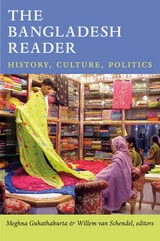
The Bangladesh Reader
History, Culture, PoliticsMeghna Guhathakurta and Willem van Schendel, eds.
Duke University Press, 2013
Intended for travelers, students, and scholars, the Reader encompasses first-person accounts, short stories, historical documents, speeches, treaties, essays, poems, songs, photographs, cartoons, paintings, posters, advertisements, maps, and a recipe. Classic selections familiar to many Bangladeshis—and essential reading for those who want to know the country—are juxtaposed with less-known pieces. The selections are translated from a dozen languages; many have not been available in English until now. Featuring eighty-three images, including seventeen in color, The Bangladesh Reader is an unprecedented, comprehensive introduction to the South Asian country's turbulent past and dynamic present.

The Economization of Life
M. Murphy
Duke University Press, 2017
The Political Economy of NGOs
State Formation in Sri Lanka and BangladeshJude L. Fernando
Pluto Press, 2011
Jude L. Fernando explores the paradoxical relationship between NGOs and capitalism, showing that supposedly progressive organisations often promote essentially the same policies and ideas as existing governments.
The book examines how a diverse group of NGOs have shaped state formation in Bangladesh and Sri Lanka. It argues that, rather than influencing state formation for the better, NGOs have been integrated into the capitalist system and their language adopted to give traditional exploitative social relations a transformative appearance.
This enlightening study will give pause to those who see NGOs as drivers of true social change and will encourage students of development studies to make a deeper analysis of state formation.
The Spectral Wound
Sexual Violence, Public Memories, and the Bangladesh War of 1971Nayanika Mookherjee
Duke University Press, 2015
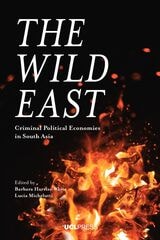
The Wild East
Criminal Political Economies in South AsiaEdited by Barbara Harriss-White and Lucia Michelutti
University College London, 2019
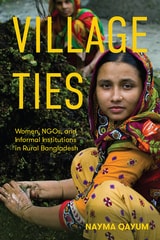
Village Ties
Women, NGOs, and Informal Institutions in Rural BangladeshNayma Qayum
Rutgers University Press, 2022
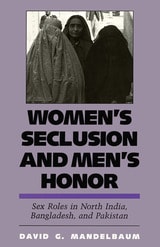
Women's Seclusion and Men's Honor
Sex Roles in North India, Bangladesh, and PakistanDavid G. Mandelbaum
University of Arizona Press, 1988
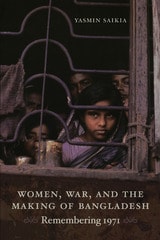
Women, War, and the Making of Bangladesh
Remembering 1971Yasmin Saikia
Duke University Press, 2011