Results by title
2335 books match the query 'Modern' and 184 start with a
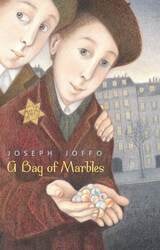
A Bag of Marbles
Joseph Joffo
University of Chicago Press, 2000
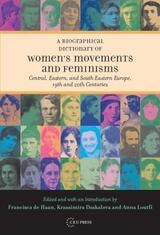
A Biographical Dictionary of Women's Movements and Feminisms
Central, Eastern, and South Eastern Europe, 19th and 20th CenturiesAnna Loutfi
Central European University Press, 2006
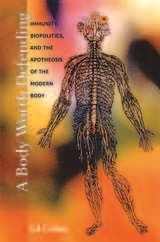
A Body Worth Defending
Immunity, Biopolitics, and the Apotheosis of the Modern BodyEd Cohen
Duke University Press, 2009
Inspired by Michel Foucault’s writings about biopolitics and biopower, Cohen traces the migration of immunity from politics and law into the domains of medicine and science. Offering a genealogy of the concept, he illuminates a complex of thinking about modern bodies that percolates through European political, legal, philosophical, economic, governmental, scientific, and medical discourses from the mid-seventeenth century through the twentieth. He shows that by the late nineteenth century, “the body” literally incarnates modern notions of personhood. In this lively cultural rumination, Cohen argues that by embracing the idea of immunity-as-defense so exclusively, biomedicine naturalizes the individual as the privileged focus for identifying and treating illness, thereby devaluing or obscuring approaches to healing situated within communities or collectives.
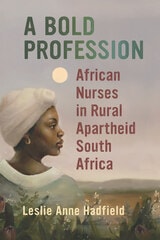
A Bold Profession
African Nurses in Rural Apartheid South AfricaLeslie Anne Hadfield
University of Wisconsin Press, 2023
Leslie Anne Hadfield compellingly demonstrates how these women were able to successfully carve out their own professional space and reshape notions of health and healing in the Eastern Cape. Bringing forth the stories of these nurses in their own voices, A Bold Profession is an homage to their dedication to the well-being of their communities. Hadfield sheds light on the struggles of balancing commitment to career and family lives during an oppressive apartheid. The volume fills an important gap for scholars studying the history of women, nursing, and health care in South Africa, illuminating the humanity of health care workers.

A Boy in Terezín
The Private Diary of Pavel Weiner, April 1944–April 1945Pavel Weiner
Northwestern University Press, 2011
The Germans claimed that Theresienstadt was "the town the Führer gave the Jews," and they temporarily transformed it into a Potemkin village for an International Red Cross visit in June 1944, the only Nazi camp opened to outsiders. But the Germans lied. Theresienstadt was a holding pen for Jews to be shipped east to annihilation camps.
While famous and infamous figures and historical events flit across the pages, they form the background for Pavel's life. Assigned to the now-famous Czech boys' home, L417, Pavel served as editor of the magazine Ne?ar. Relationships, sports, the quest for food, and a determination to continue their education dominate the boys' lives. Pavel's father and brother were deported in September 1944; he turned thirteen (the age for his bar mitzvah) in November of that year, and he grew in his ability to express his observations and reflect on them. A Boy in Terezín registers the young boy's insights, hopes, and fears and recounts a passage into maturity during the most horrifying of times.
A Cardboard Castle?
An Inside History of the Warsaw Pact, 1955-1991The National Security Archive Mastny
Central European University Press, 2005
A Century of Populist Demagogues
Eighteen European Portraits, 1918–2018Ivan T. Berend
Central European University Press, 2020
The renowned historian Ivan T. Berend discusses populist demagoguery through the presentation of eighteen politicians from twelve European countries spanning World War I to the present. Berend defines demagoguery, reflects on its connections with populism, and examines the common features and differences in the demagogues’ programs and language.
Mussolini and Hitler, the “model demagogues,” are only briefly discussed, as is the election of Donald Trump in the United States and its impact on Europe. The eighteen detailed portraits include two communists, two fascists, and several right-wing and anti-EU politicians, extending across the full range of demagoguery. The author covers Béla Kun, the leader of the Hungarian Soviet Republic in 1919, weaving through Codreanu and Gömbös from the 1930s, on to Stahremberg and Haider in Austria, and then more broadly throughout Europe from Ceaușescu, Milošević, Tuđjman, Izetbegović, Berlusconi, Wilders, to the two Le Pens, Farage, and Boris Johnson, Orbán and the two Kaczyńskis. Each case includes an analysis of the time and place and is illustrated with quotations from the demagogues’ speeches.
This book is a warning about the continuing threat of populist demagogues both for their subjects and for history itself. Berend insists on the crucial importance for Europe to understand the reality behind their promises and persuasive language as imperative to impeding their success.
A Century of Revolution
Insurgent and Counterinsurgent Violence during Latin America's Long Cold WarGreg Grandin and Gilbert M. Joseph, eds.
Duke University Press, 2010
Contributors. Michelle Chase, Jeffrey L. Gould, Greg Grandin, Lillian Guerra, Forrest Hylton, Gilbert M. Joseph, Friedrich Katz, Thomas Miller Klubock, Neil Larsen, Arno J. Mayer, Carlota McAllister, Jocelyn Olcott, Gerardo Rénique, Corey Robin, Peter Winn
A Civilian in Lawton's 1899 Philippine Campaign
The Letters of Robert D. CarterEdited by Michael E. Shay
University of Missouri Press, 2013
In the midst of the Philippine-American War, twenty-two-year-old Robert Dexter Carter served in Manila as a civilian quartermaster clerk. Through his letters to his family, he provided a vivid picture of army life in Manila—the sights, the smells, and his responses to the native culture. In addition to his letters, his diary and several related articles present a firsthand account of the historic voyage of the United States Army Transport Grant through the Suez Canal to Manila in early 1899. Carter’s writings not only tell of his sometimes harrowing experiences, but also reveal the aspirations and fears of a young man not quite sure of his next steps on life’s journey.
Carter’s father, Robert Goldthwaite Carter, was a war hero and a longtime friend of Maj. Gen. Henry W. Lawton. Carter obtained his position through Lawton’s influence, and his respect for Lawton is clear throughout his writings. A frequent guest in the Lawton home, the young clerk was introduced to many notable figures both military and civilian. Carter’s letters, particularly to his father, are full of news and gossip related to his commander. In other letters, he reveals the kindness and generosity of Mrs. Lawton, who took time to look out for Carter while he was in the hospital and often loaned him books.
This well-researched and expertly edited work casts light on the role of support troops in war, a subject too often minimized or ignored. Shay begins each chapter with an introduction that establishes the setting, the context of events, and the disposition of Carter and his compatriots and provides notes and commentary to place the letters in context. By choosing not to edit the offensive expletives of a sometimes arrogant and racist young man, Shay presents a fully nuanced portrait of a young American exploring the larger world in a time of turmoil.
Enhanced by photographs from collections at the Library of Congress and the Military History Institute, as well as many of Carter’s own whimsical drawings, the book will appeal to armchair historians and scholars alike.
A Clubbable Man
Essays on Eighteenth-Century Literature and Culture in Honor of Greg ClinghamAnthony W. Lee
Bucknell University Press, 2022
A Cold War State of Mind
Brainwashing and Postwar American SocietyMatthew W. Dunne
University of Massachusetts Press, 2013
First popularized during the 1950s, the concept of “brainwashing” is often viewed as an example of Cold War paranoia, an amusing relic of a bygone era. Yet as Matthew W. Dunne shows in this study, over time brainwashing came to connote much more than a sinister form of Communist mind control, taking on broader cultural and political meanings.
Moving beyond well-known debates over Korean War POWs and iconic cultural texts like The Manchurian Candidate, Dunne explores the impact of the idea of brainwashing on popular concerns about freedom, individualism, loyalty, and trust in authority. By the late 1950s the concept had been appropriated into critiques of various aspects of American life such as an insistence on conformity, the alleged “softening” of American men, and rampant consumerism fueled by corporate advertising that used “hidden” or “subliminal” forms of persuasion. Because of these associations and growing anxieties about the potential misuse of psychology, concerns about brainwashing contributed to a new emphasis on individuality and skepticism toward authority in the 1960s. The notion even played an unusual role in the 1968 presidential race, when Republican frontrunner George Romney's claim that he had been “brainwashed” about the Vietnam War by the Johnson administration effectively destroyed his campaign.
In addition to analyzing the evolving meaning of brainwashing over an extended period of time, A Cold War State of Mind explores the class and gender implications of the idea, such as the assumption that working-class POWs were more susceptible to mind control and that women were more easily taken in by the manipulations of advertisers.
A Commentary on Jean-Paul Sartre's Being and Nothingness
Joseph S. Catalano
University of Chicago Press, 1985
A Commentary on Kant's Critique of Practical Reason
Lewis White Beck
University of Chicago Press, 1996
This Critique is the only writing in which Kant weaves his thoughts on practical reason into a unified argument. Lewis White Beck offers a classic examination of this argument and expertly places it in the context of Kant's philosophy and of the moral philosophy of the eighteenth century.

A Common Law for Europe
Barbara Pasa
Central European University Press, 2005
A Companion to the Works of Elizabeth Strout
Katherine Montwieler
Ohio University Press, 2022

A Contemporary Archaeology of London's Mega Events
From the Great Exhibition to London 2012Jonathan Gardner
University College London, 2022
This book explores the traces of London’s most significant modern “mega events”: the Great Exhibition of 1851, the 1951 Festival of Britain’s South Bank Exhibition, and the 2012 Olympic and Paralympic Games. Though only open for a few weeks or months, mega events permanently and disruptively reshape their host cities and societies: they demolish and rebuild whole districts, they draw in materials and participants from around the globe, and their organizers self-consciously seek to leave a “legacy” that will endure for decades or more. The book argues that these spectacles must thus be seen as long-lived and persistent, rather than simply transient or short-term phenomena. It explores the long-term history of each event through contemporary archaeology, examining the contents and building materials of the Great Exhibition’s Crystal Palace and their extraordinary afterlife at Sydenham, South London; how the Festival of Britain’s South Bank Exhibition employed displays of ancient history to construct a new postwar British identity; and how London 2012 dealt with competing visions of the past as archaeology, waste, and heritage in creating a vision of the future.
A Critical Bibliography of the Published Writings of Romain Rolland
William Thomas Starr
Northwestern University Press, 1950
A Cultural Arsenal for Democracy
The World War II Work of US MuseumsClarissa J. Ceglio
University of Massachusetts Press, 2022
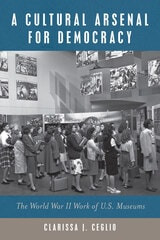
Unsurprisingly, exhibitions served as the primary vehicle through which museums, large and small, engaged their publics with wartime topics with fare ranging from displays on the cultures of Allied nations to "living maps" that charted troop movements and exhibits on war preparedness. Clarissa J. Ceglio chronicles debates, experiments, and collaborations from the 1930s to the immediate postwar years, investigating how museums re-envisioned the exhibition as a narrative medium and attempted to reconcile their mission with new modes of storytelling.
A Deleuzian Century?
Ian Buchanan, ed.
Duke University Press, 1999
Originally published as a special issue of South Atlantic Quarterly (Summer 1997), this volume includes essays from some of the most prominent American, Australian, British, and French scholars and translators of Deleuze’s writing. These essays, ranging from film, television, art, and literature to philosophy, psychoanalysis, geology, and cultural studies, reflect the broad interests of Deleuze himself. Providing both an introduction and critique of Deleuze, this volume will engage those readers interested in literary and cultural theory, philosophy, and the future of those areas of study in which Deleuze worked.
Contributors. Ronald Bogue, Ian Buchanan, André Pierre Colombat, Tom Conley, Manuel DeLanda, Tessa Dwyer, Jerry Aline Flieger, Eugene Holland, Fredric Jameson, Jean-Clet Martin, John Mullarkey, D. N. Rodowick, Horst Ruthrof, Charles J. Stivale
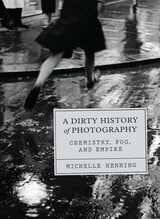
A Dirty History of Photography
Chemistry, Fog, and EmpireMichelle Henning
University of Chicago Press, 2025
Dependent on the extractive practices of fossil-fueled industrial capitalism, chemical photography’s emulsions and films were highly sensitive to polluted atmospheres, and photographic companies had to work hard to control this sensitivity. Drawing on histories of empire, coal, and chemistry and from the archives of British photographic manufacturer Ilford Limited, Michelle Henning exposes the ways photography shaped how we see and understand the atmosphere while leaving its toxic residues in the air, soil, and water.
Structured as thirty-six short chapters and with over seventy illustrations, this innovative book begins in interwar London, follows the supply of Ilford products to photographers on the West African coast, and considers photography as a military technology linked to the development of chemical warfare. Combining close readings of photographs with discussions of low-light, tropical, and aerial photography, Henning examines the extraction and development of photographic materials, their role in the current environmental crisis, and how they have shaped experiences of time and the environment.
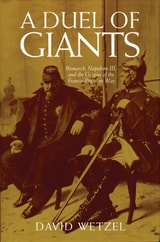
A Duel of Giants
Bismarck, Napoleon III, and the Origins of the Franco-Prussian WarDavid Wetzel
University of Wisconsin Press, 2001
Combining impeccable scholarship and literary elegance, David Wetzel depicts the drama of machinations and passions that exploded in a war that forever changed the face of European history.
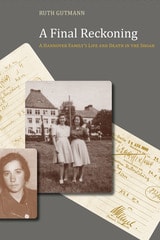
A Final Reckoning
A Hannover Family's Life and Death in the ShoahRuth Gutmann, Foreword by Kenneth Waltzer
University of Alabama Press, 2013
A work of both childhood memory and adult reflection undergirded with scholarly research
Ruth Herskovits Gutmann’s powerful memoir recounts her life not only as a concentration camp inmate and survivor, but also as a sister and daughter. Born in 1928, Gutmann and her twin sister, Eva, escaped the growing Nazi threat in Germany on a Kindertransport to Holland in 1939.
Gutmann’s compelling story captures many facets of the Jewish experience in Nazi Germany. She describes her early life in Hannover as the daughter of a prominent and patriotic member of the Jewish community. Her flight on the Kindertransport offers a vivid, firsthand account of that effort to save the children of Jewish families. Her memories of the camps include coming to the attention of Josef Mengele, who often used twins in human experiments. Gutmann writes with moving clarity and nuance about the complex feelings of survivorship.
A Final Reckoning provides not only insights into Gutmann’s own experience as a child in the midst of the atrocities of the Holocaust, but also a window into the lives of those, like her father, who were forced to carry on and comply with the regime that would ultimately bring about their demise.
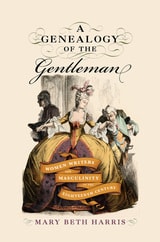
A Genealogy of the Gentleman
Women Writers and Masculinity in the Eighteenth CenturyMary Beth Harris
University of Delaware Press, 2024
A Generation of Writers and Bulgarian Cultural Politics
From Independence to CommunismIrina Gigova
Central European University Press, 2026
A Great Fear
Luís de Onís and the Shadow War against Napoleon in Spanish America, 1808–1812Timothy Hawkins
University of Alabama Press, 2019
A Great Fear: Luís de Onís and the Shadow War against Napoleon in Spanish America, 1808–1812 explores why Spanish Americans did not take the opportunity to seize independence in this critical period when Spain was overrun by French armies and, arguably, in its weakest state. In the first years after his appointment as Spanish ambassador to the United States, Luís de Onís claimed the heavy responsibility of defending Spanish America from the wave of French spies, subversives, and soldiers whom he believed Napoleon was sending across the Atlantic to undermine the empire.
As a leading representative of Spain’s loyalist government in the Americas, Onís played a central role in identifying, framing, and developing what soon became a coordinated response from the colonial bureaucracy to this perceived threat. This crusade had important short-term consequences for the empire. Since it paralleled the emergence of embryonic independence movements against Spanish rule, colonial officials immediately conflated these dangers and attributed anti-Spanish sentiment to foreign conspiracies.
Little direct evidence of Napoleon’s efforts at subversion in Spanish America exists. However, on the basis of prodigious research, Hawkins asserts that the fear of French intervention mattered far more than the reality. Reinforced by detailed warnings from Ambassador Onís, who found the United States to be the staging ground for many of the French emissaries, colonial officials and their subjects became convinced that Napoleon posed a real threat. The official reaction to the threat of French intervention increasingly led Spanish authorities to view their subjects with suspicion, as potential enemies rather than allies in the struggle to preserve the empire. In the long term, this climate of fear eroded the legitimacy of the Spanish Crown among Spanish Americans, a process that contributed to the unraveling of the empire by the 1820s.
This study draws on documents and official records from both sides of the Hispanic Atlantic, with extensive research conducted in Spain, Guatemala, Argentina, and the United States. Overall, it is a provocative interpretation of the repercussions of Napoleonic intrigue and espionage in the New World and a stellar examination of late Spanish colonialism in the Americas.
A History in Indigenous Voices
Menominee, Ho-Chunk, Oneida, Stockbridge, and Brothertown Interactions in the Removal EraCarol Cornelius
Wisconsin Historical Society Press, 2023
Treaties made in the 1800s between the United States and the Indigenous nations of what is now Wisconsin have had profound influence on the region’s cultural and political landscape. Yet few people realize that in the early part of that century, the Menominee and Ho-Chunk Nations of Wisconsin signed land treaties with several Indigenous nations from New York State. At the onset of the removal era, these eastern nations, including the Oneida Nation and the Six Nations Confederacy, were under constant pressure from the federal government and land speculators to move to lands around Green Bay and Lake Winnebago.
In this groundbreaking book, Carol A. Cornelius has compiled a careful account of these nation-to-nation treaties, in large part in the words of those Indigenous leaders who served as the voices and representatives of their nations. Drawing on a rich collection of primary sources, Cornelius walks readers through how, why, and for whom these treaties were made and how the federal government’s failure and unwillingness to acknowledge their legitimacy led to the further loss of Indigenous lands. The living documents transcribed here testify to the complexity and sovereignty of Indigenous governance then and now, making this volume a vital resource for historians and an accessible introduction to Indigenous treatymaking in Wisconsin.
Winner of the 2024 Wisconsin Historical Society’s Book of Merit Award
Finalist for the 2023 Foreword INDIES Book of the Year Award for Adult Nonfiction History

A History of Modern Singapore, 1819-2005
Constance Turnbull
National University of Singapore Press, 2020
A History of the "Atlantic Monthly," 1857-1909
Yankee Humanism at High Tide and EbbEllery Sedgwick
University of Massachusetts Press, 1994
From its founding in 1857 until its sale by Houghton Mifflin in 1908, the Atlantic Monthly was the most respected literary periodical in the United States. This study focuses on the magazine's first seven editors: James Russell Lowell, James T. Fields, William Dean Howells, Thomas Bailey Aldrich, Horace Scudder, Walter Hines Page, and Bliss Perry. Ellery Sedgwick examines their personalities, editorial policies, and literary tastes, and shows how each balanced his role as advocate of “high” culture with the demands of the literary marketplace and American democracy.
Although the Atlantic was rooted in the Yankee humanism of Boston, Cambridge, and Concord, its scope was national. Sedgwick points out that while the magazine spoke for high culture, its tradition was one of intellectual tolerance and of moderate liberalism on social and political issues. It supported abolition, women's rights, and religious tolerance, and published incisive criticism of unregulated industrial capitalism. The Atlantic also played an important role in the rise of American literary realism, and published early work not only by such authors as James, Jewett, and Howells, but also by Chesnutt, Du Bois, Cahan, and Zitkala-Sa.
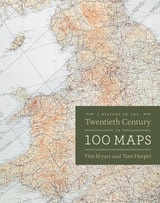
A History of the Twentieth Century in 100 Maps
Tim Bryars and Tom Harper
University of Chicago Press, 2014
As Bryars and Harper reveal, maps make ideal narrators, and the maps in this book tell the story of the 1900s—which saw two world wars, the Great Depression, the Swinging Sixties, the Cold War, feminism, leisure, and the Internet. Several of the maps have already gained recognition for their historical significance—for example, Harry Beck’s iconic London Underground map—but the majority of maps on these pages have rarely, if ever, been seen in print since they first appeared. There are maps that were printed on handkerchiefs and on the endpapers of books; maps that were used in advertising or propaganda; maps that were strictly official and those that were entirely commercial; maps that were printed by the thousand, and highly specialist maps issued in editions of just a few dozen; maps that were envisaged as permanent keepsakes of major events, and maps that were relevant for a matter of hours or days.
As much a pleasure to view as it is to read, A History of the Twentieth Century in 100 Maps celebrates the visual variety of twentieth century maps and the hilarious, shocking, or poignant narratives of the individuals and institutions caught up in their production and use.
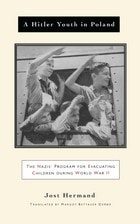
A Hitler Youth in Poland
The Nazi Children's Evacuation Program During World War IIJost Hermand
Northwestern University Press, 1997
During the Nazi era, millions of German children between the ages of seven and sixteen were taken from their homes and sent to Hitler Youth paramilitary camps to be toughened up and taught how to be "German." Separated from their families and sent to the far-flung corners of Europe, these children often endured incredible abuse by the adults in charge. In this memoir, Jost Hermand, a cultural critic and historian who spent much of his youth in five different camps, writes about his experiences as a small, unathletic boy thrown into a "wolf pack" governed by brutalization, dreary routine, and sadism.
Intelligent and persuasive, A Hitler Youth in Poland should be read by anyone interested in psychology or the history of everyday life in Hitler's Germany and the mental scars of adults born during the Nazi regime.
A Jew in the New Germany
Henryk Broder
University of Illinois Press, 2003
This volume collects eighteen of Broder's essays, translated for the first time into English. The first was written in 1979 and the most recent deals with the post-9/11 realities of the war on terrorism, and its effects on the countries of Europe. Other essays address the debate over the construction of a Holocaust memorial in Berlin, the German response to the 1991 Gulf War, the politics of German reunification, and the rise of the new German nationalism.
Broder charts the recent evolution of German Jewish relations, using his own outsider status to hold up a mirror to the German people and point out that things have not changed for German Jews as much as non-Jews might think.
A Jewish Kapo in Auschwitz
History, Memory, and the Politics of SurvivalTuvia Friling
Brandeis University Press, 2014
A Jewish Word or Two
Charles Reznikoff's ModernismJoel Bettridge
University of Iowa Press, 2026
The son of Jewish immigrants from Russia to New York, Charles Reznikoff found himself at the intersection of modernist innovation, ethnic otherness, and economic hardship. He both appreciated the modernists’ formal radicalism and critiqued their political failings—a task he accomplished by writing short lyric poems depicting the hardship and charm of urban life, as well as long poems presenting histories of horrific violence, from factory accidents to the Holocaust. But despite his contributions to American poetry, Reznikoff has remained a somewhat secondary figure, in part because his work—at times—is painful to read.
A Jewish Word or Two recasts Reznikoff ’s poetry as pleasurable and masterful even when disturbing. In their humor, their encounters with Jewish history, holiness, and identity, as well as their use of drama, horror, joy, and beauty, Reznikoff ’s poems help us celebrate what is simultaneously strange, surprising, lovely, and uncanny in our everyday lives.
A Laboratory of Transnational History
Ukraine and Recent Ukrainian HistoriographyGeorgiy Kasianov
Central European University Press, 2009
A Life under Russian Serfdom
The Memoirs of Savva Dmitrievich Purlevskii, 1800–68Boris B. Gorshkov
Central European University Press, 2005
A Long Essay on the Long Poem
Modern and Contemporary Poetics and PracticesRachel Blau DuPlessis
University of Alabama Press, 2023
A masterful meditation on our most mercurial and abiding of poetic forms—the long poem
For decades, Rachel Blau DuPlessis has shown readers how genres, forms, and the literal acts of writing and reception can be understood as sites of struggle. In her own words, “writing is . . . a praxis . . . in which the author disappears into a process, into a community, into discontinuities, and into a desire for discovery.” It is cause for celebration, then, that we have another work of warm, incisive, exploratory writing from DuPlessis in A Long Essay on the Long Poem.
Long poems, DuPlessis notes, are elusive, particularly in the slippery forms that have emerged in the postmodern mode. She cites both Nathaniel Mackey and Anne Waldman in thinking of the poem as a “box,” both in the sense of a vessel that contains and as a machine that processes, an instrument on which language is played. This study’s central attention is on the long poem as a sociocultural Book, distinctively envisioned by a range of authors.
To reckon with these shifting and evolving forms, DuPlessis works in a polyvalent mode, a hybrid of critical analysis and speculative essay. She divides the long poem and the long poets into three genres: epics, quests, and a composite she terms “assemblages.” The poets she surveys include T. S. Eliot, Ezra Pound, H.D., Louis Zukofsky, Gwendolyn Brooks, Charles Olson, Alice Notley, Nathaniel Mackey, Ron Silliman, Robert Duncan, Kamau Brathwaite, and, finally, Mallarmé and Dante. Instead of a traditional lineage, she deliberately seeks intersecting patterns of connection between poems and projects, a nexus rather than a family tree. In doing so she navigates both some challenges of long poems and her own attempt to “essay” them. The result is a fascinating and generous work that defies categorization as anything other than essential.
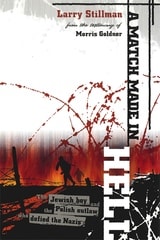
A Match Made in Hell
The Jewish Boy and the Polish Outlaw Who Defied the NazisLarry Stillman, from the testimony of Morris Goldner
University of Wisconsin Press, 2003
When Moniek (Morris) Goldner and his family were uprooted from their Polish farming village during a German action, the child-sized sixteen-year-old fled into the forests. He eventually met up with his father, who had also escaped, and together they managed to survive until a former friend betrayed the pair. Wounded and left for dead beneath his father’s murdered body, Goldner was rescued by the enigmatic outlaw Jan Kopec, who was also in hiding, looking for ways to profit from his criminal expertise.
For eighteen months Kopec hid the boy with him, moving from one area to another, often staying in hideouts he had fashioned years earlier. At first Kopec trained Goldner simply to serve as his accomplice in robberies and black market activities. But before long he pushed the training to a whole new level, making it possible for him to sell Goldner’s services to a shadowy resistance group which was becoming interested in the daring young saboteur.
And through it all, these two disparate personalities—the quiet, small-framed boy and the stocky, callous mercenary—forged an remarkable friendship and co-dependency born of need and desperation in a hellish time and place.
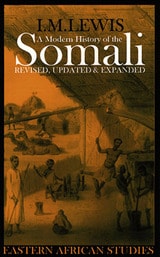
A Modern History of the Somali
Nation and State in the Horn of AfricaI. M. Lewis
Ohio University Press, 2002
This latest edition of A Modern History of the Somali brings I. M. Lewis’s definitive history up to date and shows the amazing continuity of Somali forms of social organization. Lewis’s history portrays the ingeniousness with which the Somali way of life has been adapted to all forms of modernity.

A Morning in June
Defending Outpost HarryJames W. Evans, with a foreword by John S. D. Eisenhower
University of Alabama Press, 2010
Exploring the strategic and human dimensions of the defense of Outpost Harry.
By June 1953 the Korean War, marked at the outset by extremely fluid advances and retreats up and down the peninsula, had settled into position warfare very near the original pre-war demarcation line between North and South Korea. At this point both sides were fighting to win a peace, to achieve incremental advantages that could be translated into gains at the peace negotiations in Panmunjom. The battle at Outpost Harry devolved into hand-to-hand combat during a period of constant, intense fighting that lasted two days. The author, although seriously wounded that night, refused evacuation and remained on the hill to successfully lead his company in defense of the outpost. It wasn’t romantic; it wasn’t chivalrous; and many died or were badly wounded. Some of the survivors never fully overcame the mental and physical damage they suffered during the nightmare.
With this book, one of those scarred by that experience recounts the events of the battle and his lifelong efforts to deal with the residual horrors. The Korean Conflict may be called "the forgotten war" by some, but not by those who were on the front lines.
A New Anatomy of Storyworlds
What Is, What If, As IfMarie-Laure Ryan
The Ohio State University Press, 2022
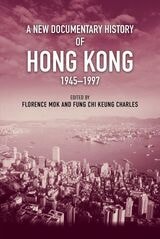
A New Documentary History of Hong Kong, 1945–1997
Edited by Florence Mok and Fung Chi Keung Charles
Hong Kong University Press, 2025
Through analyzing newly released archival records from the National Archives in London and the Public Records Office in Hong Kong, A New Documentary History of Hong Kong, 1945–1997 provides an updated and improved understanding of basic aspects of the city such as governance, economy, society, and culture. It also aims to investigate topics that are under-explored in previous sourcebooks, such as race and diasporas, gender and familial relations, medicine and healthcare, and environment and natural disasters. Overall, this book offers an innovative and comprehensive long-term perspective of Hong Kong’s colonial history.
A Partisan Church
Todd Scribner
Catholic University of America Press, 2015
A People's History of Catalonia
Michael Eaude
Pluto Press, 2022
The fight of an oppressed nation for its sovereignty has often dovetailed with that of a militant working class for social justice.
At every home game of FC Barcelona, at 17 minutes and 14 seconds of play, the 100,000-capacity Camp Nou stadium is filled by the roar of “IN-DE-PEN-DÈN-CI-A!” Time stops for a second. History lives in the present...
Catalonia's national consciousness has deep roots. There are countries twice the size with histories half as interesting. A People's History of Catalonia tells that history, from below, in all its richness and complexity. The region's struggle for independence has, for centuries, been violently resisted, the Catalan language suppressed and its leaders jailed.
From the peasant revolts of the 15th century and the siege of Barcelona in 1714, to defeat in the Spanish Civil War, and the slow re-emergence of the workers' movement and anti-Francoist resistance in the years that followed, Michael Eaude tells a compelling story whose ending has yet to be written.
A People's History of Europe
From World War I to TodayRaquel Varela
Pluto Press, 2020
From the Russian Revolution, through May '68 and the Prague Spring, to the present day, we hear from feminists, trade unionists, conscientious objectors and activists and learn of immigration struggles, anti-colonial conflicts and labour movements. Cutting against the grain of mainstream histories, this is a history of Europe told from below.
Containing new and fascinating insights, Raquel Varela paints a different picture of the European story; one where ordinary Europeans are active agents of their own history.
A Planet in Hospice
Environmental Justice in Existential EcofictionLauren S. Cardon
The Ohio State University Press, 2026
How do we continue to love and care for a planet it’s too late to save? In A Planet in Hospice, Lauren S. Cardon analyzes works of “existential ecofiction” that invite us to reflect on our mortality and the many ways that people are already affected by disaster, while also encouraging hope and connection. These texts from authors such as N. K. Jemisin, Paolo Bacigalupi, Darcie Little Badger, Rivers Solomon, Richard Powers, and Margaret Atwood are characterized by themes of ecological crisis, planetary demise, and human extinction, and they center environmental justice and human oppression. Cardon argues that, by invoking the end of the world, these writers directly engage with death anxiety and consequently intervene in current theories of existential psychology and intersectional ecocriticism. They highlight the inextricability of environmental care and social justice and offer visions of a path forward through the global climate crisis humans now face.
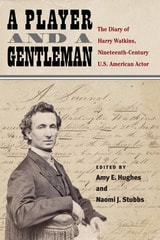
A Player and a Gentleman
The Diary of Harry Watkins, Nineteenth-Century U.S. American ActorEdited by Amy E. Hughes and Naomi J. Stubbs
University of Michigan Press, 2018
Hardworking actor, playwright, and stage manager Harry Watkins (1825–94) was also a prolific diarist. For fifteen years Watkins regularly recorded the plays he saw, the roles he performed, the books he read, and his impressions of current events. Performing across the U.S., Watkins collaborated with preeminent performers and producers, recording his successes and failures as well as his encounters with celebrities such as P. T. Barnum, Junius Brutus Booth, Edwin Forrest, Anna Cora Mowatt, and Lucy Stone. His is the only known diary of substantial length and scope written by a U.S. actor before the Civil War—making Watkins, essentially, the antebellum equivalent of Samuel Pepys. Theater historians Amy E. Hughes and Naomi J. Stubbs have selected, edited, and annotated excerpts from the diary in an edition that offers a vivid glimpse of how ordinary people like Watkins lived, loved, struggled, and triumphed during one of the most tumultuous periods in U.S. history. The selections in A Player and a Gentleman are drawn from a more expansive digital archive of the complete diary. The book, like its digital counterpart, will richly enhance our knowledge of antebellum theater culture and daily life in the U.S. during this period.
A Poetic Genealogy of North African Literature
Thomas C. Connolly
Northwestern University Press, 2025
Engaging the poetic to expand our imagination of Maghrebi literature in French
Poetry, as the Moroccan writer Abdelkébir Khatibi describes it, is a form of dissymmetry that exposes readers to the unexpected, and to the possibility of a transformative encounter with the text. Drawing on literary, philosophical, theoretical, and theological texts in multiple languages and scripts, as well as on the visual arts, Thomas C. Connolly delves into the poetic works of Khatibi and six other major Maghrebi authors—Jean Amrouche, Tahar Djaout, Nabile Farès, Mohammed Khaïr-Eddine, Abdelwahab Meddeb, and Jean Sénac—as well as the French poet Arthur Rimbaud, to think anew about the origins and legacy of Francophone poetry in the Maghreb. Instead of turning away from the poetic when it becomes indecipherable, A Poetic Genealogy of North African Literature engages poetic texts on their own terms, allowing them to dictate the search for meaning, thereby expanding our understanding of what Maghrebi literature in French was, is, and might become.
A Poetics of Plot for the Twenty-First Century
Theorizing Unruly NarrativesBrian Richardson
The Ohio State University Press, 2019
Story, in the largest sense of the term, is arguably the single most important aspect of narrative. But with the proliferation of antimimetic writing, traditional narrative theory has been inadequate for conceptualizing and theorizing a vast body of innovative narratives. In A Poetics of Plot for the Twenty-First Century: Theorizing Unruly Narratives, Brian Richardson proposes a new model for evaluating literature—returning to the basis of narrative theory to illuminate how authors play with and help clarify the boundaries of narrative theory. While he focuses on late modernist, postmodern, and contemporary narratives, the study also includes many earlier works, spanning from Aristophanes and Shakespeare through James Joyce and Virginia Woolf to Salman Rushdie and Angela Carter.
By exploring fundamental questions about narrative, Richardson provides a detailed, nuanced, and comprehensive theory that includes neglected categories of storytelling and significantly enhances our treatment of traditional areas of analysis. Ultimately, this book promises to transform and expand the study of story and plot.
A Precarious Happiness
Adorno and the Sources of NormativityPeter E. Gordon
University of Chicago Press, 2023
A strikingly original account of Theodor Adorno’s work as a critique animated by happiness—now in paperback.
"Gordon’s confidently gripping and persistently subtle interpretation brings a new tone to the debate about Adorno’s negativism."—Jürgen Habermas
Theodor Adorno is often portrayed as a totalizing negativist, a scowling contrarian who looked upon modern society with despair. Peter E. Gordon thinks we have this wrong: if Adorno is uncompromising in his critique, it is because he sees in modernity an unfulfilled possibility of human flourishing. In a damaged world, Gordon argues, all happiness is likewise damaged but not wholly absent. Through a comprehensive rereading of Adorno’s work, A Precarious Happiness recovers Adorno’s commitment to traces of happiness—fragments of the good amid the bad. Ultimately, Gordon argues that social criticism, while exposing falsehoods, must also cast a vision for an unrealized better world.
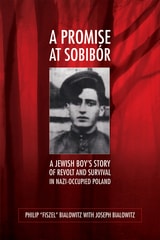
A Promise at Sobibór
A Jewish Boy’s Story of Revolt and Survival in Nazi-Occupied PolandPhilip “Fiszel” Bialowitz, with Joseph Bialowitz; Foreword by Wladyslaw Bartoszewski
University of Wisconsin Press, 2012
A Promise at Sobibór is the story of Fiszel Bialowitz, a teenaged Polish Jew who escaped the Nazi gas chambers. Between April 1942 and October 1943, about 250,000 Jews from European countries and the Soviet Union were sent to the Nazi death camp at Sobibór in occupied Poland. Sobibór was not a transit camp or work camp: its sole purpose was efficient mass murder. On October 14, 1943, approximately half of the 650 or so prisoners still alive at Sobibór undertook a daring and precisely planned revolt, killing SS officers and fleeing through minefields and machine-gun fire into the surrounding forests, farms, and towns. Only about forty-two of them, including Fiszel, are known to have survived to the end of the war.
Philip (Fiszel) Bialowitz, now an American citizen, tells his eyewitness story here in the real-time perspective of his own boyhood, from his childhood before the war and his internment in the brutal Izbica ghetto to his harrowing six months at Sobibór—including his involvement in the revolt and desperate mass escape—and his rescue by courageous Polish farmers. He also recounts the challenges of life following the war as a teenaged displaced person, and his eventual efforts as a witness to the truth of the Holocaust.
In 1943 the heroic leaders of the revolt at Sobibór, Sasha Perchersky and Leon Feldhendler, implored fellow prisoners to promise that anyone who survived would tell the story of Sobibór: not just of the horrific atrocities committed there, but of the courage and humanity of those who fought back. Bialowitz has kept that promise.
Best Books for General Audiences, selected by the American Association for School Libraries
Best Books for High Schools, selected by the American Association for School Libraries
Best Books for Special Interests, selected by the Public Library Association