Results by title
9 books match the query 'Banks'
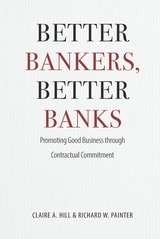
Better Bankers, Better Banks
Promoting Good Business through Contractual CommitmentClaire A. Hill and Richard W. Painter
University of Chicago Press, 2015
In Better Bankers, Better Banks, Claire A. Hill and Richard W. Painter look back at the history of banking and show how the current culture of bad behavior—dramatized by the corrupt, cocaine-snorting bankers of The Wolf of Wall Street—came to be. In the early 1980s, banks went from partnerships whose partners had personal liability to corporations whose managers had no such liability and could take risks with other people’s money. A major reason bankers remain resistant to change, Hill and Painter argue, is that while banks have been faced with large fines, penalties, and legal fees—which have exceeded one hundred billion dollars since the onset of the crisis—the banks (which really means the banks’shareholders) have paid them, not the bankers themselves. The problem also extends well beyond the pursuit of profit to the issue of how success is defined within the banking industry, where highly paid bankers clamor for status and clients may regard as inevitable bankers who prioritize their own self-interest. While many solutions have been proposed, Hill and Painter show that a successful transformation of banker behavior must begin with the bankers themselves. Bankers must be personally liable from their own assets for some portion of the bank’s losses from excessive risk-taking and illegal behavior. This would instill a culture that discourages such behavior and in turn influence the sorts of behavior society celebrates or condemns.
Despite many sensible proposals seeking to reign in excessive risk-taking, the continuing trajectory of scandals suggests that we’re far from ready to avert the next crisis. Better Bankers, Better Banks is a refreshing call for bankers to return to the idea that theirs is a noble profession.
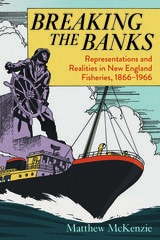
Breaking the Banks
Representations and Realities in New England Fisheries, 1866-1966Matthew McKenzie
University of Massachusetts Press, 2018
Books, films, and the media have long portrayed the Yankee fisherman's hard-scrabble existence, as he faced brutal weather on the open seas and unnecessary governmental restrictions. As McKenzie contends, this simplistic view has long betrayed commercial fisheries' sophisticated legislative campaigns in Washington, DC, as they sought federal subsidies and relief and, eventually, fewer constricting regulations. This clash between fisheries' representation and their reality still grips fishing communities today as they struggle to navigate age-old trends of fleet consolidation, stock decline, and intense competition.
Corporate Governance in Central Europe and Russia
Banks, Funds, and Foreign InvestorsRoman Frydman
Central European University Press, 1996
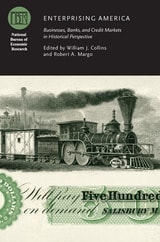
Enterprising America
Businesses, Banks, and Credit Markets in Historical PerspectiveEdited by William J. Collins and Robert A. Margo
University of Chicago Press, 2015
To better understand the historical processes central to American economic development, Enterprising America brings together contributors who address the economic behavior of American firms and financial institutions—and the associated legal institutions that shaped their behavior—throughout the nineteenth and early twentieth centuries. Collectively, the contributions provide an account of the ways in which businesses, banks, and credit markets promoted America’s extraordinary economic growth. Among the topics that emerge are the rise of incorporation and its connection to factory production in manufacturing, the organization and operation of large cotton plantations in comparison with factories, the regulation and governance of banks, the transportation revolution’s influence on bank stability and survival, and the emergence of long-distance credit in the context of an economy that was growing rapidly and becoming increasingly integrated across space.

Fiery Dragons
Banks, Moneylenders and Microfinance in BurmaSean Turnell
National University of Singapore Press, 2009

Finance Capitalism Unveiled
Banks and the German Political EconomyRichard Deeg
University of Michigan Press, 1999
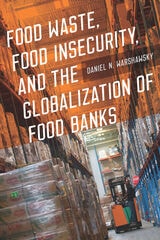
Food Waste, Food Insecurity, and the Globalization of Food Banks
Daniel N. Warshawsky
University of Iowa Press, 2023
Based on fifteen years of in-depth fieldwork on four continents, Daniel Warshawsky illustrates how and why food banks proliferate across the globe even though their impacts may be limited. He suggests that we need to reformulate the role of food banks. The mission of food banks needs to be more realistic, as food surpluses cannot reduce food insecurity on a significant scale. Food banks need to regain their institutional independence from the state and corporations, and incorporate the knowledge and experiences of the food insecure in the daily operations of the food system. These collective changes can contribute to a future where food banks play a smaller but more targeted role in food systems.

Oil, Banks, and Politics
The United States and Postrevolutionary Mexico, 1917–1924By Linda B. Hall
University of Texas Press, 1995
Mexico was second only to the United States as the world's largest oil producer in the years following the Mexican Revolution. As the revolutionary government became institutionalized, it sought to assure its control of Mexico's oil resources through the Constitution of 1917, which returned subsoil rights to the nation. This comprehensive study explores the resulting struggle between oil producers, many of which were U.S. companies, and the Mexican government.
Linda Hall goes beyond the diplomacy to look at the direct impact of a powerful, highly profitable foreign-controlled industry on a government and a nation trying to recover from a major civil war. She draws on extensive research in Mexican archives, including both government sources and the private papers of Presidents Alvaro Obregón and Plutarco Elías Calles, as well as U.S. government and private sources.
Since the North American Free Trade Agreement has expanded United States business ties to Mexico, this study of a crucial moment in U.S.-Mexican business relations will be of interest to a wide audience in business, diplomatic, and political history.
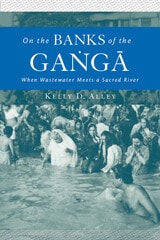
On the Banks of the Ganga
When Wastewater Meets a Sacred RiverKelly D. Alley
University of Michigan Press, 2002
Alley investigates ethno-semantic, discursive, and institutional data to flesh out the interplay between religious, scientific, and official discourses about the river Ganga. Using a new outward layering methodology, she points out that anthropological analysis must separate the historical and discursive strands of the debates concerning waste and sacred purity in order to reveal the cultural complexities that surround the Ganga. Ultimately, she addresses a deeply rooted cultural paradox: if the Ganga river is considered sacred by Hindus across India, then why do the people allow it to become polluted?
Examining areas of contemporary concern such as water usage and urban waste management in the most populated river basin in the world, this book will appeal to anthropologists and readers in religious, environmental, and Asian studies, as well as geography and law.
Kelly D. Alley is Associate Professor and Director of Anthropology at Auburn University. In addition to being a prolific writer, she has conducted research on public culture and environmental issues in northern India for over a decade. Alley is currently overseeing a project to ameliorate river pollution problems in India.