Results by title
19 books match the query 'Basque Americans'
A Travel Guide To Basque America
Families, Feasts, and Festivals, 2nd EditionNancy Zubiri
University of Nevada Press, 2006
A Travel Guide to Basque America—the first-ever guide to America’s Basque-American communities, their history, culture, and festivals—has been a best-seller since it first appeared in 1998. This new edition lists dozens of new restaurants, Basque cultural clubs and cultural events, and hundreds of Basque-related Internet sites that have appeared since 1998. It also includes new information about recent events in the Basque Country, their impact on Basque-Americans, and new cultural and community efforts to preserve Basque culture in America. This is the essential guide for Basque-Americans seeking links to their ancient culture and its homeland and their counterparts in the U.S., as well as for any traveler interested in exploring one of this country’s most vibrant and fascinating ethnic minorities.
An Enduring Legacy
The Story Of Basques In IdahoMark Bieter
University of Nevada Press, 2003
In this volume, brothers Mark and John Bieter chronicle three generations of Basque presence in Idaho from 1890 to the present, resulting in an engaging story that begins with a few solitary sheepherders and follows their evolution into the prominent ethnic community of today.

Back to Bizkaia
A Basque-American MemoirVince J. Juaristi
University of Nevada Press, 2011
Nevada sheep rancher Joe Juaristi spoke for years about making a trip back to the Spanish Basque Country that he left sixty years earlier, but each time the subject came up the discussion evolved into a family debate about the scope and members of the journey. Finally Joe's son, Vince, secretly resolved to organize the trip that his father wanted and needed--the two of them, traveling alone, making a quiet reunion with Joe's twin sister, who suffers from Alzheimer's, visiting other aging siblings and friends, and recounting the places that formed Joe's memories of his youth.
Back to Bizkaia is part travel book, part memoir of two men exploring their mutual roots and their unique father-son bond. The narrative intertwines an engaging account of the contemporary Basque Country with Joe's experiences as an immigrant making his way in a new country and Vince's memories of growing up in a close Basque-American community in the American West. This is a book about Basques and their American families, but on another level it is every immigrant's story of return to a beloved homeland.
Basque Firsts
People Who Changed the WorldVince J. Juaristi
University of Nevada Press, 2016
The profiles use primary sources to tell fresh stories and offer a wonderful variety, showing the astonishing breadth of Basque contributions. They include Juan Sebastían Elcano, the first person to circumnavigate the earth; St. Ignatius of Loyola, the first Jesuit to seed a worldwide movement in education; Santiago Ramón y Cajal, the Father of Neurology and a Nobel laureate; Cristóbal Balenciaga, the king of haute couture; Paul Laxalt, one of Ronald Reagan’s closest friends in politics; and Edurne Pasaban, the first woman to climb the world’s fourteen tallest mountains.
Basque Firsts provides a rare look at a culture’s people, revealing the significant contributions they have shared.
Basque Immigrants and Nevada's Sheep Industry
Geopolitics and the Making of an Agricultural Workforce, 1880-1954Iker Saitua
University of Nevada Press, 2019
Between the 1880s and the 1950s, the western open-range sheep industry was the original economic attraction for Basque immigrants. This engaging study tracks the development of the Basque presence in the American West, providing deep detail about the sheepherders’ history, native and local culture, the challenges they faced, and the changing conditions under which the Basques lived and worked. Saitua also shows how Basque immigrant sheepherders went from being a marginalized labor group to a desirable, high-priced workforce in response to the constant demand for their labor power.
As the twentieth century progressed, the geopolitical tide in America began to change. In 1924, the Restrictive Immigration Act resulted in a truncated labor supply from the Basque Country in Spain. During the Great Depression and the Second World War, the labor shortage became acute. In response, Senator Patrick McCarran from Nevada lobbied on behalf of his wool-growing constituency to open immigration doors for Basques, the most desirable laborers for tending sheep in remote places. Subsequently, Cold War international tensions offered opportunities for a reconciliation between the United States and Francisco Franco, despite Spain’s previous sympathy with the Axis powers.
This fresh portrayal shows how Basque immigrants became the backbone of the sheep industry in Nevada. It also contributes to a wider understanding of the significance of Basque immigration by exploring the role of Basque agricultural labor in the United States, the economic interests of Western ranchers, and McCarran’s diplomacy as catalysts that eventually helped bring Spain into the orbit of western democracies.
Basques of the American West
New and Collected Essays on History and EthnicityRichard W. Etulain
University of Nevada Press, 2026
This collection offers readers a thoughtful and engaging look at the enduring presence and influence of Basques across the cultural and historical landscape of the American West.
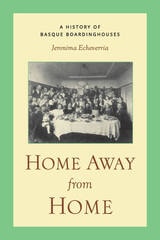
Home Away From Home
A History of Basque BoardinghousesJeronima Echeverria
University of Nevada Press, 1999
In this meticulously researched study of Basque boardinghouses in the United States, Jeronima Echeverria offers a compelling history of the institution that most deeply shaped Basque immigrant life and served as the center of Basque communities throughout the West. She weaves into her narrative the stories of the boarding house owners and operators and the ways they made their establishments a home away from home for their fellow compatriots, as well as the stories of the young Basques who left the security of their beloved homeland to find work in the United States.
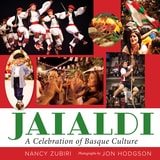
Jaialdi
A Celebration of Basque CultureNancy Zubiri
University of Nevada Press, 2022
Organized and staffed entirely by volunteers, Jaialdi attracts 35,000 to 50,000 visitors from around the world. Attendees enjoy festivities featuring Basque culture, including dancing, music, food, and competitive feats of strength. Photographer Jon C. Hodgson captures the spirit and merriment of the festival in vivid detail, taking readers on a journey into the heart of Basque culture. Coupled with author Nancy Zubiri’s observations from her own attendance at nearly every Jaialdi since 1987, the book reveals how Boise’s Basque community has committed to host the festival and why the celebration remains so popular today.
The Basque diaspora to the United States began in the late 1800s when these determined immigrants came seeking a new life filled with opportunities. Many were sheepherders who adapted to American life while maintaining their ties to the traditions of the Basque Country. Jaialdi: A Celebration of Basque Culture illuminates how this festival honors these traditions and captures the essence of the ancient Basque people, who are preserving their heritage while embracing life in the twenty-first-century West.
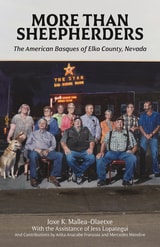
More Than Sheepherders
The American Basques of Elko County, NevadaJoxe K. Mallea-Olaetxe
University of Nevada Press, 2025
Joxe K. Mallea-Olaetxe presents a modern study focused on the post-1970s, when the retired Basque sheepherders and their families became the dominant Americanized minority in the area. During this time, the Fourth of July National Basque Festival began to attract thousands of visitors from as far away as Europe to the small Nevada community and brought to light the vibrant customs of these Nevadans.
This book explores the American Basques’ present-day place in the West, bolstered by the collaborative efforts of four contributors, including two women—all who have been residents of Elko. The writers offer firsthand knowledge of their heritage through numerous vignettes, and these deeply personal perspectives will entice readers into Mallea-Olaetxe’s singular and entertaining historical account.
Ostrich
(A Comic Novel)Michael A. Thomas
University of Nevada Press, 2000
Portraits of Basques in the New World
Richard W. Etulain
University of Nevada Press, 1999
A collection of new essays on notable historic and contemporary Basques of America's Far West that offers a perceptive and lively examination of the lives of one of the West's most resilient and successful ethnic minorities. It is essential reading for anyone interested in the Basque people or those interested in the process of immigration and assimilation: these profiles illustrate how America's Basque immigrants have achieved success in mainstream society while retaining strong ties to their ancient Old World culture.
Possible Paradises
Basque Emigration to Latin AmericaAzcona Pastor
University of Nevada Press, 2003
Possible Paradises, José Manuel Azcona Pastor's engaging and meticulously researched study of Basque emigration to the Americas, is a path breaking work of monumental importance. Ranging over the entire former Spanish American empire from Tierra del Fuego to the U.S. Southwest and covering over five centuries of history, Azcona examines the roles and fates of the Basques who came to the New World. He also studies the impact of the New World on the Basque Country, from the importance in the modern Basque diet of such American foodstuffs as corn and beans to the encouragement given to traditional Basque industries by the colonizers' demand for ships and iron tools. He considers the role of Basques in the Spanish imperial expeditions of exploration and conquest; their participation in transatlantic commerce and communication.
The Basque diaspora, although worldwide in dimension, has had its greatest presence and importance in the Americas. Azcona's pioneering study views the Basque presence in the New World through the broadest possible lens, linking Basque communities and activities from Argentina to the North American West.
Foreword by William A. Douglass. Translation by Roland Vazquez.
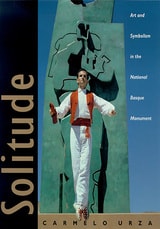
Solitude
Art And Symbolism In The National Basque MonumentCarmelo Urza
University of Nevada Press, 1993
Urza discusses the genesis of the National Basque Monument to the Basque Sheepherder that is located in Reno, Nevada. He also describes the competition held to determine the monument's design and the debates arising from the modern sculpture created by renowned Basque artist Nestor Basterrextea. Urza examines the arguments of those who favored the selection of a figurative, traditional symbol and those who preferred a modern, forward-looking symbol. He utilizes this discussion to explore the evolution of Basque ethnicity and its relationship to society.
The Deep Blue Memory
Monique Laxalt Urza
University of Nevada Press, 1993
The Good Oak
Martin Etchart
University of Nevada Press, 2005
The Land of My Fathers
A Son's Return to the Basque CountryRobert Laxalt
University of Nevada Press, 2024
In 1960, renowned Nevada writer Robert Laxalt moved himself and his family to a small Basque village in the French Pyrenees. The son of Basque emigrants, Laxalt wanted to learn as much as he could about the ancient and mysterious people from which he was descended and about the country from which his parents came. Thanks to his Basque surname and a wide network of family connections, Laxalt was able to penetrate the traditional reserve of the Basques in a way that outsiders rarely can. In the process, he gained rare insight into the nature of the Basques and the isolated, beautiful mountain world where they have lived for uncounted centuries. Based on Laxalt’s personal journals of this and a later sojourn in 1965, The Land of My Fathers is a moving record of a people and their homeland. Through Laxalt’s perceptive eyes and his wife Joyce’s photographs, we observe the Basques’ market days and festivals, join their dove hunts and harvests, share their humor and history, their deep sense of nationalism, their abiding pride in their culture and their homes, and discover the profound sources of the Basques’ strength and their endurance as a people. Photography by Joyce Laxalt.
The Last Shepherd
Martin Etchart
University of Nevada Press, 2012
Matt’s journey to manhood takes place in a vividly depicted landscape populated by lively, memorable characters. This is the powerful story of a young man’s search for an identity that encompasses two cultures and one complex, scattered family.
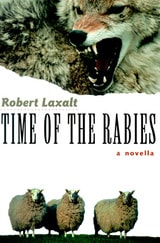
Time of the Rabies
A NovellaRobert Laxalt
University of Nevada Press, 2000
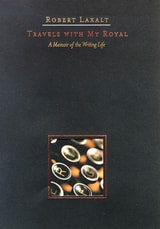
Travels with My Royal
A Memoir of the Writing LifeRobert Laxalt
University of Nevada Press, 2001
The book opens with a series of vignettes about his youth in Carson City as the second son of an immigrant Basque family and his later experiences as a student at the University of Nevada in Reno.
The second part of the book tells of Laxalt's career as a writer—his early days as a reporter when his assignments included interviews with gangsters and obligatory attendance at executions; his later adventures as a contract writer for National Geographic, and his two stays in the Basque Country. He also recounts his days as director of the University of Nevada's news service and his role in the founding of the University of Nevada Press.
The third section discusses the writing of several of his major books—where the ideas came from, what he tried to accomplish in each book, the challenges he faced, and the ways he chose to resolve them. Foreword by Cheryll Glotfelty.