Results by title
8 books match the query 'Bauer, Brian S.'
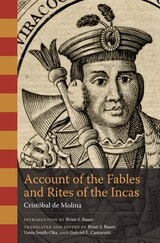
Account of the Fables and Rites of the Incas
By Cristóbal de Molina
University of Texas Press, 2011
Only a few decades after the Spanish conquest of Peru, the third Bishop of Cuzco, Sebastián de Lartaún, called for a report on the religious practices of the Incas. The report was prepared by Cristóbal de Molina, a priest of the Hospital for the Natives of Our Lady of Succor in Cuzco and Preacher General of the city. Molina was an outstanding Quechua speaker, and his advanced language skills allowed him to interview the older indigenous men of Cuzco who were among the last surviving eyewitnesses of the rituals conducted at the height of Inca rule. Thus, Molina's account preserves a crucial first-hand record of Inca religious beliefs and practices.
This volume is the first English translation of Molina's Relación de las fábulas y ritos de los incas since 1873 and includes the first authoritative scholarly commentary and notes. The work opens with several Inca creation myths and descriptions of the major gods and shrines (huacas). Molina then discusses the most important rituals that occurred in Cuzco during each month of the year, as well as rituals that were not tied to the ceremonial calendar, such as birth rituals, female initiation rites, and marriages. Molina also describes the Capacocha ritual, in which all the shrines of the empire were offered sacrifices, as well as the Taqui Ongoy, a millennial movement that spread across the Andes during the late 1560s in response to growing Spanish domination and accelerated violence against the so-called idolatrous religions of the Andean peoples.
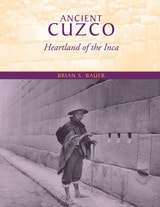
Ancient Cuzco
Heartland of the IncaBy Brian S. Bauer
University of Texas Press, 2004
The Cuzco Valley of Peru was both the sacred and the political center of the largest state in the prehistoric Americas—the Inca Empire. From the city of Cuzco, the Incas ruled at least eight million people in a realm that stretched from modern-day Colombia to Chile. Yet, despite its great importance in the cultural development of the Americas, the Cuzco Valley has only recently received the same kind of systematic archaeological survey long since conducted at other New World centers of civilization.
Drawing on the results of the Cuzco Valley Archaeological Project that Brian Bauer directed from 1994 to 2000, this landmark book undertakes the first general overview of the prehistory of the Cuzco region from the arrival of the first hunter-gatherers (ca. 7000 B.C.) to the fall of the Inca Empire in A.D. 1532. Combining archaeological survey and excavation data with historical records, the book addresses both the specific patterns of settlement in the Cuzco Valley and the larger processes of cultural development. With its wealth of new information, this book will become the baseline for research on the Inca and the Cuzco Valley for years to come.
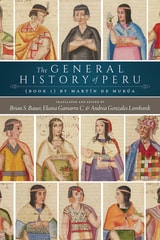
General History of Peru
Book 1Martín de Murúa
University Press of Colorado, 2024
Book 1 covers both the history of the Inca Empire and the first forty years of the Spanish occupation, up to and including the fall of Vilcabamba in 1572. While the J. Paul Getty Museum produced a digital facsimile of Murúa’s full Historia in 2008, it remained underused and, until now, untranslated. This translation revitalizes the momentous early volume with an introduction offering a window into Murúa’s life and the writing of his Historia, and extensive footnotes that provide the scholarly context of Murúa’s work.
This edition of The General History of Peru: Book 1 provides long-awaited access to Murúa’s contribution to Indigenous Andean history and early colonial Peru. The book is valuable for English-speaking students and scholars of pre-Hispanic Andean history, especially those interested in the ancient Andean world and colonial Peru’s literary production.
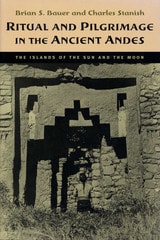
Ritual and Pilgrimage in the Ancient Andes
The Islands of the Sun and the MoonBy Brian S. Bauer and Charles Stanish
University of Texas Press, 2001
The Islands of the Sun and the Moon in Bolivia's Lake Titicaca were two of the most sacred locations in the Inca empire. A pan-Andean belief held that they marked the origin place of the Sun and the Moon, and pilgrims from across the Inca realm made ritual journeys to the sacred shrines there. In this book, Brian Bauer and Charles Stanish explore the extent to which this use of the islands as a pilgrimage center during Inca times was founded on and developed from earlier religious traditions of the Lake Titicaca region.
Drawing on a systematic archaeological survey and test excavations in the islands, as well as data from historical texts and ethnography, the authors document a succession of complex polities in the islands from 2000 BC to the time of European contact in the 1530s AD. They uncover significant evidence of pre-Inca ritual use of the islands, which raises the compelling possibility that the religious significance of the islands is of great antiquity. The authors also use these data to address broader anthropological questions on the role of pilgrimage centers in the development of pre-modern states.
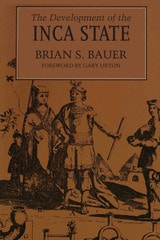
The Development of the Inca State
By Brian S. Bauer
University of Texas Press, 1992
The Inca empire was the largest state in the Americas at the time of the Spanish invasion in 1532. From its political center in the Cuzco Valley, it controlled much of the area included in the modern nations of Ecuador, Peru, Chile, and Bolivia. But how the Inca state became a major pan-Andean power is less certain. In this innovative work, Brian S. Bauer challenges traditional views of Inca state development and offers a new interpretation supported by archaeological, historical, and ethnographic evidence.
Spanish chroniclers of the sixteenth and seventeenth centuries attributed the rapid rise of Inca power to a decisive military victory over the Chanca, their traditional rivals, by Pachacuti Inca Yupanqui. By contrast, Bauer questions the usefulness of literal interpretations of the Spanish chronicles and provides instead a regional perspective on the question of state development. He suggests that incipient state growth in the Cuzco region was marked by the gradual consolidation and centralization of political authority in Cuzco, rather than resulting from a single military victory. Synthesizing regional surveys with excavation, historic, and ethnographic data, and investigating broad categories of social and economic organization, he shifts the focus away from legendary accounts and analyzes more general processes of political, economic, and social change.
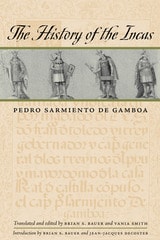
The History of the Incas
By Pedro Sarmiento de Gamboa
University of Texas Press, 2007
The History of the Incas may be the best description of Inca life and mythology to survive Spanish colonization of Peru. Pedro Sarmiento de Gamboa, a well-educated sea captain and cosmographer of the viceroyalty, wrote the document in Cuzco, the capital of the Inca Empire, just forty years after the arrival of the first Spaniards. The royal sponsorship of the work guaranteed Sarmiento direct access to the highest Spanish officials in Cuzco. It allowed him to summon influential Incas, especially those who had witnessed the fall of the Empire. Sarmiento also traveled widely and interviewed numerous local lords (curacas), as well as surviving members of the royal Inca families. Once completed, in an unprecedented effort to establish the authenticity of the work, Sarmiento's manuscript was read, chapter by chapter, to forty-two indigenous authorities for commentary and correction.
The scholars behind this new edition (the first to be published in English since 1907) went to similarly great lengths in pursuit of accuracy. Translators Brian Bauer and Vania Smith used an early transcript and, in some instances, the original document to create the text. Bauer and Jean-Jacques Decoster's introduction lays bare the biases Sarmiento incorporated into his writing. It also theorizes what sources, in addition to his extensive interviews, Sarmiento relied upon to produce his history. Finally, more than sixty new illustrations enliven this historically invaluable document of life in the ancient Andes.
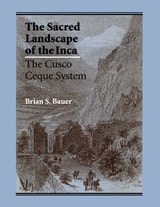
The Sacred Landscape of the Inca
The Cusco Ceque SystemBy Brian S. Bauer
University of Texas Press, 1998
The ceque system of Cusco, the ancient capital of the Inca empire, was perhaps the most complex indigenous ritual system in the pre-Columbian Americas. From a center known as the Coricancha (Golden Enclosure) or the Temple of the Sun, a system of 328 huacas (shrines) arranged along 42 ceques (lines) radiated out toward the mountains surrounding the city. This elaborate network, maintained by ayllus (kin groups) that made offerings to the shrines in their area, organized the city both temporally and spiritually.
From 1990 to 1995, Brian Bauer directed a major project to document the ceque system of Cusco. In this book, he synthesizes extensive archaeological survey work with archival research into the Inca social groups of the Cusco region, their land holdings, and the positions of the shrines to offer a comprehensive, empirical description of the ceque system. Moving well beyond previous interpretations, Bauer constructs a convincing model of the system's physical form and its relation to the social, political, and territorial organization of Cusco.
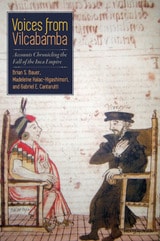
Voices from Vilcabamba
Accounts Chronicling the Fall of the Inca EmpireBrian S. Bauer
University Press of Colorado, 2016
A rich new source of important archival information, Voices from Vilcabamba examines the fall of the Inca Empire in unprecedented detail. Containing English translations of seven major documents from the Vilcabamba era (1536–1572), this volume presents an overview of the major events that occurred in the Vilcabamba region of Peru during the final decades of Inca rule.
Brian S. Bauer, Madeleine Halac-Higashimori, and Gabriel E. Cantarutti have translated and analyzed seven documents, most notably Description of Vilcabamba by Baltasar de Ocampo Conejeros and a selection from Martín de Murúa’s General History of Peru, which focuses on the fall of Vilcabamba. Additional documents from a range of sources that include Augustinian investigations, battlefield reports, and critical eyewitness accounts are translated into English for the first time.
With a critical introduction on the history of the region during the Spanish Conquest and introductions to each of the translated documents, the volume provides an enhanced narrative on the nature of European-American relations during this time of important cultural transformation.