Results by title
2 books match the query 'Become'
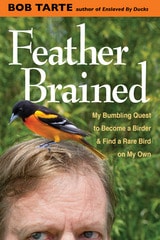
Feather Brained
My Bumbling Quest to Become a Birder and Find a Rare Bird on My OwnBob Tarte
University of Michigan Press, 2016
For much of his life, the closest Bob Tarte got to a nature walk was the stroll from parking lot to picnic table on family outings. But then a chance sighting of a dazzling rose-breasted grosbeak in wife-to-be Linda’s backyard prompts a fascination with birds, which he had never cared about before in the least. Soon he is obsessed with spotting more and more of them—the rarer the better—and embarks on a bumpy journey to improve his bumbling birding skills. Along the way, Tarte offers readers a droll look at the pleasures and pitfalls he encounters, introduces a colorful cast of fellow birders from across the country, and travels to some of the premier birding sites in the Midwest, including Point Pelee, Magee Marsh, Tawas Point State Park, and even Muskegon Wastewater System. This funny, heartfelt memoir will appeal to birders of all skill levels as well as to anyone who knows and loves a birder.
[more]
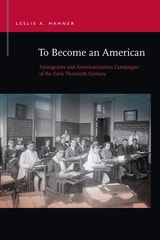
To Become an American
Immigrants and Americanization Campaigns of the Early Twentieth CenturyLeslie A. Hahner
Michigan State University Press, 2017
Pledging allegiance, singing the “Star-Spangled Banner,” wearing a flag pin—these are all markers of modern patriotism, emblems that announce the devotion of American citizens. Most of these nationalistic performances were formulized during the early twentieth century and driven to new heights by the panic surrounding national identity during World War I. In To Become an American Leslie A. Hahner argues that, in part, the Americanization movement engendered the transformation of patriotism during this period. Americanization was a massive campaign designed to fashion immigrants into perfect Americans—those who were loyal in word, deed, and heart. The larger outcome of this widespread movement was a dramatic shift in the nation’s understanding of Americanism. Employing a rhetorical lens to analyze the visual and aesthetic practices of Americanization, Hahner contends that Americanization not only tutored students in the practices of citizenship but also created a normative visual metric that modified how Americans would come to understand, interpret, and judge their own patriotism and that of others.
[more]