Results by title
10 books match the query 'Beliefs'
Alaska Politics and Public Policy
The Dynamics of Beliefs, Institutions, Personalities, and PowerEdited by Clive S. Thomas, with Laura Savatgy and Kristina Klimovich
University of Alaska Press, 2016
This book, the most comprehensive on the subject to date, focuses on the question of how beliefs, institutions, personalities, and power interact to shape Alaska politics and public policy. Drawing on these interactions, the contributors explain how and why certain issues get dealt with successfully and others unsuccessfully, and why some issues are taken up quickly while others are not addressed at all. This comprehensive guide to the political climate of Alaska will be essential to anyone studying the politics of America’s largest—and in some ways most unusual—state.
Beliefs and Holy Places
A Spiritual Geography of the Pimería AltaJames S. Griffith
University of Arizona Press, 1992
Folklorist Jim Griffith has lived in the Pimería Alta for more than thirty years, visiting its holy places and attending its fiestas, and has uncovered a background of belief, tradition, and history lying beneath the surface of these cultural expressions. In Beliefs and Holy Places, he reveals some of the supernaturally sanctioned relationships that tie people to places within that region, describing the cultural and religious meanings of locations and showing how bonds between people and places have in turn created relationships between places, a spiritual geography undetectable on physical maps.
Throughout the book, Griffith shows how culture moves from legend to art to belief to practice, all the while serving as a dynamic link between past and future. Now as the desert gives way to newcomers, Griffith's book offers visitors and residents alike a rare opportunity to share in these rich traditions.
Beliefs and Rituals in Archaic Eastern North America
An Interpretive GuideCheryl Claassen
University of Alabama Press, 2015
A comprehensive and essential field reference, Beliefs and Rituals in Archaic Eastern North America reveals the spiritual landscape in the American Archaic period.
Beliefs and Rituals in Archaic Eastern North America describes, illustrates, and offers nondogmatic interpretations of rituals and beliefs in Archaic America. In compiling a wealth of detailed entries, author Cheryl Claassen has created both an exhaustive reference as well as an opening into new archaeological taxonomies, connections, and understandings of Native American culture.
The material is presented in an introductory essay about Archaic rituals followed by two sections of entries that incorporate reports and articles discussing archaeological sites; studies of relevant practices of ritual and belief; data related to geologic features, artifact attributes, and burial settings; ethnographies; and pilgrimages to specific sites. Claassen’s work focuses on the American Archaic period (marked by the end of the Ice Age approximately 11,000 years ago) and a geographic area bounded by the edge of the Great Plains, Newfoundland, and southern Florida. This period and region share specific beliefs and practices such as human sacrifice, dirt mound burial, and oyster shell middens.
This interpretive guide serves as a platform for new interpretations and theories on this period. For example, Claassen connects rituals to topographic features and posits the Pleistocene-Holocene transition as a major stimulus to Archaic beliefs. She also expands the interpretation of existing data previously understood in economic or environmental terms to include how this same data may also reveal spiritual and symbolic practices. Similarly, Claassen interprets Archaic culture in terms of human agency and social constraint, bringing ritual acts into focus as drivers of social transformation and ethnogenesis.
Richly annotated and cross-referenced for ease of use, Beliefs and Rituals in Archaic Eastern North America will benefit scholars and students of archaeology and Native American culture. Claassen’s overview of the archaeological record should encourage the development of original archaeological and historical connections and patterns. Such an approach, Claassen suggests, may reveal patterns of influence extending from early eastern Americans to the Aztec and Maya.
Beliefs, Behaviors, and Alcoholic Beverages
A Cross-Cultural SurveyMac Marshall, Editor
University of Michigan Press, 1979
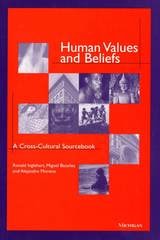
Human Values and Beliefs
A Cross-Cultural SourcebookRonald Inglehart, Miguel Basanez, and Alejandro Moreno
University of Michigan Press, 1998
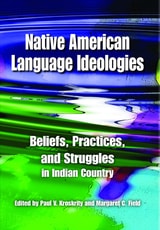
Native American Language Ideologies
Beliefs, Practices, and Struggles in Indian CountryEdited by Paul V. Kroskrity and Margaret C. Field
University of Arizona Press, 2009
These studies take up such active issues as "insiderness" in Cherokee language ideologies, contradictions of space-time for the Northern Arapaho, language socialization and Paiute identity, and orthography choices and language renewal among the Kiowa. The authors--including members of indigenous speech communities who participate in language renewal efforts--discuss not only Native Americans' conscious language ideologies but also the often-revealing relationship between these beliefs and other more implicit realizations of language use as embedded in community practice.
The chapters discuss the impact of contemporary language issues related to grammar, language use, the relation between language and social identity, and emergent language ideologies themselves in Native American speech communities. And although they portray obvious variation in attitudes toward language across communities, they also reveal commonalities--notably the emergent ideological process of iconization between a language and various national, ethnic, and tribal identities.
As fewer Native Americans continue to speak their own language, this timely volume provides valuable grounded studies of language ideologies in action--those indigenous to Native communities as well as those imposed by outside institutions or language researchers. It considers the emergent interaction of indigenous and imported ideologies and the resulting effect on language beliefs, practices, and struggles in today's Indian Country as it demonstrates the practical implications of recognizing a multiplicity of indigenous language ideologies and their impact on heritage language maintenance and renewal.
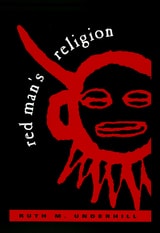
Red Man's Religion
Beliefs and Practices of the Indians North of MexicoRuth Murray Underhill
University of Chicago Press, 1965
"The distinctive contribution of [Red Man's Religion] is the treatment of topics, the insight and the perspective of the author, and her ability to transmit these to the reader. . . . Trais and aspects of religion are not treated as abstract entitites, to be enumerated and summated, assigned a geographic distribution, and then abandoned. No page is a dry recital; each is an illumination. Insight and wisdom are framed in poetic prose. An offering of information in such a medium merits gratitude."—American Anthropologist
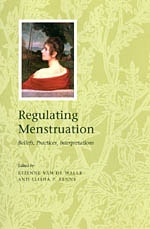
Regulating Menstruation
Beliefs, Practices, InterpretationsEdited by Etienne van de Walle and Elisha P. Renne
University of Chicago Press, 2001
Originating from an Internet conference held in February 1998, this volume contains fourteen papers that have been revised and updated to cover everything from the impact of the birth control pill to contemporary views on reproduction to the pharmacological properties of various herbal substances, reflecting the historical, contemporary, and anthropological perspectives of this timely and complex issue.
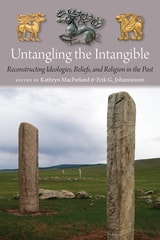
Untangling the Intangible
Reconstructing Ideologies, Beliefs, and Religion in the PastKathryn MacFarland
University Press of Colorado, 2026
In Untangling the Intangible a diverse group of authors focuses on new and rigorous ways to approach religion, beliefs, and ideology in archaeology. Reconstructing the human experience from archaeologically recovered materials is a complex task that can only benefit by making use of all available avenues of inquiry. To that end, the authors of this volume model inclusive discussions that recognize the inherent overlap, intersectionality, and co-constitutive relationship among the widely considered “intangibles” of culture: ideas, beliefs, ideology, and religion. The material and tangible aspects of these related elements inform human behavior and should not be treated independently because they constitute different and equal parts of a cognitive mosaic that forms the basis of the human experience.
The chapters encompass an array of research topics, geographical settings (Crete, Eurasia, the eastern Mediterranean, Madagascar, Mexico, and Mongolia), and temporal periods and highlight how practices associated with religious and ideological beliefs have shaped human societies across space and time. By focusing on multiple scales of inquiry and novel ways of accessing the material expressions of cultural phenomena and addressing underrepresented themes, this book challenges existing approaches and perspectives on the topic and directs future researchers to grapple with these elements as integral to researching the past.
Emphasizing a more comprehensive study of religious and ideological aspects of material culture, Untangling the Intangible highlights the potential for a more holistic understanding of the past and for approaching the very aspects that make us human through archaeology.
Publication of this book has been aided by a grant from the von Bothmer Publication Fund of the Archaeological Institute of America.
Who Is Antiracist?
Beliefs, Motivations, and PoliticsGeorge Yancey and Hayoung Oh
Temple University Press, 2025
Who Is Antiracist? provides a systematic approach to understanding the motivations and intentions of racial progressives as well as the impact of political ideology on antiracism. The authors discuss the theoretical origins of contemporary antiracism and review key works of antiracism to piece together the characteristics that define it. They also create the Antiracism Attitude Scale to explore the demographic makeup and social views of those who support the type of antiracism popularized in the United States.
Acknowledging that antiracism faces powerful challenges in fully obtaining the goals articulated by its proponents, Who Is Antiracist? enlightens us about the continuing racial conflict in our society and warns against the risk of antiracism becoming just a proxy for ordinary party politics.