Results by title
20 books match the query 'Belize'
A Good Position for Birth
Pregnancy, Risk, and Development in Southern BelizeAminata Maraesa
Vanderbilt University Press, 2018
Fear and shame are prominent affective tropes that Maraesa uses to understand women's attitudes toward reproduction that are at times contrary to development discourse but that make sense in the lived experiences of the women of southern Belize.
A Natural History of Belize
Inside the Maya ForestBy Samuel Bridgewater
University of Texas Press, 2012
Belize's Chiquibul Forest is one of the largest remaining expanses of tropical moist forest in Central America. It forms part of what is popularly known as the Maya Forest. Battered by hurricanes over millions of years, occupied by the Maya for thousands of years, and logged for hundreds of years, this ecosystem has demonstrated its remarkable ecological resilience through its continued existence into the twenty-first century. Despite its history of disturbance, or maybe in part because of it, the Maya Forest is ranked as an important regional biodiversity hot spot and provides some of the last regional habitats for endangered species such as the jaguar, the scarlet macaw, Baird's tapir, and Morelet's crocodile.
A Natural History of Belize presents for the first time a detailed portrait of the habitats, biodiversity, and ecology of the Maya Forest, and Belize more broadly, in a format accessible to a popular audience. It is based in part on the research findings of scientists studying at Las Cuevas Research Station in the Chiquibul Forest. The book is unique in demystifying many of the big scientific debates related to rainforests. These include "Why are tropical forests so diverse?"; "How do flora and fauna evolve?"; and "How do species interact?" By focusing on the ecotourism paradise of Belize, this book illustrates how science has solved some of the riddles that once perplexed the likes of Charles Darwin, and also shows how it can assist us in managing our planet and forest resources wisely in the future.
Ancient Maya Life in the Far West Bajo
Social and Environmental Change in the Wetlands of BelizeJulie L. Kunen
University of Arizona Press, 2004
In this lively story of life in the wetlands on the outskirts of the major site of La Milpa, Julie Kunen documents a hitherto unrecognized form of intensive agriculture in the Maya lowlands—one that relied on the construction of terraces and berms to trap soil and moisture around the margins of low-lying depressions called bajos. She traces the intertwined histories of residential settlements on nearby hills and ridges and agricultural terraces and other farming-related features around the margins of the bajo as they developed from the Late Preclassic perios (400 BC-AD 250) until the area's abandonment in the Terminal Classic period (about AD 850).
Kunen examines the organization of three bajo communities with respect to the use and management of resources critical to agricultural production. She argues that differences in access to spatially variable natural resources resulted in highly patterned settlement remains and that community founders and their descendents who had acquired the best quality and most diverse set of resources maintained an elevated status in the society.
The thorough integration of three lines of evidence—the settlement system, the agricultural system, and the ancient environment—breaks new ground in landscape research and in the study of Maya non-elite domestic organization. Kunen reports on the history of settlement and farming in a small corner of the Maya world but demonstrates that for any study of human-environment interactions, landscape history consists equally of ecological and cultural strands of influence.
Becoming Creole
Nature and Race in BelizeJohnson, Melissa A.
Rutgers University Press, 2019
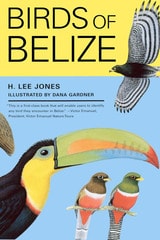
Birds of Belize
By H. Lee Jones
University of Texas Press, 2003
With nearly six hundred identified species of birds—and an average of five "new" species discovered annually—Belize is becoming a birding hotspot for amateur and professional birders from around the globe. Thousands of birders visit the country each year to enjoy Belize's amazing abundance and variety of both temperate and tropical birds in natural habitats that remain largely unspoiled. But until now, despite the growing need for an authoritative identification guide, birders have had to rely on regional field guides that offer only limited information on Belizean birds.
Birds of Belize provides the first complete guide to the identification of all currently known species—574 in all. The birds are grouped by families, with an introduction to each family that highlights its uniquely identifying characteristics and behaviors. The species accounts include all the details necessary for field identification: scientific and common names, size, plumage features, thorough voice descriptions, habitat, distribution, and status in Belize. Full color, expertly drawn illustrations by noted bird artist Dana Gardner present male and female, juvenile and adult, and basic and alternate plumages to aid visual identification throughout the year, while 234 range maps show the birds' distribution and seasonality in Belize. A comprehensive bibliography completes the volume.

Citrus, Strategy, And Class
Development In Southern BelizeMark Moberg
University of Iowa Press, 1992

Formerly British Honduras
A Profile Of The New Nation Of BelizeWilliam David Setzerkorn
Ohio University Press, 1981
A mixture of Africans, Mestizos, East Indians, Europeans, Syrians, Lebanese, Mayans, and Chinese; Belize has grown into a heterogenous mosaic of a strong and brave country which is no bigger than Cambridge, Massachusetts. Studying the influences of British domination and Spanish intimidation up to the recent movements for self-government and independence, Setzekorn presents to the reader an accounting of Belizean social and political vicissitudes—a long and tortuous, yet coherent, struggle for national and cultural identity.
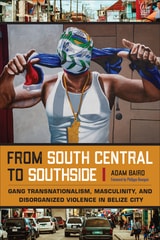
From South Central to Southside
Gang Transnationalism, Masculinity, and Disorganized Violence in Belize CityAdam Baird
Temple University Press, 2024
From South Central to Southside charts the genesis and evolution of a transnational gang culture. Baird provides firsthand interviews with gang members and “narco” families and explains the surprising source of Belize City’s severe violence and skyrocketing homicide rates. He identifies gang violence in the U.S. and Belize as stemming from populations blighted by historical, brutal inequality and marginalization. Analyzing the gendered dynamics as young men and women face the temptations, risks, and dangers of gang life, Baird shines a light on “chronic vulnerability" in Belize City.
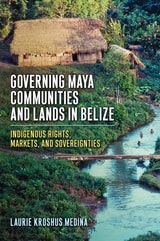
Governing Maya Communities and Lands in Belize
Indigenous Rights, Markets, and SovereigntiesLaurie Kroshus Medina
Rutgers University Press, 2024
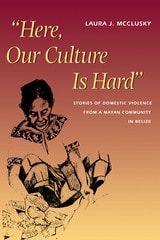
Here, Our Culture Is Hard
Stories of Domestic Violence from a Mayan Community in BelizeBy Laura McClusky
University of Texas Press, 2001
Marriage among the Maya of Central America is a model of complementarity between a man and a woman. This union demands mutual respect and mutual service. Yet some husbands beat their wives.
In this pioneering book, Laura McClusky examines the lives of several Mopan Maya women in Belize. Using engaging ethnographic narratives and a highly accessible analysis of the lives that have unfolded before her, McClusky explores Mayan women's strategies for enduring, escaping, and avoiding abuse. Factors such as gender, age inequalities, marriage patterns, family structure, educational opportunities, and economic development all play a role in either preventing or contributing to domestic violence in the village. McClusky argues that using narrative ethnography, instead of cold statistics or dehumanized theoretical models, helps to keep the focus on people, "rehumanizing" our understanding of violence. This highly accessible book brings to the social sciences new ways of thinking about, representing, and studying abuse, marriage, death, gender roles, and violence.
Heritage in the Body
Sensory Ecologies of Health Practice in Times of ChangeKristina Baines
University of Arizona Press, 2024
Employing an embodied ecological heritage (EEH) framework, Baines explores the links between health and heritage as a fluid series of ecological practices. Health and wellness are holistically defined and approached from a phenomenological perspective. Baines focuses on how sensory experiences change the body through practice and provides insights into community-driven alternatives as a means to maintain and support happy, healthy lives.
In the Realm of Nachan Kan
Postclassic Maya Archaeology at Laguna De On, BelizeMarilyn A. Masson
University Press of Colorado, 2000
In the Realm of Nachan Kan opens a window on Postclassic Maya patterns of cultural development and organization through a close examination of the small rural island of Laguna de On, a location that was distant from the governing political centers of the day. Using diachronic analysis of regional settlement patterns, ceramic traditions, household and ritual features, and artifacts from the site, Masson tracks developmental changes throughout the Postclassic period. These data suggest that affluent patterns of economic production and local and long-distance exchange were established within northern Belize by the eleventh century, and continued to develop, virtually uninterrupted, until the time of Spanish arrival.
In addition, Masson analyzes contemporary political and religious artistic traditions at the temples of Mayapan, Tulum, and Santa Rita to provide a regional context for the changes in community patterns at Laguna de On. These cultural changes, she maintains, are closely correlated with the rise of Mayapan to power and participation of sites like Laguna de On in a pan-lowland economic and ritual interaction sphere. Offering a thoroughly new interpretation of Postclassic Mayan civilization. In the Realm of Nachan Kan is a must for scholars of Mesoamerican history and culture.
Last Rites for the Tipu Maya
Genetic Structuring in a Colonial CemeteryKeith Jacobi
University of Alabama Press, 2000
Jacobi's groundbreaking osteology study uncovers the history of the Tipu Maya of Belize and their subsequent contact with the Spanish conquistadores and missionaries.
Two cultures collided at Tipu, Belize, in the 1600s: that of the native Maya and that of the Spanish missionaries, who arrived with an agenda of religious subjugation and, ultimately, political control. Combining historical documentation with the results of an archaeological exploration of a Tipu cemetery, Keith Jacobi provides an account of the meshing of these two cultures and the assimilation of Catholic practices by the Tipu.
In particular, Jacobi focuses on the dental remains recovered at this site. A tooth may be the last tangible evidence of a living creature, so teeth can reveal information about an individual's health, diet, cosmetic alteration, trauma, and genetic structure. From the genetic structure the researcher can learn information about an individual's relationship to others in a particular population and between populations.
Jacobi's research reveals how these European and Spanish Catholic practices were assimilated by the Tipu Maya and enables the first description of the prevalent attitudes toward death and burial customs. Through this study of Tipu Maya dentition changes through time, Jacobi sheds light on Spanish intermarriage, Maya familial relationships, and the Tipu genetic affinity with other prehistoric, historic, and modern Maya.
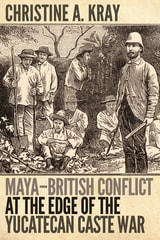
Maya-British Conflict at the Edge of the Yucatecan Caste War
Christine A. Kray
University Press of Colorado, 2023
Official British declarations of neutrality in the Caste War were confounded by a variety of political and economic factors, including competing land claims befuddled by a tangled set of treaties, mahogany extraction by British companies in contested territories, Maya rent demands, British trade in munitions to different groups of Maya combatants, and a labor system reliant on debt servitude. All these factors contributed to uneasy alliances and opportunistic crossings of imagined geopolitical borders in both directions, ultimately leading to a new military conflict in the western and northern regions of the territory claimed by Britain. What frequently began as hyper-local disputes spun out into international affairs as actors called upon more powerful groups for assistance. Evading reductionism, this work traces the decisions and actions of key figures as they maneuvered through the miasma of violence, abuse, deception, fear, flight, and glimpses of freedom.
Positioning the historiographic and ethnographic gaze on the English side without adopting the colonialist narratives and objectives found in English repositories, Maya-British Conflict at the Edge of the Yucatecan Caste War is an important and original contribution to a neglected area of study. It will appeal to students, scholars, and general readers interested in anthropology, Latin American cultures and history, Central American history, British imperialism, Indigenous rights, political anthropology, and colonialism and culture.
Negotiating Economic Development
Identity Formation and Collective Action in BelizeLaurie Kroshus Medina
University of Arizona Press, 2004
Preclassic Maya Pottery at Cuello, Belize
Laura J. Kosakowsky
University of Arizona Press, 1987
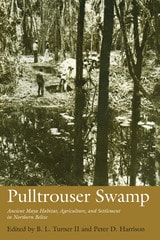
Pulltrouser Swamp
Ancient Maya Habitat, Agriculture, and Settlement in Northern BelizeEdited by B. L. Turner and Peter D. Harrison
University of Texas Press, 1983
Among Mesoamericanists, the agricultural basis of the ancient Maya civilization of the Yucatan Peninsula has been an important topic of research—and controversy. Interest in the agricultural system of the Maya greatly increased as new discoveries showed that the lowland Maya were not limited to slash-and-burn technology, as had been previously believed, but used a variety of more sophisticated agricultural techniques and practices, including terracing, raised fields, and, perhaps, irrigation. Because of the nature of the data and because this form of agricultural technology had been key to explanations of state formation elsewhere in Mesoamerica, raised-field agriculture became a particular focus of investigation.
Pulltrouser Swamp conclusively demonstrates the existence of hydraulic, raised-field agriculture in the Maya lowlands between 150 B.C. and A.D. 850. It presents the findings of the University of Oklahoma's Pulltrouser SwampProject, an NSF-supported interdisciplinary study that combined the talents of archaeologists, anthropologists, geographers, paleobotanists, biologists, and zoologists to investigate the remains of the Maya agricultural system in the swampy region of northern Belize.
By examining soils, fossil pollen and other plant remains, gastropods, relic settlements, ceramics, lithics, and other important evidence, the Pulltrouser Swamp team has clearly demonstrated that the features under investigation are relics of Maya-made raised and channelized fields and associated canals. Other data suggest the nature of the swamps in which the fields were constructed, the tools used for construction and cultivation, the possible crops cultivated, and at least one type of settlement near the fields, with its chronology. This verification of raised fields provides dramatic evidence of a large and probably organized workforce engaged in sophisticated and complex agricultural technology. As record of this evidence, Pulltrouser Swamp is a work of seminal importance for all students and scholars of New World prehistory.
Stone Houses and Earth Lords
Maya Religion in the Cave ContextKeith M. Prufer
University Press of Colorado, 2021
Demonstrating the importance of these subterranean spaces to Maya archaeology, contributors provide interpretations of archaeological remains that yield insights into Maya ritual and cosmology. Compiling the best current scholarship in this fast-growing area of research, Stone Houses and Earth Lords is a vital reference for Mayanists, Mesoamerican specialists, and others interested in the human use of caves in the New World. Contributors include: Juan Luis Bonor, James E. Brady, Robert Burnett, Allan B. Cobb, Pierre Robert Colas, Cesar Espinosa, Sergio Garza, David M. Glassman, Christina T. Halperin, Amalia Kenward, Andrew Kindon, Patricia McAnany, Christopher Morehart, Holley Moyes, Vanessa A. Owen, Shankari Patel, Polly Peterson, Keith M. Prufer, Timothy. W. Pugh, Frank Saul, Julie Saul, Ann M. Scott, Andrea Stone, and Vera Tiesler.
The Ancient Maya Marketplace
The Archaeology of Transient SpaceEdited by Eleanor M. King
University of Arizona Press, 2015
The Ancient Maya Marketplace reviews the debate on Maya markets and offers compelling new evidence for the existence and identification of ancient marketplaces in the Maya Lowlands. Its authors rethink the prevailing views about Maya economic organization and offer new perspectives. They attribute the dearth of Maya market research to two factors: persistent assumptions that Maya society and its rainforest environment lacked complexity, and an absence of physical evidence for marketplaces—a problem that plagues market research around the world.
Many Mayanists now agree that no site was self-sufficient, and that from the earliest times robust local and regional exchange existed alongside long-distance trade. Contributors to this volume suggest that marketplaces, the physical spaces signifying the presence of a market economy, did not exist for purely economic reasons but served to exchange information and create social ties as well.
The Ancient Maya Marketplace offers concrete links between Maya archaeology, ethnohistory, and contemporary cultures. Its in-depth review of current research will help future investigators to recognize and document marketplaces as a long-standing Maya cultural practice. The volume also provides detailed comparative data for premodern societies elsewhere in the world.
Women of Belize
Gender and Change in Central AmericaMcClaurin, Irma
Rutgers University Press, 1996
This engaging ethnography is set in the remote district of Toledo in Belize, Central America, where three women weave personal stories about the events in their lives. Each describes her experiences of motherhood, marriage, family illness, emigration, separation, work, or domestic violence that led her to recognize gender inequality and then to do something about it. All three challenge the culture of gender at home and in the larger community.
Zola, an East Indian woman without primary school education, invents her own escape from a life of subordination by securing land, then marries the man she's lived with since the age of fourteen--but on her terms. Once she needed permission to buy a dress, now she advocates against domestic violence. Evelyn, a thirty-nine-year old Creole woman, has raised eight children virtually alone, yet she remains married "out of habit." A keen entrepreneur, she has run a restaurant, a store, and a sewing business, and she now owns a mini-mart attached to her home. Rose, a Garifuna woman, is a mother of two whose husband left when she would not accept his extra-marital affairs. While she ekes out a survival in the informal economy by making tamales, she gets spiritual comfort from her religious beliefs, love of music, and two children.
The voices of these ordinary Belizean women fill the pages of this book. Irma McClaurin reveals the historical circumstances, cultural beliefs, and institutional structures that have rendered women in Belize politically and socially disenfranchised and economically dependent upon men. She shows how some ordinary women, through their participation in women's grassroots groups, have found the courage to change their lives. Drawing upon her own experiences as a black woman in the United States, and relying upon cross-cultural data about the Caribbean and Latin America, she explains the specific way gender is constructed in Belize.