Results by title
10 books match the query 'Beowulf'
Ancient Privileges
Beowulf, Law, and the Making of Germanic AntiquitySTEFAN JURASINSKI
West Virginia University Press, 2006
Before the Closet
Same-Sex Love from "Beowulf" to "Angels in America"Allen J. Frantzen
University of Chicago Press, 1998
With its ambitious scope and elegant style, Before the Closet sets same-sex relations in Anglo-Saxon sources in relation to the sexual themes of contemporary opera, dance, and theatre. Frantzen offers a comprehensive analysis of sources from the seventh to the twelfth century and traces Anglo-Saxon same-sex behavior through the age of Chaucer and into the Renaissance.
"Frantzen's marvelous book . . . opens up a world most readers will never have even known was there. It's a difficult topic, but Frantzen's comprehensive, readable and even wryly funny treatment makes this an unexpected pleasure."—Publishers Weekly, starred review
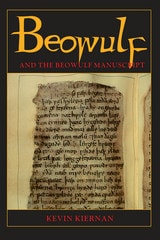
Beowulf and the Beowulf Manuscript
Kevin S. Kiernan
University of Michigan Press, 1997
Kevin S. Kiernan, one of the world's foremost Beowulf scholars, has studied the manuscript extensively with the most up-to-date methods, including fiber-optic backlighting and computer digitization. This volume reprints Kiernan's earlier study of the manuscript, in which he presented his novel conclusions about the date of Beowulf. It also offers a new Introduction in which the author describes the value of electronic study of Beowulf, and a new Appendix that lists all the letters and parts of letters revealed by backlighting.
This important volume will be a must-read not only for the scholar of early English history and literature, but for all those who are interested in practical applications of the new technologies.
Beowulf and the Grendel-Kin
Politics and Poetry in Eleventh-Century EnglandHelen Damico
West Virginia University Press, 2014
In Beowulf and the Grendel-kin: Politics and Poetry in Eleventh-Century England, Helen Damico presents the first concentrated discussion of the initiatory two-thirds of Beowulf’s 3,182 lines in the context of the sociopolitically turbulent years that composed the first half of the eleventh century in Anglo-Danish England.
Damico offers incisive arguments that major historical events and personages pertaining to the reign of Cnut and those of his sons recorded in the Anglo-Saxon Chronicle, the Encomium Emmae Reginae, and major continental and Scandinavian historical texts, hold striking parallels with events and personages found in at least eight vexing narrative units, as recorded by Scribe A in BL, Cotton Vitellius A.xv, that make up the poem’s quasi sixth-century narrative concerning the fall of the legendary Scyldings.
Given the poet’s compositional skill—widely relational and eclectic at its core—and his affinity with the practicing skalds, these strings of parallelisms could scarcely have been coincidental. Rather, Damico argues that examined within the context of other eleventh-century texts that either bemoaned or darkly satirized or obversely celebrated the rise of the Anglo-Danish realm, the Beowulfian units may bring forth a deeper understanding of the complexity of the poet’s compositional process.
Damico illustrates the poet’s use of the tools of his trade—compression, substitution, skillful encoding of character—to reinterpret and transform grave sociopolitical “facts” of history, to produce what may be characterized as a type of historical allegory, whereby two parallel narratives, one literal and another veiled are simultaneously operative.
Beowulf and the Grendel-Kin lays out the story of Beowulf, not as a monster narrative nor a folklorish nor solely a legendary tale, but rather as a poem of its time, a historical allegory coping with and reconfiguring sociopolitical events of the first half of eleventh-century Anglo-Saxon England.
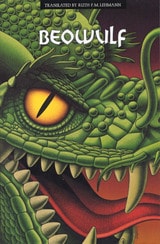
Beowulf
An Imitative TranslationBy Ruth P. M. Lehmann
University of Texas Press, 1988
The name "Beowulf" lingers in our collective memory, although today fewer people have heard the tale of the Germanic hero's fight with Grendel, the dreadful Monster of the Mere, as recounted in this Anglo-Saxon epic.
This edition of Beowulf makes the poem more accessible than ever before. Ruth Lehmann's imitative translation is the only one available that preserves both the story line of the poem and the alliterative versification of the Anglo-Saxon original. The characteristic features of Anglo-Saxon poetry— alliterative verse with first-syllable stress, flexible word order, and inflectional endings—have largely disappeared in Modern English, creating special problems for the translator. Indeed, many other translations of Beowulf currently available are either in prose or in some modern poetic form. Dr. Lehmann's translation alone conveys the "feel" of the original, its rhythm and sound, the powerful directness of the Germanic vocabulary.
In her introduction, Dr. Lehmann gives a succinct summary of the poem's plot, touching on the important themes of obligation and loyalty, of family feuds, unforgivable crimes, the necessity of revenge, and the internal and external struggles of the Scandinavian tribes. She also describes the translation process in some detail, stating the guiding principles she used and the inevitable compromises that were sometimes necessary.

Language, Sign and Gender in Beowulf
Gillian R. Overing
Southern Illinois University Press, 1990
Not a book about what Beowulf means but how it means, and how the reader participates in the process of meaning construction.
Overing’s primary aim is to address the poem on its own terms, to trace and develop an interpretive strategy consonant with the extent of its difference. Beowulf’s arcane structure describes cyclical repetitions and patterned intersections of themes which baffle a linear perspective, and suggest instead the irresolution and dynamism of the deconstructionist free play of textual elements.
Chapter 1 posits the self/reader as a function of the text/language, examining the ways in which the text "speaks" the reader. Chapter 2 develops an interactive semiotic strategy in an attempt to describe an isomorphic relation between poem and reader, between text and self. Chapter 3 addresses the notions of text and self as more complex functions or formulations of desire, and thus complicates and expands the arguments of the two preceding chapters. The final chapter examines the issue of desire in the poem, and, to a lesser extent, desire in the reader (insofar as these may legitimately be viewed as distinct from each other).
The Epic Catalogue
List Form and Reception from Beowulf to Paradise LostEva von Contzen
The Ohio State University Press, 2026
The Medieval Worlds of Neil Gaiman
From Beowulf to Sleeping BeautyShiloh Carroll
University of Iowa Press, 2023
Readers love to sink into Gaiman’s medieval worlds—but what makes them “medieval”? Shiloh Carroll offers an introduction to the idea of medievalism, how the literature and culture of the Middle Ages have been reinterpreted and repurposed over the centuries, and how the layers of interpretation have impacted Gaiman’s own use of medieval material. She examines influences from Norse mythology and Beowulf to medieval romances and fairy tales in order to expand readers’ understanding and appreciation of Gaiman’s work, as well as the rest of the medievalist films, TV shows, and books that are so popular today.
The Postmodern Beowulf
A Critical CasebookEILEEN A. JOY
West Virginia University Press, 2006
This work includes twenty-four essays including a preface, introduction, afterword, and sections containing seminal methodological pieces by such giants as Edward Said and Michel Foucault, as well as contemporary applications to Beowulf and other Old English and Germanic texts focusing on historicism, psychoanalysis, gender, textuality, and post-colonialism.
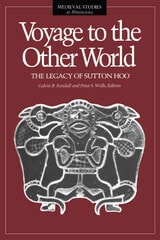
Voyage To The Other World
The Legacy of Sutton HooCalvin Kendall
University of Minnesota Press, 1992
A fascinating exploration of pagan Anglo-Saxon culture-a world caught on the boundary between competing ideologies and contrasting social systems.
Contributors: James Campbell, Martin Carver, Robert Payson Creed, Roberta Frank, Michael N. Geselowitz, Gloria Polizzotti Greis, Henrik M. Jansen, Simon Keynes, Edward Schoenfeld, Jana Schulman, Alan M. Stahl, Wesley M. Stevens, and Else Roesdahl.Medieval Cultures Series, volume 5