Results by title
11 books match the query 'Bereavement'
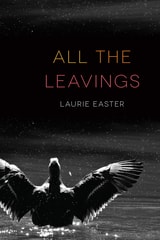
All the Leavings
Laurie Easter
Oregon State University Press, 2021
Whether recounting the home birth of her second child, encounters with cougars, the fraught dynamics of mother-daughter relationships, the destructive power of wildfires, or the community bonds challenged by a tragic suicide, Easter’s writing is firmly grounded in place. She takes readers deep into the heart of a still-wild Oregon, perilous yet rich with natural beauty.
Written from one woman’s perspective as a mother, wife, and friend, All the Leavings is ultimately a book about love—for the child who faces a health crisis, for the friend dying of AIDS, for the one entangled by addiction who then disappears. Long after the final page is turned, it will resonate with readers interested in essays, memoir, alternative lifestyles, and the literature of the West.

Architect
Alison Thumel
University of Arkansas Press, 2024
Finalist, 2025 Kate Tufts Discovery Award
“When he died, my brother became the architect of the rest of my life,” writes Alison Thumel in Architect, which interweaves poems, lyric essays, and visual art to great emotional effect. In this debut collection, the buildings of Frank Lloyd Wright become a blueprint for elegy, as Thumel overlays the language of architecture with the language of grief to raze and reconstruct memories, metaphors, and myths. With obsessive and exacting focus, the poet leads us through room after room in a search to answer whether it is possible to rebuild in the wake of loss. Meanwhile, the midwestern landscape beyond these rooms—the same landscape that infuses the low, horizontal forms of Wright’s Prairie Style buildings—shapes the figures in Architect as well as their fates: “For years after my brother’s death, I collected news articles on people who died young and tragically in landlocked states. Prairie Style deaths—boys sucked down into grain silos or swept up by tornadoes or fallen through a frozen pond. The boys I didn’t know, but the landscape I did. The dread of it. How many miles you can look ahead. For how long you see what is coming.”

Closure
The Rush to End Grief and What it Costs UsNancy Berns
Temple University Press, 2011
When it comes to the end of a relationship, the loss of a loved one, or even a national tragedy, we are often told we need “closure.” But while some people do find closure for their pain and grief, many more feel closure does not exist and believe the notion only promises false hopes. Sociologist Nancy Berns explores these ideas and their ramifications in her timely book, Closure.
Berns uncovers the various interpretations and contradictory meanings of closure. She identifies six types of “closure talk,” revealing closure as a socially constructed concept—a “new emotion.” Berns also explores how closure has been applied widely in popular media and how the idea has been appropriated as a political tool and to sell products and services.
This book explains how the push for closure—whether we find it helpful, engaging, or enraging—is changing our society.
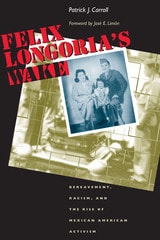
Felix Longoria's Wake
Bereavement, Racism, and the Rise of Mexican American ActivismBy Patrick Carroll
University of Texas Press, 2003
Winner, Tullis Prize, Texas State Historical Association, 2004
Private First Class Felix Longoria earned a Bronze Service Star, a Purple Heart, a Good Conduct Medal, and a Combat Infantryman's badge for service in the Philippines during World War II. Yet the only funeral parlor in his hometown of Three Rivers, Texas, refused to hold a wake for the slain soldier because "the whites would not like it." Almost overnight, this act of discrimination became a defining moment in the rise of Mexican American activism. It launched Dr. Héctor P. García and his newly formed American G.I. Forum into the vanguard of the Mexican civil rights movement, while simultaneously endangering and advancing the career of Senator Lyndon B. Johnson, who arranged for Longoria's burial with full military honors in Arlington National Cemetery.
In this book, Patrick Carroll provides the first fully researched account of the Longoria controversy and its far-reaching consequences. Drawing on extensive documentary evidence and interviews with many key figures, including Dr. García and Mrs. Longoria, Carroll convincingly explains why the Longoria incident, though less severe than other acts of discrimination against Mexican Americans, ignited the activism of a whole range of interest groups from Argentina to Minneapolis. By putting Longoria's wake in a national and international context, he also clarifies why it became such a flash point for conflicting understandings of bereavement, nationalism, reason, and emotion between two powerful cultures—Mexicanidad and Americanism.
Help Your Marriage Survive
The Death Of A ChildPaul Rosenblatt
Temple University Press, 2000
Based on intensive interviews of 29 couples who experienced the death of a child, this book offers perspectives and advice on common marital problems experienced by bereaved parents. Each couple's problems are unique, but often the problems are connected to couple communication, sexuality, parenting of other children, the use of alcohol and drugs, blaming, and differences in such areas as whether to have another child, how to grieve, how to talk about the child who died, whether to go outside the marriage for support, and what to do with things and spaces that were the child's.
Although the book deals with pain and marital distress, it offers a message of hope. Grieving parents can and do get through the hard times, based on respect for differences, mutual understanding, and shared history.
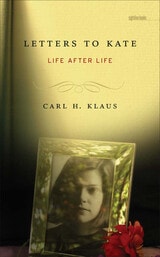
Letters to Kate
Life after LifeCarl H. Klaus
University of Iowa Press, 2006

Mendings
Megan Sweeney
Duke University Press, 2023
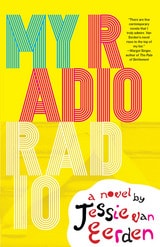
My Radio Radio
Jessie van Eerden
West Virginia University Press, 2016
The members of Dunlap Fellowship of All Things in Common share everything from their meager incomes to the only functioning toilet in the community house— everything, that is, except secrets. When Omi Ruth Wincott, the youngest member of the disintegrating common-purse community in this small Indiana town, loses her only brother, Woodrun, she withdraws from everyone and fixates on a secret desire: She wishes only for an extravagant head- stone to mark Woodrun’s grave, an expense that the strict, parsimonious community can’t—or won’t—pay for. In her loneliness, Omi Ruth’s only ties to the world remain her National Geographic magazines and a new resident in the house, Northrop, an old man caught between living and dying, maintained in a vegetative state by hospice care.
Observing everything with the keen eye of a girl with a photographic memory, Omi Ruth finds herself learning to grieve in the company of unlikely strangers. With the help of a homeless and pregnant Tracie Casteel, a rebellious Amish boy named Spencer Frye, and the smooth-talking Vaughn Buey who works third shift at Dunlap’s RV plant, Omi Ruth discovers that there are two things of which there is no shortage in the world’s common purse—love and loss.
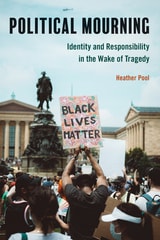
Political Mourning
Identity and Responsibility in the Wake of TragedyHeather Pool
Temple University Press, 2021
What leads us to respond politically to the deaths of some citizens and not others? This is one of the critical questions Heather Pool asks in Political Mourning. Born out of her personal experiences with the trauma of 9/11, Pool’s astute book looks at how death becomes political, and how it can mobilize everyday citizens to argue for political change.
Pool examines four tragedies in American history—the Triangle Shirtwaist Factory Fire, the lynching of Emmett Till, the September 11 attacks, and the Black Lives Matter movement—that offered opportunities to tilt toward justice and democratic inclusion. Some of these opportunities were taken, some were not. However, these watershed moments show, historically, how political identity and political responsibility intersect and how racial identity shapes who is mourned. Political Mourning helps explain why Americans recognize the names of Trayvon Martin and Sandra Bland; activists took those cases public while many similar victims have been ignored by the news media.
Concluding with an afterword on the coronavirus, Pool emphasizes the importance of collective responsibility for justice and why we ought to respond to tragedy in ways that are more politically inclusive.

Singing Mother Home
A Psychologist's Journey through Anticipatory GriefDonna S. Davenport
University of North Texas Press, 2002
This intimate narrative forms the core of her book. It is emotionally wrenching, but it also provides hope for those going through similar experiences. Just as Davenport used her family's tradition of singing to comfort her mother, readers will be encouraged to find their own sources of comfort in family and legacy. The book concludes with two chapters describing psychological approaches to grief and recommending further reading.

Widows' Words
Women Write on the Experience of Grief, the First Year, the Long Haul, and Everything in BetweenRutgers University Press, 2019
Some were widowed young, while others were married for decades. Some cared for their late partners through long terminal illnesses, while others lost their partners suddenly. Some had male partners, while others had female partners. Yet each of these women faced the same basic dilemma: how to go on living when a part of you is gone.
Widows’ Words is arranged chronologically, starting with stories of women preparing for their partners’ deaths, followed by the experiences of recent widows still reeling from their fresh loss, and culminating in the accounts of women who lost their partners many years ago but still experience waves of grief. Their accounts deal honestly with feelings of pain, sorrow, and despair, and yet there are also powerful expressions of strength, hope, and even joy. Whether you are a widow yourself or have simply experienced loss, you will be sure to find something moving and profound in these diverse tales of mourning, remembrance, and resilience.