Results by title

48 books match the query 'Biblical Commentary'
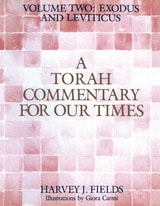
cover of A Torah Commentary for Our Times: Volume 2: Exodus and Leviticus

A Torah Commentary for Our Times

Volume 2: Exodus and Leviticus

Rabbi Harvey J. Fields

Central Conference of American Rabbis, 1991

A helpful approach to the weekly parashah, juxtaposing the insights of ancient, medieval, and modern commentators (including the author). Perfect for both beginning Torah students and scholars seeking new angles on the text. The volumes are available individually or as a three-volume set, ideal for a bar or bat mitzvah or confirmation gift.
[more]
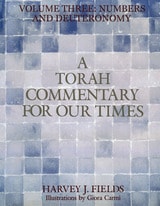
cover of A Torah Commentary for Our Times: Volume 3: Numbers and Deuteronomy

A Torah Commentary for Our Times

Volume 3: Numbers and Deuteronomy

Rabbi Harvey J. Fields

Central Conference of American Rabbis, 1993

A helpful approach to the weekly parashah, juxtaposing the insights of ancient, medieval, and modern commentators (including the author). Perfect for both beginning Torah students and scholars seeking new angles on the text. The volumes are available individually or as a three-volume set, ideal for a bar or bat mitzvah or confirmation gift.
[more]
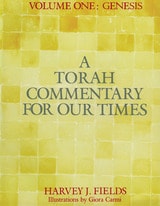
cover of A Torah Commentary for Our Times: Volume I: Genesis

A Torah Commentary for Our Times

Volume I: Genesis

Rabbi Harvey J. Fields

Central Conference of American Rabbis, 1990

A helpful approach to the weekly parashah, juxtaposing the insights of ancient, medieval, and modern commentators (including the author). Perfect for both beginning Torah students and scholars seeking new angles on the text. The volumes are available individually or as a three-volume set, ideal for a bar or bat mitzvah or confirmation gift.
[more]
cover of A Word in Season: Isaiah's Reception in the Book of Mormon

A Word in Season

Isaiah's Reception in the Book of Mormon

Joseph M. Spencer

University of Illinois Press, 2023

A groundbreaking look at the relationship between two sacred texts

The Book of Mormon’s narrative privileges Isaiah over other sources, provocatively interpreting and at times inventively reworking the biblical text. Joseph M. Spencer sees within the Book of Mormon a programmatic investigation regarding the meaning and relevance of the Book of Isaiah in a world increasingly removed from the context of the times that produced it. Working from the crossroads of reception studies and Mormon studies, Spencer investigates and clarifies the Book of Mormon’s questions about the vitality of Isaiah’s prophetic project. Spencer’s analysis focuses on the Book of Mormon’s three interactions with the prophet: the character of Abinadi; the resurrected Jesus Christ; and the nation-founding figure of Nephi. Working from the Book of Mormon as it was dictated, Spencer details its vital and overlooked place in Isaiah’s reception while recognizing the interpretation of Isaiah as an organizing force behind the Book of Mormon.
[more]
cover of Ambrosiaster's Commentary on the Pauline Epistles: Romans

Ambrosiaster's Commentary on the Pauline Epistles

Romans

Theodore S. de Bruyn

SBL Press, 2017

A new translation for scholars and students of biblical interpretation and ancient Christianity

The ancient writer dubbed Ambrosiaster was a pioneer in the revival of interest in the Pauline Epistles in the later fourth century. He was read by Latin writers, including Pelagius and Augustine, and his writings, passed on pseudonymously, had a long afterlife in the biblical commentaries, theological treatises, and canonical literature of the medieval and the early modern periods. In addition to his importance as an interpreter of scripture, Ambrosiaster provides unique perspectives on many facets of Christian life in Rome, from the emergence of clerical celibacy to the development of liturgical practices to the subordination of women.

Features

  • An up-to-date overview of what is known about Ambrosiaster, the transmission of his commentary on the Pauline Epistles, his exegetical method, his theological orientation, and aspects of Christianity in Rome in the fourth century
  • A scholarly translation of the final version of the commentary, along with notes that identify significant variants from prior versions of the commentary
  • Bibliography thatincludes a comprehensive list of the scholarly literature on Ambrosiaster
[more]
cover of American Values, Religious Voices, Volume 2: Letters of Hope from People of Faith

American Values, Religious Voices, Volume 2

Letters of Hope from People of Faith

Edited by Andrea Weiss and Lisa Weinberger

University of Minnesota Press, 2022

Religious scholars and leaders engage in a nonpartisan letter-writing campaign following the 2021 Presidential inauguration.

In the aftermath of the 2016 presidential election, biblical scholar Andrea L. Weiss and graphic designer Lisa M. Weinberger teamed up to create Values & Voices, a national nonpartisan campaign that used letters and social media to highlight core American values connected to our diverse religious traditions. The result was American Values, Religious Voices: 100 Days, 100 Letters, a collection of one hundred letters written by some of America's most accomplished and thoughtful scholars of religion interspersed with original artwork during the first one hundred days of the Trump presidency.

In 2021, Weiss and Weinberger invited religious scholars and leaders to address President Biden, Vice President Harris, and members of the 117th Congress in their national letter writing and social media campaign. During the first 100 days of the Biden administration, religious leaders from across the country and from a range of religious denominations once again sent one letter a day to elected leaders in Washington. These letters bring an array of religious texts and teachings to bear on our most pressing contemporary issues. Arranged chronologically, the 2021 edition features 59 returning letter writers and 42 new scholars, new artwork, original essays, and and a new section focused on putting the letters into practice by using them for teaching, preaching, meditative practice, civic activism, and more. An alternate table of contents arranged by core values that emerged in the letters over the 100 days allows for thematic reading.
[more]
cover of Commentary on the Epistle to the Romans

Commentary on the Epistle to the Romans

Peter Abelard

Catholic University of America Press, 2011
Despite its importance and the frequent references made to it by modern scholars, this commentary has never before been translated into English in its entirety. This volume, which includes an extensive introduction, fills this gap, thus providing a needed contribution to medieval scholarship.
[more]
cover of Commentary on the Old Greek and Peshitta of Isaiah 1–25

Commentary on the Old Greek and Peshitta of Isaiah 1–25

Ronald L. Troxel

SBL Press, 2020

The first thorough commentary on the Old Greek and Peshitta of Isaiah

Ronald L. Troxel’s new textual commentary on Isaiah focuses on the book’s Greek and Syriac translations and seeks to recover, as much as possible, the Hebrew texts on which these early translations relied. Troxel treats the Greek and Syriac together in order to present a detailed analysis of their relationship, devoting particular attention to whether the Syriac was directly or indirectly influenced by the Greek. This comparison sheds light on both the shared and distinct approaches that the translators took in rendering lexemes, phrases, verses, and even passages. In addition Troxel presents observations about the literary structures the translators created that differ from those implicit in their source texts (as we understand them), to produce coherent discourse in the target language.

Features:

  • Textual commentary on the life of the text of Isaiah 1–25
  • Use of the Dead Sea Scrolls to shed light on particular issues
  • Detailed comparison of the Masoretic Text, the Old Greek, and the Peshitta
[more]
cover of Commentary on the Twelve Prophets, Volume 3

Commentary on the Twelve Prophets, Volume 3

Catholic University of America Press, 2012
No description available
[more]
cover of Constructing Antichrist: Paul, Biblical Commentary, and the Development of Doctrine in the Early Middle Ages

Constructing Antichrist

Paul, Biblical Commentary, and the Development of Doctrine in the Early Middle Ages

Kevin L. Hughes

Catholic University of America Press, 2005
Constructing Antichrist engages readers with the question: what does Paul have to do with the Antichrist? Integrating new scholarship in apocalypticism and the history of exegesis, this book is the first longitudinal study of the role of Paul in apocalyptic thought
[more]
cover of Exploring Colossians:Living the New Reality

Exploring Colossians

Living the New Reality

Roy R. Jeal

SBL Press, 2024

In this comprehensive, sociorhetorical interpretation of Colossians, Roy R. Jeal explores the letter’s portrayal of the grand vision that extends from the realm of God before the creation of the cosmos to the new reality and new culture of the life of fullness in Christ. The commentary analyzes the pictures the text evokes in the human visual imagination, identifies the persuasive modes of discourse in the letter, and evaluates the range of textures that interweave to produce the dynamic rhetorical argument of Colossians. Demands to conform to “empty deceitful philosophy, human tradition, and the elements of the world” rather than to Christ are irrelevant for believers who have been transferred from darkness to the light of the Son of God’s kingdom. The rhetoric of the letter moves believers to ideologies of living in the body of Christ where orderly behavior guided by love contrasts with the chaotic, self-indulgent, divisive uncertainties of Mediterranean existence.
[more]
cover of Ezekiel 1–24: Introduction and Commentary

Ezekiel 1–24

Introduction and Commentary

Dale F. Launderville

SBL Press, 2026

In volume 1 of his cutting-edge two-volume commentary, Dale F. Launderville relies on the Hebrew, Old Greek, Aramaic, Syriac, and Latin texts of Ezekiel to produce a fresh translation of the first twenty-four chapters. Each passage is followed by interpretive sections that emphasize the history of reception, explaining how the text of Ezekiel has sparked the imagination of subsequent thinkers, writers, and artists. Each chapter concludes with a section of commentary dedicated to a historical-critical examination of the canonical text. Readers will become more equipped to interpret Ezekiel and more confident in their understanding of Old Testament prophecy and its relevance to contemporary issues in church and society. This is an essential resource for ministers, seminary students, and teachers of biblical studies courses.
[more]
cover of Inscribed: Encounters with the Ten Commandments

Inscribed

Encounters with the Ten Commandments

Rabbi Oren J. Hayon

Central Conference of American Rabbis, 2020

This anthology gives voice to the many diverse and contemporary perspectives about each of the Ten Commandments. Written by an impressive collection of rabbis and scholars, the volume allots multiple chapters for each of the commandments in order to engage with the ways in which these timeless utterances have inspired contemporary laws, ethics, and moral guidelines.
 

[more]
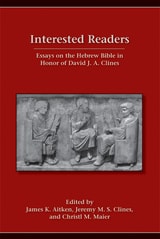
cover of Interested Readers: Essays on the Hebrew Bible in Honor of David J.A. Clines

Interested Readers

Essays on the Hebrew Bible in Honor of David J.A. Clines

James K. Aitken

SBL Press, 2013

Readers of the Hebrew Bible are interested readers, bringing their own perspectives to the text. The essays in this volume, written by friends and colleagues who have drawn inspiration from and shown interest in the scholarship of David Clines, engage with his work through examining interpretations of the Hebrew Bible in areas of common exploration: literary/exegetical readings, ideological-critical readings, language and lexicography, and reception history. The contributors are James K. Aitken, Jacques Berlinerblau, Daniel Bodi, Roland Boer, Athalya Brenner, Mark G. Brett, Marc Zvi Brettler, Craig C. Broyles, Philip P. Chia, Jeremy M. S. Clines, Adrian H. W. Curtis, Katharine J. Dell, Susan E. Gillingham, Susanne Gillmayr-Bucher, Edward L. Greenstein, Mayer I. Gruber, Norman C. Habel, Alan J. Hauser, Jan Joosten, Paul J. Kissling, Barbara M. Leung Lai, Diana Lipton, Christl M. Maier, Heather A. McKay, Frank H. Polak, Jeremy Punt, Hugh S. Pyper, Deborah W. Rooke, Eep Talstra, Laurence A. Turner, Stuart Weeks, Gerald O. West, and Ian Young.
[more]
cover of Jesus Becoming Jesus, Volume 3: A Theological Interpretation of the Gospel of John: The Book of Glory and the Passion and Resurrection

Jesus Becoming Jesus, Volume 3

A Theological Interpretation of the Gospel of John: The Book of Glory and the Passion and Resurrection

Thomas G. Weinandy

Catholic University of America Press, 2022
Jesus Becoming Jesus, Volume 3 follows upon the previous two volumes of this series entitled Jesus Becoming Jesus. Volume 1 was a theological interpretation of the Gospels of Matthew, Mark and Luke, and volume 2 was a theological interpretation of the Prologue and Book of Signs of John’s Gospel (chapters 1-12). Unlike many conventional biblical commentaries, Weinandy concentrates on the theological content contained within John’s Gospel. This is accomplished through a close reading of John’s Gospel, theologically interpreting each chapter of the Gospel sequentially. In so doing he also takes into account the Johannine corpus as a whole. He also relates John’s Gospel to relevant material found within the Synoptic Gospels, the Pauline Corpus and other New Testament writings. In this present volume, Weinandy’s original theological interpretation focuses first on the Evangelist’s narrative of the Last Supper, which includes Jesus’ washing of his disciples’ feet, followed upon his lengthy farewell address and his ensuing High Priestly Prayer (chapter 13-17). Although Jesus speaks of his leaving his disciples, yet their hearts should not be troubled, for he is going to prepare a place for them in his Father’s house, and he will also send them another Counselor, the Holy Spirit. The Holy Spirit will not only convict the world sin, but he will also empower the disciples to profess their faith in Jesus as the Father’s Son, even in the midst of persecution. All that Jesus tells his disciple in his final discourse, he then prays that his Father will accomplish through his forthcoming death and resurrection – above all that his disciples will share in the same oneness of love that he and his Father possess. Weinandy masterfully treats John’s Passion and Resurrection Narratives. He not only theologically interprets the uniqueness of the Evangelist’s narratives, but also how his narratives insect with the Synoptic accounts. Moreover, Weinandy’s theological reading of Jesus’ crucifixion and resurrection weaves together John’s soteriology, ecclesiology, and sacramentality – all of which are founded upon the Incarnation, that Jesus is the Father’s Spirit-filled incarnate Son. As the title suggests, Jesus, being named Jesus, in his death and resurrection, definitively enacts his name and so becoming who he is – YHWH-Saves.
[more]
cover of Jesus Being Jesus: A Theological Interpretation of the Acts of the Apostles, Volume 2: Chapters 15-28

Jesus Being Jesus

A Theological Interpretation of the Acts of the Apostles, Volume 2: Chapters 15-28

Thomas G. Weinandy

Catholic University of America Press, 2026
Luke was a Gentile and physician. Though not one of Jesus’ initial Jewish disciples, Luke was a traveling companion of Paul. As with the Old Testament and the Gospels, Luke provides the theological and ecclesial significance of the historical events he is narrating. In so doing, he accentuates what the risen and ascended Jesus is doing through the Holy Spirit by means of the nascent church, primarily through Peter and Paul. Although the book is entitled the Acts of the Apostles, the Holy Spirit is the primary actor throughout its entirety. Luke is traditionally believed to be the author of both the third Gospel as well as the Acts of the Apostles. As Luke, in his Gospel, first wrote “an orderly account for you, most excellent Theophilus, concerning the truth of the gospel,” so he now writes what has taken place after Jesus’ departure. Thus, the Acts of the Apostles is a continuation of a historical narrative. The Gospel contains what Jesus historically said and did until his Ascension into Heaven. Acts is the historical narrative of what followed upon Jesus’ ascension and the pouring out of the Holy Spirit at Pentecost that gave birth of the Church, and the first preaching of the Good News. If in Luke’s gospel account one finds Jesus becoming Jesus through his saving actions which culminate in his death and resurrection, in the Acts of the Apostles, one finds the risen Jesus being Jesus through the preaching and actions of the apostolic church. Jesus continues to enact his name, YHWH-Saves. In this second volume on Acts, such saving words and actions are particularly found within Paul’s preaching of the gospel in course of his missionary journeys.
[more]
cover of Jesus Being Jesus: A Theological Interpretation of the Acts of the Apostles: Volume 1: Chapters 1-14

Jesus Being Jesus

A Theological Interpretation of the Acts of the Apostles: Volume 1: Chapters 1-14

Thomas G. Weinandy

Catholic University of America Press, 2026
Luke was a Gentile and physician. Though not one of Jesus’ initial Jewish dis­ciples, Luke was a traveling companion of Paul. As with the Old Testament and the Gospels, Luke provides the theological and ecclesial significance of the historical events he is narrating. In so doing, he accentuates what the risen and ascended Jesus is doing through the Holy Spirit by means of the na­scent church, primarily through Peter and Paul. Although the book is entitled the Acts of the Apostles, the Holy Spirit is the primary actor throughout its entirety. Luke is traditionally believed to be the author of both the third Gospel as well as the Acts of the Apostles. As Luke, in his Gospel, first wrote “an or­derly account for you, most excellent Theophilus, concerning the truth of the gospel,” so he now writes what has taken place after Jesus’ departure. Thus, the Acts of the Apostles is a continuation of a historical narrative. The Gospel contains what Jesus historically said and did until his Ascension into Heaven. Acts is the historical narrative of what followed upon Jesus’ ascen­sion and the pouring out of the Holy Spirit at Pentecost that gave birth to the Church, and the first preaching of the Good News. If in Luke’s gospel account one finds Jesus becoming Jesus through his sav­ing actions which culminate in his death and resurrection, in the Acts of the Apostles, one finds the risen Jesus being Jesus through the preaching and actions of the apostolic church. Jesus continues to enact his name, YH­WH-Saves. Such saving words and actions are particularly within the evan­gelistic ministry of Peter and Paul.
[more]
cover of Job 1–21: Interpretation and Commentary

Job 1–21

Interpretation and Commentary

C. L. Seow

SBL Press, 2013

The Hebrew book of Job is an exquisite piece of literary art that many consider one of the most outstanding compositions in world literature. It is a poetic work of remarkable theological richness, passion, and honesty, yet it is an immensely difficult text to understand. C. L. Seow’s inaugural Illuminations commentary offers a literary-theological interpretation of Job written in an accessible style for a wide audience, a new translation, and detailed verse-by-verse commentary for a deeper dive into the complex linguistic and thematic issues. The commentary’s unique History of Consequences section draws attention to the reception history of Job in Jewish, Muslim, Christian, and Western secular interpretations found in writings and artistic representations. Seow reveals not only how interpreters throughout history have grappled with the human struggle to understand the reasons for suffering and the possibility of divine complicity in undeserved suffering but also why we continue to struggle with these ideas today.
[more]
cover of Jonah: Introduction and Commentary

Jonah

Introduction and Commentary

Amy Erickson

SBL Press, 2021

In Jonah: Introduction and Commentary, Amy Erickson reevaluates a range of interpretations of the book of Jonah to present her own fresh literary and theological understanding of the book’s complex themes and characterizations. Drawing on Christian, Jewish, and Islamic reception history of Jonah, including the story’s representations in the arts, literature, and pop culture, Erickson presents a History of Consequences section that spans centuries and crosses borders. Erickson’s translation and interpretation pave the way for pastors and scholars to read and utilize the book of Jonah as the provocative, richly allusive, and theologically robust text that it is. Each passage includes a commentary on linguistic and thematic challenges to interpretation and translation. Erickson’s innovative reading recovers the richness of meaning that belongs to this short but noteworthy book of the Bible.
[more]
cover of Law and Liberty: Jesus, Paul, and the Newness of Christianity

Law and Liberty

Jesus, Paul, and the Newness of Christianity

Romano Penna

Catholic University of America Press, 2026
This newest volume in the CUA Press Verbum Domini series by the late Professor Romano Penna, represents a synthesis of Penna's thought, which often engaged with the question of Christian originality. The relationship between Law and liberty is a theme that effectively runs like a red thread through the “grand narrative” of the Bible. Law and liberty represent two values that mutually call forth one another and require thorough and nuanced reflection on multiple levels. The book offers a biblical-theological journey that enables the reader to grasp the central aspects of the Law-liberty dialectic and to focus on the uniqueness of the Christian message. Through engagement with the Greek and Jewish cultural backgrounds, Romano Penna demonstrates the richness of the Law understood as a gift from God and embraced as a commitment to responsible living—a commitment that presupposes the gift of a new kind of liberty and demands existential involvement. In the message of Jesus of Nazareth and in its Pauline reinterpretation, one perceives how the dialectic between Law and liberty reveals the “filial” condition of the Christian. It is precisely the ability to understand and synthesize the Law-liberty pairing that defines Christian conduct and its testimonial power. The originality of Christianity can be well summarized by the expression “free because children”. This phrase encapsulates an unprecedented vision and an extraordinary fecundity, much needed by humanity in our time.
[more]
cover of Law and Wisdom in the Bible: David Daube's Gifford Lectures, Volume II

Law and Wisdom in the Bible

David Daube's Gifford Lectures, Volume II

David Daube

Templeton Press, 2010

"That over forty years after they were delivered these famous but unavailable Gifford Lectures should be published is occasion for celebration. Once again we hear Daube’s voice, patient and probing, as he turns over, tests, pushes fresh inquiries, and finds new insights. No man has had such a subtle sense of scriptural texts matched by such a supple sense of the practices and peculiarities of human beings engaged in the legal process. Law and Wisdom in the Bible is classic Daube." mdash;John T. Noonan Jr., United States Circuit Judge

David Daube (1909–99) was known for his unique and sophisticated research on Roman law, biblical law, Jewish Law, and medical ethics. In Law and Wisdom in the Bible, the first published collection of his 1964 Gifford Lectures, Daube derives from his complex understanding of biblical texts both ancient and contemporary notions about wisdom, justice, and education.

In addressing these and other profound issues, Daube crosses traditional disciplinary boundaries and bridges the
gap between humanism and religion, especially with regard to Christianity and Judaism. With his sophisticated understanding of Talmudic law and literature, his thinking, which is on full display in these lectures, revolutionized prevailing perceptions about the New Testament.

[more]
cover of Loaves of Torah: Exploring the Jewish Year through Challah

Loaves of Torah

Exploring the Jewish Year through Challah

Rabbi Vanessa M. Harper

Central Conference of American Rabbis, 2023

Braided and spiral loaves of challah have long been a delicious centerpiece of the Jewish table, but with a few extra twists, the beloved Shabbat bread can become a work of art that teaches Torah. In Loaves of Torah, Rabbi Vanessa M. Harper— creator of the hit Instagram account @lechlechallah—shapes interpretive challot for each weekly Torah portion and Jewish holiday. A creative journey through the Jewish year, the book pairs gorgeous color photographs with insightful commentary, in-depth questions for reflection and discussion, as well as beautiful kavanot. Rabbi Harper also includes blessings, recipes, and tips for creating your own interpretive challot. A fresh, contemporary commentary on our holiest text, Loaves of Torah will inspire you to think outside the braid and take Torah into your own hands.
[more]
cover of Matthew 16:21–28:20: Introduction and Commentary

Matthew 16

21–28:20: Introduction and Commentary

Warren Carter

SBL Press, 2025

In volume 2 of this remarkable two-volume commentary, Warren Carter situates Matthew 16:21–28:20 within the context of Jewish traditions and Roman power after the destruction of Jerusalem in 70 CE. Each passage is translated, with interpretation and commentary following. Carter reveals how the text illuminates the diverse ways a community of Jesus followers navigated imperial power. In addition to his thorough examination of the gospel in its historical and social context, Carter shines new light on instances of the Gospel of Matthew’s reception, illustrating how scholars have interpreted it from the era of the early church up to the present.
[more]
cover of Matthew 1:1–16:20: Introduction and Commentary

Matthew 1

1–16:20: Introduction and Commentary

Warren Carter

SBL Press, 2025

In volume 1 of this remarkable two-volume commentary, Warren Carter situates Matthew 1:1–16:20 within the context of Jewish traditions and Roman power after the destruction of Jerusalem in 70 CE. Each passage is translated, with interpretation and commentary following. Carter reveals how the text illuminates the diverse ways a community of Jesus followers navigated imperial power. The volume’s History of Consequences sections shine new light on instances of the Gospel of Matthew’s reception in ancient and modern media through the application of a range of methodologies, readings from different geographic locations, and social contexts.
[more]
cover of Micah: Introduction and Commentary

Micah

Introduction and Commentary

Carolyn J. Sharp

SBL Press, 2025

Written by Carolyn J. Sharp, a leading scholar of biblical prophetic literature, this commentary provides scholars and preachers with a thorough overview of historical, literary, and theological dimensions of the book of Micah. Sharp explores the political and economic dimensions of prophecy as well as its relevance to ecological justice. Each passage is translated and interpreted in an accessible style. The commentary also examines the reception history of Micah among Jewish and Christian interpreters in the History of Consequences section.
[more]
cover of New Documents Illustrating Early Christianity 11A: Texts from Ephesus

New Documents Illustrating Early Christianity 11A

Texts from Ephesus

James R. Harrison

SBL Press, 2024

This volume of the New Documents Illustrating Early Christianity series introduces scholars and students to the historical, political, civic, religious, cultural, and social context of Ephesian inscriptional evidence. Each of the twenty-five entries in this volume includes one or more original inscriptions, English translation, and a commentary that sheds light on early Christianity, particularly as it relates to Ephesians, Acts, Revelation, and the Pastoral Epistles. Contributors Bradley J. Bitner, James R. Harrison, Phillip Ort, and Isaac T. Soon examine topics such as the gods and the founder of Ephesus, the political and economic relationship between Ephesus and Rome, Ephesian elites and the dynamics of honor, building activity, local sites, and graffiti.
[more]
cover of New Documents Illustrating Early Christianity 11B: Essays on Ephesus

New Documents Illustrating Early Christianity 11B

Essays on Ephesus

James R. Harrison

SBL Press, 2025

This volume of the New Documents Illustrating Early Christianity series includes essays exploring aspects of the political, religious, social, and cultural life of ancient Ephesus and surrounding villages as well as essays that address exegetical issues in Acts, Ephesians, and 1 Timothy from a documentary and historical perspective. Contributors Richard S. Ascough, Bradley J. Bitner, James R. Harrison, Michael Immendorfer, Elif Hilal Karaman, R. A. Kearsley, Stephen Llewelyn, Will Robinson, Guy MacLean Rogers, and Stephan Witetschek examine a range of topics, including the goddess Artemis, the imperial cult, civic associations, women, widows, slaves, confession inscriptions, benefaction and citizenship, and virtue.
[more]
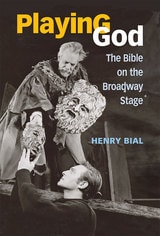
cover of Playing God: The Bible on the Broadway Stage

Playing God

The Bible on the Broadway Stage

Henry Bial

University of Michigan Press, 2015
Biblical texts have inspired more than 100 Broadway plays and musicals, ranging from early spectacles like Ben-Hur (1899) to more familiar works such as Godspell and Jesus Christ Superstar. What happens when a culture’s most sacred text enters its most commercial performance venue? Playing God focuses on eleven successful productions, as well as a few notable flops that highlight the difficulties in adapting the Old and New Testaments for the stage. The book is informed by both performance studies and theater history, combining analysis of play scripts with archival research into the actual circumstances of production and reception. Biblical plays, Henry Bial argues, balance religious and commercial considerations through a complex blend of spectacle, authenticity, sincerity, and irony. Though there is no magic formula for a successful adaptation, these four analytical lenses help explain why some biblical plays thrive while others have not.

[more]
cover of Profaning Paul

Profaning Paul

Cavan W. Concannon

University of Chicago Press, 2021

A critical reconsideration of the repeated use of the biblical letters of Paul.
 
The letters of Paul have been used to support and condone a host of evils over the span of more than two millennia: racism, slavery, imperialism, misogyny, and anti-Semitism, to name a few. Despite, or in some cases because of, this history, readers of Paul have felt compelled to reappropriate his letters to fit liberal or radical politics, seeking to set right the evils done in Paul’s name. Starting with the language of excrement, refuse, and waste in Paul’s letters, Profaning Paul looks at how Paul’s “shit” is recycled and reconfigured. It asks why readers, from liberal Christians to academic biblical scholars to political theorists and philosophers, feel compelled to make Paul into a hero, mining his words for wisdom. Following the lead of feminist, queer, and minoritized scholarship, Profaning Paul asks what would happen if we stopped recycling Paul’s writings. By profaning the status of his letters as sacred texts, we might open up new avenues for imagining political figurations to meet our current and coming political, economic, and ecological challenges.
 
[more]
cover of Prophetic Voices: Renewing and Reimagining Haftarah

Prophetic Voices

Renewing and Reimagining Haftarah

Rabbi Barbara AB Symons

Central Conference of American Rabbis, 2023
The traditional haftarah cycle, read on Shabbat and holidays during the Torah service, contains a wealth of prophetic wisdom, yet today it is too often forgotten or ignored. Prophetic Voices gives new life to these ancient texts. A diverse group of contributors--including rabbis, cantors, scholars, educators, activists, and poets--provide short commentaries on each haftarah, demonstrating their profound relevance to the present. Moreover, the volume boldly invites us to rethink the haftarah canon. Going beyond the Prophets, it presents alternative readings from Jewish texts biblical to contemporary. New haftarot for each Shabbat and holiday are included, plus haftarot for the Jewish American calendar, from Yom HaShoah to Pride Month to Martin Luther King Jr. Day. The readings are enhanced by scholarly essays placing the Prophets in historical context and examining the role of prophecy in Reform Judaism. Prophetic Voices summons us to listen, study, think, and teach--as well as to sing, pray, and march.
[more]
cover of Songs Ascending: The Book of Psalms in a New Translation with Textual and Spiritual Commentary

Songs Ascending

The Book of Psalms in a New Translation with Textual and Spiritual Commentary

Rabbi Richard N. Levy

Central Conference of American Rabbis, 2017

A beautiful, poetic translation of the Book of Psalms, Songs Ascending includes textual commentary and insights into the translation process, illuminating the choices of the original composers and the choices facing us in the 21st century as we try to make each psalm our own. The spiritual commentary asks: To what events, struggles, and triumphs in our lives might this psalm speak? How might this psalm articulate an aspect of our own sacred existence, or how might it help us celebrate a special day in our lives? How might it provide comfort when we are bereft and most in need of consolation, or how might it help us provide comfort for someone else? Songs Ascending explores all this and more, engaging the reader in dialogue that will inform and inspire.
[more]
cover of The Apostle Paul and His Letters: An Introduction

The Apostle Paul and His Letters

An Introduction

James B. Prothro

Catholic University of America Press, 2022
The letters of the Apostle Paul are central witnesses to the Christian faith and to the earliest history of Christianity. And yet, when students, preachers, and others turn to Paul, they find many things “hard to understand” (2 Peter 3:16) in these ancient writings. James Prothro’s new book aims to help readers see the Apostle’s faith and hope at work as he evangelized the nations. Steeped in up-to-date scholarship and a passion for the gospel Paul preached, Prothro draws readers into Paul’s life and letters in order to help them hear the Apostle’s voice. The book’s chapters offer introductions to Paul’s background, life, and legacy; an introduction to ancient letter writing; a guide to understanding Paul’s theology across the letters; a survey of the portrait of Paul in the Book of Acts; separate treatments of each letter’s background and purpose; treatments of key theological topics in each letter and a thorough outline of each letter showing its arguments and how they make sense. Prothro introduces complex matters with clarity, balance, and an inviting style. He not only offers answers but models how to ask questions, helping us reason through Paul’s letters as ancient documents and as Christian Scripture. This book will prove a valuable introduction for those who study, teach, and preach these biblical books.
[more]
cover of The Beginning of Wisdom: Reading Genesis

The Beginning of Wisdom

Reading Genesis

Leon R. Kass

University of Chicago Press, 2006

“Extraordinary,” says the New York Times, “will leave no reader’s understanding of Genesis unchanged.”


Examining Genesis in a philosophical light, Leon Kass presents it not as a story of what happened long ago, but as the enduring story of humanity itself. He asserts that the first half of Genesis contains insights about human nature that “rival anything produced by the great philosophers.” Kass here reads these first stories—from Adam and Eve to the tower of Babel—as a mirror for self-discovery that reveals truths about human reason, speech, freedom, sexual desire, pride, shame, anger, and death. Taking a step further in the second half of his book, Kass explores the struggles in Genesis to launch a new way of life that addresses mankind’s morally ambiguous nature by promoting righteousness and holiness. 

Even readers who don’t agree with Kass’s interpretations will find The Beginning of Wisdom a compelling book—a masterful philosophical take on one of the world’s seminal religious texts. 
 

[more]
cover of The Bible and the Latter-day Saint Tradition

The Bible and the Latter-day Saint Tradition

Edited by Taylor G. Petrey, Cory Crawford, and Eric A. Eliason

University of Utah Press, 2022

Like other Christian denominations, the Church of Jesus Christ of Latter-day Saints (Mormons) has been engaged in the battle for the Bible since challenges to biblical authority began to exert significant influence in America toward the end of the nineteenth century. Other believing communities have responded with various reevaluations of the biblical text. Latter-day Saints have experimented with similar approaches, often taking liberal positions on biblical authority and conservative positions on history and authorship. However, Latter-day Saints accept additional scripture and embrace a theology notably distinct from traditional Christianity. Hence, they relate to the Bible differently from other Christians, creating gaps with mainstream biblical studies. This volume bridges that gap.

From comparing the Book of Mormon to the Bible or the Dead Sea Scrolls, to Mormon feminists’ views on the Gospels, this volume takes a comprehensive and inclusive approach to understanding Bible scholarship’s role in Mormon history, exploring these differences for both scholars and students. A diverse group of contributors presents an accessible resource to mediate between Latter-day Saint traditions and the broader context of biblical history, literature, and scholarship. Each essay provides a synopsis of relevant major scholarly views and delivers new insights into varied crosscurrents of biblical studies.
[more]
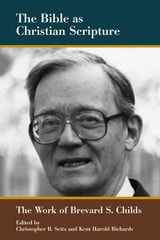
cover of The Bible as Christian Scripture: The Work of Brevard S. Childs

The Bible as Christian Scripture

The Work of Brevard S. Childs

Christopher R. Seitz

SBL Press, 2013

This memorial volume both displays and evaluates the canonical approach of Brevard S. Childs, whose attention to history through time animated his interest in the Bible’s use in the church through the ages up to and including the present. Just as Childs wrote on a wide range of topics canonical and theological—both Testaments, Isaiah and Exodus, the Pauline letters, the history of biblical interpretation, biblical theology, and historical, theological, and methodological questions—the contributors to this volume, seasoned colleagues as well as younger scholars who studied with Childs, offer an international collection of historical, theological, and New Testament essays as well as contributions focused on the Old Testament. The contributors are Stephen B. Chapman, Brevard S. Childs, Don Collett, Daniel R. Driver, Mark W. Elliott, Leonard G. Finn, Mark Gignilliat, Bernd Janowski, Jörg Jeremias, Leander E. Keck, Neil B. MacDonald, David L. Petersen, Murray A. Rae, C. Kavin Rowe, and Christopher R. Seitz.
[more]
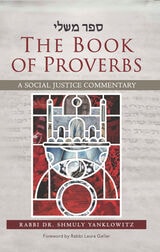
cover of The Book of Proverbs: A Social Justice Commentary

The Book of Proverbs

A Social Justice Commentary

Rabbi Dr. Shmuly Yanklowitz

Central Conference of American Rabbis, 2022
The Book of Proverbs, attributed to King Solomon, is a profound collection of Jewish wisdom, song, and inspiration. Yet to contemporary readers, the text can appear vague, ambiguous, and contradictory. In this refreshing and relevant commentary, Rabbi Dr. Shmuly Yanklowitz challenges us to find modern meaning in this ancient text. Using his signature blend of social justice practice and Jewish thought from throughout history, Rabbi Yanklowitz shows how the words of Proverbs are strikingly pertinent to issues we face today. Drawing on a wide range of sources, Rabbi Yanklowitz explores such topics as income inequality, feminism, animal rights, environmentalism, and many more. The author’s commentary is paired with the full text of Proverbs—in both Hebrew and an updated, gender-accurate translation—so readers can glean their own insights.
[more]
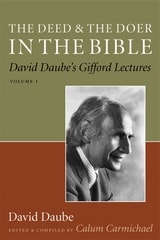
cover of The Deed and the Doer in the Bible: David Daube's Gifford Lectures, Volume 1

The Deed and the Doer in the Bible

David Daube's Gifford Lectures, Volume 1

David Daube

Templeton Press, 2008

David Daube (1909–1999) was a world-renowned biblical law scholar. He was a fellow at All Souls College at Oxford, an emeritus professor of law at Oxford, and an emeritus professor of law at the University of California, Berkeley. Scholars have hailed his essential research on Roman law, biblical law, Hebraic Law, and ethics throughout his life and today.

Daube produced dozens of books and published over 150 articles in scholarly journals. Now, for the first time, his twenty Gifford Lectures, delivered in 1962 and 1964, will be available to the public. His first ten Gifford Lectures have been collected in The Deed and the Doer in the Bible: David Daube's Gifford Lectures, Volume 1.

The theme of Daube's Gifford Lectures is law and wisdom in the Bible. His wide-ranging deliberations reveal how complicated and profound the biblical text is. He analyzes deeds described in the Bible and considers, for example, what causes people to act in a certain way, the role of intent, why unintended deeds are sometimes punishable, and how the origin of a deed is determined. His lectures are aimed at professionals in biblical criticism, biblical history, ethics, and the history of law concerning its roots in Old Testament traditions. Daube is a recognized master in these fields, and there are substantial applications to current ethical and legal issues.
[more]
cover of The King James Version at 400: Assessing Its Genius as Bible Translation and Its Literary Influence

The King James Version at 400

Assessing Its Genius as Bible Translation and Its Literary Influence

David G. Burke

SBL Press, 2013

In this collection of essays, thirty scholars from diverse disciplines offer their unique perspectives on the genius of the King James Version, a translation whose 400th anniversary was recently celebrated throughout the English-speaking world. While avoiding nostalgia and hagiography, each author clearly appreciates the monumental, formative role the KJV has had on religious and civil life on both sides of the Atlantic (and beyond) as well as on the English language itself. In part 1 the essayists look at the KJV in its historical contexts—the politics and rapid language growth of the era, the emerging printing and travel industries, and the way women are depicted in the text (and later feminist responses to such depictions). Part 2 takes a closer look at the KJV as a translation and the powerful precedents it set for all translations to follow, with the essayists exploring the translators’ principles and processes (with close examinations of “Bancroft’s Rules” and the Prefaces), assessing later revisions of the text, and reviewing the translation’s influence on the English language, textual criticism, and the practice of translation in Jewish and Chinese contexts. Part 3 looks at the various ways the KJV has impacted the English language and literature, the practice of religion (including within the African American and Eastern Orthodox churches), and the broader culture. The contributors are Robert Alter, C. Clifton Black, David G. Burke, Richard A. Burridge, David J. A. Clines, Simon Crisp, David J. Davis, James D. G. Dunn, Lori Anne Ferrell, Leonard J. Greenspoon, Robin Griffith-Jones, Malcolm Guite, Andrew E. Hill, John F. Kutsko, Seth Lerer, Barbara K. Lewalski, Jacobus A. Naudé, David Norton, Jon Pahl, Kuo-Wei Peng, Deborah W. Rooke, Rodney Sadler Jr., Katharine Doob Sakenfeld, Harold Scanlin, Naomi Seidman, Christopher Southgate, R. S. Sugirtharajah, Joan Taylor, Graham Tomlin, Philip H. Towner, David Trobisch, and N. T. Wright.
[more]
cover of The Old Greek of Isaiah: An Analysis of Its Pluses and Minuses

The Old Greek of Isaiah

An Analysis of Its Pluses and Minuses

Mirjam van der Vorm-Croughs

SBL Press, 2014

A concise study of a large number of examples of pluses and minus providing insight into translation from Hebrew to Greek

Van der Vorm-Croughs focuses this translation study on the processes leading to pluses and minuses including linguistic and stylistic aspects (i.e., cases in which elements have been added or omitted for the sake of a proper use of the Greek language), literary aspects (additions and omissions meant to embellish the Greek text), translation technical aspects (e.g., the avoidance of redundancy), and contextual and intertextual exegesis and harmonization. This work also covers the relation between the Greek Isaiah and its possible Hebrew Vorlage to try to determine which pluses and minuses may have been the result of the translator’s use of a different Hebrew text.

Features:

  • Eleven categories for the pluses and minuses of the Greek Isaiah
  • Examination of translation techniques and translator errors
  • Use of Joseph Ziegler’s critical edition
[more]
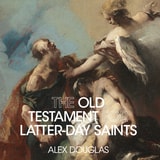
cover of The Old Testament for Latter-day Saints

The Old Testament for Latter-day Saints

Douglas, Alex

Signature Books, 2023

In The Old Testament for Latter-day Saints, Alex Douglas explores the Old Testament from various perspectives: as a believer, a skeptic, a secular scholar, and a member of the Latter-day Saint community. He delves deep into biblical scholarship, incorporating insights from disciplines such as ancient Near Eastern archaeology and the rich mythic traditions of Israel’s neighboring cultures. By doing so, Douglas helps the reader appreciate the profound significance the Old Testament held for its earliest readers.

This book also explores the intriguing ways in which Latter-day Saints have interpreted and engaged with this ancient text and the author navigates their diverse interpretations of it. He examines how individuals have alternately embraced the Old Testament as myth or history, law or legend, wise counsel or sacred scripture. He shows where many traditional interpretations have come from, and offers many ways to encourage a more nuanced understanding of the text.

Drawing from a wealth of scholarly research and his own unique perspective, Douglas presents a compelling and multidimensional analysis of the Old Testament. However readers approach the text, this book sheds light on the complex nature of the Old Testament and its enduring relevance to the Latter-day Saint tradition.
[more]
cover of The Old Testament for Latter-day Saints

The Old Testament for Latter-day Saints

Douglas, Alex

Signature Books, 2024

In The Old Testament for Latter-day Saints, Alex Douglas explores the Old Testament from various perspectives: as a believer, a skeptic, a secular scholar, and a member of the Latter-day Saint community. He delves deep into biblical scholarship, incorporating insights from disciplines such as ancient Near Eastern archaeology and the rich mythic traditions of Israel’s neighboring cultures. By doing so, Douglas helps the reader appreciate the profound significance the Old Testament held for its earliest readers.

This book also explores the intriguing ways in which Latter-day Saints have interpreted and engaged with this ancient text and the author navigates their diverse interpretations of it. He examines how individuals have alternately embraced the Old Testament as myth or history, law or legend, wise counsel or sacred scripture. He shows where many traditional interpretations have come from, and offers many ways to encourage a more nuanced understanding of the text.

Drawing from a wealth of scholarly research and his own unique perspective, Douglas presents a compelling and multidimensional analysis of the Old Testament. However readers approach the text, this book sheds light on the complex nature of the Old Testament and its enduring relevance to the Latter-day Saint tradition.
[more]
cover of The SBL Commentary on the Septuagint: An Introduction

The SBL Commentary on the Septuagint

An Introduction

Dirk Büchner

SBL Press, 2017

Explore the groundwork for a new commentary series from SBL Press

This book contains verse by verse commentary on selections from the Greek text of the Hebrew Bible known as the Septuagint. Each chapter is from a different bible book, for which there will eventually be a full commentary published in the Society of Biblical Literature Commentary on the Septuagint. The commentary series focuses on the actual process of translation, so its authors try to describe and explain the kinds of decisions the ancient Alexandrian translators made about how to render Hebrew into Greek.

Features

  • Translations from and commentary on Genesis, Exodus, Leviticus, Numbers, Esther, Job, and Psalms
  • Contributions from eight experts on the Septuagint
  • Guidelines and procedures used in the production of the translations in the series
[more]
cover of The Torah/Law Is a Journey: Using Cognitive and Culturally Oriented Linguistics to Interpret and Translate Metaphors in the Hebrew Bible

The Torah/Law Is a Journey

Using Cognitive and Culturally Oriented Linguistics to Interpret and Translate Metaphors in the Hebrew Bible

Ivana Procházková

Karolinum Press, 2022

An analysis of metaphor in the legal texts of the Old Testament using the tools of cognitive and cultural linguistics.
 
The Old Testament is rich in metaphor. Metaphorical expressions appear not only in places where you might expect them, like the poetic verses, but also in the legal texts. They appear in the preambles to collections of laws, in their final summaries, in general considerations on compliance with and violation of the law, in texts concerning the meaning of the law, and those dealing with topics now reserved for legal theory and legal philosophy. These metaphorical expressions reveal how the authors of the relevant Torah/Law texts understood their function in society and what the society of the time preferred in the law.
​
Anchored in cognitive and cultural linguistics, The Torah/Law Is a Journey investigates Hebrew metaphorical expressions concerning the key Old Testament concept of Torah/Law. Ivana Procházková identifies Hebrew conceptual metaphors and explicates the metaphorical expressions. She also uses cognitive linguistic analysis to look at modern translations of selected metaphorical expressions into Czech and English. Procházková closes with an analysis of the metaphors used in the Council of Europe publication Compass: Manual for Human Rights Education with Young People to conceptualize human rights.
[more]
cover of The Transcendent Mystery of God's Word: A Critical Synthesis of Antioch and Alexandria

The Transcendent Mystery of God's Word

A Critical Synthesis of Antioch and Alexandria

John W. Martens

Saint Paul Seminary Press, 2024
Historical-critical methods in biblical scholarship are associated with numerous intellectual movements, such as rationalism, positivism, and historical relativism, that minimize or reject the sacred and revealed nature of Scripture. Ben F. Meyer noted, however, as have official Church documents, that modern biblical techniques are essential for locating the literal, that is, the intended sense of the biblical texts. He likened these modern methods to the ancient Antiochene school’s focus on the literal sense. But to focus on “Antioch” alone does not account for Scripture’s theological depth, religious context, or fulfillment of the promises of God. Biblical interpretation associated with ancient “Alexandria” offers a focus on the transcendent mystery of God’s word, often lacking in current biblical scholarship, but Meyer noted that ancient allegorical interpretation cannot simply be borrowed today since it often lacks a sense of historic change and development. This book is not about patristic reception of the Bible in Antioch and Alexandria, but the need to bring together in critical synthesis historical biblical methods that seek to understand the literal sense in all of its fullness and also incorporate methods of interpretation that take seriously the biblical texts as revelatory of God’s word for our salvation. “Antioch” and “Alexandria” are representative in this book of interpretive stances that pay attention to historical context, change, and development and are open to transcendence in order to offer the salvific power of Scripture to readers in our own day.
[more]
cover of Torah

Torah

Irmtraud Fischer

SBL Press, 2011

This volume is the first in The Bible and Women series. It presents a history of the reception of the Bible as embedded in Western cultural history with a special focus on the history of women and issues of gender. It introduces the series, explaining the choice of the Hebrew canon in connection with the Christian tradition and preparing the way for a changed view of women throughout the series. The contributors explore the gendered significance of the canonical writings as well as the process of their canonization and the social-historical background of ancient Near Eastern women’s lives, both of which play key roles in the series. Turning to the Pentateuch, essays address a variety of texts and issues still relevant today, such as creation and male-female identity in the image of God, women’s roles in the genealogies of the Pentateuch and in salvation history, the rights and responsibilities of women according to the Hebrew Bible's legal and ritual texts, and how archaeology and iconography can illustrate the texts of the Torah. Contributors include Sophie Démare-Lafont, Dorothea Erbele-Küster, Karin Finsterbusch, Irmtraud Fischer, Mercedes García Bachmann, Thomas Hieke, Carol Meyers, Mercedes Navarro Puerto, Jorunn Økland, Ursula Rapp, Donatella Scaiola, Silvia Schroer, Jopie Siebert-Hommes, and Adriana Valerio.
[more]
cover of Valuable and Vulnerable: Children in the Hebrew Bible, especially the Elisha Cycle

Valuable and Vulnerable

Children in the Hebrew Bible, especially the Elisha Cycle

Julie Faith Parker

SBL Press, 2013

Just as women in the Bible have been overlooked for much of interpretative history, children in the Bible have fascinating and compelling stories that scholars have largely ignored. This groundbreaking book focuses on children in the Hebrew Bible. The author argues that the biblical writers recognized children as different from adults and used these ideas to shape their stories. She provides conceptual and historical frameworks for understanding children and childhood, and examines Hebrew terms related to children and youth. The book introduces a new methodology of childist interpretation and applies it to the Elisha cycle (2 Kings 2-8), which contains forty-nine child characters. Combining literary insights with social-scientific evidence, the author demonstrates that children play critical roles in the world of the text as well as the culture that produced it.
[more]
[more]
[more]