Results by title
39 books match the query 'Biographical & Autofiction'
A Bohemian Youth
Josef Hirsal
Northwestern University Press, 1997
Josef Hiršal's experimental novel is a Dada-like romp through the life of a young man born into a Bohemian peasant family. Told in five parts, A Bohemian Youth begins with a word to the wise, moves on to the text, continues with notes and with notes to the note, and ends with a note on the notes to the notes.
More than just a tongue-in-cheek parody of a literary memoir, A Bohemian Youth is a glimpse of the First Czechoslovak Republic as seen through the eyes of a young peasant from the provinces. Abounding in intimate details--the manners of a servant girl, the habits of the town homosexual, the sounds of popular music; the way people eat in wartime—Hiršal's novel is a wrenching and hilarious tale of a young man's emotional and sexual awakening.

A History of Light
Jan Nemec
Seagull Books, 2024
Have you ever wondered what a story written by a beam of light would be like? The story would be ordinary, but the course of events extraordinary. Its hero would be a photographer, a guardian of light. And, naturally, the tale would be full of shadow.
A History of Light delves into the fascinating life of František Drtikol (1883–1961), an important figure in early-twentieth-century photography who is all but forgotten in contemporary times. A dandy from a small mining town, a world-famous photographer whose business went bankrupt, a master of the nude who never had much luck with women, a mystic and a Buddhist who believed in communism—a man whose numerous contradictions were evident externally and synthesized internally.
A unique blend of fiction and biography, this novel vividly portrays Drtikol’s life, tracing the diverse stages of his career and offering detailed, almost encyclopedic insights into the times and places pivotal to his journey. Acclaimed Czech author Jan Němec narrates the story in the uncommon second-person singular, speaking directly to his subject. Fresco-like, this novel is an artistic and spiritual Bildungsroman that covers over half a century, bringing to life the silver mines of Príbram, Jugendstil Munich, and the Bohemianism of the First Czechoslovak Republic. Drtikol’s role as a photographer is set against the turbulent history of Central Europe through the two World Wars, and the events of those five decades form a riveting backdrop for an exploration of the artist’s work.
Always Crashing in the Same Car
A Novel after David BowieLance Olsen
University of Alabama Press, 2023
A prismatic, imaginative exploration of David Bowie’s last days
An intricate collage-novel fusing and confusing fact and imagination, Always Crashing in the Same Car is a prismatic exploration of David Bowie through multiple voices and perspectives—the protean musician himself, an academic trying to compose a critical monograph about him, friends, lovers, musicologists, and others in Bowie’s orbit.
At its core beat questions about how we read others, how we are read by them, how (if at all) we can tell the past with something even close to accuracy, what it feels like being the opposite of young and still committed to bracing, volatile innovation.
Set during Bowie’s last months—those during which he worked on his acclaimed final album Black Star while battling liver cancer and the consequences of a sixth heart attack—yet washing back and forth across his exhilarating, kaleidoscopically costumed life, Always Crashing in the Same Car enacts a poetics of impermanence, of art, of love, of truth, even of death, that apparently most permanent of conditions.
Compulsory Happiness
Norman Manea
Northwestern University Press, 1994
Familiarity Is the Kingdom of the Lost
Dugmore Boetie
Ohio University Press, 2020
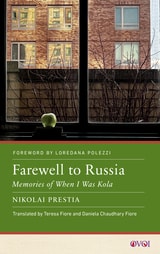
Farewell to Russia
Memories of When I Was KolaNikolai Prestia
Rutgers University Press, 2026
Growing up in 1990s Russia in a family marked by poverty, substance abuse, and neglect, Kola and his sister are eventually admitted into the orphanage system. Here, Kola comes face to face with a different but equally daunting challenge: navigating an unfamiliar and sometimes hostile world haunted by the absence of his mother. The ensuing journey, which eventually culminates in the adoption by an Italian family, alternates moments of both trauma and deliverance, while asking fundamental questions about our ability to reconcile ourselves with unfathomable loss.
Harrowing yet lyrical, Nikolai Prestia’s prize-winning 2021 novel is a testament to the duality of memory in its ability to both hurt and heal, and to the transformative power of those figures, adults and peers alike, who contribute to a child’s development. Translated into English as part of a collaboration between the author and a mother-daughter translator duo, the novel serves up a wrenching glimpse into the back stories that often precede the adoption of an older child.
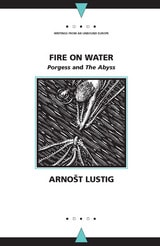
Fire on Water
Porgess and The AbyssArnost Lustig
Northwestern University Press, 2005
It occurred to me why I was able to forgive the Italians, but never the Germans. Was it because the Italians never slept on mattresses stuffed with the hair of Luster Leibling or Weltfeind Flusser?
In this pair of short novels, Arnošt Lustig continues his lifelong project of creating a universe-at once concrete and dreamlike-to examine the horrors of the Holocaust and the impossible burden of living as a survivor.
The Abyss is the fragmented memories of David Wiesenthal, aged twenty, tortured by what he has witnessed and by the knowledge that luck-not skill, not courage, certainly not goodness-separated the survivors from the doomed. He seeks solace remembering the women he's loved or desired, even the one who represents his death.
In Porgess, the narrator recounts the life of the title character, "the most handsome boy in Jewish Prague" who was paralyzed on the last day of World War II. The two discuss their mutual fascinations-women, jazz, the significance of numbers-in sometimes bitter, sometimes sardonic voices, but always with the specters of the dead and the guilt of survival close at hand.
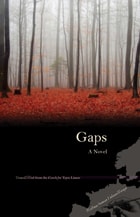
Gaps
A NovelBohumil Hrabal
Northwestern University Press, 2011
Gaps is a more overtly political novel than either In-House Weddings or Vita Nuova. The 1968 Soviet invasion of Czechoslovakia and the subsequent repression of artistic freedom figure prominently. Hrabal is placed on the "liquidated writers" list, and copies of his novel Poupata (Buds) are disposed of at the paper salvage where he once worked. Hrabal's decision to tell his autobiography in his wife Eliska's voice highlights their very close relationship and lovingly details her deep influence on his work. Every movement, sound, fragrance, and color is detailed, creating a collage of Bohumil and Eliska's life together, an unforgettable picture that reveals the author's innermost attitudes to life, love, and the pursuit of his own art.
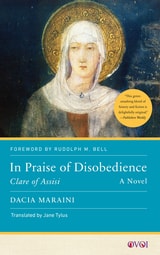
In Praise of Disobedience
Clare of Assisi, A NovelDacia Maraini
Rutgers University Press, 2023
In-House Weddings
Bohumil Hrabal
Northwestern University Press, 2007
The task, taken up by such a rogue comic talent, could be nothing other than strangely delightful; and in In-House Weddings, the first of the trilogy that Hrabal produced, we meet the author through the eyes of his wife Eliska. She narrates his life from his upbringing in Nymburk through his work as a dispatcher in a train station and then in a scrap paper plant, his first publication, his trouble with the authorities, and his association with notable artists and authors such as Jiri Kolar, Vladimir Boudnik, and Arnost Lustig. Hrabal’s bohemian life was itself a source of great interest to the Czech public; transmuted here, it is even more compelling, a wry portrait of artistic life in postwar Eastern Europe and a telling reflection on how such a life might be recast in the light of literary brilliance.
Koan Khmer
A NovelBunkong Tuon
Northwestern University Press, 2024
Celebrating the power of literature to rescue a life from despair, Koan Khmer is the story of Samnang Sok, an orphaned child survivor of the Cambodian genocide who sets out to make a new life in America alongside his extended family. Struggling to cope with the traumas of his past, Samnang feels alienated from his American peers at school and disconnected from his aunts, uncles, and cousins at home. Inspired by the books he discovers along the way, Samnang begins piecing together information about the past through stories told by elders, family photographs, and his own memories and dreams. Based loosely on Tuon’s life, the novel traces Samnang’s difficult journey toward an answer to the question, How does one rebuild a life after genocide and displacement and create a home?
Koan Khmer gives an unflinching voice to a distinctly Cambodian American sensibility. Tuon creates a refugee space that all Americans can visit in this bildungsroman that breathes life into cultural knowledge disrupted by loss and grief.
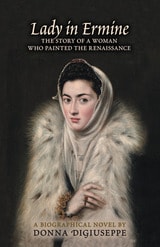
Lady in Ermine
The Story of a Woman Who Painted the Renaissance. A Biographical NovelDonna DiGiuseppe
Arizona Center for Medieval and Renaissance Studies, 2019
Lady in Ermine: The Story of a Woman Who Painted the Renaissance reveals the discovery of an historic figure who embodies the struggle of women throughout the ages while immersing the reader in the sixteenth century world of the Renaissance figures she paints.
As a girl in Lombardy, Sofonisba Anguissola trains to paint with mannerist masters, and though society frowns upon women having such ambition, Sofonisba’s father unwaveringly encourages her. A royal tour by Prince Philip of Spain inspires her lifelong dream: to perfect the king’s portrait and show his truth on canvas, the highest calling for a Renaissance portraitist. Her drive to vindicate her loving father, a bastard of nobility, propels her. Politics of the Spanish empire brings Sofonisba to the heart of the royal court in Madrid. She aspires to achieve her goal while others at court work to undermine her as a female artist. Tragedy unfolds in the royal household, but in the process, Sofonisba finds her opportunity to paint the King of Spain, honoring her family name with her success. In life after court, Sofonisba navigates two marriages, royal appointments, love, hardship, and bankruptcy, while leaving a legacy of hundreds of paintings and influencing generations of artists from Anthony van Dyck to Peter Paul Rubens. This is her story.
Like Wine Through Water
A NovelKathleen Hill
Northwestern University Press, 2027
A pivotal summer in the life of Maria Branwell, the mother of the Brontë sisters
In imagined diary entries from the summer of 1812, twenty-nine-year-old Maria Branwell is pondering a momentous choice. Far from her Cornish home, working with her aunt and uncle at their Methodist boys’ school on the moors of Yorkshire, she has just been introduced to the Irish clergyman Patrick Brontë. The two are powerfully drawn to one another, resulting in a proposal Maria accepts wholeheartedly—yet reservations begin to surface. From her earliest years she has felt marked by an uncommon destiny, one she had assumed incompatible with an ordinary life of marriage and children. Does marriage fit into that destiny? Or is there a different path to take? The choice of this woman forgotten by history will alter the course of literature forever.
Little Songs in the Shade of Tamaara
Muhammed Afifi
University of Arkansas Press, 2000
Paradise, for the skeptic Mohammed Afifi, was just four steps down from his porch into a sunny garden. There he would sit, morning and evening, in the shadow of Tamaara, his beloved tamarhinna tree, soaking up the sights, sounds, and smells of his precious corner of the natural world. From an old yellow straw chair, Afifi would train his perceptive gaze on that garden in all its detail. Flora and fauna blessed him with honorary membership in their enchanted realm. Only the rare downpours of winter and the dust storms of spring could banish him indoors. Yet, whether inspired at the side of the heater, purring black cat on his lap, or next to the pansy bed, with ecstatic flocks of bee-eaters overhead, Afifi’s intimate, whimsical musings radiate a profound and unique sense of place.
Lisa J. White’s nuanced translation of Taramiim fii Dhill Taraara captures Afifi’s impish, ironic sense of humor and his unsparing honesty. She handles Afifi’s parting gift to the world with great care and honor. Mohammed Afifi died in 1981, in winter, just after completing this fictionalized memoir. Majestic and melancholy, mysterious and magical—the essence of his world, Afifi’s extraordinary garden, is here revealed to the English-speaking world.
Love and Fatigue in America
Roger King
University of Wisconsin Press, 2012
Love and Fatigue in America records an Englishman’s decade-long journey through his newly adopted country in the company of a mystifying illness and a charismatic dog.
When he receives an unexpected invitation from an unfamiliar American university, he embraces it as a triumphant new beginning. Instead, on arrival, he is stricken with a persistent inability to stand up or think straight, and things quickly go wrong. Diagnosed with ME disease—chronic fatigue syndrome—he moves restlessly from state to state, woman to woman, and eccentric doctor to eccentric doctor, in a search for a love and a life suited to his new condition. The journey is simultaneously brave, absurd, and instructive.
Finding himself prostrate on beds and couches from Los Alamos to Albany, he hears the intimate stories offered by those he encounters—their histories, hurts, and hopes—and from these fragments an unsentimental map emerges of the inner life of a nation. Disability has shifted his interest in America from measuring its opportunities to taking the measure of its humanity. Forced to consider for himself the meaning of a healthy life and how best to nurture it, he incidentally delivers a report on the health of a country.
By turns insightful, comic, affecting, and profound, Roger King’s Love and Fatigue in America briskly compresses an illness, a nation, and an era through masterly blending of literary forms. In a work that defies categorization, and never loses its pace or poise, the debilitated narrator is, ironically, the most lively and fully awake figure in the book.
“As the disease drives the narrator city to city, woman to woman, and doctor to doctor, it brings into relief many of America’s follies and excesses, most notably our health-care system, which King portrayed as antiquated, bureaucratic, and inhumane. After more than fifteen years, America brings the narrator ‘not aspiration realized, nor a largeness of life fitting to its open spaces, but the nascent ability to be satisfied with less.’”—The New Yorker
Marina Tsvetaeva
To Die in YelabugaVénus Khoury-Ghata
Seagull Books, 2022
The life of Marina Tsvetaeva (1892–1941) coincided with turbulent years in Russian history. She was an eminent Russian poet and a passionate lover involved with several men at the same time, including Rilke, who chose Lou Andreas-Salomé over her, and Pasternak, who married someone else, but protected her until her death. Her life included many trials such as her poverty during the grueling Russian civil war, her young daughter’s death from hunger in an orphanage, and the death of her husband, who fought against the Communist regime and was executed by the Soviet state. Rejected by official poets, then by the wealthy Russian diaspora in France, she finally returned to her country to end her wandering life. She hanged herself from a rope in an attic from which she could see the field where she had dug with bare hands for potatoes abandoned by local farmers. A poet-martyr of the Stalinist era—buried in an unmarked plot in the cemetery of Yelabuga—Tsvetaeva is brought to life in this poetic biographical novel by celebrated Lebanese author Vénus Khoury-Ghata.
Materada
Fulvio Tomizza
Northwestern University Press, 1999
A picture of a disappearing way of life, a tale of feud and displacement, and imbued with the tastes, tales, and songs of his native Istria, Koslovic's story is a testament to the intertwined ethnic roots of Balkan history.
Mdeilmm
Mole SpeechHélène Cixous
Seagull Books, 2025
Weaving together history, literature, and personal experience, this recent book from a master of literature crafts a mesmerizing exploration of language, loss, and the enduring power of the spirit world.
The strange word “Mdeilmm” was reported to have been uttered by the spirit of Shakespeare when called up during a séance in 1854 at the instigation of the French poet Victor Hugo. Hugo was then living in exile on the island of Jersey where he took part in several such séances. Hélène Cixous weaves this scene into a rich tapestry that draws from many corners of her world, both real and fictional: Dostoevsky’s Idiot, Hugo’s Last Day of a Condemned Man, Poe’s story “The Gold Bug,” but also film footage of the assassination of Itzhak Rabin and many layers of memories of her Algerian childhood. Transcribed communications from spirits of the departed, her father and grandfather among them, provide a fascinating glimpse into past spiritual practices.
Cixous’s unique narrative style enhances the book’s enchanting quality, ensuring that readers are not only engaged by the content but also captivated by the beauty of the prose. Meanwhile, the reader falls under the spell of the author’s incomparable “mole speech,” the language in which poets communicate.
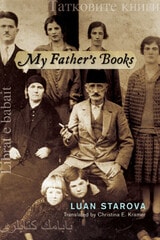
My Father’s Books
Luan Starova; Translated by Christina E. Kramer
University of Wisconsin Press, 2012
In My Father’s Books, the first volume in Luan Starova’s multivolume Balkan Saga, he explores themes of history, displacement, and identity under three turbulent regimes—Ottoman, Fascist, and Stalinist—in the twentieth century. Weaving a story from the threads of his parents’ lives from 1926 to 1976, he offers a child’s-eye view of personal relationships in shifting political landscapes and an elegiac reminder of the enduring power of books to sustain a literate culture.
Through lyrical waves of memory, Starova reveals his family’s overlapping religious, linguistic, national, and cultural histories. His father left Constantinople as the Ottoman Empire collapsed, and the young family fled from Albania to Yugoslav Macedonia when Luan was a boy. His parents, cosmopolitan and well-traveled in their youth, and steeped in the cultures of both Orient and Occident, find themselves raising their children in yet another stagnant and repressive state. Against this backdrop, Starova remembers the protected spaces of his childhood—his mother’s walled garden, his father’s library, the cupboard holding the rarest and most precious of his father’s books. Preserving a lost heritage, these books also open up a world that seems wide, deep, and boundless.
Open Wound
The Tragic Obsession of Dr. William BeaumontJason Karlawish
University of Michigan Press, 2013
A shotgun misfires inside the American Fur Company store in Northern Michigan, and Alexis St. Martin's death appears imminent. It's 1822, and, as the leaders of Mackinac Island examine St. Martin's shot-riddled torso, they decide not to incur a single expense on behalf of the indentured fur trapper. They even go so far as to dismiss the attention of U.S. Army Assistant Surgeon William Beaumont, the frontier fort's only doctor.
Beaumont ignores the orders and saves the young man's life. What neither the doctor nor his patient understands—yet—is that even as Beaumont's care of St. Martin continues for decades, the motives and merits of his attention are far from clear. In fact, for what he does to his patient, Beaumont will eventually stand trial and be judged.
Rooted deeply in historic fact, Open Wound artfully fictionalizes the complex, lifelong relationship between Beaumont and his illiterate French Canadian patient. The young trapper's injury never completely heals, leaving a hole into his stomach that the curious doctor uses as a window to understand the mysteries of digestion. Eager to rise up from his humble origins and self-conscious that his medical training occurred as an apprentice to a rural physician rather than at an elite university, Beaumont seizes the opportunity to experiment upon his patient's stomach in order to write a book that he hopes will establish his legitimacy and secure his prosperity. As Jason Karlawish portrays him, Beaumont, always growing hungrier for more wealth and more prestige, personifies the best and worst aspects of American ambition and power.
Perverzion
Yuri Andrukhovych
Northwestern University Press, 2005
Or, then again, it may not.
Perverzion constructs Perfetsky's final days using a mishmash of relics, from official documents to recorded interviews to scraps of paper. Perfetsky, the personification of the Ukrainian artistic superman—he used his masterful musicianship in a collaboration with Elton John during the pop star's secret sojourn in Ukraine—is bound for Venice to participate in a seminar to save the world from absurdity. On the way he becomes a Ukrainian Orpheus descending into the decadence of the West, navigating through surrealistic adventures and no less surrealistic seminar topics as he charges head up (and pants down) toward his fate.
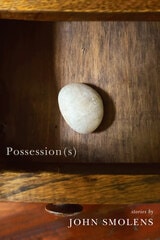
Possession(s)
John Smolens
Michigan State University Press, 2026
In settings familiar and foreign, from the shores of the Great Lakes to rural Ireland and Scotland, the boulevards of nineteenth-century Paris, and an ancient Italian hill town, John Smolens’s stories delineate our fears, doubts, and uncertainties, tempered by irony, humor, and tenacity. The collection’s title, Possession(s), suggests an overarching duality that connects these fourteen disparate narratives, which include stories first published in magazines such as the North American Review, the Madison Review, and the Southern Review. In “prose that is an understated marvel” (Publishers Weekly) and through a wide range of compelling voices, each story resonates with compassion and honesty, often turning on unexpected encounters with a stranger, a place, the past, and sometimes with oneself, offset by a recognition that the future holds few assurances other than the promise of mortality. In their search for love, reconciliation, and acceptance, the characters in Possession(s) strive to find understanding and peace.
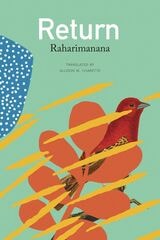
Return
Raharimanana
Seagull Books, 2025
A powerful testament to writing as an act of beauty and rebellion that speaks truth and condemns violent legacies and a feverish ode that weaves together personal and national history to finally find healing.
This evocative novel from a great figure of Malagasy literature tells the story of Hira, a writer born on the seventh anniversary of Madagascar’s independence. He wanders through different cities on a book tour, but the experience is amnesiac and confusing. There is a past he is trying to reckon with, filled with violence against both his family and country. He runs from his wife and represses his memories until it all explodes in fever dreams and a vomit of words. But to write the rebirth that he yearns for, Hira must write of his father’s torture, his tortured island, and how both were juxtaposed to his own happy childhood. In combing through these various pasts, he might make the same mistake his father did: trying to change the world but leaving his own family broken.
Drawing from the lived experience of both the author and his parents, the violence of both life and language, and the stories of both myth and history, Return is a search for an individual’s place within larger collective trauma. Infused with Raharimanana’s signature poeticism and intensity, this is a masterwork by an as-yet-overlooked but essential voice in the postcolonial tradition.
Scattered Crumbs
A NovelMuhsin Al-ramli
University of Arkansas Press, 2003
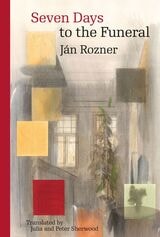
Seven Days to the Funeral
Ján Rozner
Karolinum Press, 2024
Seven Days to the Funeral is the fictionalized memoir of Ján Rozner, a leading Slovak journalist, critic, dramaturg, and translator. Rozner and his wife Zora Jesenská were champions of the Prague Spring and were blacklisted after the Soviet-led invasion of Czechoslovakia in 1968. When Jesenská died in 1972, her funeral became a political event and attendees faced recriminations.
A painstaking account of the week after his wife’s death, Seven Days to the Funeral is a historical record of the devastating impact of the period after the invasion. Through ruthless portraits of key figures in Slovak culture, the book provides a fascinating cultural history of Slovakia from 1945 to 1972. It is also a moving love story of an unlikely couple. Although Rozner began the book in 1976, it was left unfinished upon his death. The book was published posthumously in 2009 by his second wife Sláva Roznerová.
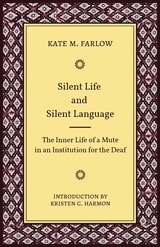
Silent Life and Silent Language
The Inner Life of a Mute in an Institution for the DeafKate M. Farlow
Gallaudet University Press, 2018
Kate M. Farlow wrote this book with the goal of giving hearing parents hope that their deaf children would be able to lead happy and productive lives. She sought to raise awareness of the benefits of deaf schools and was an early advocate for the use of American Sign Language and of bilingual education. The Christian influence on the school and on the author is strongly present in her writing and reflects an important component of deaf education at the time. Descriptions of specific signs, games, ASL story nights, and other aspects of the signing community during the 1870s will be of interest to modern students and researchers in linguistics, deaf education, Deaf studies, and Deaf history. Farlow’s work reveals a sophisticated, early understanding of the importance of access to language, education, and community for deaf individuals.
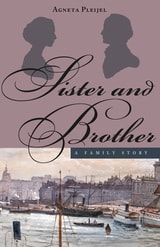
Sister and Brother
A Family StoryAgneta Pleijel
Gallaudet University Press, 2018
Helena showed early musical talent and, trained by her father, was a gifted singer. She lived in Paris for a time and enjoyed popular success. She fell in love with a musician but was plunged into despair when he died from cholera. Her father persuaded her to give up singing and marry a cold industrialist, who was one of the wealthiest men in Sweden, in order to provide financial support for the family. Helena struggled in the loveless marriage and battled depression throughout her life.
Despite their disparate lives, Albert and Helena faced similar struggles with communication, autonomy, and self-determination. Albert’s story traces the development of his own sense of identity as well as the development of Swedish Deaf culture, while Helena’s life reflects the silencing and oppression endured by women. In Sister and Brother, Pleijel’s literary treatment of their lives sheds light on the cultural and social norms that shaped the experiences of deaf people and women in the 19th century.
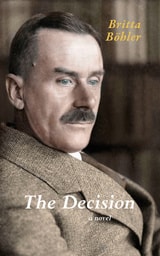
The Decision
Britta Böhler
Haus Publishing, 2015
Britta Böhler shows us one of the twentieth century’s greatest writers as a family man, a father, a writer, and a man with moral doubts. We see a human soul trapped in a historical setting that forces him to make a seemingly impossible choice. A convincing depiction of a dilemma addressed only sparsely in Mann’s own writings, The Decision eloquently explores the all-too-human price of confronting totalitarianism.
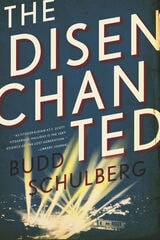
The Disenchanted
Budd Schulberg
University of Minnesota Press, 2012
Considered by some to be Budd Schulberg’s masterpiece, The Disenchanted tells the tragic story of Manley Halliday, a fabulously successful writer during the 1920s—a golden figure in a golden age—who by the late 1930s is forgotten by the literary establishment, living in Hollywood and writing for the film industry. Halliday is hired to work on a screenplay with a young writer in his twenties named Shep, who is desperate for success and idolizes Halliday. The two are sent to New York City, where a few drinks on the plane begin an epic disintegration on the part of Halliday due to the forces of alcoholism he is heroically fighting against and the powerful draw of memory and happier times. Based in part on a real-life and ill-fated writing assignment between the author and F. Scott Fitzgerald in 1939, Schulberg’s novel is at its heart a masterful depiction of Manley Halliday—at times bitter, at others sympathetic and utterly sorrowful—and The Disenchanted stands as one of the most compelling and emotional evocations of generational disillusionment and fallen American stardom.
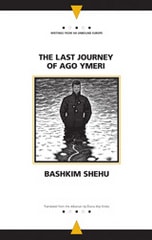
The Last Journey of Ago Ymeri
Bashkim Shehu
Northwestern University Press, 2007
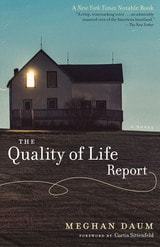
The Quality of Life Report
A NovelBy Meghan Daum, Foreword by Curtis Sittenfeld
University of Texas Press, 2017
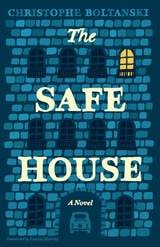
The Safe House
A NovelChristophe Boltanski
University of Chicago Press, 2017
When the Nazis came, Étienne Boltanski divorced his wife and walked out the front door, never to be seen again during the war. So far as the outside world knew, the Jewish doctor had fled. The truth was that he had sneaked back to hide in a secret crawl space at the heart of the house. There he lived for the duration of the war. With the Liberation, Étienne finally emerged, but he and his family were changed forever—anxious, reclusive, yet proudly eccentric. Their lives were spent, amid Bohemian disarray and lingering wartime fears, in the mansion’s recesses or packed comically into the protective cocoon of a Fiat.
That house (and its vehicular appendage) is at the heart of Christophe Boltanski’s ingeniously structured, lightly fictionalized account of his grandparents and their extended family. The novel unfolds room by room—each chapter opening with a floorplan—introducing us to the characters who occupy each room, including the narrator’s grandmother—a woman of “savage appetites”—and his uncle Christian, whose haunted artworks would one day make him famous. “The house was a palace,” Boltanski writes, “and they lived like hobos.” Rejecting convention as they’d rejected the outside world, the family never celebrated birthdays or even marked the passage of time, living instead in permanent stasis, ever more closely bonded to the house itself.
The Safe House was a literary sensation when published in France in 2015 and won the Prix de Prix, France’s most prestigious book prize. A French-language film adaptation, La cache, was released in 2025 from director Lionel Baier. With hints of Oulipian playfulness and an atmosphere of dark humor, The Safe House is an unforgettable portrait of a self-imprisoned family.
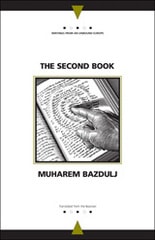
The Second Book
Muharem Bazdulj
Northwestern University Press, 2005
Muharem Bazdulj has broken from the pack of new Eastern European writers influenced by innovators such as Danilo Kiš, Milan Kundera, and Jorge Luis Borges. Employing a light touch, a daring anti-nationalist tone, and the kind of ambition that inspires nothing less than a rewriting of Bosnian and Yugoslavian history, Bazdulj weaves the imagined realities of history into fiction and fiction into history. To quote one critic, for Bazdulj history "is the sum of interpretations while imagination is the sum of facts."
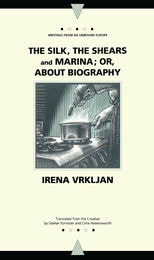
The Silk, the Shears and Marina; or, About Biography
Irena Vrkljan
Northwestern University Press, 1999
These are the first two volumes of the Croatian poet and novelist Irena Vrkljan's lyrical autobiography. Although each novel illuminates the other, they also stand alone as original and independent works of art. In The Silk, the Shears, Vrkljan traces the symbolic and moral significance of her life, and her vision of the fate of women in her mother's time and in her own. Marina continues the intense analysis of the poetic self, using the life of Marina Tsvetaeva to meditate on the processes behind biography.
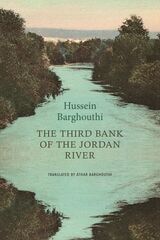
The Third Bank of the Jordan River
Hussein Barghouthi
Seagull Books, 2026
In this profound and evocative novel, acclaimed Palestinian author Hussein Barghouthi invites readers on an extraordinary, youthful journey through a landscape of memory, longing, alienation, and exile. Translated with great sensitivity by his son, Áthar Barghouthi, this deeply personal narrative unfurls as a stream-of-consciousness odyssey, blurring the lines between reality and dream. Haunted by a pervasive sense of loss, the prose, rich with poetic imagery, explores themes of displacement, identity, and the enduring shadows of a contested homeland.
The Third Bank of the Jordan River is a powerful, meditative work that defies conventional boundaries. With unflinching honesty, Barghouthi confronts the political through deeply human stories, capturing the restless search for meaning and the enduring human hunger for connection and freedom.
Tsing
David Albahari
Northwestern University Press, 1997
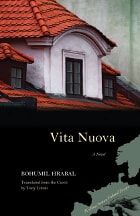
Vita Nuova
A NovelBohumil Hrabal
Northwestern University Press, 2010
Vita Nuova is the second in a trilogy of memoirs written from the perspective of Bohumil Hrabal’s wife, Elis.ka, about their life in Prague from the 1950s to the 1970s, when Communist repression of artists was at its peak.
Hrabal’s inimitable humor, which in Elis.ka’s ruminations ranges from bawdy slapstick to cutting irony, is all the more penetrating for being directed at himself. Vita Nuova showcases Hrabal’s legendary bohemian intellectual life, particularly his relationship with Vladimír Boudník. Hrabal creates a shrewd, lively portrait of Eastern European intellectual life in the mid-twentieth century.
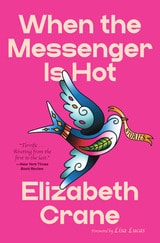
When the Messenger Is Hot
StoriesElizabeth Crane, foreword by Lisa Lucas
Northwestern University Press, 2026
A beloved, smart, and bold story collection surges back to life in a new print edition
Hailed as “revolutionary fiction,” When the Messenger Is Hot gleefully upends the short-story form, rendering the absurdities and possibilities of modern urban life with disarming humor and keen perception as Crane weaves through grief and womanhood. The women in Elizabeth Crane’s world are fierce and kind, damaged and optimistic. They are jilted lovers, absent daughters, twelve-steppers, and smart-asses, recovering from loss, addiction, or betrayal. From a woman who decides to live on the rooftop of her friend’s apartment (why not?), to a writer whose identity is compromised by the actress who portrays her, to a daughter who believes her deceased mother is still alive and living at the bus depot, these characters experience love and loss in a way that is both profoundly universal and uniquely theirs.
Words Are Something Else
David Albahari
Northwestern University Press, 1996