Results by title
42 books match the query 'Biological diversity'
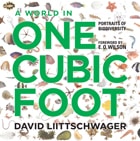
A World in One Cubic Foot
Portraits of BiodiversityDavid Liittschwager
University of Chicago Press, 2012
For A World in One Cubic Foot, esteemed nature photographer David Liittschwager took a bright green metal cube—measuring precisely one cubic foot—and set it in various ecosystems around the world, from Costa Rica to Central Park. Working with local scientists, he measured what moved through that small space in a period of twenty-four hours. He then photographed the cube’s setting and the plant, animal, and insect life inside it—anything visible to the naked eye. The result is a stunning portrait of the amazing diversity that can be found in ecosystems around the globe. Many organisms captured in Liittschwager’s photographs have rarely, if ever, been presented in their full splendor to the general reader, and the singular beauty of these images evocatively conveys the richness of life around us and the essential need for its conservation. The breathtaking images are accompanied by equally engaging essays that speak to both the landscapes and the worlds contained within them, from distinguished contributors such as Elizabeth Kolbert and Alan Huffman, in addition to an introduction by E. O. Wilson. After encountering this book, you will never look at the tiniest sliver of your own backyard or neighborhood park the same way; instead, you will be stunned by the unexpected variety of species found in an area so small.
A World in One Cubic Foot puts the world accessibly in our hands and allows us to behold the magic of an ecosystem in miniature. Liittschwager’s awe-inspiring photographs take us to places both familiar and exotic and instill new awareness of the life that abounds all around.
Bacula of North American Mammals
William Henry Burt
University of Michigan Press, 1960
Battle Against Extinction
Native Fish Management in the American WestEdited by W. L. Minckley and James E. Deacon; Foreword by Stewart L. Udall
University of Arizona Press, 1991
Nearly a third of the native fish fauna of North America lives in the arid West; this book traces their decline toward extinction as a result of human interference and the threat to their genetic diversity posed by decreases in their populations. What can be done to slow or end this tragedy? As the most comprehensive treatment ever attempted on the subject, Battle Against Extinction shows how conservation efforts have been or can be used to reverse these trends.
In covering fishes in arid lands west of the Mississippi Valley, the contributors provide a species-by-species appraisal of their status and potential for recovery, bringing together in one volume nearly all of the scattered literature on western fishes to produce a monumental work in conservation biology. They also ponder ethical considerations related to the issue, ask why conservation efforts have not proceeded at a proper pace, and suggest how native fish protection relates to other aspects of biodiversity planetwide. Their insights will allow scientific and public agencies to evaluate future management of these animal populations and will offer additional guidance for those active in water rights and conservation biology.
First published in 1991, Battle Against Extinction is now back in print and available as an open-access e-book thanks to the Desert Fishes Council.

Battle Against Extinction
Native Fish Management in the American WestEdited by W. L. Minckley and James E. Deacon; Foreword by Stewart L. Udall
University of Arizona Press, 1991
Nearly a third of the native fish fauna of North America lives in the arid West; this book traces their decline toward extinction as a result of human interference and the threat to their genetic diversity posed by decreases in their populations. What can be done to slow or end this tragedy? As the most comprehensive treatment ever attempted on the subject, Battle Against Extinction shows how conservation efforts have been or can be used to reverse these trends.
In covering fishes in arid lands west of the Mississippi Valley, the contributors provide a species-by-species appraisal of their status and potential for recovery, bringing together in one volume nearly all of the scattered literature on western fishes to produce a monumental work in conservation biology. They also ponder ethical considerations related to the issue, ask why conservation efforts have not proceeded at a proper pace, and suggest how native fish protection relates to other aspects of biodiversity planetwide. Their insights will allow scientific and public agencies to evaluate future management of these animal populations and will offer additional guidance for those active in water rights and conservation biology.
Biogeography of Reptiles and Amphibians in the Gomez Farias Region, Tamaulipas, Mexico
Paul S. Martin
University of Michigan Press, 1958
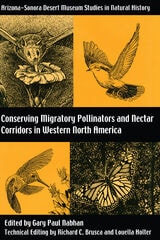
Conserving Migratory Pollinators and Nectar Corridors in Western North America
Gary Paul Nabhan
University of Arizona Press, 2004
This book, a unique work of comparative zoogeography and conservation biology, is the first to bring together studies of these important migratory pollinators and of what we must do to conserve them. It considers the similarities and differences among the behavior and habitat requirements of several species of migratory pollinators and seed dispersers in the West—primarily rufous hummingbirds, white-winged doves, lesser long-nosed bats, and monarch butterflies. It examines the population dynamics of these four species in flyways that extend from the Pacific Ocean to the continental backbone of the Sierra Madre Oriental and Rocky Mountains, and it investigates their foraging and roosting behaviors as they journey from the Tropic of Cancer in western Mexico into the deserts, grasslands, and thornscrub of the U.S.-Mexico borderlands. The four pollinators whose journeys are traced here differ dramatically from one another in foraging strategies and stopover fidelities, but all challenge many of the truisms that have emerged regarding the status of migratory species in general. The rufous hummingbird makes the longest known avian migration in relation to body size and is a key to identifying nectar corridors running through northwestern Mexico to the United States. And there is new evidence to challenge the long-supposed separation of eastern and western monarch butterfly populations by the Rocky Mountains as these insects migrate.
Conserving Migratory Pollinators and Nectar Corridors in Western North America demonstrates new efforts to understand migratory species and to determine whether their densities, survival rates, and health are changing in response to changes in the distribution and abundance of nectar plants found within their ranges. Representing collaborative efforts that bridge field ecology and conservation biology in both theory and practice, it is dedicated to safeguarding dynamic interactions among plants and pollinators that are only now being identified.

Foundations of Macroecology
Classic Papers with CommentariesEdited by Felisa A. Smith, John L. Gittleman, and James H. Brown
University of Chicago Press, 2014
Foundations of Macroecology charts the evolutionary trajectory of these concepts—from the species-area relationship and the latitudinal gradient of species richness to the relationship between body size and metabolic rate—through forty-six landmark papers originally published between 1920 and 1998. Divided into two parts—“Macroecology before Macroecology” and “Dimensions of Macroecology”—the collection also takes the long view, with each paper accompanied by an original commentary from a contemporary expert in the field that places it in a broader context and explains its foundational role. Providing a solid, coherent assessment of the history, current state, and potential future of the field, Foundations of Macroecology will be an essential text for students and teachers of ecology alike.
Fragile Web
What Next for Nature?Edited by Jonathan Silvertown
University of Chicago Press, 2010
Biodiversity is as close as your breakfast table. Your cereal and coffee are the products of at least a dozen species of plants and animals. And believe it or not, you are related to your morning meal—all life on earth is descended from a common ancestor, giving new meaning to the old saying “You are what you eat.”
Making clear why the future of biodiversity matters, Fragile Web—which takes its name from the delicate mechanism that holds all life together—unites a team of international experts to explore the wonder of the natural world. Drawing on the very latest research, the book explains what biodiversity is and explores its evolution, from 3.5 billion years ago to the present day. It discusses the importance of the world’s ecosystems and how directly or indirectly humans are responsible for the fate of nature. Crucially, it also examines what can be done to protect the natural world and why it matters. Although we cannot undo all that we have done, ignoring the current crisis facing biodiversity could fundamentally change the lives of future generations.
Fully illustrated with color photographs, diagrams, and maps, and edited by celebrated ecologist Jonathan Silvertown, this book is a timely snapshot of the state of life on Earth. From the plant and animal products that make up our breakfast to the ecosystems that help to produce clean water, our very survival depends upon the variety of plant and animal life on our planet. The year 2010 has been declared by the United Nations the International Year of Biodiversity, and The Fragile Web will be an essential guidebook for our time.
Heirloom Seeds and Their Keepers
Marginality and Memory in the Conservation of Biological DiversityVirginia D. Nazarea
University of Arizona Press, 2005
As scientists grapple with the erosion of genetic diversity of crops and their wild relatives, old-timey farmers and gardeners continue to save, propagate, and pass on folk varieties and heirloom seeds. Virginia Nazarea focuses on the role of these seedsavers in the perpetuation of diversity. She thoughtfully examines the framework of scientific conservation and argues for the merits of everyday conservation—one that is beyond programmatic design. Whether considering small-scale rice and sweet potato farmers in the Philippines or participants in the Southern Seed Legacy and Introduced Germplasm from Vietnam in the American South, she explores roads not necessarily less traveled but certainly less recognized in the conservation of biodiversity.
Through characters and stories that offer a wealth of insights about human nature and society, Heirloom Seeds and Their Keepers helps readers more fully understand why biodiversity persists when there are so many pressures for it not to. The key, Nazarea explains, is in the sovereign spaces seedsavers inhabit and create, where memories counter a culture of forgetting and abandonment engendered by modernity. A book about theory as much as practice, it profiles these individuals, who march to their own beat in a world where diversity is increasingly devalued as the predictability of mass production becomes the norm.
Heirloom Seeds and Their Keepers offers a much-needed, scientifically researched perspective on the contribution of seedsaving that illustrates its critical significance to the preservation of both cultural knowledge and crop diversity around the world. It opens new conversations between anthropology and biology, and between researchers and practitioners, as it honors conservation as a way of life.
In Search of Swampland
A Wetland Sourcebook and Field GuideRalph W. Tiner
Rutgers University Press, 2005
Invasive Species in a Globalized World
Ecological, Social, and Legal Perspectives on PolicyEdited by Reuben P. Keller, Marc W. Cadotte, and Glenn Sandiford
University of Chicago Press, 2014
Yet even though ecological research has led to public conversation and policy recommendations, those recommendations have frequently been ignored, and the efforts to counter invasive species have been largely unsuccessful. Recognizing the need to engage experts across the life, social, and legal sciences as well as the humanities, the editors of this volume have drawn together a wide variety of ecologists, historians, economists, legal scholars, policy makers, and communications scholars, to facilitate a dialogue among these disciplines and understand fully the invasive species phenomenon. Aided by case studies of well-known invasives such as the cane toad of Australia and the emerald ash borer, Asian carp, and sea lampreys that threaten US ecosystems, Invasive Species in a Globalized World offers strategies for developing and implementing anti-invasive policies designed to stop their introduction and spread, and to limit their effects.
Inventing Global Ecology
Tracking the Biodiversity Ideal in India, 1947–1997Michael L. Lewis
Ohio University Press, 2004
Blue jeans, MTV, Coca-Cola, and… ecology? We don't often think of conservation sciences as a U.S. export, but in the second half of the twentieth century an astounding array of scientists and ideas flowed out from the United States into the world, preaching the gospel of conservation-oriented ecology.
Inventing Global Ecology grapples with how we should understand the development of global ecology in the twentieth century—a science that is held responsible for, literally, saving the world. Is the spread of ecology throughout the globe a subtle form of cultural imperialism, as some claim? Or is it a manifestation of an increasingly globalized world, where ideas, people, and things move about with greater freedom than ever before?
Using India as the case study, Professor Michael Lewis considers the development of conservation policies and conservation sciences since the end of World War II and the role of United States scientists, ideas, and institutions in this process. Was India subject to a subtle form of Americanization, or did Indian ecologists develop their own agenda, their own science, and their own way of understanding (and saving) the natural world? Does nationality even matter when doing ecology?
This readable narrative will carry you through the first fifty years of independent India, from the meadows of the Himalayan Mountains to the rainforests of southern India, from Gandhi and Nehru to Project Tiger. Of equal interest to the general reader, to scientists, and to scholars of history and globalization, Inventing Global Ecology combines ethnographic fieldwork and oral history conducted in India and the United States, as well as traditional archival research.
Keepers of the Wolves
Richard P. Thiel
University of Wisconsin Press, 2018
This new edition brings Thiel's story into the twenty-first century, recounting his work monitoring wolves as they spread to central Wisconsin, conflicts of wolves with landowners and recreationalists, changes in state and federal policies, the establishment of a state wolf-hunting season in 2012, and Thiel's forecast for the future of wolves in Wisconsin.
Les aires protégées terrestres de Madagascar
leur histoire, description et biota, tome 1: IntroductionEdited by Steven M. Goodman, Marie Jeanne Raherilalao, and Sébastien Wohlhauser
Association Vahatra, 2020
The purpose of the French-language Les aires protégées terrestres de Madagascar is to present a large-scale update of information available from 98 terrestrial protected areas, various analyses to understand general trends in the conservation of these sites, and a synthesis to assess the needs for future scientific programs. Beautifully illustrated throughout with color maps, graphs, and photos, these three volumes will be an important reference for students, researchers, protected area managers, conservationists, and visiting ecotourists. Volume one provides a comprehensive introduction.
Les aires protégées terrestres de Madagascar
leur histoire, description et biota, tome 2: Le Nord et l'Est de MadagascarEdited by Steven M. Goodman, Marie Jeanne Raherilalao, and Sébastien Wohlhauser
Association Vahatra, 2020
The purpose of the French-language Les aires protégées terrestres de Madagascar is to present a large-scale update of information available from 98 terrestrial protected areas, various analyses to understand general trends in the conservation of these sites, and a synthesis to assess the needs for future scientific programs. Beautifully illustrated throughout with color maps, graphs, and photos, these three volumes will be an important reference for students, researchers, protected area managers, conservationists, and visiting ecotourists. Volume two covers northern and eastern Madagascar.
Les aires protégées terrestres de Madagascar
leur histoire, description et biota, tome 3: L'Ouest et le Sud de Madagascar - SynthèseEdited by Steven M. Goodman, Marie Jeanne Raherilalao, and Sébastien Wohlhauser
Association Vahatra, 2020
The purpose of the French-language Les aires protégées terrestres de Madagascar is to present a large-scale update of information available from 98 terrestrial protected areas, various analyses to understand general trends in the conservation of these sites, and a synthesis to assess the needs for future scientific programs. Beautifully illustrated throughout with color maps, graphs, and photos, these three volumes will be an important reference for students, researchers, protected area managers, conservationists, and visiting ecotourists. Volume three covers western and southwestern Madagascar, as well as provides a valuable synthesis.
Nonadaptive Selection
An Evolutionary Source of Ecological LawsJohn Damuth and Lev R. Ginzburg
University of Chicago Press, 2025
In this important treatise, ecologists and evolutionary biologists John Damuth and Lev R. Ginzburg identify a specific evolutionary process in biology, which they call nonadaptive selection. The idea is simple, but the implications are profound. Nonadaptive selection, as they use the term, is selection among biological entities (as is natural selection) but is based on the fitness effects of structural properties intrinsic to the entities under selection rather than on interactions between traits and a local shared environment. In other words, features of systems that evolve by nonadaptive selection do not adapt to local environmental conditions; rather, this selective process increases the long-term stability of the focal systems independent of local conditions.
Nonadaptive selection may be of particular value in explaining broad, persistent patterns in multispecies biological units where adaptive evolution may be weak or poorly defined. Examples include Damuth’s Law, the equivalence of energy use among animal species across a wide range of body sizes; the ratio-dependent, or Arditi-Ginzburg, predation conjecture; the consistency of allometric scaling powers; the shortness of trophic chains; and the prevalence of certain types of three-species trophic structures across ecosystems. Damuth and Ginzburg see nonadaptive selection underlying patterns of ecological allometries, community structure, and species interactions, with some implications for macroevolution. Moreover, they find a surprising relationship between these nonadaptive processes and biological laws. They do not advocate the reorientation of any existing research programs but present nonadaptive selection as an additional conceptual framework that may be useful to add to ecology and evolution.
Out of Nature
Why Drugs from Plants Matter to the Future of HumanityKara Rogers
University of Arizona Press, 2012
About half of all species under threat of extinction in the world today are plants. The loss of plant biodiversity is disturbing for many reasons, but especially because it is a reflection of the growing disconnect between humans and nature. Plants have been used for millennia in traditional systems of healing and have held a significant place in drug development for Western medicine as well. Despite the recent dominance of synthetic drug production, natural product discovery remains the backbone of drug development. As the diversity of life on Earth is depleted and increasing numbers of species become lost to extinction, we continue to lose opportunities to achieve advances in medicine.
Through stories of drug revelation in nature and forays into botany, human behavior, and conservation, Kara Rogers sheds light on the multiple ways in which humans, medicine, and plants are interconnected. With accessible and engaging writing, she explores the relationships between humans and plants, relating the stories of plant hunters of centuries past and examining the impact of human activities on the environment and the world's biodiversity. Rogers also highlights the role that plant-based products can play in encouraging conservation and protecting the heritage and knowledge of indigenous peoples.
Out of Nature provides a fresh perspective on modern drug innovation and its relationship with nature. The book delves into the complexity of biophilia—the innate human attraction to life in the natural world—and suggests that the reawakening of this drive is fundamental to expanding conservation efforts and improving medicine. Rogers's examination of plants, humans, and drug discovery also conveys a passionate optimism for the future of biodiversity and medicine. Including a collection of hand-drawn maps and plant illustrations created by the author, this well-researched narrative will inspire as well as inform.
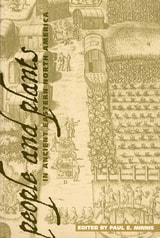
People and Plants in Ancient Eastern North America
Edited by Paul E. Minnis
University of Arizona Press, 2003
The most comprehensive overview in more than half a century about the interconnectedness of prehistoric Native Americans and their botanical world, this book and its forthcoming companion volume, People and Plants in Ancient Western North America, present the latest information on three major topics: the use of native plants, the history of crops and their uses, and how humans affected their environment. In this volume, expert scholars summarize the prehistoric ethnobotany of four regions: the Eastern Woodlands (W. Cowan, K. Gremillion, M. Scarry, B. Smith, and G. Wagner), Northeast (G. Crawford and D. Smith), Plains (M. Adair), and Caribbean (L. Newsom and D. Pearsall).
This volume contributes significantly to our understanding of the lives of prehistoric people as well as the forces that influenced their communities, their ingenuity, and their ecological impact. It also serves as a guide for designing environmentally sustainable lives today.
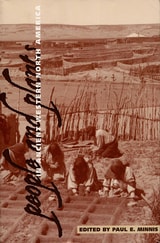
People and Plants in Ancient Western North America
Edited by Paul E. Minnis
University of Arizona Press, 2004
The most comprehensive overview in more than half a century on the interconnectedness of people and plants, this book and its companion volume, People and Plants in Ancient Eastern North America, present the latest information on three major topics: the uses of native plants, the history of crops and their uses, and the impact of humans on their environment. They not only contribute to our understanding of the lives of prehistoric people but also serve as guides for designing sustainable living today.
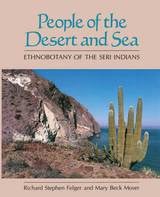
People of the Desert and Sea
Ethnobotany of the Seri IndiansRichard Stephen Felger, Mary Beck Moser
University of Arizona Press, 1985
"To read and gaze through this elegantly illustrated book is to be exposed, as if through a work of science fiction, to an astonishing and unknown cultural world."—North Dakota Quarterly
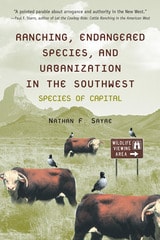
Ranching, Endangered Species, and Urbanization in the Southwest
Species of CapitalNathan F. Sayre
University of Arizona Press, 2002
Nathan Sayre now takes a close look at how the ranching ideal has come into play in the conversion of a large tract of Arizona rangeland from private ranch to National Wildlife Refuge. He tells how the Buenos Aires Ranch, a working operation for a hundred years, became not only a rallying point for multiple agendas in the "rangeland conflict" after its conversion to a wildlife refuge but also an expression of the larger shift from agricultural to urban economies in the Southwest since World War II.
The U.S. Fish and Wildlife Service bought the Buenos Aires Ranch in 1985, removed all livestock, and attempted to restore the land to its "original" grassland in order to protect an endangered species, the masked bobwhite quail. Sayre examines the history of the ranch and the bobwhite together, exploring the interplay of social, economic, and ecological issues to show how ranchers and their cattle altered the land—for better or worse—during a century of ranching and how the masked bobwhite became a symbol for environmentalists who believe that the removal of cattle benefits rangelands and wildlife.
Sayre evaluates both sides of the Buenos Aires controversy—from ranching's impact on the environment to environmentalism's sometimes misguided efforts at restoration—to address the complex and contradictory roles of ranching, endangered species conservation, and urbanization in the social and environmental transformation of the West. He focuses on three dimensions of the Buenos Aires story: the land and its inhabitants, both human and animal; the role of government agencies in shaping range and wildlife management; and the various species of capital—economic, symbolic, and bureaucratic—that have structured the activities of ranchers, environmentalists, and government officials.
The creation of the Buenos Aires National Wildlife Refuge has been a symbolic victory for environmentalists, but it comes at the cost of implicitly legitimizing the ongoing fragmentation and suburbanization of Arizona's still-wild rangelands. Sayre reveals how the polarized politics of "the rangeland conflict" have bound the Fish and Wildlife Service to a narrow, ineffectual management strategy on the Buenos Aires, with greater attention paid to increasing tourism from birdwatchers than to the complex challenge of restoring the masked bobwhite and its habitat. His findings show that the urban boom of the late twentieth century echoed the cattle boom of a century before—capitalizing on land rather than grass, humans rather than cattle—in a book that will serve as a model for restoration efforts in any environment.

Serengeti II
Dynamics, Management, and Conservation of an EcosystemEdited by A. R. E. Sinclair and Peter Arcese
University of Chicago Press, 1995
Building on the groundwork laid by the classic Serengeti: Dynamics of an Ecosystem, published in 1979 by the University of Chicago Press, this new book integrates studies of the ecosystem at every level—from the plants at the bottom of the visible food chain, to the many species of herbivores and predators, to the system as a whole. Drawing on new data from many long-term studies and from more recent research initiatives, and applying new theory and computer technology, the contributors examine the large-scale processes that have produced the Serengeti's extraordinary biological diversity, as well as the interactions among species and between plants and animals and their environment. They also introduce computer modeling as a tool for exploring these interactions, employing this new technology to test and anticipate the effects of social, political, and economic changes on the entire ecosystem and on particular species, and so to shape future conservation and management strategies.

Serengeti III
Human Impacts on Ecosystem DynamicsEdited by A. R. E. Sinclair, Craig Packer, Simon A. R. Mduma, and John M. Fryxel
University of Chicago Press, 2008

Serengeti IV
Sustaining Biodiversity in a Coupled Human-Natural SystemEdited by Anthony R. E. Sinclair, Kristine L. Metzger, Simon A. R. Mduma, and John M. Fryxell
University of Chicago Press, 2015
Serengeti IV, the latest installment in a long-standing series on the region’s ecology and biodiversity, explores the role of our species as a source of both discord and balance in Serengeti ecosystem dynamics. Through chapters charting the complexities of infectious disease transmission across populations, agricultural expansion, and the many challenges of managing this ecosystem today, this book shows how the people and landscapes surrounding crucial protected areas like Serengeti National Park can and must contribute to Serengeti conservation. In order to succeed, conservation efforts must also focus on the welfare of indigenous peoples, allowing them both to sustain their agricultural practices and to benefit from the natural resources provided by protected areas—an undertaking that will require the strengthening of government and education systems and, as such, will present one of the greatest conservation challenges of the next century.

Serengeti
Dynamics of an EcosystemEdited by A. R. E. Sinclair and M. Norton-Griffiths
University of Chicago Press, 1979

Shattering
Food, Politics, and the Loss of Genetic DiversityCary Fowler and Pat Mooney
University of Arizona Press, 1990
Large-scale agriculture has come to favor uniformity in food crops. More than 7,000 U.S. apple varieties once grew in American orchards; 6,000 of them are no longer available. Every broccoli variety offered through seed catalogs in 1900 has now disappeared. As the international genetics supply industry absorbs seed companies—with nearly one thousand takeovers since 1970—this trend toward uniformity seems likely to continue; and as third world agriculture is brought in line with international business interests, the gene pools of humanity's most basic foods are threatened.
The consequences are more than culinary. Without the genetic diversity from which farmers traditionally breed for resistance to diseases, crops are more susceptible to the spread of pestilence. Tragedies like the Irish Potato Famine may be thought of today as ancient history; yet the U.S. corn blight of 1970 shows that technologically based agribusiness is a breeding ground for disaster.
Shattering reviews the development of genetic diversity over 10,000 years of human agriculture, then exposes its loss in our lifetime at the hands of political and economic forces. The possibility of crisis is real; this book shows that it may not be too late to avert it.
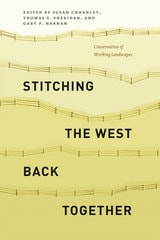
Stitching the West Back Together
Conservation of Working LandscapesEdited by Susan Charnley, Thomas E. Sheridan, and Gary P. Nabhan
University of Chicago Press, 2014
Featuring contributions from an impressive array of scientists, conservationists, scholars, ranchers, and foresters, Stitching the West Back Together explores that expanded, inclusive vision of environmentalism as it delves into the history and evolution of Western land use policy and of the working landscapes themselves. Chapters include detailed case studies of efforts to promote both environmental and economic sustainability, with lessons learned; descriptions of emerging institutional frameworks for conserving Western working landscapes; and implications for best practices and policies crucial to the future of the West’s working forests and rangelands. As economic and demographic forces threaten these lands with fragmentation and destruction, this book encourages a hopeful balance between production and conservation on the large, interconnected landscapes required for maintaining cultural and biological diversity over the longterm.
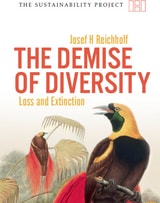
The Demise of Diversity
Loss and ExtinctionJosef Reichholf
Haus Publishing, 2009
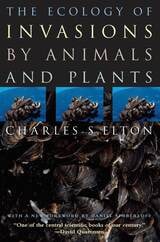
The Ecology of Invasions by Animals and Plants
Charles S. Elton
University of Chicago Press, 2000
Much as Rachel Carson's Silent Spring was a call to action against the pesticides that were devastating bird populations, Charles S. Elton's classic The Ecology of Invasions by Animals and Plants sounded an early warning about an environmental catastrophe that has become all too familiar today—the invasion of nonnative species. From kudzu to zebra mussels to Asian long-horned beetles, nonnative species are colonizing new habitats around the world at an alarming rate thanks to accidental and intentional human intervention. One of the leading causes of extinctions of native animals and plants, invasive species also wreak severe economic havoc, causing $79 billion worth of damage in the United States alone.
Elton explains the devastating effects that invasive species can have on local ecosystems in clear, concise language and with numerous examples. The first book on invasion biology, and still the most cited, Elton's masterpiece provides an accessible, engaging introduction to one of the most important environmental crises of our time.

The Expendable Future
US Politics and the Protection of Biological DiversityRichard Tobin
Duke University Press, 1990
Drawing on congressional hearing and debates, previously unpublished public opinion surveys, interviews with state officials and employees of the Department of the Interior, and internal documents from this and other government agencies, Tobin provides an in-depth analysis of the policies on endangered species and the policy relationships among the different units of government involved in implementation. He examines the resources that are available for the protection of endangered species and the way in which those resources are matched to the priorities. Tobin also discusses the processes by which species are classified as endangered, how these species’ critical habitats are determined and protected, and the successes, and mostly failures, of current recovery programs.
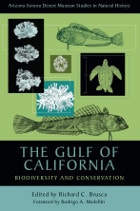
The Gulf of California
Biodiversity and ConservationRichard C. Brusca
University of Arizona Press, 2010
Few places in the world can claim such a diversity of species as the Gulf of California (Sea of Cortez), with its 6,000 recorded animal species estimated to be half the number actually living in its waters. So rich are the Gulf's water that over a half-million tons of seafood are taken from them annually—and this figure does not count the wasted by-catch, which would triple or quadruple that tonnage. This timely book provides a benchmark for understanding the Gulf's extraordinary diversity, how it is threatened, and in what ways it is—or should be—protected.
In spite of its dazzling richness, most of the Gulf's coastline now harbors but a pale shadow of the diversity that existed just a half-century ago. Recommendations based on sound, careful science must guide Mexico in moving forward to protect the Gulf of California.
This edited volume contains contributions by twenty-four Gulf of California experts, from both sides of the U.S.-Mexico border. From the origins of the Gulf to its physical and chemical characteristics, from urgently needed conservation alternatives for fisheries and the entire Gulf ecosystem to information about its invertebrates, fishes, cetaceans, and sea turtles, this thought-provoking book provides new insights and clear paths to achieve sustainable use solidly based on robust science. The interdisciplinary, international cooperation involved in creating this much-needed collection provides a model for achieving success in answering critically important questions about a precious but rapidly disappearing ecological treasure.
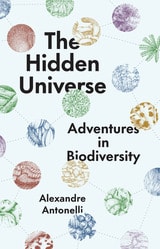
The Hidden Universe
Adventures in BiodiversityAlexandre Antonelli
University of Chicago Press, 2022
We are now living in an environmental emergency. As climate change, habitat loss, and other threats have placed almost one-fifth of all species on Earth at risk of extinction in the coming decades, a deeper understanding of biodiversity has never been more important. Biodiversity encompasses the rich variety of all life on Earth—the building blocks of life that provide invaluable sources of food, medicine, clothing, building materials, and more.
Marking the arrival of a bold new voice in popular science, The Hidden Universe shows readers what’s at stake in the fight to protect and restore biodiversity, but also what can and should be done now to protect our planet and ourselves for the future. As director of science at one of the world’s largest research organizations in plant and fungal sciences, Brazilian-born scientist Alexandre Antonelli is ideally suited to reveal the wonders of biodiversity at a genetic, species, and ecosystem level—what biodiversity is, how it works, and why it is the most important tool in our battle against climate change. Antonelli offers recommendations for large-scale political changes, as well as smaller, practical steps that readers can implement in their own lives and homes. With Antonelli as our guide, The Hidden Universe helps us imagine a future where biodiversity is not just preserved but cherished.
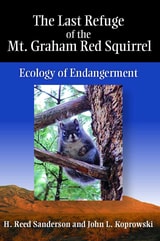
The Last Refuge of the Mt. Graham Red Squirrel
Ecology of EndangermentH. Reed Sanderson and John L. Koprowski
University of Arizona Press, 2009
This book is derived from a symposium on the Mt. Graham red squirrel and offers a comprehensive picture of the ecology of this red squirrel and the impacts on its mountain home. Forty contributors detail studies conducted to understand the natural history of the creature and the challenges and changing ecological conditions on Mt. Graham.
Each chapter tells a unique story that contributes to the mosaic of natural history knowledge about the endangered Mt. Graham red squirrel. They reflect diverse viewpoints on the problems of conserving the habitats and populations of the squirrel, showing how it was complicated by perspectives ranging from Native Americans’ concern over traditional lands to astronomers’ hope for a better view of space, and by issues ranging from forestry practices to climate change. Studies of such factors as squirrel middens, seed hoarding, and nest sites provide definitive research on the animal.
Ongoing censuses continue to track the squirrel’s population trends, and both Forest Service and Arizona Department of Transportation activities continue to be scrutinized by interested parties to determine their impact. This book represents an authoritative overview of this still-endangered species and its habitat.
The Nature of Diversity
An Evolutionary Voyage of DiscoveryDaniel R. Brooks and Deborah A. McLennan
University of Chicago Press, 2002
Daniel R. Brooks and Deborah A. McLennan argue that it is impossible to comprehend the nature of life on earth unless evolution—the history of organisms—is restored to a central position in research. They demonstrate how the phylogenetic approach can be integrated with ecological and behavioral studies to produce a richer and more complete picture of evolution. Clearly setting out the conceptual, methodological, and empirical foundations of their research program, Brooks and McLennan show how scientists can use it to unravel the evolutionary history of virtually any characteristic of any living thing, from behaviors to ecosystems. They illustrate and test their approach with examples drawn from a wide variety of species and habitats.
The Nature of Diversity provides a powerful new tool for understanding, documenting, and preserving the world's biodiversity. It is an essential book for biologists working in evolution, ecology, behavior, conservation, and systematics. The argument in The Nature of Diversity greatly expands upon and refines the arguments made in the authors' previous book Phylogeny, Ecology, and Behavior.
The Terrestrial Protected Areas of Madagascar
Their History, Description, and BiotaEdited by Steven M. Goodman, Marie Jeanne Raherilalao, and Sébastien Wohlhause
Association Vahatra, 2018
The purpose of The Terrestrial Protected Areas of Madagascar is to present a large-scale update of information available from 98 terrestrial protected areas, various analyses to understand general trends in the conservation of these sites, and a synthesis to assess the needs for future scientific programs. Beautifully illustrated throughout with color maps, graphs, and photos, these three volumes will be an important reference for students, researchers, protected area managers, conservationists, and visiting ecotourists. Volume one provides a comprehensive introduction.
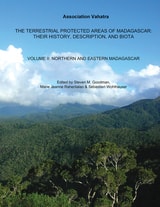
The Terrestrial Protected Areas of Madagascar
Their History, Description, and Biota, Volume 2: Northern and eastern MadagascarEdited by Steven M. Goodman, Marie Jeanne Raherilalao, and Sébastien Wohlhauser
Association Vahatra, 2020
The purpose of The Terrestrial Protected Areas of Madagascar is to present a large-scale update of information available from 98 terrestrial protected areas, various analyses to understand general trends in the conservation of these sites, and a synthesis to assess the needs for future scientific programs. Beautifully illustrated throughout with color maps, graphs, and photos, these three volumes will be an important reference for students, researchers, protected area managers, conservationists, and visiting ecotourists. Volume two covers northern and eastern Madagascar.
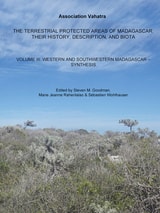
The Terrestrial Protected Areas of Madagascar
Their History, Description, and Biota, Volume 3: Western and southwestern Madagascar - SynthesisEdited by Steven M. Goodman, Marie Jeanne Raherilalao, and Sébastien Wohlhauser
Association Vahatra, 2020
The purpose of The Terrestrial Protected Areas of Madagascar is to present a large-scale update of information available from 98 terrestrial protected areas, various analyses to understand general trends in the conservation of these sites, and a synthesis to assess the needs for future scientific programs. Beautifully illustrated throughout with color maps, graphs, and photos, these three volumes will be an important reference for students, researchers, protected area managers, conservationists, and visiting ecotourists. Volume three covers western and southwestern Madagascar, as well as provides a valuable synthesis.
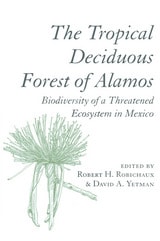
The Tropical Deciduous Forest of Alamos
Biodiversity of a Threatened Ecosystem in MexicoEdited by Robert H. Robichaux and David A. Yetman
University of Arizona Press, 2000
Only a day's drive south of the U.S.-Mexico border, a tropical deciduous forest opens up a world of exotic trees and birds that most people associate with tropical forests of more southerly latitudes. Like many such forests around the world, this diverse ecosystem is highly threatened, especially by large-scale agricultural interests that are razing it in order to plant grass for cattle.
This book introduces the tropical deciduous forest of the Alamos region of Sonora, describing its biodiversity and the current threats to its existence. The book's contributors present the most up-to-date scientific knowledge of this threatened ecosystem. They review the natural history and ecology of its flora and fauna and explore how native peoples use the forest's many resources.
Included in the book's coverage is a comprehensive plant list for the Río Cuchujaqui area that well illustrates the diversity of the forest. Other contributions examine tree species used by Mayo Indians and the numerous varieties of domesticated plants that have been developed over the centuries by the Mayos and other indigenous peoples. Also examined are the diversity and distribution of reptiles, amphibians, mammals, and birds in the region.
The Tropical Deciduous Forest of Alamos provides critical information about a globally important biome. It complements other studies of similar forests and allows a better understanding of a diverse but vanishing ecosystem.
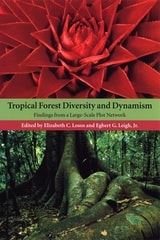
Tropical Forest Diversity and Dynamism
Findings from a Large-Scale Plot NetworkEdited by Elizabeth Losos and Egbert Giles Leigh Jr.
University of Chicago Press, 2004
Written by experts in the field of tropical ecology, Tropical Forest Diversity and Dynamism will appeal to students and professionals with an interest in community ecology and patterns of diversity.
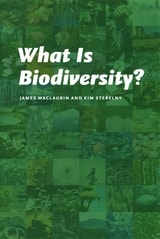
What Is Biodiversity?
James Maclaurin and Kim Sterelny
University of Chicago Press, 2008
Here, Maclaurin and Sterelny explore not only the origins of the concept of biodiversity, but also how that concept has been shaped by ecology and more recently by conservation biology. They explain the different types of biodiversity important in evolutionary theory, developmental biology, ecology, morphology and taxonomy and conclude that biological heritage is rich in not just one biodiversity but many. Maclaurin and Sterelny also explore the case for the conservation of these biodiversities using option value theory, a tool borrowed from economics.
An erudite, provocative, timely, and creative attempt to answer a fundamental question, What Is Biodiversity? will become a foundational text in the life sciences and studies thereof.
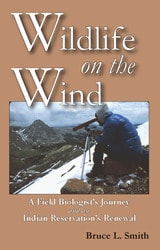
Wildlife on the Wind
A Field Biologist's Journey and an Indian Reservation's RenewalBruce L Smith
Utah State University Press, 2010
In the heart of Wyoming sprawls the ancient homeland of the Eastern Shoshone Indians, who were forced by the U.S. government to share a reservation in the Wind River basin and flanking mountain ranges with their historical enemy, the Northern Arapahos. Both tribes lost their sovereign, wide-ranging ways of life and economic dependence on decimated buffalo. Tribal members subsisted on increasingly depleted numbers of other big game—deer, elk, moose, pronghorn, and bighorn sheep. In 1978, the tribal councils petitioned the U.S. Fish and Wildlife Service to help them recover their wildlife heritage. Bruce Smith became the first wildlife biologist to work on the reservation. Wildlife on the Wind recounts how he helped Native Americans change the course of conservation for some of America's most charismatic wildlife.