Results by title
26 books match the query 'Biotic communities'
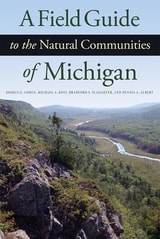
A Field Guide to the Natural Communities of Michigan
Joshua G. Cohen
Michigan State University Press, 2014
The culmination of three decades of work by Michigan Natural Features Inventory ecologists, this essential guidebook to the natural communities of Michigan introduces the diverse terrain of a unique state. Small enough to carry in a backpack, this field guide provides a system for dividing the complex natural landscape of Michigan into easily understood and describable components called natural communities. Providing a new way to explore Michigan’s many environments, this book details natural communities ranging from patterned fen to volcanic bedrock glade and beyond. The descriptions are supplemented with distribution maps, vibrant photographs, and comprehensive lists of characteristic plant species. The authors suggest places to visit to further study each type of natural community and provide a comprehensive glossary of ecological terms, as well as a dichotomous key for aiding field identification. An invaluable resource, this book is meant to serve as a tool for those seeking to understand, describe, document, conserve, and restore the diversity of natural communities native to Michigan.
A Resonant Ecology
Max Ritts
Duke University Press, 2024
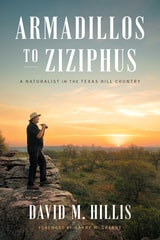
Armadillos to Ziziphus
A Naturalist in the Texas Hill CountryDavid M. Hillis, foreword by Harry W. Greene
University of Texas Press, 2023
A collection of essays on the ecology, biodiversity, and restoration of the Texas Hill Country.
For most of five decades, evolutionary biologist David Hillis has studied the biodiversity of the Texas Hill Country. Since the 1990s, he has worked to restore the natural beauty and diversity of his Mason County ranch, the Double Helix. In his excursions around his ranch and across the Edwards Plateau, Hillis came to realize how little most people know about the plants and animals around them or their importance to our everyday lives. He began thinking about how natural history is connected to our enjoyment of life, especially in a place as beautiful and beloved as the Hill Country, which, not coincidentally, happens to be one of the most biodiverse parts of Texas.
Featuring short nontechnical essays accompanied by vivid color photos, Armadillos to Ziziphus is a charming and casual introduction to the environment of the region. Whether walking the pasture with his Longhorn cattle, explaining the ecological significance of microscopic organisms in springtime mud puddles, or marveling at the local Ziziphus (aka Lotebush, a spiny shrub), Hillis guides first-time visitors and long-term residents alike in an appreciation for the Hill Country’s natural beauty and diversity.
Biophysical Models and Applications in Ecosystem Analysis
Chen, Jiquan
Michigan State University Press, 2021
Biotic Communities
Southwestern United States and Northwestern MexicoDavid E. Brown
University of Utah Press, 1994
Biotic Communities catalogs and defines by biome, or biotic community, the region centered on Arizona, New Mexico, Sonora, Chihuahua, and Baja California Norte, plus California, Nevada, Utah, Colorado, Texas, Coahuila, Sinaloa, and Baja California Sur. Originally published in 1982 by the Boyce Thompson Southwestern Arboretum, this ambitious book is still a "must-have" for those working in natural resources management and ecological research, as well as non-specialists who wish to know more about a particular locale.
Biotic Communities is arranged by climatic formation with a short chapter for each biome describing climate, physiognomy, distribution, dominant and common plant species, and characteristic vertebrates. Subsequent chapters contain careful descriptions of zonal subdivisions. The text is supplemented with over one hundred black and white photographs illustrating almost every community type.

Borne of the Wind
Michigan Sand DunesDennis A. Albert
University of Michigan Press, 2006
Borne of the Wind describes the environmental factors necessary for dune creation in an easy-to-understand format, introducing readers to the rich ecology of Michigan's dunes. Each of the distinct types of dunes encountered along the Great Lakes shoreline is explained and illustrated with color photographs and line drawings, while color photographs of the plants and animals found in duneland areas complement the story of these fragile, ever-changing landscapes.
For scholars and enthusiasts alike, Borne of the Wind provides a comprehensive and colorful introduction to one of our finest yet least-understood natural features.

Coastal Ecosystems and Economic Strategies at Cerro Azul, Peru
The Study of a Late Intermediate KingdomEdited by Joyce Marcus
University of Michigan Press, 2016
Dinosaurs and Other Ancient Animals of Big Bend
Cindi Sirois Collins and Asher Elbein
University of Texas Press, 2023
A time-traveling field guide to the ancient version of Big Bend National Park.
The sheer beauty of Big Bend National Park, along the shores of the Rio Grande in west Texas, never fails to astonish. Yet what lies beneath this natural treasure may be even more extraordinary than what meets the eye. Hidden in the rocks of Big Bend are the remains of giants: toothy sea lizards, enormous flying reptiles, and dinosaurs.
Dinosaurs and Other Ancient Animals of Big Bend is a field guide to what once was. Inspired by the latest research, Cindi Sirois Collins and Asher Elbein imagine what it was like to walk among the plants and animals whose fossil remains tell the story of evolution and geological transformation in this singular landscape. We glimpse the drama of Big Bend’s rugged landscape in creation—the desert’s emergence from retreating oceans and volcanic eruptions. Immersive vignettes introduce dinosaurs, giant fish, and saber-toothed cats. And the history of discovery in the park proves a gripping tale, as paleontologists sifted major scientific insights from the soils, rocks, and riverbeds. Complete with vivid illustrations, this is a wholly original sensory and narrative experience that will deepen any reader’s knowledge and sense of wonder.

Ecological and General Systems
An Introduction to Systems Ecology, Revised EditionHoward T. Odum
University Press of Colorado, 1994
First published as Systems Ecology in 1983, Ecological and General Systems proposes principles of self-organization and the designs that prevail by maximizing power and efficiency. Comparisons to fifty other systems languages are provided. Innovative presentations are given on earth homeostasis (Gaia); the inadequacy of presenting equations without network relationships and energy constraints; the alternative interpretation of high entropy complexity as adaptive structure; basic equations of ecological economics; and the energy basis of scientific hierarchy.
Part I introduces energetics, hierarchy, and systems modeling. Part II features design elements: intersections, autocatalytic modules, loops, series, parallel elements, and webs. Part III includes embodied energy, spectra of energy quality, temperature, complexity, spatial distribution, and diversity. Part IV discusses production, consumption, ecosystems, succession, economic systems, anthropological models, urban and regional models, global biogeochemistry, and the universe.
Ecology and the Environment
A Look at Ecosystems of the WorldAmy L. Tickle
University of Michigan Press, 1996
Ethnoecology
Situated Knowledge/Located LivesVirginia D. Nazarea
University of Arizona Press, 1999
1. Introduction. A View from a Point: Ethnoecology as Situated Knowledge, Virginia D. Nazarea
2. The Value of Subsistence for the Future of the World, Eugene S. Hunn
3. Practical and Religious Meanings of the Navajo Hogan, Lillie Lane
4. The Agronomy of Memory and the Memory of Agronomy: Ritual Conservation of Archaic Cultigens in Contemporary Farming Systems, Michael R. Dove
5. Ethnoecology Serving the Community: A Case Study from Zuni Pueblo, New Mexico, Richard I. Ford
6. Lenses and Latitudes in Landscapes and Lifescapes, Virginia D. Nazarea
7. Cultural Landscapes and Biodiversity: The Ethnoecology of an Upper R¡o Grande Watershed Commons, Devon G. Peña
8. Conserving Folk Crop Varieties: Different Agricultures, Different Goals, Daniela Soleri and Steven E. Smith
9. Plant Constituents and the Nutrition and Health of Indigenous Peoples, Timothy Johns
10. Sustainable Production and Harvest of Medicinal and Aromatic Herbs in the Sierras de C¢rdoba Region, Argentina, Marta Lagrotteria and James M. Affolter
11. Managing the Maya Commons: The Value of Local Knowledge, Scott Atran
12. Safeguarding Traditional Resource Rights of Indigenous Peoples, Darrell A. Posey
13. A Practical Primer on Intellectual Property Rights in a Contemporary Ethnoecological Context, David J. Stephenson, Jr.
14. Toward Compensation: Returning Benefits from Ethnobotanical Drug Discovery to Native Peoples, Katy Moran
15. Am I My Brother's Keeper?, Christine S. Kabuye
16. Epilogue. Quo Vadis? The Promise of Ethnoecology, Robert E. Rhoades and Jack Harlan

Food Webs
Stuart L. Pimm
University of Chicago Press, 2002
Although it was first published twenty years ago, Stuart Pimm's Food Webs remains the clearest introduction to the study of food webs. Reviewing various hypotheses in the light of theoretical and empirical evidence, Pimm shows that even the most complex food webs follow certain patterns and that those patterns are shaped by a limited number of biological processes, such as population dynamics and energy flow. Pimm provides a variety of mathematical tools for unravelling these patterns and processes, and demonstrates their application through concrete examples. For this edition, he has written a new foreword covering recent developments in the study of food webs and demonstrates their continuing importance to conservation biology.
Metacommunities
Spatial Dynamics and Ecological CommunitiesEdited by Marcel Holyoak, Mathew A. Leibold, and Robert D. Holt
University of Chicago Press, 2005
Metacommunities takes the hallmarks of metapopulation theory to the next level by considering a group of communities, each of which may contain numerous populations, connected by species interactions within communities and the movement of individuals between communities. In examining communities open to dispersal, the book unites a broad range of ecological theories, presenting some of the first empirical investigations and revealing the value of the metacommunity approach.
The collection of empirical, theoretical, and synthetic chapters in Metacommunities seeks to understand how communities work in fragmented landscapes. Encouraging community ecologists to rethink some of the leading theories of population and community dynamics, Metacommunities urges ecologists to expand the spatiotemporal scales of their research.
Modern Nature
The Rise of the Biological Perspective in GermanyLynn K. Nyhart
University of Chicago Press, 2009
In Modern Nature,Lynn K. Nyhart traces the emergence of a “biological perspective” in late nineteenth-century Germany that emphasized the dynamic relationships among organisms, and between organisms and their environment. Examining this approach to nature in light of Germany’s fraught urbanization and industrialization, as well the opportunities presented by new and reforming institutions, she argues that rapid social change drew attention to the role of social relationships and physical environments in rendering a society—and nature—whole, functional, and healthy.
This quintessentially modern view of nature, Nyhart shows, stood in stark contrast to the standard naturalist’s orientation toward classification. While this new biological perspective would eventually grow into the academic discipline of ecology, Modern Nature locates its roots outside the universities, in a vibrant realm of populist natural history inhabited by taxidermists and zookeepers, schoolteachers and museum reformers, amateur enthusiasts and nature protectionists.
Probing the populist beginnings of animal ecology in Germany, Nyhart unites the history of popular natural history with that of elite science in a new way. In doing so, she brings to light a major orientation in late nineteenth-century biology that has long been eclipsed by Darwinism.
Nature/Southwestern Colorado C*Op*
D Paulson
University Press of Colorado, 2006
Patterns in Nature
The Analysis of Species Co-OccurrencesJames G. Sanderson and Stuart L. Pimm
University of Chicago Press, 2015
Travel from island to island and the species change. Travel along any gradient—up a mountain, from forest into desert, from low tide to high tide on a shoreline —and again the species change, sometimes abruptly. What explains the patterns of these distributions? Some patterns might be as random as a coin toss. But as with a coin toss, can ecologists differentiate associations caused by a multiplicity of complex, idiosyncratic factors from those structured by some unidentified but simple mechanisms? Can simple mechanisms that structure communities be inferred from observations of which species associations naturally occur? For decades, community ecologists have debated about whether the patterns are random or show the geographically pervasive effect of competition between species. Bringing this vigorous debate up to date, this book undertakes the identification and interpretation of nature’s large-scale patterns of species co-occurrence to offer insight into how nature truly works.
Patterns in Nature explains the computing and conceptual advances that allow us to explore these issues. It forces us to reexamine assumptions about species distribution patterns and will be of vital importance to ecologists and conservationists alike.
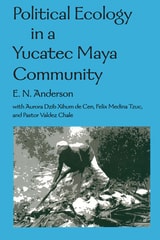
Political Ecology in a Yucatec Maya Community
E. N. Anderson with Aurora Dzib Xihum de Cen, Felix Medina Tzuc, and Pastor Valdez Chale
University of Arizona Press, 2005
Unlike many small tropical towns, Chunhuhub in rural Quintana Roo, Mexico, has not been a helpless victim of international forces. Its people are descendants of heroic Mayans who stood off the Spanish invaders. People in Chunhuhub continue to live largely through subsistence farming of maize and vegetables, supplemented by commercial orchard, livestock, and field crop cultivation. They are, however, also self-consciously “modernizing” by seeking better educational and economic opportunities.
Political Ecology in a Yucatec Maya Community tells the story of Chunhuhub at the beginning of the twenty-first century, focusing on the resource management of plants and animals. E. N. Anderson and his Maya co-authors provide a detailed overview of Maya knowledge of and relationships with the environment, describing how these relationships have been maintained over the centuries and are being transformed by modernization. They show that the Quintana Roo Mayas have been working to find ways to continue ancient and sustainable methods of making a living while also introducing modern techniques that can improve that living. For instance, traditional subsistence agriculture is broadly sustainable at current population densities, but hunting is not, and modern mechanized agriculture has an uncertain future.
Bringing the voice of contemporary Mayas to every page, the authors offer an encyclopedic overview of the region: history, environment, agriculture, medicine, social relations, and economy. Whether discussing the fine points of beekeeping or addressing the problem of deforestation, they provide a remarkably detailed account that immerses readers in the landscape.
Maya of the Yucatán Peninsula have had more than their share of successes—and some failures as well—and as a study in political and cultural ecology, Political Ecology in a Yucatec Maya Community has much to tell us about tropical development and about the human condition. Their experience tells us that if we wish to have not only farms but also mahogany, wildlife, and ecotourism, then further efforts are needed.
As Anderson observes, traditional Maya management, with its immense knowledge base, remains the best—indeed, the only—effective system for making a living from the Yucatán’s harsh landscape. Political Ecology in a Yucatec Maya Community is a compelling testament to the daily life practices of modern peasant farmers that can provide us with clues about more efficient management techniques for the conservation of biodiversity worldwide.
Species Diversity in Ecological Communities
Edited by Robert E. Ricklefs and Dolph Schluter
University of Chicago Press, 1993
The authors use new theoretical developments, analyses, and case studies to explore the large-scale mechanisms that generate and maintain diversity. Case studies of various regions and organisms consider how local and regional processes interact to determine patterns of species richness. The contributors emphasize the fact that ecological processes acting quickly on a local scale do not erase the effects of regional and historical events that occur more slowly and less frequently.
This book compels scientists to rethink the foundations of community ecology and sets the stage for further research using comparative, experimental, geographical, and historical data.

Subaltern Studies 2.0
Being against the CapitaloceneMilinda Banerjee and Jelle J.P. Wouters
Prickly Paradigm Press, 2022
State and Capital reign over the Age of Sorrow. We face inequality, pandemics, ethnocide, climate crisis, and mass extinction. Our desire for security and power governs us as State. Our desire for possessions governs us as Capital. Our desires imprison and rule us beings as Unbeing. Yet, from Nagaland to New Zealand, Bhutan to Bolivia, a second wave of anti-colonial revolutions has begun. Arising from assemblies of humans and other-than-humans, these revolutions replace possessive individualism with non-exploitative interdependence. Naga elders, Bhutanese herders and other indigenous communities, feminists, poets, seers, yaks, cranes, vultures, and fungi haunt this pamphlet. The original Subaltern Studies narrated how Indian peasant communities destroyed the British empire. Subaltern Studies 2.0 prophesies the multi-being demos and liberates Being from Unbeing. Re-kin, Re-nomad, Re-animate, Re-wild! The Animist Revolution has come.
The Balance of Nature?
Ecological Issues in the Conservation of Species and CommunitiesStuart L. Pimm
University of Chicago Press, 1991
Ecologists describing phenomena on larger scales often use terms like "stability," "balance of nature," and "fragility," and Pimm begins by considering the various specific meanings of these terms. He addresses five kinds of ecological stability—stability in the strict sense, resilience, variability, persistence, and resistance—and shows how they provide ways of comparing natural populations and communities as well as theories about them. Each type of stability depends on characteristics of the species studied and also on the structure of the food web in which the species is embedded and the physical features of the environment.
The Balance of Nature? provides theoretical ecology with a rich array of questions—questions that also underpin pressing problems in practical conservation biology. Pimm calls for nothing less than new approaches to ecology and a new alliance between theoretical and empirical studies.
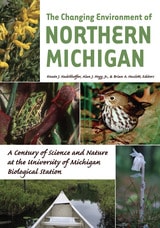
The Changing Environment of Northern Michigan
A Century of Science and Nature at the University of Michigan Biological StationKnute J. Nadelhoffer, Alan J. Hogg, Jr., Brian A. Hazlett, editors
University of Michigan Press, 2009
Northern Michigan is undergoing unprecedented changes in land use, climate, resource extraction, and species distributions. For the last hundred years, the University of Michigan Biological Station has monitored these environmental transformations. Stretching 10,000 acres along Burt and Douglas Lakes in the northern Lower Peninsula and 3,200 acres on Sugar Island near Sault Ste. Marie, Michigan, the station has played host to nearly 10,000 students and a steady stream of top scientists in the fields of biology, ecology, geology, archeology, and climatology.
The Changing Environment of Northern Michigan collects essays by some of these scientists, who lead readers on virtual field trips exploring the history of people and science at the station itself, the relations of indigenous people to the land, the geophysical history of the region, characteristics of terrestrial and aquatic ecosystems, key groups of organisms and their relations to local habitats, and perspectives on critical environmental challenges of today and their effects on the region. Accompanying the chapters are color illustrations and photographs that bring the station's pristine setting to life.
Like the station itself, the book provides a solid background for better appreciating the relationships among living and nonliving parts of northern Michigan, for anyone interested in exploring the region's forests, fields, and wetlands; wading or paddling down its rivers; or swimming or floating across its lakes.
Knute J. Nadelhoffer is Director of the University of Michigan Biological Station and Professor of Ecology and Evolutionary Biology at the University of Michigan.
Alan J. Hogg, Jr., teaches science writing at the University of Michigan as a faculty member of the Sweetland Writing Center. His Ph.D. research explored the effects of ozone and nitrogen oxides on University of Michigan Biological Station forests.
Brian A. Hazlett is Professor Emeritus of Zoology at the University of Michigan.
The Ecosystem Approach in Anthropology
From Concept to PracticeEmilio F. Moran, Editor
University of Michigan Press, 1990
The Natural Heritage of Illinois
Essays on Its Lands, Waters, Flora, and FaunaJohn E. Schwegman
Southern Illinois University Press, 2016
Author John E. Schwegman looks at the state’s early natural history, including its prehistoric vegetation and wildlife. He describes surviving remnants of formerly widespread species, such as biting horseflies so abundant they could kill a horse and flights of passenger pigeons dense enough to block the sun. The book addresses issues of species decline, the ways animals adapt to climate change and dwindling habitats, and the problem of invasive exotic species. Ecosystem preservation is discussed, and readers will witness prescribed burning techniques and volunteers aiding in natural land management.
Animal and plant conservation in Illinois is illustrated by essays that examine the efforts to save our dwindling Prairie Chicken population and to reintroduce river otters, the return of nesting bald eagles and cormorants to the state, the discovery of armadillos in southern Illinois, the pros and cons of feeding birds, and the biological significance of frog calls. Essays on Illinois’ native plants cover a wide range of topics, from defensive strategies to poisonous and edible species, prairie’s dependence on fire, how to recognize our wild roses, orchids, prairie grasses, and more. Full of fascinating information and expert knowledge, this book will prove invaluable to scholars, students, teachers, and casual nature lovers.
The Nature of New Hampshire
Natural Communities of the Granite StateDan Sperduto
University of New Hampshire Press, 2011
With gorgeous photographs, informative text, and recommended places to visit, The Nature of New Hampshire provides an important common language for conservation planning and informed land stewardship. Whether used as a field guide or an at-home resource, this book will help readers reconnect with their surroundings, and understand the places they value.
Untangling Ecological Complexity
The Macroscopic PerspectiveBrian A. Maurer
University of Chicago Press, 1998
Maurer begins by reviewing the strengths and limitations of reductionist experimental approaches. Although these studies have produced much valuable data, their small scale restricts the kinds of inferences that can be drawn from them. Maurer then demonstrates how statistical methods can be used to identify processes (such as dispersal or nonrandom extinction) that operate across broad geographic scales, yet which also have profound impacts on local ecosystems. This macroscopic perspective, Maurer suggests, provides a powerful tool for untangling ecological complexity.
Wisconsin's Natural Communities
How to Recognize Them, Where to Find ThemRandy Hoffman
University of Wisconsin Press, 2002
Cattails grow in a marsh, pitcher plants grow in a bog, jewelweed grows in a swamp, right? Do sandhill cranes live among sandy hills? Frogs live near lakes and ponds, but can they live on prairies, too? What is a pine barrens, an oak opening, a calcareous fen?
Wisconsin’s Natural Communities is an invitation to discover, explore, and understand Wisconsin’s richly varied natural environment, from your backyard or neighborhood park to stunning public preserves.Part 1 of the book explains thirty-three distinct types of natural communities in Wisconsin—their characteristic trees, beetles, fish, lichens, butterflies, reptiles, mammals, wildflowers—and the effects of geology, climate, and historical events on these habitats. Part 2 describes and maps fifty natural areas on public lands that are outstanding examples of these many different natural communities: Crex Meadows, Horicon Marsh, Black River Forest, Maribel Caves, Whitefish Dunes, the Blue Hills, Avoca Prairie, the Moquah Barrens and Chequamegon Bay, the Ridges Sanctuary, Cadiz Springs, Devil’s Lake, and many others.
Intended for anyone who has a love for the natural world, this book is also an excellent introduction for students. And, it provides landowners, public officials, and other stewards of our environment with the knowledge to recognize natural communities and manage them for future generations.