Results by title

3 books match the query 'Black Body'

cover of Scarring the Black Body: Race and Representation in African American Literature

Scarring the Black Body

Race and Representation in African American Literature

Carol E. Henderson

University of Missouri Press, 2002
Scarring and the act of scarring are recurrent images in African American literature. In Scarring the Black Body, Carol E. Henderson analyzes the cultural and historical implications of scarring in a number of African American texts that feature the trope of the scar, including works by Sherley Anne Williams, Toni Morrison, Ann Petry, Ralph Ellison, and Richard Wright.
The first part of Scarring the Black Body, “The Call,” traces the process by which African bodies were Americanized through the practice of branding. Henderson incorporates various materials—from advertisements for the return of runaways to slave narratives—to examine the cultural practice of “writing” the body. She also considers ways in which writers and social activists, including Frederick Douglass, Olaudah Equiano, Harriet Tubman, and Sojourner Truth, developed a “call” centered on the body’s scars to demand that people of African descent be given equal rights and protection under the law.
In the second part of the book, “The Response,” Henderson goes on to show that more recent representations of the conditions of slavery by authors such as Williams and Morrison extend the efforts of their predecessors by developing creative responses to those calls centered around the African American body and its scars. Henderson explores Williams’s reinvention of the whip-scarred body in her novel Dessa Rose and provides a close analysis of Morrison’s use of scar imagery in Beloved. She also devotes a chapter to Petry’s The Street and concludes with an investigation of the wounded black male psyche in the works of Ralph Ellison and Richard Wright.
            Scarring the Black Body demonstrates that the creative acts of these authors bind together that which has been wounded both literally and figuratively. Those who hear the voices of the ancestors are urged to connect to that part of themselves wherein wounds of the past carry a self-knowledge that can alter the experiences of the present. In this way, the disfigured body as a cultural metaphor and social invention can come to terms with its own humanity and embodiment.
[more]
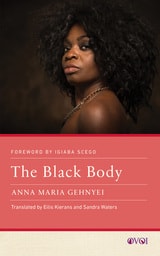
cover of The Black Body

The Black Body

Anna Maria Gehnyei (Karima 2G)

Rutgers University Press, 2025

Best Translation of a Literary Work Published in 2025 from the American Association of Italian Studies

In her memoir, Anna Maria Gehnyei, better known as singer, rapper, and producer Karima 2G, reveals the challenges she faced as the child of Liberian immigrants, born and raised in Rome but perpetually viewed by her fellow Italians as a foreigner.
 
The daughter of the first Kpelle man to ever leave his native village and emigrate to Europe, Anna is proud of her heritage but only knows Liberia as a mystical, faraway land that appears in her parents’ stories. Though Italy is the only homeland she knows, she is merely classed as a resident, not a permanent citizen. At school and in the streets of Rome, she is treated to a mixture of patronizing condescension and xenophobic hostility. But Anna refuses to be bullied into mute submission, finding her voice as a performer and activist who demands recognition for Italy’s growing immigrant population.
 

[more]
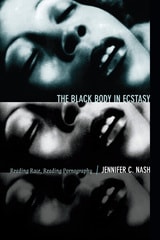
cover of The Black Body in Ecstasy: Reading Race, Reading Pornography

The Black Body in Ecstasy

Reading Race, Reading Pornography

Jennifer C. Nash

Duke University Press, 2014

In The Black Body in Ecstasy, Jennifer C. Nash rewrites black feminism's theory of representation. Her analysis moves beyond black feminism's preoccupation with injury and recovery to consider how racial fictions can create a space of agency and even pleasure for black female subjects. Nash's innovative readings of hardcore pornographic films from the 1970s and 1980s develop a new method of analyzing racialized pornography that focuses on black women's pleasures in blackness: delights in toying with and subverting blackness, moments of racialized excitement, deliberate enactments of hyperbolic blackness, and humorous performances of blackness that poke fun at the fantastical project of race. Drawing on feminist and queer theory, critical race theory, and media studies, Nash creates a new black feminist interpretative practice, one attentive to the messy contradictions—between delight and discomfort, between desire and degradation—at the heart of black pleasures.
[more]