Results by title
384 books match the query 'Black Studies (Global)' and 44 start with a
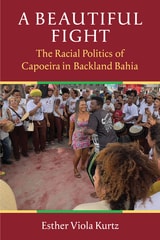
A Beautiful Fight
The Racial Politics of Capoeira in Backland BahiaEsther Viola Kurtz
University of Michigan Press, 2025
2026 Dance Studies Association de la Torre Bueno First Book Award Shortlist Finalist
A Beautiful Fight examines the potentials and limits of capoeira Angola to cohere a multiracial community committed to antiracist struggle. Capoeira, a musical fight-game that originated among enslaved Africans in Brazil, holds special significance for Black Brazilian activists as a spiritual and political practice that affirms the value of Black lives, thus countering anti-Black violence sanctioned by the Brazilian state. However, many capoeira groups count more white practitioners than Black, especially groups of the politicized, Afrocentric style capoeira Angola, raising debates about appropriation of Black culture that resonate across the Americas. A Beautiful Fight addresses these tensions. Drawing on ethnographic research with a multiracial capoeira Angola group in Brazil’s Bahian sertão or backlands, Esther Viola Kurtz explores diverse group members’ understandings of capoeira’s spiritual and political meanings and considers how white participation impacts capoeira’s antiracist politics. A Beautiful Fight argues that white practitioners occupying space in capoeira divert attention from Black members’ concerns and reproduce racist and colonialist ideologies, albeit unintentionally. In this way, the book complicates claims that shared music and dance bridge differences and facilitate cross-racial unity, yet Kurtz proposes that capoeira still transmits knowledge and tools that, when used with intention, commitment, and care, can be wielded to collaboratively contest racism and imagine a more just world.
A Billion Black Anthropocenes or None
Kathryn Yusoff
University of Minnesota Press, 2018
Rewriting the “origin stories” of the Anthropocene
No geology is neutral, writes Kathryn Yusoff. Tracing the color line of the Anthropocene, A Billion Black Anthropocenes or None examines how the grammar of geology is foundational to establishing the extractive economies of subjective life and the earth under colonialism and slavery. Yusoff initiates a transdisciplinary conversation between feminist black theory, geography, and the earth sciences, addressing the politics of the Anthropocene within the context of race, materiality, deep time, and the afterlives of geology.
Forerunners is a thought-in-process series of breakthrough digital works. Written between fresh ideas and finished books, Forerunners draws on scholarly work initiated in notable blogs, social media, conference plenaries, journal articles, and the synergy of academic exchange. This is gray literature publishing: where intense thinking, change, and speculation take place in scholarship.

A Certain Amount of Madness
The Life Politics and Legacies of Thomas SankaraAmber Murrey
Pluto Press, 2018
This book looks at Sankara's political philosophies and legacies and their relevance today. Analyses of his synthesis of Pan-Africanism and humanist Marxist politics, as well as his approach to gender, development, ecology and decolonisation offer new insights to Sankarist political philosophies. Critical evaluations of the limitations of the revolution examine his relationship with labour unions and other aspects of his leadership style. His legacy is revealed by looking at contemporary activists, artists and politicians who draw inspiration from Sankarist thought in social movement struggles today, from South Africa to Burkina Faso.
In the 30th anniversary of his assassination, this book illustrates how Sankara's political praxis continues to provide lessons and hope for decolonisation struggles today.
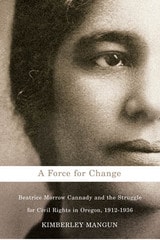
A Force for Change
Beatrice Morrow Cannady and the Struggle for Civil Rights in Oregon, 1912-1936Kimberley Mangun
Oregon State University Press, 2010
A Force for Change is the first full-length study of the life and work of one of Oregon’s most dynamic civil rights activists, African American journalist Beatrice Morrow Cannady. Between 1912 and 1936, Cannady tirelessly promoted interracial goodwill and fought segregation and discrimination.
She gave hundreds of lectures to high school and college students and shared her message with radio listeners across the Pacific Northwest. She was assistant editor, and later publisher, of The Advocate, Oregon’s largest African American newspaper. Cannady was the first black woman to graduate from law school in Oregon, and the first to run for state representative. She held interracial teas in her home in Northeast Portland and protested repeated showings of the racist film The Birth of a Nation. And when the Ku Klux Klan swept into Oregon, she urged the governor to act quickly to protect black Oregonians’ right to live and work without fear. Despite these accomplishments—and many more during her twenty-five-year career—Beatrice Cannady fell into obscurity when she left Oregon in about 1938.
A Force for Change illuminates Cannady’s important role in advocating for better race relations in Oregon in the early decades of the twentieth century. It describes her encounters with the period’s leading black artists, editors, politicians, and intellectuals, including W.E.B. Du Bois, Langston Hughes, A. Philip Randolph, Oscar De Priest, Roland Hayes, and James Weldon Johnson. It dispels the myth that African Americans played little part in Oregon’s history and enriches our understanding of the black experience in Oregon.
A Force for Change is an invaluable resource for students and scholars of women’s history, gender studies, African American history, journalism history, and Pacific Northwest history. It belongs on the shelf of any reader interested in a richer understanding of the civil rights movement in Oregon and across the country.
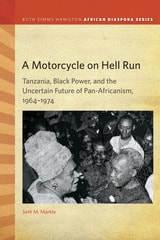
A Motorcycle on Hell Run
Tanzania, Black Power, and the Uncertain Future of Pan-Africanism, 1964–1974Seth M. Markle
Michigan State University Press, 2017

A Narrative of Events, since the First of August, 1834, by James Williams, an Apprenticed Labourer in Jamaica
James Williams
Duke University Press, 2001
Describing the hard working conditions on plantations and the harsh treatment of apprentices unjustly incarcerated, Williams argues that apprenticeship actually worsened the conditions of Jamaican ex-slaves: former owners, no longer legally permitted to directly punish their workers, used the Jamaican legal system as a punitive lever against them. Williams’s story documents the collaboration of local magistrates in this practice, wherein apprentices were routinely jailed and beaten for both real and imaginary infractions of the apprenticeship regulations.
In addition to the complete text of Williams’s original Narrative, this fully annotated edition includes nineteenth-century responses to the controversy from the British and Jamaican press, as well as extensive testimony from the Commission of Enquiry that heard evidence regarding the Narrative’s claims. These fascinating and revealing documents constitute the largest extant body of direct testimony by Caribbean slaves or apprentices.
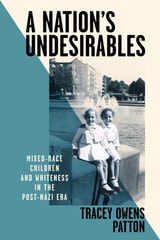
A Nation’s Undesirables
Mixed-Race Children and Whiteness in the Post-Nazi EraTracey Owens Patton
The Ohio State University Press, 2024
An innovative investigation of the entangled histories of race, transnational adoption, and post-Nazi Germany.
In a moving blend of family history and cutting-edge scholarship, Tracey Owens Patton’s A Nation’s Undesirables synthesizes work in rhetorical postmemory studies, critical adoption studies, Afrofuturism, and more to tell the story of her mother and aunt, Lore and Lilli. Two of thousands of children born to white German women and Black American men after World War II, the twins moved to the United States at age seven, where their mother renounced her parental rights and put them into the adoption system. They did not see her again for fifty-two years.Patton takes up the twins’ story and their reckoning with their mixed-race, Black German identity to disrupt standard narratives around World War II, Black experiences in Germany, and race and adoption. Combining family interviews, historical artifacts, and autoethnographic reflection, Patton composes a new narrative of women and Black German children in the postwar era. In examining the systemic racism of Germany’s efforts to move children like Lore and Lilli out of the country—and the suppression of German women’s bodily autonomy—Patton amplifies the once unacknowledged identities of these Black German children to broaden our understanding of citizenship, racism, and sexism after World War II.
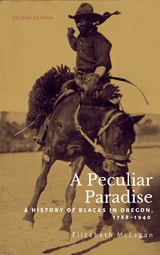
A Peculiar Paradise
A History of Blacks in Oregon, 1788-1940Elizabeth McLagan
Oregon State University Press, 2022
A Peculiar Paradise: A History of Blacks in Oregon 1788–1940 remains the most comprehensive chronology of Black life in Oregon more than forty years after its original publication in 1980. The book has long been a resource for those seeking information on the legal and social barriers faced by people of African descent in Oregon. Elizabeth McLagan’s work reveals how in spite of those barriers, Black individuals and families made Oregon their home, and helped create the state’s modern Black communities. Long out of print, the book is available again through this co-publication with Oregon Black Pioneers, Oregon’s statewide African American historical society. The revised second edition includes additional details for students and scholars, an expanded reading list, a new selection of historic images, and a new foreword by Gwen Carr and an afterword by Elizabeth McLagan.

A Received Grace
Slavery, Heirlooms, and the Feminine Labor of ForgettingMacushla Robinson
Duke University Press, 2027
A Wide Net of Solidarity
Antiracism and Anti-Imperialism from the Americas to the GlobeAnne Garland Mahler
Duke University Press, 2025
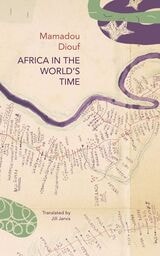
Africa in the World’s Time
Rewriting the Past Beyond Colonial NarrativesMamadou Diouf
Seagull Books, 2025
Mamadou Diouf unearths the intellectual and cultural traditions that have long defined Africa, proving that history was never just written about Africa, but also by it.
For too long, Africa has been framed as an afterthought in world history—a continent written into the margins of time. In Africa in the World’s Time, renowned historian Mamadou Diouf dismantles these colonial narratives and reclaims Africa’s rightful place at the center of global historical thought. Moving beyond Western frameworks, Diouf examines the continent’s intellectual traditions and demonstrates how African artists and historians have shaped and reshaped how we understand the past.
Tracing central debates from the independence era to today, Diouf examines figures like Cheikh Anta Diop and Samir Amin, as well as the vital role of literature and film in contesting predominant histories. He challenges the linear, Eurocentric timelines that have long governed historical discourse, and puts forward a vision of Africa as a force that has always been influencing and reimagining the world.
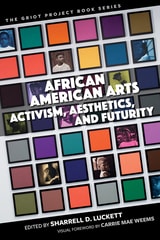
African American Arts
Activism, Aesthetics, and Futurityweems, carrie mae
Bucknell University Press, 2020
Contributors: Carrie Mae Weems, Carmen Gillespie, Rikki Byrd, Amber Lauren Johnson, Doria E. Charlson, Florencia V. Cornet, Daniel McNeil, Lucy Caplan, Genevieve Hyacinthe, Sammantha McCalla, Nettrice R. Gaskins, Abby Dobson, J. Michael Kinsey, Shondrika Moss-Bouldin, Julie B. Johnson, Sharrell D. Luckett, Jasmine Eileen Coles, Tawnya Pettiford-Wates, Rickerby Hinds.
Published by Bucknell University Press. Distributed worldwide by Rutgers University Press.

African Intellectuals and Decolonization
Nicholas M. Creary
Ohio University Press, 2012
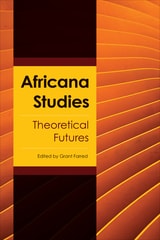
Africana Studies
Theoretical FuturesEdited by Grant Farred
Temple University Press, 2022
As Africana Studies celebrates its fiftieth anniversary throughout the United States, this invigor ating collection presents possibilities for the future of the discipline’s theoretical paths. The essays in Africana Studies focus on philosophy, science, and technology; poetry, literature, and music; the crisis of the state; issues of colonialism, globalization, and neoliberalism; and the ever-expanding diaspora. The editor and contributors to this volume open exciting avenues for new narratives, philosophies, vision, and scale in this critical field of study—formed during the 1960s around issues of racial injustice in America—to show what Africana Studies is already in the process of becoming.
Africana Studies recognizes how the discipline has been shaped, changing over the decades as scholars have opened new modes of theoretical engagement such as addressing issues of gender and sexuality, politics, and cultural studies. The essays debate and (re)consider black and diasporic life to sustain, provoke, and cultivate Africana Studies as a singular yet polyvalent mode of thinking.
Contributors: Akin Adeṣọkan, John E. Drabinski, Zeyad El Nabolsy, Pierre-Philippe Fraiture, Kasareka Kavwahirehi, Gregory Pardlo, Radwa Saad, Sarah Then Bergh, and the editor
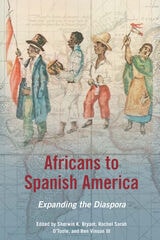
Africans to Spanish America
Expanding the DiasporaEdited by Sherwin K. Bryant, Rachel Sarah O’Toole, & Ben Vinson III
University of Illinois Press, 2014
Contributors are Joan C. Bristol, Nancy E. van Deusen, Leo J. Garofalo, Herbert S. Klein, Charles Beatty-Medina, Karen Y. Morrison, Rachel Sarah O'Toole, Frank "Trey" Proctor III, and Michele Reid-Vazquez.
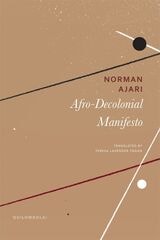
Afro-Decolonial Manifesto
Norman Ajari
Seagull Books, 2025
Offering a compelling call to arms while challenging the pervasive grip of colonialism on the Black psyche, this manifesto charts a course toward a future defined by autonomy, dignity, and radical liberation.
Delving into the historical currents of resistance—from Negritude to Black nationalism to pan-Africanism—this manifesto unapologetically confronts the insidious nature of modern colonialism. In a world where the very presence of the Black body incites fear and insecurity among white supremacists, Afro-Decolonial Manifesto exposes the fallacy of equating Black existence with reverse colonialism. It challenges the prevailing narratives of gratitude and guilt, asserting the right of the Black diaspora to reclaim its autonomy and dignity, and also examines the effectiveness of movements like Black Lives Matter, advocating for a renewed Black internationalism rooted in Africa’s unity and autonomy.
In a stirring call to arms, Afro-Decolonial Manifesto heralds a new era of resistance, where reparation becomes not just a demand for restitution, but a catalyst for radical change. This volume emboldens Black people to reclaim their narrative, their agency, and their future. It is a testament to the enduring spirit of liberation and the indomitable resilience of Black lives.
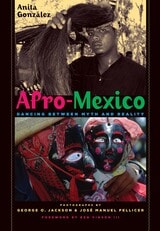
Afro-Mexico
Dancing between Myth and RealityBy Anita González
University of Texas Press, 2010
While Africans and their descendants have lived in Mexico for centuries, many Afro-Mexicans do not consider themselves to be either black or African. For almost a century, Mexico has promoted an ideal of its citizens as having a combination of indigenous and European ancestry. This obscures the presence of African, Asian, and other populations that have contributed to the growth of the nation. However, performance studies—of dance, music, and theatrical events—reveal the influence of African people and their cultural productions on Mexican society.
In this work, Anita González articulates African ethnicity and artistry within the broader panorama of Mexican culture by featuring dance events that are performed either by Afro-Mexicans or by other ethnic Mexican groups about Afro-Mexicans. She illustrates how dance reflects upon social histories and relationships and documents how residents of some sectors of Mexico construct their histories through performance. Festival dances and, sometimes, professional staged dances point to a continuing negotiation among Native American, Spanish, African, and other ethnic identities within the evolving nation of Mexico. These performances embody the mobile histories of ethnic encounters because each dance includes a spectrum of characters based upon local situations and historical memories.
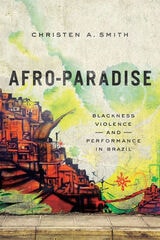
Afro-Paradise
Blackness, Violence, and Performance in BrazilChristen A. Smith
University of Illinois Press, 2016
Christen A. Smith argues that the dialectic of glorified representations of black bodies and subsequent state repression reinforces Brazil's racially hierarchal society. Interpreting the violence as both institutional and performative, Smith follows a grassroots movement and social protest theater troupe in their campaigns against racial violence. As Smith reveals, economies of black pain and suffering form the backdrop for the staged, scripted, and choreographed afro-paradise that dazzles visitors. The work of grassroots organizers exposes this relationship, exploding illusions and asking unwelcome questions about the impact of state violence performed against the still-marginalized mass of Afro-Brazilians.
Based on years of field work, Afro-Paradise is a passionate account of a long-overlooked struggle for life and dignity in contemporary Brazil.
Afro-Sweden
Becoming Black in a Color-Blind CountryRyan Thomas Skinner
University of Minnesota Press, 2022
A compelling examination of Sweden’s African and Black diaspora
Contemporary Sweden is a country with a worldwide progressive reputation, despite an undeniable tradition of racism within its borders. In the face of this contradiction of culture and history, Afro-Swedes have emerged as a vibrant demographic presence, from generations of diasporic movement, migration, and homemaking. In Afro-Sweden, Ryan Thomas Skinner uses oral histories, archival research, ethnography, and textual analysis to explore the history and culture of this diverse and growing Afro-European community.
Skinner employs the conceptual themes of “remembering” and “renaissance” to illuminate the history and culture of the Afro-Swedish community, drawing on the rich theoretical traditions of the African and Black diaspora. Remembering fosters a sustained meditation on Afro-Swedish social history, while Renaissance indexes a thriving Afro-Swedish public culture. Together, these concepts illuminate significant existential modes of Afro-Swedish being and becoming, invested in and contributing to the work of global Black studies.
The first scholarly monograph in English to focus specifically on the African and Black diaspora in Sweden, Afro-Sweden emphasizes the voices, experiences, practices, knowledge, and ideas of these communities. Its rigorously interdisciplinary approach to understanding diasporic communities is essential to contemporary conversations around such issues as the status and identity of racialized populations in Europe and the international impact of Black Lives Matter.
AfroSwedish Places of Belonging
Nana Osei-Kofi
Northwestern University Press, 2024
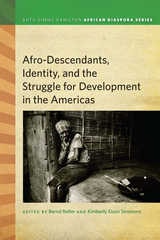
Afrodescendants, Identity, and the Struggle for Development in the Americas
Bernd Reiter
Michigan State University Press, 2012
Indigenous people and African descendants in Latin America and the Caribbean have long been affected by a social hierarchy established by elites, through which some groups were racialized and others were normalized. Far from being “racial paradises” populated by an amalgamated “cosmic race” of mulattos and mestizos, Latin America and the Caribbean have long been sites of shifting exploitative strategies and ideologies, ranging from scientific racism and eugenics to the more sophisticated official denial of racism and ethnic difference. This book, among the first to focus on African descendants in the region, brings together diverse reflections from scholars, activists, and funding agency representatives working to end racism and promote human rights in the Americas. By focusing on the ways racism inhibits agency among African descendants and the ways African-descendant groups position themselves in order to overcome obstacles, this interdisciplinary book provides a multi-faceted analysis of one of the gravest contemporary problems in the Americas.
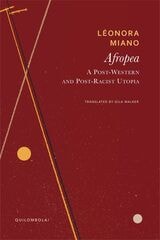
Afropea
A Post-Western and Post-Racist UtopiaLéonora Miano
Seagull Books, 2024
In this ground-breaking exploration, French-Cameroonian author Léonora Miano unveils a distinct sensibility shaped by her sub-Saharan African roots, setting her apart from those who identify as Afro-Europeans, or Afropeans, a group forged within the European context. Drawing on her unique perspective, Miano reveals the complexities that determine self-perception and complicate the bonds of identification and solidarity between Afro-Europeans and their sub-Saharan counterparts. Contrasting with France’s approach of lumping all citizens of sub-Saharan descent together under an “African” label, the author questions the effectiveness of such categorization in fostering a genuine connection to one’s country and assuming responsibility for its future.
Despite the many challenges, Miano finds hope in the Afropean identity—those who embrace the fusion of Africa and Europe within their self-designation—believing it holds the potential to embody a transformative, fraternal, anti-imperialist, and anti-racist societal project. Yet, she acknowledges the persistent struggle for acceptance and understanding in a society grappling with identity tensions. In this powerful narrative, Miano examines the allure of rejection that exists on both sides of the divide, offering a nuanced examination of the delicate balance between cultures, identities, and the pursuit of a utopian vision. Timely and captivating, this book is essential to understanding the Afropean perspective.
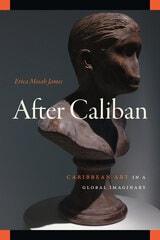
After Caliban
Caribbean Art in a Global ImaginaryErica Moiah James
Duke University Press, 2025
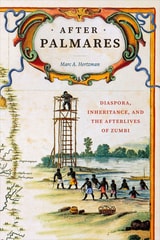
After Palmares
Diaspora, Inheritance, and the Afterlives of ZumbiMarc A. Hertzman
Duke University Press, 2024
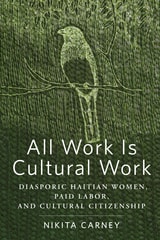
All Work Is Cultural Work
Diasporic Haitian Women, Paid Labor, and Cultural CitizenshipNikita Carney
Rutgers University Press, 2026
What does it mean to belong in a nation? All Work Is Cultural Work examines how Haitian women living in diaspora find and create status through their work outside the home. Nikita Carney draws on ethnographic data gathered over several years in Boston, Montreal, and Paris with women who left Haiti in search of other things: safety, financial security, and opportunity. Ranging from administrative assistants to dancers to preschool teachers, the women in this study share their rich experiences, teaching us how they found a place in their new host nations through paid labor. Focusing on small, daily interactions in the workplace, these women’s narratives highlight the ways in which often invisible daily cultural practices build and re-build both the nation and the home. Taking into account the overlapping and interlocking systems of oppression her participants face both nationally and globally, Carney uses an intersectional analysis to illuminate how the workplace serves as a central site in which Haitian women become raced, gendered, and classed within the nation. Ultimately, the lives and experiences of these women point to one conclusion: culture is indivisible from labor and labor from culture, with paid labor providing a vital method for national culture to be created and recreated each and every day.

American Allegory
Lindy Hop and the Racial ImaginationBlack Hawk Hancock
University of Chicago Press, 2013
In American Allegory, Black Hawk Hancock offers an embedded and embodied ethnography that situates dance within a larger Chicago landscape of segregated social practices. Delving into two Chicago dance worlds, the Lindy and Steppin’, Hancock uses a combination of participant-observation and interviews to bring to the surface the racial tension that surrounds white use of black cultural forms. Focusing on new forms of appropriation in an era of multiculturalism, Hancock underscores the institutionalization of racial disparities and offers wonderful insights into the intersection of race and culture in America.
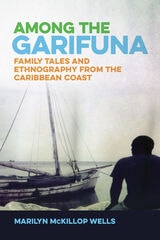
Among the Garifuna
Family Tales and Ethnography from the Caribbean CoastMarilyn McKillop Wells
University of Alabama Press, 2015
An intimate ethnographic narrative of one indigenous family in the twentieth-century Caribbean
Among the Garifuna is the first ethnographic narrative of a Garifuna family. The Garifuna are descendants of the “Black Carib,” whom the British deposited on Roatan Island in 1797 and who settled along the Caribbean coast from Belize City to Nicaragua.
In 1980, medical anthropologist Marilyn McKillop Wells found herself embarking on an “improbable journey” when she was invited to the area to do fieldwork with the added challenge of revealing the “real” Garifuna. Upon her arrival on the island, Wells was warmly embraced by a local family, the Diegos, and set to work recording life events and indigenous perspectives on polygyny, Afro-indigenous identity, ancestor-worshiping religion, and more. The result, as represented in Among the Garifuna, is a lovingly intimate, earthy human drama.
The family narrative is organized chronologically. Part I, “The Old Ways,” consists of vignettes that introduce the family backstory with dialogue as imagined by Wells based on the family history she was told. We meet the family progenitors, Margaret and Cervantes Diego, during their courtship, experience Margaret’s pain as Cervantes takes a second wife, witness the death of Cervantes and ensuing mourning rituals, follow the return of Margaret and the children to their previous home in British Honduras, and observe the emergence of the children’s personalities.
In Part II, “Living There,” Wells continues the story when she arrives in Belize and meets the Diego children, including the major protagonist, Tas. In Tas’s household Wells learns about foods and manners and watches family squabbles and reconciliations. In these mini-stories, Wells interweaves cultural information on the Garifuna people with first-person narrative and transcription of their words, assembling these into an enthralling slice of life. Part III, “The Ancestor Party,” takes the reader through a fascinating postmortem ritual that is enacted to facilitate the journey of the spirits of the honored ancestors to the supreme supernatural.
Among the Garifuna contributes to the literary genres of narrative anthropology and feminist ethnography in the tradition of Zora Neal Hurston and other women writing culture in a personal way. Wells’s portrait of this Garifuna family will be of interest to anthropologists, Caribbeanists, Latin Americanists, students, and general readers alike.
Améfrica in Letters
Literary Interventions from Mexico to the Southern ConeJennifer Carolina Gómez Menjívar
Vanderbilt University Press, 2022
An African Voice
The Role of the Humanities in African IndependenceRobert W. July
Duke University Press, 1987
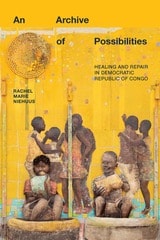
An Archive of Possibilities
Healing and Repair in Democratic Republic of CongoRachel Marie Niehuus
Duke University Press, 2024

An Efficient Womanhood
Women and the Making of the Universal Negro Improvement AssociationNatanya Duncan
University of Illinois Press, 2023
Founded in 1914 by Amy Ashwood and Marcus Garvey, the Universal Negro Improvement Association and African Communities League (commonly called the UNIA) grew into one of the largest social justice organizations of the twentieth century. Natanya Duncan’s collective biography explores women’s role in building the UNIA and how Ashwood’s strategy of efficient womanhood equipped them to confront political and social issues--even when it meant defying gender norms. Efficient womanhood took a three-tiered approach that asked UNIA women to seek equitable partners, take on roles as mentors, and connect resources and people to their communities and Black people at large. Strong believers in the necessity of their presence and voices, UNIA women developed leadership skills within and beyond the organization and used these skills in service to their communities.
Enlightening and in-depth, An Efficient Womanhood tells the story of the women who shaped a framework for leadership and engagement that remains a blueprint for activists today.
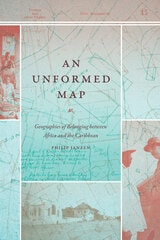
An Unformed Map
Geographies of Belonging between Africa and the CaribbeanPhilip Janzen
Duke University Press, 2025

And Who Will Witness Us?
A Histofuturist Account of Black Literacies on the Rust BeltS. R. Toliver
University of Chicago Press, 2027
An imaginative exploration of the historical narratives that shape Black life today, showing how the past is never truly left behind, but is always alive in the present, shaping the future.
Most people have probably never heard of New Castle, a Rust Belt city in western Pennsylvania. Education scholar S. R. Toliver describes it as “a stop on the road to elsewhere. But as a former resident, New Castle remains the endpoint of my journey, the highway exit I take, the place I go when I say I’m headed home.” Combining an autoethnography of growing up and being educated in New Castle with a remarkable study of Histofuturism, Toliver’s And Who Will Witness Us? reveals the historical erasure of Black people and their literary practices.
First, Toliver turns to the past, presenting a multifaceted portrayal of Black life in New Castle. She draws from personal insights, archival data, and oral histories to uncover historical disinvestment and the violence of anti-Blackness and anti-Indigeneity sown into the soil and soul of a city. At the same time, she highlights how, despite systemic neglect, Black people have used their stories to author themselves into existence, creating counter histories that reflect the richness and depth of Black lives. Toliver explains how these acts of creation, in turn, shape the future, allowing Black people to resist imposed narratives and envision possibilities beyond the limits of traditional ways of thinking, knowing, and doing.
Innovative in both form and style, And Who Will Witness Us? shares how research opens space for Black people to relearn themselves and their communities. It is a reckoning with what it means to call a place, a city, a people, home.

Antiblackness
Moon-Kie Jung and João H. Costa Vargas, editors
Duke University Press, 2021
Contributors. Mohan Ambikaipaker, Jodi A. Byrd, Iyko Day, Anthony Paul Farley, Crystal Marie Fleming, Sarah Haley, Tanya Katerí Hernández, Sarah Ihmoud, Joy James, Moon-Kie Jung, Jae Kyun Kim, Charles W. Mills, Dylan Rodríguez, Zach Sell, João H. Costa Vargas, Frank B. Wilderson III, Connie Wun

Apartheid Remains
Sharad Chari
Duke University Press, 2024

Archival Irruptions
Constructing Religion and Criminalizing Obeah in Eighteenth-Century JamaicaKatharine Gerbner
Duke University Press, 2025
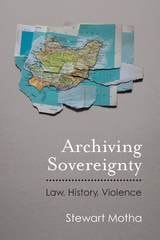
Archiving Sovereignty
Law, History, ViolenceStewart Motha
University of Michigan Press, 2018
Sovereignty is often cast as a limit-concept, constituent force, determining the boundary of law. Archiving Sovereignty reverses this to explain how judicial pronouncements inscribe and sustain extravagant claims to exceptionality and sovereign solitude. This wide-ranging, critical work distinguishes between myths that sustain neocolonial orders and fictions that generate new forms of political and ethical life.
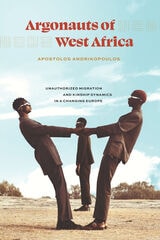
Argonauts of West Africa
Unauthorized Migration and Kinship Dynamics in a Changing EuropeApostolos Andrikopoulos
University of Chicago Press, 2023
In rapidly changing and highly precarious contexts, unauthorized African migrants turn to kinship in search of security, stability, and predictability. Through the exchange of identity documents between “siblings,” assistance in obtaining such documentation through kinship networks, and marriages that provide access to citizenship, new assemblages of kinship are continually made and remade to navigate the shifting demands of European states. These new kinship relations, however, often prove unreliable, taking on new, unexpected dynamics in the face of codependency; they become more difficult to control than those who enter into such relations can imagine. Through unusually close ethnographic work in West African migrant communities in Amsterdam, Apostolos Andrikopoulos reveals the unseen dynamics of kinship through shared papers, the tensions of race and gender that develop in mutually beneficial marriages, and the vast, informal networks of people, information, and documentation on which migrants rely. Throughout Argonauts of West Africa, Andrikopoulos demonstrates how inequality, exclusionary practices, and the changing policies of an often-violent state demand innovative ways of doing kinship to successfully navigate complex migration routes.
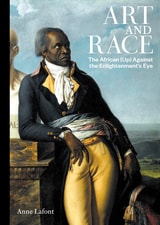
Art and Race
The African (Up) Against the Enlightenment’s EyeAnne Lafont
J. Paul Getty Trust, The, 2026
In this text, French art historian Anne Lafont examines the complexities and contradictions in Enlightenment-era ideas about race, focusing on the figurations of Africans and other people of color. Through studies of a wide range of eighteenth-century art, Lafont grounds her analysis in the objects themselves and, by doing so, highlights how visual works can reveal the values of the culture that produced them.
While Lafont locates—unsurprisingly—instances of the marginalization and objectification of Black people, she also draws attention to depictions that present African sitters as subjects in their own right. For example, Anne-Louis Girodet’s Portrait of Jean-Baptiste Belley (1797) offers a dignified, individualized representation of this formerly enslaved French politician from Saint-Domingue; and portraits of anonymous sitters show them as actual persons whose costumes and poses demonstrate their agency.
Ultimately, Lafont moves beyond artworks to consider the broader intellectual context of the Enlightenment, particularly ideas about freedom, equality, and universal human rights, which were anchored in visual culture and indexed by it. She reveals how these ideals often conflicted with the realities of colonialism and the shifting status of Black people during this era.
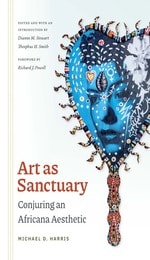
Art as Sanctuary
Conjuring an Africana AestheticMichael D. Harris. Edited and with an introduction by Dianne M. Stewart and Theophus H. Smith. Foreword by Richard J. Powell.
Duke University Press, 2026

Artery
Racial Ecologies on Colombia's Magdalena RiverAustin Zeiderman
Duke University Press, 2025
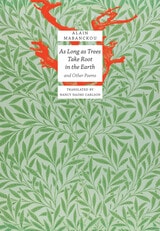
As Long As Trees Take Root in the Earth
and Other PoemsAlain Mabanckou
Seagull Books, 2025
These compelling poems by novelist and essayist Alain Mabanckou conjure nostalgia for an African childhood where the fauna, flora, sounds, and smells evoke snapshots of a life forever gone. Mabanckou’s poetry is frank and forthright, urging his compatriots to no longer be held hostage by the civil wars and political upheavals that have ravaged their country and to embrace a new era of self-determination where the village roosters can sing again.
These music-infused texts, beautifully translated by Nancy Naomi Carlson and supported by a grant from the National Endowment for the Arts, appear together in English for the first time. In these pages, Mabanckou pays tribute to his beloved mother, as well as to the regenerative power of nature, especially of trees, whose roots are a metaphor for the poet’s roots, anchored in the red earth of his birthplace. Mabanckou’s yearning for the land of his ancestors is even more poignant because he has been declared persona non grata in his homeland, now called Congo-Brazzaville, due to his biting criticism of the country’s regime. Despite these barriers, his poetry exudes hope that nature’s resilience will lead humankind on the path to redemption and reconciliation.
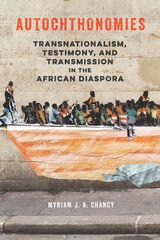
Autochthonomies
Transnationalism, Testimony, and Transmission in the African DiasporaMyriam J. A. Chancy
University of Illinois Press, 2020
A bold challenge to established scholarship, Autochthonomies ranges from Africa to Europe and the Americas to provide powerful new tools for charting the transnational interactions between African cultural producers and sites.
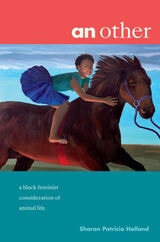
an other
a black feminist consideration of animal lifeSharon Patricia Holland
Duke University Press, 2023