Results by title
12 books match the query 'Black lives matter movement'

A Police State
Politics and Public Safety in Minneapolis, 1945–2020Michael J. Lansing
University of Chicago Press, 2027
How the police in Minneapolis used electoral politics to accrue power and avoid accountability.
The 2020 murder of George Floyd made Minneapolis synonymous with unjust policing and the pain and outrage left in its wake. The city became ground zero for police reform in the United States—even though liberal politicians in Minnesota had promised, and delivered, police reforms for decades. Centered on professionalization, these changes inadvertently exacerbated injustice. Better training and higher standards broadened the influence of the police, who then claimed expertise in public safety. They deployed it to bargain for governmental support, even when they treated residents unfairly. Though Black, Indigenous, and gay residents resisted, the political power amassed by the police rendered real change almost impossible.
In A Police State, historian and fourth-generation Minneapolis resident Michael J. Lansing chronicles how the police became a political force in one of the nation’s most liberal cities. Lansing shows how, in the years after World War II, public safety policies that appealed to voters in the overwhelmingly white city protected and expanded police discretion. As union members, administrators, and citizens, officers shaped these policies to shield themselves and their violent actions from scrutiny. They campaigned for better wages, secured legal safeguards, resisted race-neutral policing, and elected one of their own to the mayor’s office. Ultimately, they used democratic institutions to cultivate and sustain a police state that protected white people and harmed people of color. Lansing uncovers this dysfunctional relationship between a city and its cops while illuminating a larger American story about reform, resistance, and democracy.
A significant exploration of policing politics, this book helps us understand the history that led to George Floyd’s murder—and insists that the future of community safety depends on reenvisioning the role of police in our society.
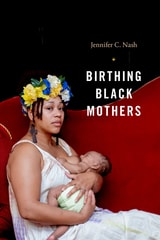
Birthing Black Mothers
Jennifer C. Nash
Duke University Press, 2021
Black Life Matter
Blackness, Religion, and the SubjectBiko Mandela Gray
Duke University Press, 2022
Black and Blue TV
Industry Responses to the Black Lives Matter MovementLaurena Bernabo
Rutgers University Press, 2026
Black and Blue TV explores the ways television productions have responded to the Black Lives Matter movement. Television programs’ engagement with BLM was common before George Floyd’s murder sparked international protests in the summer of 2020, at which point it became nearly unavoidable for many series. Images of police using violence against Black Americans fueled criticisms of the role of television—especially cop shows—in perpetuating “copaganda,” highlighting the fact that television’s cops are nearly always the good guys, even when they break the law and use excessive force. Black and Blue TV identifies trends and anomalies in television’s engagement with BLM but also investigates the people who influence what those representations look like. Pairing textual criticism with interviews with television creatives, executives, and media activists, author Laurena Bernabo traces shifts in how these individuals understand their role in televisual culture and the cultural forum of narratives that are produced and distributed as a result.
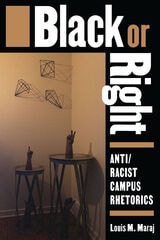
Black or Right
Anti/Racist Campus RhetoricsLouis M. Maraj
Utah State University Press, 2020
Offering four Black rhetorics as antiracist means for rhetorical reclamation—autoethnography, hashtagging, inter(con)textual reading, and reconceptualized disruption—the book uses Black feminist relationality via an African indigenous approach. Maraj examines fluid, quotidian ways Black folk engage anti/racism at historically white institutions in the United States in response to violent campus spaces, educational structures, protest movements, and policy practice. Black or Right’s experimental, creative style strives to undiscipline knowledge from academic confinement. Exercising different vantage points in each chapter—autoethnographer, digital media scholar/pedagogue, cultural rhetorician, and critical discourse analyst—Maraj challenges readers to ecologically understand shifting, multiple meanings of Blackness in knowledge-making. Black or Right’s expressive form, organization, narratives, and poetics intimately interweave with its argument that Black folk must continuously invent “otherwise” in reiterative escape from oppressive white spaces.
In centering Black experiences, Black theory, and diasporic Blackness, Black or Right mobilizes generative approaches to destabilizing institutional whiteness, as opposed to reparative attempts to “fix racism,” which often paradoxically center whiteness. It will be of interest to both academic and general readers and significant for specialists in cultural rhetorics, Black studies, and critical theory.
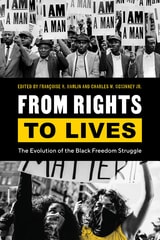
From Rights to Lives
The Evolution of the Black Freedom StruggleEdited by Françoise N. Hamlin and Charles W. McKinney Jr.
Vanderbilt University Press, 2024
From Rights to Lives critically engages the dynamic relationship between these two moments of liberatory possibility on the Black Freedom Struggle timeline. The book’s contributors explore what we can learn when we place these moments of struggle in dialogue with each other. They grapple with how our understanding of the postwar moment shapes our analysis of #BLM and wherein lie the discontinuities, in order to glean lessons for future moments of insurgency.
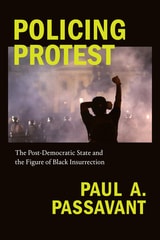
Policing Protest
The Post-Democratic State and the Figure of Black InsurrectionPaul A. Passavant
Duke University Press, 2021
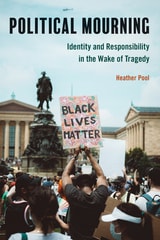
Political Mourning
Identity and Responsibility in the Wake of TragedyHeather Pool
Temple University Press, 2021
What leads us to respond politically to the deaths of some citizens and not others? This is one of the critical questions Heather Pool asks in Political Mourning. Born out of her personal experiences with the trauma of 9/11, Pool’s astute book looks at how death becomes political, and how it can mobilize everyday citizens to argue for political change.
Pool examines four tragedies in American history—the Triangle Shirtwaist Factory Fire, the lynching of Emmett Till, the September 11 attacks, and the Black Lives Matter movement—that offered opportunities to tilt toward justice and democratic inclusion. Some of these opportunities were taken, some were not. However, these watershed moments show, historically, how political identity and political responsibility intersect and how racial identity shapes who is mourned. Political Mourning helps explain why Americans recognize the names of Trayvon Martin and Sandra Bland; activists took those cases public while many similar victims have been ignored by the news media.
Concluding with an afterword on the coronavirus, Pool emphasizes the importance of collective responsibility for justice and why we ought to respond to tragedy in ways that are more politically inclusive.
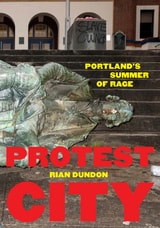
Protest City
Portland's Summer of RageRian Dundon
Oregon State University Press, 2023
In the months leading up to the 2020 presidential election, Portland made national news with nightly social justice protests, often met with violent response by counter protestors and law enforcement. Though frequently regarded as a progressive hub, Portland has a long history of racial inequality and oppression, and the city’s entrenched divisions gained new attention during the Trump years. The photos in Protest City present a visceral visual record of this significant moment in Portland’s history.
Rian Dundon, who has been photographing the rise of extreme politics on the West Coast since 2016, lived only a short walk from the protests that erupted after the murder of George Floyd. For one hundred days, Dundon enmeshed himself in the demonstrations with an unobtrusive point-and-shoot camera. The result is a graphic portrayal of how social movements become politicized, how spectacle serves as a subtext to change in the digital age, and how modern protests blur distinctions among performance, ritual, and surveillance. As he follows the progress of Portland’s conflicts, Dundon draws connections to Oregon’s legacy as a stronghold of white supremacist extremism and interrogates the role of whiteness in racial justice movements.
Most of the photographs in the book were taken between May and October 2020, but the collection also includes photos from protests in late 2020 and 2021 around various related issues, including the Red House eviction blockade, rightwing demonstrations on January 6 and 17, and the one-year anniversary of George Floyd’s murder. Dundon’s striking photos recreate the immediacy and impact of the protests, while essays by historian Carmen Thompson and journalist Donnell Alexander contextualize the uprising’s sociopolitical background. A chronology and author’s note are also featured.
The publisher and author would like to thank the Magnum Foundation, Documentary Arts, and the Economic Hardship Reporting Project for their generous support of this publication. Additional funding has been provided by Furthermore: a program of the J. M. Kaplan Fund.
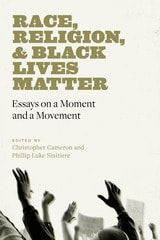
Race, Religion, and Black Lives Matter
Essays on a Moment and a MovementChristopher Cameron
Vanderbilt University Press, 2021
This volume has a simple, but far-reaching argument: religion is an important thread in BLM. To advance this claim, Race, Religion, and Black Lives Matter examines religion’s place in the movement through the lenses of history, politics, and culture. While this collection is not exhaustive or comprehensive in its coverage of religion and BLM, it selectively anthologizes unique aspects of Black religious history, thought, and culture in relation to political struggle in the contemporary era. The chapters aim to document historical change in light of current trends and current events. The contributors analyze religion and BLM in a current historical moment fraught with aggressive, fascist, authoritarian tendencies and one shaped by profound ingenuity, creativity, and insightful perspectives on Black history and culture.
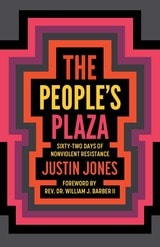
The People’s Plaza
Sixty-Two Days of Nonviolent ResistanceJustin Jones
Vanderbilt University Press, 2022
Central to the occupation was Justin Jones, a student of Fisk University and Vanderbilt Divinity School whose place at the forefront of the protests brought him and the occupation to the attention of the Tennessee state troopers, state and US senators, and Governor Bill Lee. The result was two months of solidarity in the face of rampant abuse, community in the face of state-sponsored terror, and standoff after standoff at the doorsteps of the people's house with those who claimed to represent them. In this, his first book, Jones describes those two revolutionary months of nonviolent resistance against a police state that sought to dehumanize its citizens.
The People's Plaza is a rumination on the abuse of power, and a vision of a more just, equitable, anti-racist Nashville—a vision that kept Jones and those with him posted on the plaza through intense heat, unprovoked arrests, vandalism, theft, and violent suppression. It is a first-person account of hope, a statement of intent, and a blueprint for nonviolent resistance in the American South and elsewhere.
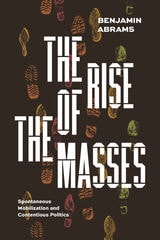
The Rise of the Masses
Spontaneous Mobilization and Contentious PoliticsBenjamin Abrams
University of Chicago Press, 2023
Between 15 and 26 million Americans participated in protests surrounding the murders of George Floyd, Ahmaud Arbery, Breonna Taylor, and others as part of the Black Lives Matter protests in 2020, which is only one of the most recent examples of an immense mobilization of citizens around a cause. In The Rise of the Masses, sociologist Benjamin Abrams addresses why and how people spontaneously protest, riot, and revolt en masse. While most uprisings of such a scale require tremendous resources and organizing, this book focuses on cases where people with no connection to organized movements take to the streets, largely of their own accord. Looking to the Arab Spring, Occupy Wall Street, and the Black Lives Uprising, as well as the historical case of the French Revolution, Abrams lays out a theory of how and why massive mobilizations arise without the large-scale planning that usually goes into staging protests.
Analyzing a breadth of historical and regional cases that provide insight into mass collective behavior, Abrams draws on first-person interviews and archival sources to argue that people organically mobilize when a movement speaks to their pre-existing dispositions and when structural and social conditions make it easier to get involved—what Abrams terms affinity-convergence theory. Shedding a light on the drivers behind large spontaneous protests, The Rise of the Masses offers a significant theory that could help predict movements to come.