Results by title
27 books match the query 'Blues musicians'
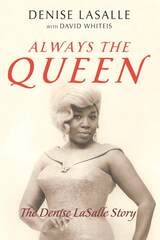
Always the Queen
The Denise LaSalle StoryDenise LaSalle, with David Whiteis
University of Illinois Press, 2020
As honest and no-nonsense as the artist herself, Always the Queen is LaSalle's in-her-own-words story of a lifetime in music. Moving to Chicago as a teen, LaSalle launched a career in gospel and blues that eventually led to the chart-topping 1971 smash ”Trapped by a Thing Called Love” and a string of R&B hits. She reinvented herself as a soul-blues artist as tastes changed and became a headliner on the revitalized southern soul circuit and at festivals nationwide and overseas. Revered for a tireless dedication to her music and fans, LaSalle continued to tour and record until shortly before her death.
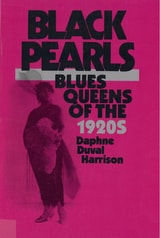
Black Pearls
Blues Queens of the 1920sDaphne Duval Harrison
Rutgers University Press, 1990
Blues music spawned legendary performers whose influence has been felt in many musical forms here and around the world. Until now the important role of the great women blues singers has largely gone unexplored. This book tells of the cultural and social impact of the blues during the 1920s when the genre was dominated by women, both on stage and on record. Harrison (Afro-American Studies Department, University of Maryland) writes with authority, focusing particularly on Sippie Wallace, Edith Wilson, Victoria Spivey, and Alberta Hunter as she analyzes the music and the collective black experience out of which it grew. A significant book, particularly for collections of music history, black studies, and women's studies. -- Library Journal
Blues Before Sunrise 2
Interviews from the Chicago SceneSteve Cushing
University of Illinois Press, 2019
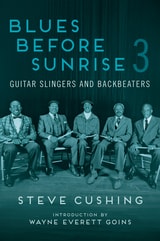
Blues Before Sunrise 3
Guitar Slingers and BackbeatersSteve Cushing. Introduction by Wayne Everett Goins
University of Illinois Press, 2025
Steve Cushing’s third volume of interviews from Blues Before Sunrise puts fans face-to-face with music legends and industry figures. The volume kicks off with a roundtable featuring drumming all-stars Earl Phillips, S.P. Leary, Odie Payne, Clifton James, and Fred Below discussing their lives and craft. Cushing segues to one-on-one interviews with Howlin’ Wolf sideman Phillips; Leary, a fellow Wolf alum and player with Sonny Boy Williamson II; Payne, known for his kick drum technique; longtime Muddy Waters drummer Willie “Big Eyes” Smith; next-generation standard bearer and session mainstay Casey Jones; and King Records house drummer Phillip Paul.
Interviews with guitarists include talks with Honeyboy Edwards, whose friendships with innumerable Chicago blues legends (and Robert Johnson) predated the Great Migration; jazz player turned bluesman Guitar Shorty; and figures like Texas native Roy Gaines, Johnny Heartsman of Oakland, and Memphis-born Floyd Murphy. A final section offers interviews with vocalists, record label founders, and other figures. Music scholar Wayne Everett Goins provides an introduction on blues history, blues style, and the careers of the featured artists.
Interviews: Joel Dorn, Honeyboy Edwards, Slim Gaillard, Roy Gaines, Johnny Heartsman, Franz Jackson, Casey Jones, S.P. Leary, Floyd Murphy, Jimmy “T-99” Nelson, Johnny Parth, Phillip Paul, Odie Payne, Earl Phillips, Art Sheridan, Guitar Shorty, Willie “Big Eyes” Smith, and Norvel Taborn
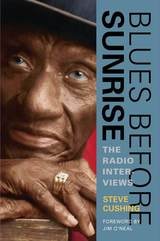
Blues Before Sunrise
The Radio InterviewsSteve Cushing, Foreword by Jim O'Neal
University of Illinois Press, 2010
This collection assembles the best interviews from Steve Cushing's long-running radio program Blues Before Sunrise, the nationally syndicated, award-winning program focusing on vintage blues and R&B. As both an observer and performer, Cushing has been involved with the blues scene in Chicago for decades. His candid, colorful interviews with prominent blues players, producers, and deejays reveal the behind-the-scenes world of the formative years of recorded blues. Many of these oral histories detail the careers of lesser-known but greatly influential blues performers and promoters.
The book focuses in particular on pre–World War II blues singers, performers active in 1950s Chicago, and nonperformers who contributed to the early blues world. Interviewees include Alberta Hunter, one of the earliest African American singers to transition from Chicago's Bronzeville nightlife to the international spotlight, and Ralph Bass, one of the greatest R&B producers of his era. Blues expert, writer, record producer, and cofounder of Living Blues Magazine Jim O'Neal provides the book's foreword.
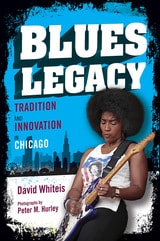
Blues Legacy
Tradition and Innovation in ChicagoDavid Whiteis
University of Illinois Press, 2019
David Whiteis delves into how the current and upcoming Chicago blues generations carry on this legacy. Drawing on in-person interviews, Whiteis places the artists within the ongoing social and cultural reality their work reflects and helps create. Beginning with James Cotton, Eddie Shaw, and other bequeathers, he moves through an all-star council of elders like Otis Rush and Buddy Guy and on to inheritors and today's heirs apparent like Ronnie Baker Brooks, Shemekia Copeland, and Nellie "Tiger" Travis.
Insightful and wide-ranging, Blues Legacy reveals a constantly adapting art form that, whatever the challenges, maintains its links to a rich musical past.
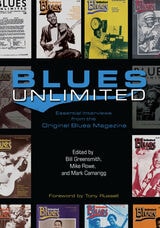
Blues Unlimited
Essential Interviews from the Original Blues MagazineEdited by Bill Greensmith, Mike Rowe, and Mark Camarigg
University of Illinois Press, 2015

Blues in the Blood
Julien Delmaire
Seagull Books, 2023
Blues in the Blood is an ode to the spring of 1932 in the Mississippi delta, when stifling heat crushed the countryside and threatened the harvest, pervasive injustice ruled the day, and ghostly riders of the Ku Klux Klan spread terror. A panoramic historical and musical portrait, Blues in the Blood follows a poor young Black couple who believe their love for each other will save them from this devastation. Julien Delmaire introduces us to a gallery of figures: Blacks, Whites, Native Americans, mulattos, landowners, itinerant bluesmen, preachers, witches, corrupt politicians, prisoners, bootleggers, and Legba, the voodoo god, “master of crossroads,” who, like an otherworldly detective, watches over people’s destinies. As the story unfolds, a world is reborn: the delta, the birthplace of the blues, in which oppressed women and men rediscover the voices and rhythms of their humanity.
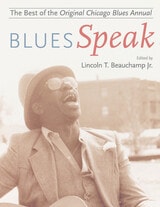
BluesSpeak
Best of the Original Chicago Blues AnnualLincoln T. Beauchamp, Jr.
University of Illinois Press, 2010
This incomparable anthology collects articles, interviews, fiction, and poetry from the Original Chicago Blues Annual, one of music history's most significant periodical blues publications. Founded and operated from 1989 to 1995 by African American musician and entrepreneur Lincoln T. Beauchamp Jr., OCBA gave voice to the blues community and often frankly addressed contentious issues within the blues such as race, identity, prejudice, wealth, gender, and inequity.
OCBA often expressed an explicitly black perspective, but its contributors were a mix of black and white, American and international. Likewise, although OCBA's roots and main focus were in Chicago, Beauchamp's vision for the publication (and his own activities as a blues performer and promoter) embraced an international dimension, reflecting a broad diversity of blues audiences and activities in locations as farflung as Iceland, Poland, France, Italy, and South Africa.
This volume includes key selections from OCBA's seven issues and features candid interviews with blues luminaries such as Koko Taylor, Eddie Boyd, Famoudou Don Moye, Big Daddy Kinsey, Lester Bowie, Junior Wells, Billy Boy Arnold, Herb Kent, Barry Dolins, and many more. Also featured are heartfelt memorials to bygone blues artists, insightful observations on the state of the blues in Chicago and beyond, and dozens of photographs of performers, promoters, and other participants in the worldwide blues scene.
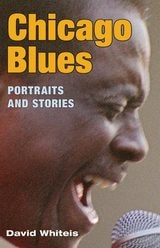
Chicago Blues
Portraits and StoriesDavid Whiteis
University of Illinois Press, 2006
Through revealing portraits of selected local artists and slice-of-life vignettes drawn from the city’s pubs and lounges, Chicago Blues encapsulates the sound and spirit of the blues as it is lived today. As a committed participant in the Chicago blues scene for more than a quarter century, David Whiteis draws on years of his observations and extensive interviews to paint a full picture of the Chicago blues world, both on and off the stage.
In addition to portraits of blues artists he has personally known and worked with, Whiteis takes readers on a tour of venues like East of Ryan and the Starlight Lounge, home to artists such as Jumpin’ Willie Cobbs, Willie D., and Harmonica Khan. He tells the stories behind the lives of past pioneers, including Junior Wells, pianist Sunnyland Slim, and harpist Big Walter Horton, whose music reflects the universal concerns with love, loss, and yearning that continue to keep the blues so vital for so many.
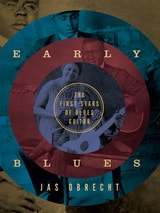
Early Blues
The First Stars of Blues GuitarJas Obrecht
University of Minnesota Press, 2015
Winner of the 2016 Living Blues Award for Blues Book of the Year
The complete history of early blues guitar, with portraits of its first stars—now in paperback
Since the early 1900s, blues and the guitar have traveled side by side. This book tells the story of their pairing from the first reported sightings of blues musicians, to the rise of nationally known stars, to the onset of the Great Depression, when blues recording virtually came to a halt.
Like the best music documentaries, Early Blues: The First Stars of Blues Guitar interweaves musical history, quotes from celebrated musicians (B.B. King, John Lee Hooker, Ry Cooder, and Johnny Winter, to name a few), and a spellbinding array of life stories to illustrate the early days of blues guitar in rich and resounding detail. In these chapters, you’ll meet Sylvester Weaver, who recorded the world’s first guitar solos, and Paramount Records artists Papa Charlie Jackson, Blind Lemon Jefferson, and Blind Blake, the “King of Ragtime Blues Guitar.” Blind Willie McTell, the Southeast’s superlative twelve-string guitar player, and Blind Willie Johnson, street-corner evangelist of sublime gospel blues, also get their due, as do Lonnie Johnson, the era’s most influential blues guitarist; Mississippi John Hurt, with his gentle, guileless voice and syncopated fingerpicking style; and slide guitarist Tampa Red, “the Guitar Wizard.”
Drawing on a deep archive of documents, photographs, record company ads, complete discographies, and up-to-date findings of leading researchers, this is the most comprehensive and complete account ever written of the early stars of blues guitar—an essential chapter in the history of American music.
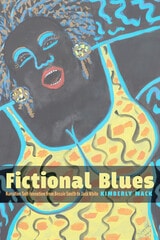
Fictional Blues
Narrative Self-Invention from Bessie Smith to Jack WhiteKimberly Mack
University of Massachusetts Press, 2020
The familiar story of Delta blues musician Robert Johnson, who sold his soul to the devil at a Mississippi crossroads in exchange for guitar virtuosity, and the violent stereotypes evoked by legendary blues “bad men” like Stagger Lee undergird the persistent racial myths surrounding “authentic” blues expression. Fictional Blues unpacks the figure of the American blues performer, moving from early singers such as Ma Rainey and Big Mama Thornton to contemporary musicians such as Amy Winehouse, Rhiannon Giddens, and Jack White to reveal that blues makers have long used their songs, performances, interviews, and writings to invent personas that resist racial, social, economic, and gendered oppression.
Using examples of fictional and real-life blues artists culled from popular music and literary works from writers such as Walter Mosley, Alice Walker, and Sherman Alexie, Kimberly Mack demonstrates that the stories blues musicians construct about their lives (however factually slippery) are inextricably linked to the “primary story” of the narrative blues tradition, in which autobiography fuels musicians' reclamation of power and agency.
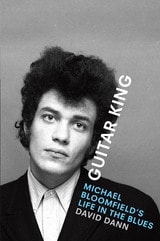
Guitar King
Michael Bloomfield's Life in the BluesBy David Dann
University of Texas Press, 2021
Named one of the world’s great blues-rock guitarists by Rolling Stone, Mike Bloomfield (1943–1981) remains beloved by fans forty years after his untimely death. Taking readers backstage, onstage, and into the recording studio with this legendary virtuoso, David Dann tells the riveting stories behind Bloomfield’s work in the seminal Paul Butterfield Blues Band and the mesmerizing Electric Flag, as well as on the Super Session album with Al Kooper and Stephen Stills, Bob Dylan’s Highway 61 Revisited, and soundtrack work with Peter Fonda and Jack Nicholson.
In vivid chapters drawn from meticulous research, including more than seventy interviews with the musician’s friends, relatives, and band members, music historian David Dann brings to life Bloomfield’s worlds, from his comfortable upbringing in a Jewish family on Chicago’s North Shore to the gritty taverns and raucous nightclubs where this self-taught guitarist helped transform the sound of contemporary blues and rock music. With scenes that are as electrifying as Bloomfield’s solos, this is the story of a life lived at full volume.
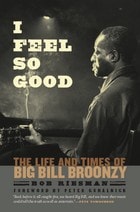
I Feel So Good
The Life and Times of Big Bill BroonzyBob Riesman
University of Chicago Press, 2011
A major figure in American blues and folk music, Big Bill Broonzy (1903–1958) left his Arkansas Delta home after World War I, headed north, and became the leading Chicago bluesman of the 1930s. His success came as he fused traditional rural blues with the electrified sound that was beginning to emerge in Chicago. This, however, was just one step in his remarkable journey: Big Bill was constantly reinventing himself, both in reality and in his retellings of it. Bob Riesman’s groundbreaking biography tells the compelling life story of a lost figure from the annals of music history.
I Feel So Good traces Big Bill’s career from his rise as a nationally prominent blues star, including his historic 1938 appearance at Carnegie Hall, to his influential role in the post-World War II folk revival, when he sang about racial injustice alongside Pete Seeger and Studs Terkel. Riesman’s account brings the reader into the jazz clubs and concert halls of Europe, as Big Bill's overseas tours in the 1950s ignited the British blues-rock explosion of the 1960s. Interviews with Eric Clapton, Pete Townshend, and Ray Davies reveal Broonzy’s profound impact on the British rockers who would follow him and change the course of popular music.
Along the way, Riesman details Big Bill’s complicated and poignant personal saga: he was married three times and became a father at the very end of his life to a child half a world away. He also brings to light Big Bill’s final years, when he first lost his voice, then his life, to cancer, just as his international reputation was reaching its peak. Featuring many rarely seen photos, I Feel So Good will be the definitive account of Big Bill Broonzy’s life and music.
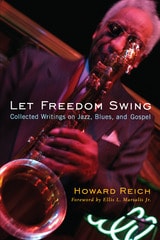
Let Freedom Swing
Collected Writings on Jazz, Blues, and GospelHoward Reich
Northwestern University Press, 2010
Each section of Let Freedom Swing composes a suite, focusing on either a person, place, or scene. Reich gives new life to the standards with his profiles and elegies for such giants as Gershwin, Ellington, and Sinatra. A profile of Louis Armstrong brings out the often angry side of Satchmo but also reveals a more remarkable musician and human being.
His open-mindedness makes Reich a particularly astute observer of the experimental and new, from Ornette Coleman to Chicago experimentalist Ken Vandermark. And his observations about street music open our ears to the songs of everyday life. Reich’s fearlessness is evident in his writing about daunting subjects, such as the New Orleans music scene after Katrina, the lost legacy of jazz in Panama, and the complicated legacy of "race music" in America.
Howard Reich combines a deep enthusiasm for music, a breadth of knowledge, and an ability to share his world with his readers, and Let Freedom Swing is essential reading for anyone interested in the continuing vitality of jazz, gospel, blues, and American music in general.
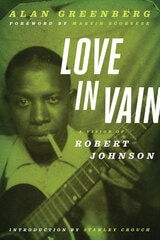
Love in Vain
A Vision of Robert JohnsonAlan Greenberg
University of Minnesota Press, 2012
Robert Johnson was undoubtedly the most outstanding of the Mississippi Delta blues musicians and also one of the first inductees into the Rock and Roll Hall of Fame, but his short life remains steeped in mystery and wrapped in some of the most enduring legends of modern music. Love in Vain is Alan Greenberg’s remarkable, highly acclaimed, and genre-defying screenplay and is widely considered to be one of the foremost books on Robert Johnson’s life and legacy and an extraordinary exercise in American mythmaking. Newly revised and complete with extensive historical notes on Johnson’s life and the culture of the Mississippi Delta and blues music during the 1930s, Love in Vain is at once a classic of music writing and a screenplay whose reputation lies firmly in the realm of great American literature.
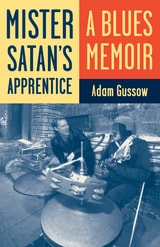
Mister Satan's Apprentice
A Blues MemoirAdam Gussow
University of Minnesota Press, 1998
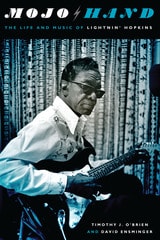
Mojo Hand
The Life and Music of Lightnin' HopkinsBy Timothy J. O'Brien and David Ensminger
University of Texas Press, 2013
In a career that took him from the cotton fields of East Texas to the concert stage at Carnegie Hall and beyond, Lightnin’ Hopkins became one of America’s greatest bluesmen, renowned for songs whose topics effortlessly ranged from his African American roots to space exploration, the Vietnam War, and lesbianism, performed in a unique, eccentric, and spontaneous style of guitar playing that inspired a whole generation of rock guitarists. Hopkins’s music directly and indirectly influenced an amazing range of artists, including Jimi Hendrix, Stevie Ray Vaughan, Miles Davis, John Coltrane, Tom Waits, and Bob Dylan, as well as bands such as the Grateful Dead, Jefferson Airplane, and ZZ Top, with whom Hopkins performed.
Mojo Hand follows Lightin’ Hopkins’s life and music from the acoustic country blues that he began performing in childhood, through the rise of 1950s rock ’n’ roll, which nearly derailed his career, to his reinvention and international success as a pioneer of electric folk blues from the 1960s to the 1980s. The authors draw on 130 vivid oral histories, as well as extensive archival and secondary sources, to provide the fullest account available of the development of Hopkins’s music; his idiosyncratic business practices, such as shunning professional bookers, managers, and publicists; and his durable and indelible influence on modern roots, blues, rock ’n’ roll, singer-songwriter, and folk music. Mojo Hand celebrates the spirit and style, intelligence and wit, and confounding musical mystique of a bluesman who shaped modern American music like no one else.
One Man's Music
The Life and Times of Texas Songwriter Vince BellVince Bell
University of North Texas Press, 2009
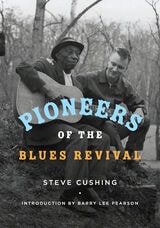
Pioneers of the Blues Revival
Steve Cushing
University of Illinois Press, 2014
Opinionated and territorial, the American, British, and French interviewees provide fascinating first-hand accounts of the era and movement. Experts including Paul Oliver, Gayle Dean Wardlow, Sam Charters, Ray Flerledge, Paul Oliver, Richard K. Spottswood, and Pete Whelan chronicle in their own words their obsessive early efforts at cataloging blues recordings and retrace lifetimes spent loving, finding, collecting, reissuing, and producing records. They and nearly a dozen others recount relationships with blues musicians, including the discoveries of prewar bluesmen Mississippi John Hurt, Son House, Skip James, and Bukka White, and the reintroduction of these musicians and many others to new generations of listeners. The accounts describe fieldwork in the South, renew lively debates, and tell of rehearsals in Muddy Waters's basement and randomly finding Lightning Hopkins's guitar in a pawn shop.
Blues scholar Barry Lee Pearson provides a critical and historical framework for the interviews in an introduction.
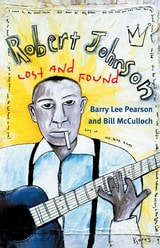
Robert Johnson
Lost and FoundBarry Lee Pearson and Bill McCulloch
University of Illinois Press, 2002
Even with just forty-one recordings to his credit, Robert Johnson (1911-38) is a towering figure in the history of the blues. His vast influence on twentieth-century American music, combined with his mysterious death at the age of twenty-seven, still encourage the speculation and myth that have long obscured the facts about his life. The most famous legend depicts a young Johnson meeting the Devil at a dusty Mississippi crossroads at midnight and selling his soul in exchange for prodigious guitar skills.
Barry Lee Pearson and Bill McCulloch examine the full range of writings about Johnson and weigh the conflicting accounts of Johnson's life story against interviews with blues musicians and others who knew the man. Their extensive research uncovers a life every bit as compelling as the fabrications and exaggerations that have sprung up around it. In examining the bluesman's life and music, and the ways in which both have been reinvented and interpreted by other artists, critics, and fans, Robert Johnson: Lost and Found charts the cultural forces that have mediated the expression of African American artistic traditions.
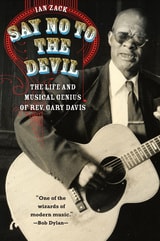
Say No to the Devil
The Life and Musical Genius of Rev. Gary DavisIan Zack
University of Chicago Press, 2015
The first biography of Davis, Say No to the Devil restores “the Rev’s” remarkable story. Drawing on extensive research and interviews with many of Davis’s former students, Ian Zack takes readers through Davis’s difficult beginning as the blind son of sharecroppers in the Jim Crow South to his decision to become an ordained Baptist minister and his move to New York in the early 1940s, where he scraped out a living singing and preaching on street corners and in storefront churches in Harlem. There, he gained entry into a circle of musicians that included, among many others, Lead Belly, Woody Guthrie, and Dave Van Ronk. But in spite of his tremendous musical achievements, Davis never gained broad recognition from an American public that wasn’t sure what to make of his trademark blend of gospel, ragtime, street preaching, and the blues. His personal life was also fraught, troubled by struggles with alcohol, women, and deteriorating health.
Zack chronicles this remarkable figure in American music, helping us to understand how he taught and influenced a generation of musicians.
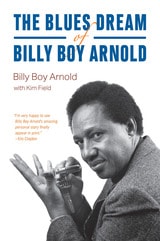
The Blues Dream of Billy Boy Arnold
Billy Boy Arnold with Kim Field
University of Chicago Press, 2021
Simply put, Billy Boy Arnold is one of the last men standing from the Chicago blues scene’s raucous heyday. What’s more, unlike most artists in this electrifying melting pot, who were Southern transplants, Arnold—a harmonica master who shared stages with Bo Diddley, Muddy Waters, and Howlin’ Wolf, plus a singer and hitmaker in his own right who first recorded the standards “I Wish You Would” and “I Ain’t Got You”—was born right here and has lived nowhere else. This makes his perspective on Chicago blues, its players, and its locales all the rarer and all the more valuable. Arnold has witnessed musical generations come and go, from the decline of prewar country blues to the birth of the electric blues and the worldwide spread of rock and roll. Working here in collaboration with writer and fellow musician Kim Field, he gets it all down. The Blues Dream of Billy Boy Arnold is a remarkably clear-eyed testament to more than eighty years of musical love and creation, from Arnold’s adolescent quest to locate the legendary Sonny Boy Williamson, the story of how he named Bo Diddley Bo Diddley, and the ups and downs of his seven-decade recording career. Arnold’s tale—candidly told with humor, insight, and grit—is one that no fan of modern American music can afford to miss.
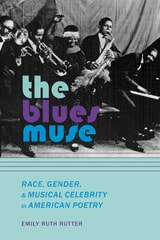
The Blues Muse
Race, Gender, and Musical Celebrity in American PoetryEmily Ruth Rutter
University of Alabama Press, 2018
A critical analysis of the poetic representations and legacies of five landmark blues artists
The Blues Muse: Race, Gender, and Musical Celebrity in American Poetry focuses on five key blues musicians and singers—Gertrude “Ma” Rainey, Bessie Smith, Billie Holiday, Robert Johnson, and Lead Belly—and traces the ways in which these artists and their personas have been invoked and developed throughout American poetry. This study spans nearly one hundred years of literary and musical history, from the New Negro Renaissance to the present.
Emily Ruth Rutter not only examines blues musicians as literary touchstones or poetic devices, but also investigates the relationship between poetic constructions of blues icons and shifting discourses of race and gender. Rutter’s nuanced analysis is clear, compelling, and rich in critical assessments of these writers’ portraits of the musical artists, attending to their strategies and oversights.
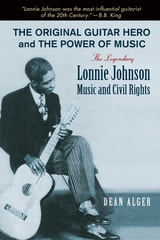
The Original Guitar Hero and the Power of Music
The Legendary Lonnie Johnson, Music, and Civil RightsDean Alger
University of North Texas Press, 2014
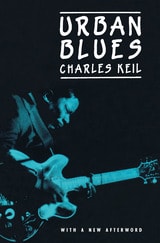
Urban Blues
Charles Keil
University of Chicago Press, 1968
"Enlightening. . . . [Keil] has given a provocative indication of the role of the blues singer as a focal point of ghetto community expression."—John S. Wilson, New York Times Book Review
"[Urban Blues] expresses authentic concern for people who are coming to realize that their past was . . . the source of meaningful cultural values."—Atlantic
"An achievement of the first magnitude. . . . He opens our eyes and introduces a world of amazingly complex musical happening."—Robert Farris Thompson, Ethnomusicology
"[Keil's] vigorous, aggressive scholarship, lucid style and sparkling analysis stimulate the challenge. Valuable insights come from treating urban blues as artistic communication."—James A. Bonar, Boston Herald
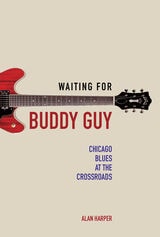
Waiting for Buddy Guy
Chicago Blues at the CrossroadsAlan Harper
University of Illinois Press, 2016