Results by title
23 books match the query 'Body, Human'
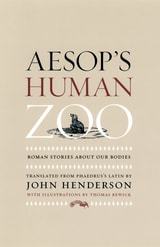
Aesop's Human Zoo
Roman Stories about Our BodiesPhaedrus
University of Chicago Press, 2004
Providing unusual insights into the heart of Roman culture, these clever poems open up odd avenues of ancient lore and life as they explore social types and physical aspects of the body, regularly mocking the limitations of human nature and offering vulgar or promiscuous interpretations of the stuff of social life.
Featuring folksy proverbs and satirical anecdotes, filled with saucy naughtiness and awful puns, Aesop's Human Zoo will amuse you with its eccentricities and hit home with its shrewdly candid and red raw messages. The entertainment offered in this volume of impeccably accurate translations is truly a novelty—a good-hearted and knowing laugh courtesy of classical poetry. Beginning to advanced classicists and Latin scholars will appreciate the original Latin text provided in this bilingual edition. The splash of classic Thomas Bewick wood engravings to accompany the fables renders the collection complete.
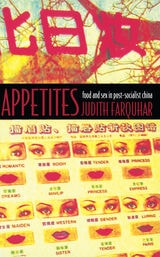
Appetites
Food and Sex in Post-Socialist ChinaJudith Farquhar
Duke University Press, 2002
From eating well in improving economic times to memories of the late 1950s famine, from the flavors of traditional Chinese medicine to modernity’s private sexual passions, this book argues that embodiment in all its forms must be invented and sustained in public reflections about personal and national life. As much at home in science studies and social theory as in the details of life in Beijing, this account uses anthropology, cultural studies, and literary criticism to read contemporary Chinese life in a materialist and reflexive mode. For both Maoist and market reform periods, this is a story of high culture in appetites, desire in collective life, and politics in the body and its dispositions.
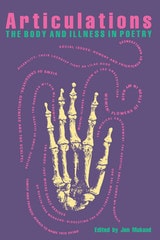
Articulations
The Body and Illness in PoetryJon Mukand
University of Iowa Press, 1994
In 1987 poet and physician Jon Mukand published Sutured Words, a volume of contemporary poems to help patients, their families and friends, and all health care professionals embrace the complexity of healing, illness, and death. Robert Coles called the collection “a wonderful source of inspiration and instruction for any of us who are trying to figure out what our work means”; Norman Cousins was impressed by the “discernment and high quality of the selections.” Now, in Articulations, Mukand adds more than a hundred new poems to the strongest poems from Sutured Words to give us a lyrical, enlightened understanding of the human dimensions of suffering and illness
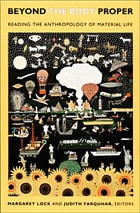
Beyond the Body Proper
Reading the Anthropology of Material LifeMargaret Lock and Judith Farquhar, eds.
Duke University Press, 2007
Beyond the Body Proper includes nine sections conceptually organized around themes such as everyday life, sex and gender, and science. Each section is preceded by interpretive commentary by the volume’s editors. Within the collection are articles and book excerpts focused on bodies using tools and participating in rituals, on bodies walking and eating, and on the female circumcision controversy, as well as pieces on medical classifications, spirit possession, the commodification of body parts, in vitro fertilization, and an artist/anatomist’s “plastination” of cadavers for display. Materialist, phenomenological, and feminist perspectives on embodiment appear along with writings on interpretations of pain and the changing meanings of sexual intercourse. Essays on these topics and many others challenge Eurocentric assumptions about the body as they speak to each other and to the most influential contemporary trends in the human sciences.
With selections by: Henry Abelove, Walter Benjamin, Janice Boddy, John Boswell, Judith Butler, Caroline Walker Bynum, Stuart Cosgrove, Michel de Certeau, Gilles Deleuze, Alice Domurat Dreger, Barbara Duden, Friedrich Engels, E. E. Evans-Pritchard, Judith Farquhar, Marcel Granet, Felix Guattari, Ian Hacking, Robert Hertz, Patricia Leyland Kaufert, Arthur Kleinman, Shigehisa Kuriyama, Jean Langford, Bruno Latour, Margaret Lock, Emily Martin, Karl Marx, Marcel Mauss, Maurice Merleau-Ponty, Nancy K. Miller, Lisa Jean Moore, John D. O’Neil, Aihwa Ong, Mariella Pandolfi, Susan Pedersen, Gregory M. Pflugfelder, Rayna Rapp, Nancy Scheper-Hughes, Kristofer Schipper, Matthew Schmidt, Peter Stallybrass, Michael Taussig, Charis Thompson, E.P. Thompson, Anna Lowenhaupt Tsing, Victor Turner, Terence Turner, Jose van Dijck, Keith Wailoo, Brad Weiss, Allon White
Blood and Bone
Poems by PhysiciansAngela Belli
University of Iowa Press, 1998
Bodies in Contact
Rethinking Colonial Encounters in World HistoryTony Ballantyne and Antoinette Burton, eds.
Duke University Press, 2005
Bodies in Contact brings together important scholarship on colonial gender studies gathered from journals around the world. Breaking with approaches to world history as the history of “the West and the rest,” the contributors offer a panoramic perspective. They examine aspects of imperial regimes including the Ottoman, Mughal, Soviet, British, Han, and Spanish, over a span of six hundred years—from the fifteenth century through the mid-twentieth. Discussing subjects as diverse as slavery and travel, ecclesiastical colonialism and military occupation, marriage and property, nationalism and football, immigration and temperance, Bodies in Contact puts women, gender, and sexuality at the center of the “master narratives” of imperialism and world history.
Contributors. Joseph S. Alter, Tony Ballantyne, Antoinette Burton, Elisa Camiscioli, Mary Ann Fay, Carter Vaughn Findley, Heidi Gengenbach, Shoshana Keller, Hyun Sook Kim, Mire Koikari, Siobhan Lambert-Hurley, Melani McAlister, Patrick McDevitt, Jennifer L. Morgan, Lucy Eldersveld Murphy, Rosalind O’Hanlon, Rebecca Overmyer-Velázquez, Fiona Paisley, Adele Perry, Sean Quinlan, Mrinalini Sinha, Emma Jinhua Teng, Julia C. Wells
Body Thoughts
Andrew J. Strathern
University of Michigan Press, 1996
Coyote Nation
Sexuality, Race, and Conquest in Modernizing New Mexico, 1880-1920Pablo Mitchell
University of Chicago Press, 2005
Coyote Nation considers these questions as it explores how New Mexicans evaluated and categorized racial identities through bodily practices. Where ethnic groups were numerous and—in the wake of miscegenation—often difficult to discern, the ways one dressed, bathed, spoke, gestured, or even stood were largely instrumental in conveying one's race. Even such practices as cutting one's hair, shopping, drinking alcohol, or embalming a deceased loved one could inextricably link a person to a very specific racial identity.
A fascinating history of an extraordinarily plural and polyglot region, Coyote Nation will be of value to historians of race and ethnicity in American culture.

Dismembering the Male
Men's Bodies, Britain, and the Great WarJoanna Bourke
University of Chicago Press, 1996
Each chapter explores a different facet of the war and masculinity in depth. Joanna Bourke discovers that those who were dismembered and disabled by the war were not viewed as passive or weak, like their civilian counterparts, but were the focus of much government and public sentiment. Those suffering from disease were viewed differently, often finding themselves accused of malingering.
Joanna Bourke argues convincingly that military experiences led to a greater sharing of gender identities between men of different classes and ages. Dismembering the Male concludes that ultimately, attempts to reconstruct a new type of masculinity failed as the threat of another war, and with it the sacrifice of a new generation of men, intensified.
Invention Of Women
Making An African Sense Of Western Gender DiscoursesOyeronke Oyewumi
University of Minnesota Press, 1997
Oyewumi traces the misapplication of Western, body-oriented concepts of gender through the history of gender discourses in Yoruba studies. Her analysis shows the paradoxical nature of two fundamental assumptions of feminist theory: that gender is socially constructed and that the subordination of women is universal. The Invention of Women demonstrates, to the contrary, that gender was not constructed in old Yoruba society, and that social organization was determined by relative age.
A meticulous historical and epistemological account of an African culture on its own terms, this book makes a persuasive argument for a cultural, context-dependent interpretation of social reality. It calls for a reconception of gender discourse and the categories on which such study relies. More than that, the book lays bare the hidden assumptions in the ways these different cultures think. A truly comparative sociology of an African culture and the Western tradition, it will change the way African studies and gender studies proceed.
Matters of Gravity
Special Effects and Supermen in the 20th CenturyScott Bukatman
Duke University Press, 2003
Considering theme parks, cyberspace, cinematic special effects, superhero comics, and musical films, Matters of Gravity highlights phenomena that make technology spectacular, permit unfettered flights of fantasy, and free us momentarily from the weight of gravity and history, of past and present. Bukatman delves into the dynamic ways pop culture imagines that apotheosis of modernity: the urban metropolis. He points to two genres, musical films and superhero comics, that turn the city into a unique site of transformative power. Leaping in single bounds from lively descriptions to sharp theoretical insights, Matters of Gravity is a deft, exhilarating celebration of the liberatory effects of popular culture.
Medieval Identity Machines
Jeffrey J. Cohen
University of Minnesota Press, 2003
A provocative new approach to medieval culture
In Medieval Identity Machines, Jeffrey J. Cohen examines the messiness, permeability, and perversity of medieval bodies, arguing that human identity always exceeds the limits of the flesh. Combining critical theory with a rigorous reading of medieval texts, Cohen asks if the category “human” isn’t too small to contain the multiplicity of identities. As such, this book is the first to argue for a “posthuman” Middle Ages and to make extensive use of the philosophical writings of Gilles Deleuze to rethink the medieval.
Among the topics that Cohen covers are the passionate bond between men and horses in chivalric training; the interrelation of demons, celibacy, and colonialism in an Anglo-Saxon saint’s life; Lancelot’s masochism as envisioned by Chrétien de Troyes; the voice of thunder echoing from Margery Kempe; and the fantasies that sustained some dominant conceptions of race. This tour of identity—in all its fragility and diffusion—illustrates the centrality of the Middle Ages to theory as it enhances our understanding of self, embodiment, and temporality in the medieval world.
National Abjection
The Asian American Body OnstageKaren Shimakawa
Duke University Press, 2002
Shimakawa looks at the origins of Asian American theater, particularly through the memories of some of its pioneers. Her examination of the emergence of Asian American theater companies illuminates their strategies for countering the stereotypes of Asian Americans and the lack of visibility of Asian American performers within the theater world. She shows how some plays—Wakako Yamauchi’s 12-1-A, Frank Chin’s Chickencoop Chinaman, and The Year of the Dragon—have both directly and indirectly addressed the displacement of Asian Americans. She analyzes works attempting to negate the process of abjection—such as the 1988 Broadway production of M. Butterfly as well as Miss Saigon, a mainstream production that enacted the process of cultural displacement both onstage and off. Finally, Shimakawa considers Asian Americanness in the context of globalization by meditating on the work of Ping Chong, particularly his East-West Quartet.

Pain, Death, and the Law
Austin Sarat, Editor
University of Michigan Press, 2001
Primary Care
More Poems by PhysiciansAngela Belli
University of Iowa Press, 2006
Reading The Social Body
Catherine B. Burroughs
University of Iowa Press, 1993
The overarching argument of Reading the Social Body is that the body is cultural rather than “natural.” Some of the essays treat the social construction of bodies that have actually existed in human history; others discuss the representation of bodies in artistic contexts; all recognize that everything visible to the human body—from posture and costume to the width of an eyebrow or a smile—is determined by and shaped in response to a particular culture.
Sensual Relations
Engaging the Senses in Culture and Social TheoryDavid Howes
University of Michigan Press, 2003
David Howes is Professor of Anthropology, Concordia University, Montreal, Quebec.
The Body in Late-Capitalist USA
Donald M. Lowe
Duke University Press, 1995
Moving beyond studies of representations and images of the body, Lowe focuses on the intersection of body practices, language, and the Social to describe concretely the reality of a lived body. His strongly synthetic work brings together Marxist critique, semiotics, Foucaultian discourse analysis, and systems and communications theory to examine those practices that construct the body under late capitalism: habits of work and consumption, the ways we give birth and raise children, socialization, mental and physical healing, reconstructions and contestations of sexuality and gender. Lowe draws upon a wide range of sources, including government and labor studies and statistics, diagnostic and statistical manuals on mental illness, computer manuals, self-help books, and guides to work-related stress disorders, to illustrate the transformation of the body into a nexus of exchange value in postmodern society.
The Human Animal in Western Art and Science
Martin Kemp
University of Chicago Press, 2007
From the lazy, fiddling grasshopper to the sneaky Big Bad Wolf, children’s stories and fables enchant us with their portrayals of animals who act like people. But the comparisons run both ways, as metaphors, stories, and images—as well as scientific theories—throughout history remind us that humans often act like animals, and that the line separating them is not as clear as we’d like to pretend.
Here Martin Kemp explores a stunning range of images and ideas to demonstrate just how deeply these underappreciated links between humans and other fauna are embedded in our culture. Tracing those interconnections among art, science, and literature, Kemp leads us on a dazzling tour of Western thought, from Aristotelian physiognomy and its influence on phrenology to the Great Chain of Being and Darwinian evolution. We learn about the racist anthropology underlying a familiar Degas sculpture, see paintings of a remarkably simian Judas, and watch Mowgli, the man-child from Kipling’s The Jungle Book, exhibit the behaviors of the beasts who raised him. Like a kaleidoscope, Kemp uses these stories to refract, reconfigure, and echo the essential truth that the way we think about animals inevitably inflects how we think about people, and vice versa.
Loaded with vivid illustrations and drawing on sources from Hesiod to La Fontaine, Leonardo to P. T. Barnum, The Human Animal in Western Art and Science is a fascinating, eye-opening reminder of our deep affinities with our fellow members of the animal kingdom.
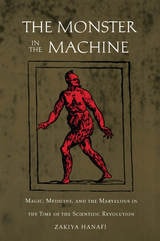
The Monster in the Machine
Magic, Medicine, and the Marvelous in the Time of the Scientific RevolutionZakiya Hanafi
Duke University Press, 2000
Noting that the word “monster” is derived from the Latin for “omen” or “warning,” Hanafi explores the monster’s early identity as a portent or messenger from God. Although monsters have always been considered “whatever we are not,” they gradually were tranformed into mechanical devices when new discoveries in science and medicine revealed the mechanical nature of the human body. In analyzing the historical literature of monstrosity, magic, and museum collections, Hanafi uses contemporary theory and the philosophy of technology to illuminate the timeless significance of the monster theme. She elaborates the association between women and the monstrous in medical literature and sheds new light on the work of Vico—particularly his notion of the conatus—by relating it to Vico’s own health. By explicating obscure and fascinating texts from such disciplines as medicine and poetics, she invites the reader to the piazzas and pulpits of seventeenth-century Naples, where poets, courtiers, and Jesuit preachers used grotesque figures of speech to captivate audiences with their monstrous wit.
Drawing from a variety of texts from medicine, moral philosophy, and poetics, Hanafi’s guided tour through this baroque museum of ideas will interest readers in comparative literature, Italian literature, history of ideas, history of science, art history, poetics, women’s studies, and philosophy.
The Reef
Elizabeth Arnold
University of Chicago Press, 1998
"Arnold's poetry, much more mature than most writers' first book, links lyrics, slight narratives, and a bit of satire into a work of glorious affirmation. The book is a splendid read."—Mary Sue Koeppel, Florida Times-Union
"For this commitment to both the autobiographical honesty and aesthetic risk, The Reef should be valuable to anyone who has been waiting for where contemporary American poetry is going."—Agni
This Is My Body
Representational Practices in the Early Middle AgesMichal Kobialka
University of Michigan Press, 2003
Michal Kobialka is Professor in the Department of Theatre Arts and Dance at the University of Minnesota.
World Below
Body and Cosmos in Otomí Indian RitualJacques Galinier
University Press of Colorado, 2004
Drawing upon both Freud and theories of the carnivalesque, Galinier argues that the "world below" (the lower half of the body) provides the foundation for an indigenous metapsychology that is at once very close to and very far away from the Freudian conceptual apparatus.