Results by title
36 books match the query 'Borders'
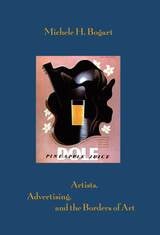
Artists, Advertising, and the Borders of Art
Michele H. Bogart
University of Chicago Press, 1995
From the turn of the century through the 1950s, the explosive growth of popular magazines and national advertising offered artists new sources of income and new opportunities for reaching huge audiences. Bogart shows how, at the same time, this change in the marketplace also forced a rethinking of the purpose of the artistic enterprise itself. She examines how illustrators such as Howard Pyle, Charles Dana Gibson, and Norman Rockwell claimed their identities as artists within a market-oriented framework. She looks at billboard production and the growing schism between "art" posters and billboard advertisements; at the new roles of the art director; at the emergence of photography as the dominant advertising medium; and at the success of painters in producing "fine art" for advertising during the 1930s and 1940s.

At the Borders of Sleep
On Liminal LiteraturePeter Schwenger
University of Minnesota Press, 2012
At the Borders of Sleep is a unique exploration of the connections between literature and the liminal states between waking and sleeping—from falling asleep and waking up, to drowsiness and insomnia, to states in which sleeping and waking mix. Delving into philosophy as well as literature, Peter Schwenger investigates the threshold between waking and sleeping as an important and productive state between the forced march of rational thought and the oblivion of unconsciousness.
While examining literary representations of the various states between waking and sleeping, At the Borders of Sleep also analyzes how writers and readers alike draw on and enter into these states. To do so Schwenger reads a wide range of authors for whom the borders of sleep are crucial, including Marcel Proust, Stephen King, Paul Valéry, Fernando Pessoa, Franz Kafka, Giorgio de Chirico, Virginia Woolf, Philippe Sollers, and Robert Irwin. Considering drowsiness, insomnia, and waking up, he looks at such subjects as the hypnagogic state, the experience of reading and why it is different from full consciousness, the relationships between insomnia and writing and why insomnia is often a source of creative insight, and the persistence of liminal elements in waking thought. A final chapter focuses on literature that blurs dream and waking life, giving special attention to experimental writing.
Ultimately arguing that, taking place on the edges of consciousness, both the reading and writing of literature are liminal experiences, At the Borders of Sleep suggests new ways to think about the nature of literature and consciousness.
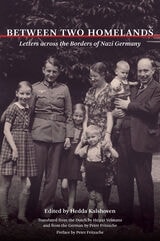
Between Two Homelands
Letters across the Borders of Nazi GermanyEdited by Hedda Kalshoven
University of Illinois Press, 2014
In 1920, at the age of thirteen, Irmgard Gebensleben first traveled from Germany to The Netherlands on a "war-children transport." She would later marry a Dutch man and live and raise her family there while keeping close to her German family and friends through the frequent exchange of letters. Yet during this period geography was not all that separated them. Increasing divergence in political opinions and eventual war between their countries meant letters contained not only family news but personal perspectives on the individual, local, and national choices that would result in the most destructive war in history.
This important collection, first assembled by Irmgard Gebensleben's daughter Hedda Kalshoven, gives voice to ordinary Germans in the Weimar Republic and the Third Reich and in the occupied Netherlands. The correspondence between Irmgard, her friends, and four generations of her family delve into their most intimate and candid thoughts and feelings about the rise of National Socialism. The responses to the German invasion and occupation of the Netherlands expose the deeply divided loyalties of the family and reveal their attempts to bridge them. Of particular value to historians, the letters evoke the writers' beliefs and their understanding of the events happening around them.
This first English translation of Ik denk zoveel aan jullie: Een briefwisseling tussen Nederland en Duitsland 1920-1949, has been edited, abridged, and annotated by Peter Fritzsche with the assent and collaboration of Hedda Kalshoven. After the book's original publication the diary of Irmgard's brother and loyal Wehrmacht soldier, Eberhard, was discovered and edited by Hedda Kalshoven. Fritzsche has drawn on this important additional source in his preface.
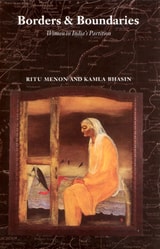
Borders and Boundaries
How Women Experienced the Partition of IndiaRitu Menon
Rutgers University Press, 1998
While there are plenty of official accounts of Partition, there are few social histories and no feminist histories. Borders and Boundaries changes that, providing first-hand accounts and memoirs, juxtaposed alongside official government accounts. The authors make women not only visible but central. They explore what country, nation, and religious identity meant for women, and they address the question of the nation-state and the gendering of citizenship.
In the largest ever peace-time mass migration of people, violence against women became the norm. Thousands of women committed suicide or were done to death by their own kinsmen. Nearly 100,000 women were "abducted" during the migration. A young woman might have been separated from her family when a convoy was ambushed, abducted by people of another religion, forced to convert, and forced into marriage or cohabitation. After bearing a child, she would be offered the opportunity to return only if she left her child behind and if she could face shame in her natal community. These stories do not paint their subjects as victims. Theirs are the stories of battles over gender, the body, sexuality, and nationalism-stories of women fighting for identity.
Borders of Belief
Religious Nationalism and the Formation of Identity in Ireland and TurkeyGregory J. Goalwin
Rutgers University Press, 2022
Borders of Care
Immigrants, Migrants, and the Fight for Health Care in the United StatesBeatrix Hoffman
University of Chicago Press, 2025
For the roughly ten million undocumented immigrants living in the United States, federal health care coverage is out of reach. Barred from Medicare, Medicaid, and the Affordable Care Act, most rely on hospital emergency rooms when they get sick, or clinics that don’t inquire about immigration status. Further obstacles to health care, including discrimination and the fear of deportation, mean that immigrants, undocumented or not, seek and receive less medical attention than any other population in the country. Yet immigrants haven’t always been ostracized from health care in the United States—providers and activists have for over a century worked to make medical services available to newcomers and migrants, including, at times, the undocumented.
Drawing together stories from diverse communities from the mid-nineteenth century to the present, Borders of Care examines how health care in the United States has both included and excluded immigrants. Beatrix Hoffman analyzes both the health and immigration systems, adding to our understanding of why these structures, and the policies that support them, have resisted reform. Moreover, she shows that immigrants, often scapegoated as burdens on the health-care system, have strengthened it through their responses to systemic exclusion. By creating hospitals and clinics, serving as practitioners, fighting for safer workplaces, filing lawsuits, organizing and protesting, immigrants and migrants have improved medical access for everybody and advanced the idea of health care as a universal right. As accessible as it is authoritative, Hoffman’s survey could not be more timely.
Borders of Care
Immigrants, Migrants, and the Fight for Health Care in the United StatesBeatrix Hoffman
University of Chicago Press, 2025
Probes the relationship between the immigration and health care systems in the United States.
For the roughly ten million undocumented immigrants living in the United States, federal health care coverage is out of reach. Barred from Medicare, Medicaid, and the Affordable Care Act, most rely on hospital emergency rooms when they get sick, or clinics that don’t inquire about immigration status. Further obstacles to health care, including discrimination and the fear of deportation, mean that immigrants, undocumented or not, seek and receive less medical attention than any other population in the country. Yet immigrants haven’t always been ostracized from health care in the United States—providers and activists have for over a century worked to make medical services available to newcomers and migrants, including, at times, the undocumented.
Drawing together stories from diverse communities from the mid-nineteenth century to the present, Borders of Care examines how health care in the United States has both included and excluded immigrants. Beatrix Hoffman analyzes both the health and immigration systems, adding to our understanding of why these structures, and the policies that support them, have resisted reform. Moreover, she shows that immigrants, often scapegoated as burdens on the health-care system, have strengthened it through their responses to systemic exclusion. By creating hospitals and clinics, serving as practitioners, fighting for safer workplaces, filing lawsuits, organizing and protesting, immigrants and migrants have improved medical access for everybody and advanced the idea of health care as a universal right. As accessible as it is authoritative, Hoffman’s survey could not be more timely.
Borders of Chinese Civilization
Geography and History at Empire's EndD. R. Howland
Duke University Press, 1996
With Japan’s decision in the 1870s to modernize and westernize, China’s relationship with Japan underwent a crucial change—one that resulted in its decisive separation from Chinese civilization and, according to Howland, a destabilization of China’s worldview. His examination of the ways in which Chinese perceptions of Japan altered in the 1880s reveals the crucial choice faced by the Chinese of whether to interact with Japan as “kin,” based on geographical proximity and the existence of common cultural threads, or as a “barbarian,” an alien force molded by European influence.
By probing China’s poetic and expository modes of portraying Japan, Borders of Chinese Civilization exposes the changing world of the nineteenth century and China’s comprehension of it. This broadly appealing work will engage scholars in the fields of Asian studies, Chinese literature, history, and geography, as well as those interested in theoretical reflections on travel or modernism.
Borders of Visibility
Haitian Migrant Women and the Dominican Nation-Stateby Jennifer L. Shoaff
University of Alabama Press, 2018
An anthropological study of Haitian migrant women in the Dominican Republic.
Borders of Visibility offers extremely timely insight into the Dominican Republic’s racist treatment of Haitian descendants within its borders. Jennifer L. Shoaff employs multisited feminist research to focus on the geographies of power that intersect to inform the opportunities and constraints that migrant women must navigate to labor and live within a context that largely denies their human rights, access to citizenship, and a sense of security and belonging.
Paradoxically, these women are both hypervisible because of the blackness that they embody and invisible because they are marginalized by intersecting power inequalities. Haitian women must contend with diffuse legal, bureaucratic and discursive state-local practices across “border” sites that situate them as a specific kind of threat that must be contained. Shoaff examines this dialectic of mobility and containment across various sites in the northwest Dominican Republic, including the official border crossing, transborder and regional used-clothing markets, migrant settlements (bateyes), and other rural-urban contexts.
Shoaff combines ethnographic interviews, participant observation, institutional analyses of state structures and nongovernmental agencies, and archival documentation to bring this human rights issue to the fore. Although primarily grounded in critical ethnographic practice, this work contributes to the larger fields of transnational feminism, black studies, migration and border studies, political economy, and cultural geography. Borders of Visibility brings much needed attention to Haitian migrant women’s economic ingenuity and entrepreneurial savvy, their ability to survive and thrive, their often impossible choices whether to move or to stay, returning them to a place of visibility, while exposing the very structures that continue to render them invisible and, thus, expendable over time.

Borders, Human Itineraries, and All Our Relation
Dele Adeyemo, Natalie Diaz, Nadia Yala Kisukidi, and Rinaldo Walcott. With a Foreword by Christina Sharpe
Duke University Press, 2024

Chiricahua Mountains
Bridging the Borders of WildnessText by Ken Lamberton; Photographs by Jeff Garton
University of Arizona Press, 2003
Lamberton shares insights about the geology, habitats, and diversity of wildlife in a place of such isolation that species must either adapt or become extinct. The Chiricahuas are one link in a chain of mountains connecting the Rockies to the Sierra Madre Occidental in Mexico, and some Madrean species reach the northernmost extension of their ranges here: birds like sulphur-bellied flycatchers, mammals like jaguarundis, and trees like the Apache pine. But this is not an untraveled wilderness. We learn why the Chiricahuas are so popular with birders, who flock to these mountains from around the world in the hopes of spotting some of the nearly four hundred avian species found here. We also learn something of the Chiricahua's rich human culture, from Apache warriors to European settlers.
Gracing the text are more than a dozen black-and-white photographs by Jeff Garton that offer views of the Chiricahuas different from those usually found in tourist brochures: landscapes and riparian settings, rock formations and plant studies that give readers a lasting impression of the beauty and tranquility of this wilderness. Together words and images convey an intimate view of one of the Southwest's most exotic locations—stronghold, paradise, and everlasting island in the vast and rolling desert.

Cold War and Sinophone Culture at the Borders
Shuang Shen
University of Michigan Press, 2027
Cold War and Sinophone Culture at the Borders examines Sinophone literary and cultural production in relation to the politics of the global Cold War and decolonization in Hong Kong, Singapore, and Malaysia. As we reckon with the historical and contemporary geopolitical standoffs in the Cold War–divided territories, Shuang Shen draws attention to the diasporic communities outside Chinese sovereign territories and shows that these supposedly peripheral locations were in fact significant cultural and political hot spots.
Shen demonstrates how Cold War borders exerted geo-power over strategic hot spots, organized global flows of populations and cultures, hardened the boundaries of aesthetic debates, and managed interracial relationships and plurilingual exchange. The multifold bordering effect in turn complicates the common perception of the border as a mechanism of territorial division. Cold War and Sinophone Culture at the Borders proposes that a critical examination of borders—not just territorial divisions, but also social, political, and aesthetic boundaries––can tap into different structures of power without needing to incorporate them into a single binary framework of the metropole versus colony.

Crossing the Borders
New Methods and Techniques in the Study of Archaeological Materials from the CaribbeanEdited by Corinne L. Hofman, Menno Hoogland, and Annelou L. van Gijn
University of Alabama Press, 2008
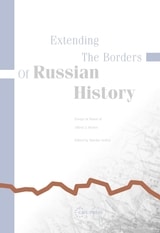
Extending the Borders of Russian History
Essays in Honor of Alfred J. RieberMarsha Siefert
Central European University Press, 2003
The borders of Russian history, whether chronological, geographical, political or intellectual, have always been patrolled, have sometimes been evaded, but have never been invisible. This volume attempts to extend those borders in several ways. The articles stress continuity rather than ruptures and their organization emphasizes persistent factors over time, particularly across the 1917 divide. Geographical dimensions are explored not through conquest but through regional responses to the center: local variants of eighteenth- and nineteenth-century colonial policies in the Caucasus and Turkestan are complemented by Central Asian petitions for citizenship in the 1930s and Siberian healing in the 1990s. Ukrainian aspirations take a special focus, from Kyivan Rus’ to Ruthenian dreams.
Politically, of course, Marxist–Leninist ideology attempted to extend its own frontiers of Russian history. Several studies here attempt to assess the meaning of the Soviet period in terms of ideology, practices, processes and memory. It is fitting too that the now accepted boundaries of the Soviet era—the revolutionary decade and the first decade of transition—are subject to detailed attention and analysis. The intellectual borders of Russian and Soviet history, long policed from within and without, have been breached by the creative and wide-ranging use of newly accessible archival sources that form the basis for these articles. The sense of community exhibited by this collection, however, is not artificial nor is it wholly imagined. It derives from the honoree, whose scholarly life has exhibited the blurring of traditional boundaries, whether disciplinary, generational, or national, that is represented by the contributors to this volume.

Fannie Barrier Williams
Crossing the Borders of Region and RaceWanda A. Hendricks
University of Illinois Press, 2014

Figures of Deportation
Borders, Mobilities, and Andean World-MakingUlla D. Berg
Duke University Press, 2027

Heaven Has a Wall
Religion, Borders, and the Global United StatesElizabeth Shakman Hurd
University of Chicago Press, 2025
Our national conversation about the border has taken a religious turn. When televangelists declare, “Heaven has a wall,” activists shout back, “Jesus was a refugee.” For Elizabeth Shakman Hurd, the standoff makes explicit a longstanding truth: borders are religious as well as political objects.
In this book, Hurd argues that Americans share a bipartisan border religion, complete with an array of beliefs and practices, including a reverence for national security, a liturgy for immigration, and an eschatological foreign policy. Through an analysis of the many ways the United States creates, enforces, and ignores borders at home and abroad, Hurd offers a bold new perspective on the ties that bind American religion, politics, and public life.

Helen Halsey, or The Swamp State of Conelachita
A Tale of the BordersWilliam Gilmore Simms
University of Arkansas Press, 1998
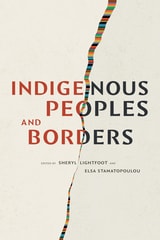
Indigenous Peoples and Borders
Sheryl Lightfoot and Elsa Stamatopoulou, editors
Duke University Press, 2024
Contributors. Tone Bleie, Andrea Carmen, Jacqueline Gillis, Rauna Kuokkanen, Elifuraha Laltaika, Sheryl Lightfoot, David Bruce MacDonald, Toa Elisa Maldonado Ruiz, Binalakshmi “Bina” Nepram, Melissa Z. Patel, Manoel B. do Prado Junior, Hana Shams Ahmed, Elsa Stamatopoulou, Liubov Suliandziga, Rodion Sulyandziga, Yifat Susskind, Erika M. Yamada
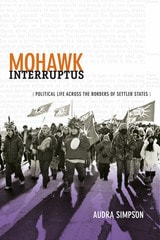
Mohawk Interruptus
Political Life Across the Borders of Settler StatesAudra Simpson
Duke University Press, 2014
More or Less Afraid of Nearly Everything
Homeland Security, Borders, and Disasters in the Twenty-First CenturyBenjamin Rohrbaugh
University of Michigan Press, 2020
Throughout the twentieth century, the United States did not experience national security domestically; it defended its borders by conducting military, foreign policy, and intelligence operations internationally, and then separated these activities from domestic law enforcement with bright legal lines. In the twenty-first century, U.S. national security no longer occurs exclusively outside of the nation. The U.S. government is beginning to respond to this change, and the establishment of the Department of Homeland Security is merely the first step in an organizational and strategic realignment that will be a long, difficult, and mistake-filled process. More or Less Afraid of Nearly Everything is an accessible and engaging guide to homeland security, particularly migration and border security, that makes innovative arguments about the American government and keeping citizens safe, and provides practical solutions to real-world problems.
Narratives of Greater Mexico
Essays on Chicano Literary History, Genre, and BordersBy Héctor Calderón
University of Texas Press, 2005
Once relegated to the borders of literature—neither Mexican nor truly American—Chicana/o writers have always been in the vanguard of change, articulating the multicultural ethnicities, shifting identities, border realities, and even postmodern anxieties and hostilities that already characterize the twenty-first century. Indeed, it is Chicana/o writers' very in-between-ness that makes them authentic spokespersons for an America that is becoming increasingly Mexican/Latin American and for a Mexico that is ever more Americanized.
In this pioneering study, Héctor Calderón looks at seven Chicana and Chicano writers whose narratives constitute what he terms an American Mexican literature. Drawing on the concept of "Greater Mexican" culture first articulated by Américo Paredes, Calderón explores how the works of Paredes, Rudolfo Anaya, Tomás Rivera, Oscar Zeta Acosta, Cherríe Moraga, Rolando Hinojosa, and Sandra Cisneros derive from Mexican literary traditions and genres that reach all the way back to the colonial era. His readings cover a wide span of time (1892-2001), from the invention of the Spanish Southwest in the nineteenth century to the América Mexicana that is currently emerging on both sides of the border. In addition to his own readings of the works, Calderón also includes the writers' perspectives on their place in American/Mexican literature through excerpts from their personal papers and interviews, correspondence, and e-mail exchanges he conducted with most of them.
Of Borders And Thresholds
Theatre History, Practice, and TheoryMichal Andrzej Kobialka
University of Minnesota Press, 1999

Palestine and Jewish History
Criticism at the Borders of EthnographyJonathan Boyarin
University of Minnesota Press, 1996
Palestine and Jewish History was first published in 1996. Minnesota Archive Editions uses digital technology to make long-unavailable books once again accessible, and are published unaltered from the original University of Minnesota Press editions.
This provocative and personal series of meditations on the Israeli-Palestinian conflict argues that it represents a struggle not as much about land and history as about space, time, and memory. Juxtaposing entries from Jonathan Boyarin's field diary with critical and theoretical articulations, Palestine and Jewish History shows not only the unfinished nature of anthropological endeavor, but also the author's personal stake in the ethical predicament of being a Jew at this point in history.
Boyarin comes to Israel as a specialist in modern Jewish studies, an individual who has kin, friends, and colleagues there, a scholar with a long history of peace activism. He interweaves fascinating descriptions of ordinary life-parties, walks, classes, visits to homes-with a selection of his related writings on cultural studies and anthropology. Some sections are polemical; others are witty analyses of bumper stickers, slogans, the ambiguities in conversations. Boyarin foregrounds the messiness and lack of closure inherent in this process, presenting "raw materials" (field notes) in some sections of the book that reappear in other sections as various kinds of "finished" products (conference papers, published articles).
In the process, we learn a good deal about the Middle East and its debates and connections to other places. Boyarin addresses two fundamental issues: the difficulty of linking different sorts of memories and memorializations, and the importance of moving beyond objectivity and multiculturalism into a situated, engaged, and nontotalizing framework for fieldwork and ethnography.
Palestine and Jewish History enacts rather than reports on Boyarin's process of error, pain, impatience, uncertainty, discovery, embarrassment, self-criticism, intellectual struggle, and dawning awareness, challenging and engaging us in the process of discovery. Ultimately, it gives the lie, as the Palestinian presence does in Israel, to any concept of a "finishedness" that successfully conceals its unruly and painful multiple processes.
Jonathan Boyarin is the Leonard and Tobee Kaplan Distinguished Professor of Modern Jewish Thought in the Department of Religious Studies at the University of North Carolina at Chapel Hill. He is the author of Storm from Paradise, co-author of Powers of Diaspora, and the co-editor of Remapping Memory and Jews and Other Differences, all available from Minnesota.
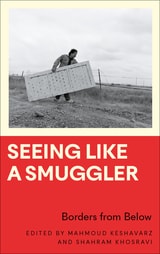
Seeing Like a Smuggler
Borders from BelowMahmoud Keshavarz and Shahram Khosravi
Pluto Press, 2022
Stories of smuggling as acts of resistance and decolonization.
'This conceptually vivid book refreshes our vision' - Ruth Wilson Gilmore
The word smuggler often unleashes a simplified, negative image painted by the media and the authorities. Such state-centric perspectives hide many social, political, and economic relations generated by smuggling. This book looks at the practice through the eyes of the smugglers, revealing how their work can be productive, subversive, and deeply sociopolitical.
By tracing the illegalized movement of people and goods across borders, Seeing Like a Smuggler shows smuggling as a contradiction within the nation-state system, and in a dialectical relation with the national order of things. It raises questions about how smuggling engages and unsettles the ethics, materialities, visualities, histories, and the colonial power relations that form borders and bordering.
Covering a wide spectrum of approaches from personal reflections and ethnographies to historical accounts, cultural analysis, and visual essays, the book spans the globe from Colombia to Ethiopia, Singapore to Guatemala, Afghanistan to Zimbabwe, and from Kurdistan to Bangladesh, to show how people deal with global inequalities and the restrictions of poverty and immobility.
The Border Crossed Us
Rhetorics of Borders, Citizenship, and Latina/o IdentityJosue David Cisneros
University of Alabama Press, 2013
Explores efforts to restrict and expand notions of US citizenship as they relate specifically to the US-Mexico border and Latina/o identity.
Borders and citizenship go hand in hand. Borders define a nation as a territorial entity and create the parameters for national belonging. But the relationship between borders and citizenship breeds perpetual anxiety over the purported sanctity of the border, the security of a nation, and the integrity of civic identity.
In The Border Crossed Us, Josue David Cisneros addresses these themes as they relate to the US-Mexico border, arguing that issues ranging from the Mexican-American War of 1846–1848 to contemporary debates about Latina/o immigration and border security are negotiated rhetorically through public discourse. He explores these rhetorical battles through case studies of specific Latina/o struggles for civil rights and citizenship, including debates about Mexican American citizenship in the 1849 California Constitutional Convention, 1960s Chicana/o civil rights movements, and modern-day immigrant activism.
Cisneros posits that borders—both geographic and civic—have crossed and recrossed Latina/o communities throughout history (the book’s title derives from the popular activist chant, “We didn’t cross the border; the border crossed us!”) and that Latina/os in the United States have long contributed to, struggled with, and sought to cross or challenge the borders of belonging, including race, culture, language, and gender.
The Border Crossed Us illuminates the enduring significance and evolution of US borders and citizenship, and provides programmatic and theoretical suggestions for the continued study of these critical issues.
The Borders of "Europe"
Autonomy of Migration, Tactics of BorderingNicholas De Genova, editor
Duke University Press, 2017
Contributors. Ruben Andersson, Nicholas De Genova, Dace Dzenovska, Evelina Gambino, Glenda Garelli, Charles Heller, Clara Lecadet, Souad Osseiran, Lorenzo Pezzani, Fiorenza Picozza, Stephan Scheel, Maurice Stierl, Laia Soto Bermant, Martina Tazzioli
The Borders of America
Migration, Control, and Resistance Across Latin America and the CaribbeanSoledad Álvarez Velasco, Nicholas De Genova, Gustavo Dias, and Eduardo Domenech, editors
Duke University Press, 2026
Contributors. Soledad Álvarez Velasco, Tanya Basok, Janneth Clavijo, Nicholas De Genova, Gustavo Dias, Eduardo Domenech, Roberto Dufraix-Tapia, Jonathan Echeverri Zuluaga, Valentina Glockner Fagetti, Luin Goldring, Patricia Landolt, Carolina Moulin, Margarita Luz Núñez Chaim, Juan Ordóñez, Daniel Quinteros, Romina Ramos, Martha Rojas-Wiesner, Fabio Santos, Amarela Varela-Huerta, and Laura Velasco Ortiz
The Borders of Dominicanidad
Race, Nation, and Archives of ContradictionLorgia García Peña
Duke University Press, 2016
The Borders of Inequality
Where Wealth and Poverty CollideÍñigo Moré
University of Arizona Press, 2011
In this fascinating book, originally published in Spain to much acclaim, researcher Íñigo Moré looks at the bigger picture. With a professionally trained eye, he examines the world’s “top twenty most unequal borders.” What he finds is that many of these border situations share similar characteristics. There is always illegal immigration from the poor country to the wealthy one. There is always trafficking in illegal substances. And the unequal neighbors usually regard each other with suspicion or even open hostility.
After surveying the “top twenty,” Moré explores in depth the cases of three borders: between Germany and Poland, Spain and Morocco, and the United States and Mexico. The core problem, he concludes, is not drugs or immigration or self-protection. Rather, the problem is inequality itself. Unequal borders result, he writes, from a skewed interaction among markets, people, and states. Using these findings, Moré builds a useful new framework for analyzing border dynamics from a quantitative view based on economic inequality.
The Borders of Inequality illustrates how longstanding “multidirectional misunderstandings” can exacerbate cross-border problems—and consequent public opinion. Perpetuating these misunderstandings can inflame and complicate the situation, but purposeful efforts to reduce inequality can produce promising results.

The Borders of Integration
Polish Migrants in Germany and the United States, 1870–1924Brian McCook
Ohio University Press, 2011
The issues of immigration and integration are at the forefront of contemporary politics. Yet debates over foreign workers and the desirability of their incorporation into European and American societies too often are discussed without a sense of history. McCook’s examination questions static assumptions about race and white immigrant assimilation a hundred years ago, highlighting how the Polish immigrant experience is relevant to present-day immigration debates on both sides of the Atlantic. Further, his research shows the complexity of attitudes toward immigration in Germany and the United States, challenging historical myths surrounding German national identity and the American “melting pot.”
In a comparative study of Polish migrants who settled in the Ruhr Valley and northeastern Pennsylvania, McCook shows that in both regions, Poles become active citizens within their host societies through engagement in social conflict within the public sphere to defend their ethnic, class, gender, and religious interests. While adapting to the Ruhr and northeastern Pennsylvania, Poles simultaneously retained strong bonds with Poland, through remittances, the exchange of letters, newspapers, and frequent return migration. In this analysis of migration in a globalizing world, McCook highlights the multifaceted ways in which immigrants integrate into society, focusing in particular on how Poles created and utilized transnational spaces to mobilize and attain authentic and more permanent identities grounded in newer broadly conceived notions of citizenship.
The Borders of Justice
Etienne Balibar
Temple University Press, 2013
International in scope and featuring a diverse group of contributors, The Borders of Justice investigates the complexities of transitional justice that emerge from its “social embeddedness.” This original and provocative collection of essays, which stem from a collective research program on social justice undertaken by the Calcutta Research Group, confronts the concept and practices of justice. The editors and contributors question the relationship between geography, methodology, and justice—how and why justice is meted out differently in different places.
Expanding on Michael Walzer's idea of the “spheres of justice,” the contributors argue that justice is burdened with our notions of social realities and expectations, in addition to the influence of money, law, and government. Chapters provide close readings of Pascal, Plato and Marx, theories on global justice, the relationship between liberalism and multiculturalism, struggles of social injustice, and how and where we draw the borders of justice.

The Borders of Responsibility
Migration Control in the Mediterranean SeaKiri Olivia Santer
Duke University Press, 2026
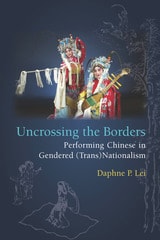
Uncrossing the Borders
Performing Chinese in Gendered (Trans)NationalismDaphne P. Lei
University of Michigan Press, 2019
Over many centuries, women on the Chinese stage committed suicide in beautiful and pathetic ways just before crossing the border for an interracial marriage. Uncrossing the Borders asks why this theatrical trope has remained so powerful and attractive. The book analyzes how national, cultural, and ethnic borders are inevitably gendered and incite violence against women in the name of the nation. The book surveys two millennia of historical, literary, dramatic texts, and sociopolitical references to reveal that this type of drama was especially popular when China was under foreign rule, such as in the Yuan (Mongol) and Qing (Manchu) dynasties, and when Chinese male literati felt desperate about their economic and political future, due to the dysfunctional imperial examination system. Daphne P. Lei covers border-crossing Chinese drama in major theatrical genres such as zaju and chuanqi, regional drama such as jingju (Beijing opera) and yueju (Cantonese opera), and modernized operatic and musical forms of such stories today.
Viapolitics
Borders, Migration, and the Power of LocomotionWilliam Walters, Charles Heller, and Lorenzo Pezzani, editors
Duke University Press, 2021
Contributors. Ethan Blue, Maribel Casas-Cortes, Julie Y. Chu, Sebastian Cobarrubias, Glenda Garelli, Charles Heller, Sabine Hess, Bernd Kasparek, Clara Lecadet, Johan Lindquist, Renisa Mawani, Lorenzo Pezzani, Ranabir Samaddar, Amaha Senu, Martina Tazzioli, William Walters