Results by title
43 books match the query 'Boston (Mass.)'
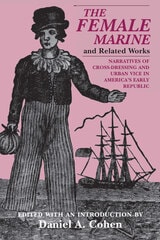
"The Female Marine" and Related Works
Narratives of Cross-Dressing and Urban Vice in America's Early RepublicDaniel A. Cohen
University of Massachusetts Press, 1997
The alternately racy and moralistic narrative recounts the adventures of a young woman from rural Massachusetts who is seduced by a false-hearted lover, flees to Boston, and is entrapped in a brothel. She eventually escapes by disguising herself as a man and serves with distinction on board the U.S. frigate Constitution during the War of 1812. After subsequent onshore adventures in and out of male dress, she is happily married to a wealthy New York gentleman.
In his introduction, Daniel A. Cohen situates the story in both its literary and historical contexts. He explains how the tale draws upon a number of popular Anglo-American literary genres, including the female warrior narrative, the sentimental novel, and the urban exposé. He then explores how The Female Marine reflects early-nineteenth-century anxieties concerning changing gender norms, the expansion of urban prostitution, the growth of Boston's African American community, and feelings of guilt aroused by New England's notoriously unpatriotic activities during the War of 1812.
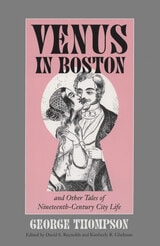
"Venus in Boston" and Other Tales of Nineteenth-Century City Life
George Thompson
University of Massachusetts Press, 2002
The three works in this volume offer a rich representative sample of Thompson's writing. The two novels—Venus in Boston and City Crimes—depict the American city as a place of dark mystery, bawdy humor, and near-universal corruption peopled with con artists and criminals of all kinds. In each novel, a complex narrative structure interweaves multiple stories of exploited labor, abuse of power, seduction, intrigue, and crime. Thompson's autobiography, My Life, presents the author's life in terms nearly as lively as his fiction.
Thompson's zestful, unconventional writings fly in the face of the stereotypical view of Victorian America as straitlaced and sentimental. Ideal for use as a classroom text, this new edition includes a scholarly introduction and an extensive bibliography.
A History of Boston in 50 Artifacts
Joseph M. Bagley
University Press of New England, 2016
A History of Boston in 50 Artifacts
Joseph M. Bagley
Brandeis University Press, 2021
Joseph M. Bagley, the city archaeologist of Boston, uncovers a fascinating hodgepodge of history—from ancient fishing grounds to Jazz Age red-light districts—that will surprise and delight even longtime residents. Each artifact is shown in full color with a description of the item’s significance to its site location and Boston’s larger history. From cannonballs to drinking cups and from ancient spears to chinaware, A History of Boston in 50 Artifacts offers a unique and accessible introduction to Boston’s history and physical culture while revealing the ways objects can offer a tantalizing entrée into our past. Packed with vivid descriptions and art, this lively history of Boston will appeal to all manner of readers, locals, and visitors alike. This new edition showcases an important fact which has come to light since its first publication, that a chapter about a cat has now been shown to be a dog, thus demonstrating the perils of the archaeologist.
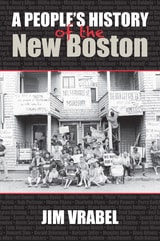
A People's History of the New Boston
Jim Vrabel
University of Massachusetts Press, 2014
Credit for the city's turnaround since that time is often given to a select group of people, all of them men, all of them white, and most of them well off. In fact, a large group of community activists, many of them women, people of color, and not very well off, were also responsible for creating the Boston so many enjoy today. This book provides a grassroots perspective on the tumultuous 1960s and 1970s, when residents of the city's neighborhoods engaged in an era of activism and protest unprecedented in Boston since the American Revolution.
Using interviews with many of those activists, contemporary news accounts, and historical sources, Jim Vrabel describes the demonstrations, sit-ins, picket lines, boycotts, and contentious negotiations through which residents exerted their influence on the city that was being rebuilt around them. He includes case histories of the fights against urban renewal, highway construction, and airport expansion; for civil rights, school desegregation, and welfare reform; and over Vietnam and busing. He also profiles a diverse group of activists from all over the city, including Ruth Batson, Anna DeFronzo, Moe Gillen, Mel King, Henry Lee, and Paula Oyola. Vrabel tallies the wins and losses of these neighborhood Davids as they took on the Goliaths of the time, including Boston's mayors. He shows how much of the legacy of that activism remains in Boston today.
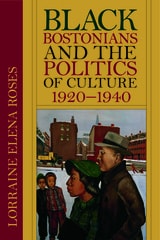
Black Bostonians and the Politics of Culture, 1920-1940
Lorraine Elena Roses
University of Massachusetts Press, 2017
In the 1920s and 1930s Boston became a rich and distinctive site of African American artistic production, unfolding at the same time as the Harlem Renaissance and encompassing literature, theater, music, and visual art. Owing to the ephemeral nature of much of this work, many of the era's primary sources have been lost.
In this book, Lorraine Elena Roses employs archival sources and personal interviews to recover this artistic output, examining the work of celebrated figures such as Dorothy West, Helene Johnson, Meta Warrick Fuller, and Allan Rohan Crite, as well as lesser-known artists including Eugene Gordon, Ralf Coleman, Gertrude “Toki” Schalk, and Alvira Hazzard. Black Bostonians and the Politics of Culture, 1920–1940 demonstrates how this creative community militated against the color line not solely through powerful acts of civil disobedience but also by way of a strong repertoire of artistic projects.
Boston Mass-Mediated
Urban Space and Culture in the Digital AgeStanley Corkin
University of Massachusetts Press, 2024
In the mid-nineteenth century, Boston fashioned itself as a global hub. By the early 1970s, it was barely a dot on the national picture. It had gained a reputation as a decaying city rife with crime and dysfunctional politics, as well as decidedly retrograde race relations, prominently exemplified by white resistance to school integration. Despite this historical ebb in its national and international presence, it still possessed the infrastructure—superb educational institutions such as Harvard and MIT, world-class sports teams like the Celtics and Red Sox, powerful media outlets like The Boston Globe, and extensive shipping capacity—required to eventually thrive in an age of global trade and mass communication.
In Boston Mass-Mediated, Stanley Corkin explores the power of mass media to define a place. He examines the tensions between the emergent and prosperous city of the late twentieth and early twenty-first centuries and its representation in a range of media genres such as news journalism, professional sports broadcasting, and popular films like Mystic River and The Departed. This mass media, with its ever-increasing digital reach, has emphasized a city restricted by tropes suggestive of an earlier Boston—racism, white ethnic crime, Catholicism, and a pre-modern insularity—even as it becomes increasingly international and multicultural. These tropes mediate our understanding and experience of the city. Using Boston as a case study, Corkin contends that our contemporary sense of place occurs through a media saturated world, a world created by the explosion of digital technology that is steeped in preconceptions.
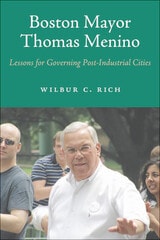
Boston Mayor Thomas Menino
Lessons for Governing Post-Industrial CitiesWilbur C. Rich
University of Massachusetts Press, 2023
Hailed as one of Boston’s most beloved mayors and its longest serving, Thomas Menino (1942–2014) deftly managed the city’s finances and transformed Boston into the hub of innovation that it is today. During his time in office, Boston embraced modern industrial growth and moved forward with noteworthy developments that altered neighborhoods, while also facing ongoing racial strife, challenges of unaffordable housing, and significant public union negotiations.
Mayors in modern American cities occupy unique positions as government leaders who need to remain active parts of their communities in addition to being tasked with fixing neighborhood issues, managing crises, and keeping schools and public infrastructure on course. Situating news coverage alongside interviews with the mayor and his administration, political scientist Wilbur C. Rich chronicles Menino’s time in office while also considering his personal and professional background, his larger-than-life personality, and his ambitions. Menino’s approach to these challenges and opportunities offers enduring lessons to anyone interested in urban government and political leadership.
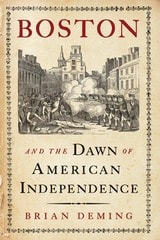
Boston and the Dawn of American Independence
Brian Deming
Westholme Publishing, 2013
In 1760, no one could imagine the American colonies revolting against Great Britain. The colonists were not hungry peasants groaning under the whip of a brute. They lived well. Land was cheap, wages were good, opportunities abounded. While many colonists had been in the New World for generations, they identified with Britain, and England was still “home.” Yet in the space of just fifteen years these sturdy bonds snapped. Boston—a town of just 16,000—lit the fire for American Independence. Brian Deming explains how and why in his lucid, lively, and deeply researched Boston and the Dawn of American Independence.
To dodge British taxes, Boston merchants for as long as anyone could remember had routinely smuggled in molasses from French and Spanish possessions in the Caribbean. Boston distillers transformed this sweet cargo into rum, the liquid gold traded around the world. But British authorities cracked down on smuggling and imposed the Sugar Act to help pay for the debts incurred during their wars against France. Then came the hated Stamp Act, a tax on documents, newspapers, and printed materials of all kinds. In courtrooms, in the press, and in the streets, Bostonians rallied in protest against taxation without representation. As anger swept America, Boston was at the center of the storm, which burst forth with the infamous massacre and the Boston Tea Party. By 1775, open warfare erupted at Lexington, Concord, and Bunker Hill. Boston and the Dawn of American Independence ties these scenes together with the people of the time, including John and Sam Adams, John Hancock, and Paul Revere, as well as Thomas Hutchinson, the beleaguered Massachusetts royal governor, and James Otis, the bombastic, unstable early patriot. Readers hear their voices, but also those of many amazing, colorful, and memorable personalities— feisty mob leaders, defiant Tories, terrified townspeople. Deming illuminates this epic story with views of everyday life inside taverns, outside newspaper offices, and along the wharves, and the political dramas in London and Philadelphia that shaped the destiny of an empire and gave rise to the world’s first modern democracy.
Boston and the Making of a Global City
James C. O’Connell
University of Massachusetts Press, 2025
In the late twentieth century the American and global economy shifted from manufacturing toward a knowledge industry. Following an economic low point several decades earlier, the city of Boston took advantage of the new era of globalization, fueled by dramatic advances in telecommunications, computer power, and air and sea travel, as well as its own impressive intellectual capital.
Boston and the Making of a Global City pulls together scholarship, media stories, personal interviews, and city planning documents to tell the story of Boston’s historical trajectory, as it quickly became a competitive global hub. Starting with its role as a colonial port and nineteenth-century maritime power, but moving quickly forward, the book describes how Boston capitalized on its strengths in higher education and such innovation sectors as life sciences, healthcare, information technology, and finance. Author James O’Connell traces the historical sweep of global flows—trade and supply chains, innovation and the dissemination of knowledge, investment, transportation, tourism, telecommunications, and immigration—that have shaped the city and region’s development. This volume also addresses the economic, social, and environmental challenges that Boston currently faces and how it is strategically positioned to confront them going forward.
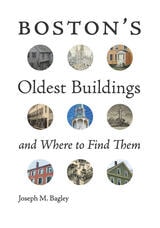
Boston's Oldest Buildings and Where to Find Them
Joseph M. Bagley
Brandeis University Press, 2021
As Boston approaches its four-hundredth anniversary, it is remarkable that it still maintains its historic character despite constant development. The fifty buildings featured in this book all pre-date 1800 and illustrate Boston’s early history. This is the first book to survey Boston’s fifty oldest buildings and does so through an approachable narrative which will appeal to nonarchitects and those new to historic preservation. Beginning with a map of the buildings’ locations and an overview of the historic preservation movement in Boston, the book looks at the fifty buildings in order from oldest to most recent. Geographically, the majority of the buildings are located within the downtown area of Boston along the Freedom Trail and within easy walking distance from the core of the city. This makes the book an ideal guide for tourists, and residents of the city will also find it interesting as it includes numerous properties in the surrounding neighborhoods. The buildings span multiple uses from homes to churches and warehouses to restaurants. Each chapter features a building, a narrative focusing on its historical significance, and the efforts made to preserve it over time. Full color photos and historical drawings illustrate each building and area. Boston’s Oldest Buildings and Where to Find Them presents the ideals of historic preservation in an approachable and easy-to-read manner appropriate for the broadest audience. Perfect for history lovers, architectural enthusiasts, and tourists alike.
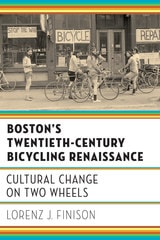
Boston's Twentieth-Century Bicycling Renaissance
Cultural Change on Two WheelsLorenz J. Finison
University of Massachusetts Press, 2019
Finison traces the city's cycling history, chronicling the activities of environmental and social justice activists, stories of women breaking into male-dominated professions by becoming bike messengers and mechanics, and challenges faced by African American cyclists. Making use of newspaper archives, newly discovered records of local biking organizations, and interviews with Boston-area bicyclists and bike builders, Boston's Twentieth-Century Bicycling Renaissance brings these voices and battles back to life.
Boston
Voices and VisionsShaun O'Connell
University of Massachusetts Press, 2010
“New England was founded consciously, and in no fit of absence of mind,” observed historian Samuel Eliot Morison on the establishment of the Bay Colony in 1630 on the narrow, mountainous Shawmut peninsula of what became Massachusetts. That self-conscious presence of mind has endured for four centuries. Boston has been shaped and sustained by observation, imagination, and interpretation. As a result, the evolving vision of Boston has yielded a compelling literary record.
In this wide-ranging anthology, Shaun O'Connell includes a generous sampling of those who have recorded, revised, and redefined the vision of Boston. Anne Bradstreet, Nathaniel Hawthorne, Henry James, W. E. B. Du Bois, Mary Antin, Edwin O'Connor, John Updike, and many others eloquently evoke and explain Boston in these pages.
From John Winthrop's “city upon a hill” sermon, delivered aboard the Arbella before his followers landed in 1630 in the place they would call Boston, to Robert Lowell's “For the Union Dead,” a poem delivered in Boston's Public Garden in 1960, writers have continued to invoke the high purposes for which the city was founded, sometimes in praise of the city, but often in what Robert Frost named a “lover's quarrel,” in works that called attention to the city's failures to fulfill its promises. In the twenty-first century some writers continue to celebrate or to castigate the city, while others look back to Boston's origins to reassess its founders and renew its covenant of high purpose.
This is an interpretive anthology—one that includes commentary as well as writings. Section introductions provide historical and biographical context, offer analysis that stresses the thematic relevance of each selection, and explore the pattern of their relations. Rather than present a random array of writers who happen to have been Greater Bostonians, O'Connell focuses on those authors who possessed a commitment to the sense of place, those who addressed Boston not only as a geographical, social, and political entity but as an image, idea, and site of symbolic values.
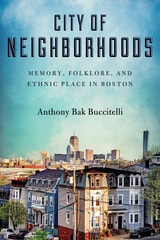
City of Neighborhoods
Memory, Folklore, and Ethnic Place in BostonAnthony Bak Buccitelli
University of Wisconsin Press, 2016
Digging into the ever-shifting terrain of American ethnicity and urban spaces, Anthony Bak Buccitelli investigates folk practices, social memory, and local histories in three Boston-area neighborhoods. He looks at the ways locals represent their neighborhoods and themselves via events, symbols, stories, and landmarks, from the shamrock to the Chinese flag, whether the St. Patrick’s Day parade in Southie or the Columbus Day parade in East Boston, from urban graffiti and websites to the Dorchester Heights Monument. City of Neighborhoods exposes the processes of selection and emphasis that produce, sustain, challenge, and change understandings of urban spaces as ethnic places.
Honorable mention, Wayland Hand Prize for Folklore and History, American Folklore Society
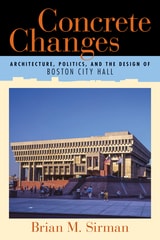
Concrete Changes
Architecture, Politics, and the Design of Boston City HallBrian M. Sirman
University of Massachusetts Press, 2018
And yet Boston City Hall frequently ranks among the country's ugliest buildings. Concrete Changes seeks to answer a common question for contemporary viewers: How did this happen? In a lively narrative filled with big personalities and newspaper accounts, Brian M. Sirman argues that this structure is more than a symbol of Boston's modernization; it acted as a catalyst for political, social, and economic change.
Critical Perspectives on Latino Education in Massachusetts
Lorna Rivera and Melissa Colón, editors
University of Massachusetts Press, 2025
In Massachusetts, the Latino population increased by 475 percent between 1980 and 2017, marking a dramatic growth. This diverse ethnic community of Puerto Ricans, Dominicans, Salvadoreans, Colombians, Brazilians, and more also contains a wide range of cultures, immigration and migration experiences, languages, and socio-political backgrounds. However, there are numerous commonalities involving education. Recent research at the Mauricio Gastón Institute for Latino Community Development and Policy reveals that Latino students in Massachusetts are more likely to attend public schools, in communities with significant academic achievement and opportunity gaps as well as other challenges, from food scarcity to higher rates of unemployment. At the same time, the state-wide shift to standards-based education has had a disproportionately negative impact on Latino students, who already feel the effects of politically motivated anti-immigrant policies and laws that limit bilingual education.
This collection of essays, from those working inside the classroom as well as researchers taking a broader look at policy, addresses the array of issues facing Latino students in Massachusetts. These perspectives paint a complex picture of the educational experience for Latinos, and offer expert suggestions for improving classrooms, school environments, and ultimate educational outcomes for an important growing demographic in the Commonwealth.
In addition to editors Lorna Rivera and Melissa Colón, this volume’s contributors include Almudena G. Abeyta, Nasteho Ali, Cristina Araujo Brinkerhoff, Michael Berardino, Alex Briesacher, Thomas Conroy, Judenie Dabel, Liya Escalera, Luis Enrique Esquivel, Deyja Enriquez, Isahiah Erilus, Nyal Fuentes, Jazmin Rubi Flete Gomez, Manuel Frau-Ramos, Kimberly A. S. Howard, Patricia Krueger-Henney, Steven Lue, Mary Jo Marion, Timothy E. Murphy, Cecilia Nardi, Laurie Occhipinti, Alexandra Oliver-Davila, Chong Myung Park, Angelica Rodriquez, Marta T. Rosa, Diana Santiago, Melissa Sargent, Ester Shapiro, V. Scott H. Solberg, Fabián Torres-Ardila, Ashley Torres Carrasquillo, Paul Trunfio, Carmen N. Veloria, and Heilam Xie.
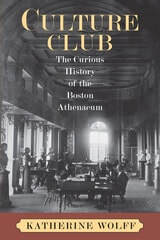
Culture Club
The Curious History of the Boston AthenaeumKatherine Wolff
University of Massachusetts Press, 2009
Yet from the outset, Katherine Wolff shows, the Boston Athenaeum was more than a library; it was also a breeding ground for evolving notions of cultural authority and American identity. Though governed by the Boston elite, who promoted it as a way of strengthening their own clout in the city, the early Athenaeum reflected conflicting and at times contradictory aims and motives on the part of its membership. On the one hand, by drawing on European aesthetic models to reinforce an exalted sense of mission, Athenaeum leaders sought to establish themselves as guardians of a nascent American culture. On the other, they struggled to balance their goals with their concerns about an increasingly democratic urban populace. As the Boston Athenaeum opened its doors to women as well as men outside its inner circle, it eventually began to define itself against a more accessible literary institution, the Boston Public Library.
Told through a series of provocative episodes and generously illustrated, Culture Club offers a more complete picture than previously available of the cultural politics behind the making of a quintessentially American institution.
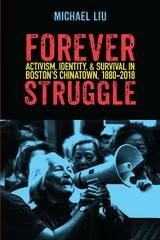
Forever Struggle
Activism, Identity, and Survival in Boston's Chinatown, 1880–2018Michael Liu
University of Massachusetts Press, 2020
In writing about Boston Chinatown's long history, Michael Liu, a lifelong activist and scholar of the community, charts its journey and efforts for survival—from its emergence during a time of immigration and deep xenophobia to the highway construction and urban renewal projects that threatened the neighborhood after World War II to its more recent efforts to keep commercial developers at bay. At the ground level, Liu depicts its people, organizations, internal battles, and varied and complex strategies against land-taking by outside institutions and public authorities. The documented courage, resilience, and ingenuity of this low-income immigrant neighborhood of color have earned it a place amongst our urban narratives. Chinatown has much to teach us about neighborhood agency, the power of organizing, and the prospects of such neighborhoods in rapidly growing and changing cities.
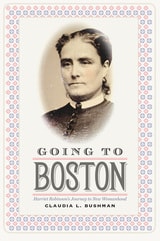
Going to Boston
Harriet Robinson's Journey to New WomanhoodClaudia L. Bushman
University Press of New England, 2017
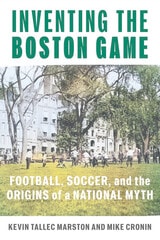
Inventing the Boston Game
Football, Soccer, and the Origins of a National MythKevin Tallec Marston and Mike Cronin
University of Massachusetts Press, 2024
Honorable Mention, 2025 North American Society for Sport History Book Award
On Boston Common stands a monument dedicated to the Oneida Football Club. It honors the site where, in the 1860s, sixteen boys played what was then called the “Boston game”—an early version of football in the United States. The boys were largely the sons of upper-class Boston Brahmins, and they lived through the transformative periods of the Civil War, Reconstruction, and the Gilded Age. Later as they grew old, in the 1920s, a handful of them orchestrated a series of commemorative events about their boyhood game. Benefitting from elite networks developed through the city’s social and educational institutions, including Harvard University, they donated artifacts (such as an oddly shaped, battered black ball) to museums, deposited self-penned histories into libraries and archives, and erected bronze and stone memorials, all to elevate themselves as the inventors of American football (and later, by extension, soccer). But was this origin story of what, by then, had become one of America’s favorite games as straightforward as they made it seem or a myth-making hoax?
In Inventing the Boston Game, Kevin Tallec Marston and Mike Cronin investigate the history of the Oneida Football Club and reveal what really happened. In a compelling, well told narrative that is informed by sports history, Boston history, and the study of memory, they posit that these men engaged in self-memorialization to reinforce their elite cultural status during a period of tremendous social and economic change, and particularly increased immigration. This exploration of the Club’s history provides fascinating insight into how and why origin stories are created in the first place.
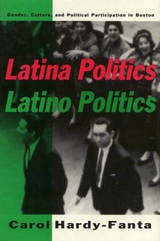
Latina Politics, Latino Politics
Gender, Culture, and Political Participation in BostonCarol Hardy-Fanta
Temple University Press, 1993
Through an in-depth study of the Latino community in Boston, Carol hardy-Fanta addressees three key debates in American politics: how to look at the ways in which women and men envision the meaning of politics and political participation; how to understand culture and the political life of expanding immigrant populations; and how to create a more participatory America. The author's interviews with Latinos from Puerto Rico, the Dominican Republic, and Central and South America and her participation in community events in North Dorchester, Jamaica Plain, and the South End document the often ignored contribution of Latina women as candidates, political mobilizers, and community organizers. Hardy-Fanta examines critical gender differences in how politics is defined, what strategies Latina women and Latino men use to generate political participation, and how culture and gender interact in the political empowerment of the ethic communities.
Hardy-Fanta challenges the notion of political apathy among Latinos and presents factors that stimulate political participation. She finds that the vision of politics promoted by Latina women—one based on connectedness, collectivity, community, and consiousness-raising—contrasts sharply with a male political concern for status, hierarchy, and personal opportunity.

Little Saigons
Staying Vietnamese in AmericaKarin Aguilar–San Juan
University of Minnesota Press, 2009
Karin Aguilar-San Juan examines the contradictions of Vietnamese American community and identity in two emblematic yet different locales: Little Saigon in suburban Orange County, California (widely described as the capital of Vietnamese America) and the urban "Vietnamese town" of Fields Corner in Boston, Massachusetts. Their distinctive qualities challenge assumptions about identity and space, growth amid globalization, and processes of Americanization.
With a comparative and race-cognizant approach, Aguilar-San Juan shows how places like Little Saigon and Fields Corner are sites for the simultaneous preservation and redefinition of Vietnamese identity. Intervening in debates about race, ethnicity, multiculturalism, and suburbanization as a form of assimilation, this work elaborates on the significance of place as an integral element of community building and its role in defining Vietnamese American-ness.
Staying Vietnamese, according to Aguilar-San Juan, is not about replicating life in Viet Nam. Rather, it involves moving toward a state of equilibrium that, though always in flux, allows refugees, immigrants, and their U.S.-born offspring to recalibrate their sense of self in order to become Vietnamese anew in places far from their presumed geographic home.
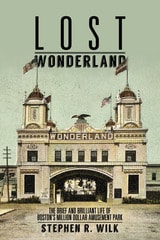
Lost Wonderland
The Brief and Brilliant Life of Boston's Million Dollar Amusement ParkStephen R. Wilk
University of Massachusetts Press, 2020
If you take Boston's Blue Line to its northern end, you'll reach the Wonderland stop. Few realize that a twenty-three-acre amusement park once sat nearby—the largest in New England, and grander than any of the Coney Island parks that inspired it. Opened in Revere on Memorial Day in 1906 to great fanfare, Wonderland offered hundreds of thousands of visitors recreation by the sea, just a short distance from downtown Boston.
The story of the park's creation and wild, but brief, success is full of larger-than-life characters who hoped to thrill attendees and rake in profits. Stephen R. Wilk describes the planning and history of the park, which featured early roller coasters, a scenic railway, a central lagoon in which a Shoot-the-Chutes boat plunged, an aerial swing, a funhouse, and more. Performances ran throughout the day, including a daring Fires and Flames show; a Wild West show; a children's theater; and numerous circus acts. While nothing remains of what was once called “Boston's Regal Home of Pleasure” and the park would close in 1910, this book resurrects Wonderland by transporting readers through its magical gates.
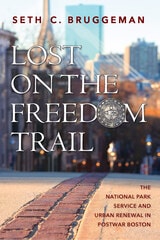
Lost on the Freedom Trail
The National Park Service and Urban Renewal in Postwar BostonSeth C. Bruggeman
University of Massachusetts Press, 2022
Boston National Historical Park is one of America's most popular heritage destinations, drawing in millions of visitors annually. Tourists flock there to see the site of the Boston Massacre, to relive Paul Revere's midnight ride, and to board Old Ironsides—all of these bound together by the iconic Freedom Trail, which traces the city's revolutionary saga.
Making sense of the Revolution, however, was never the primary aim for the planners who reimagined Boston's heritage landscape after the Second World War. Seth C. Bruggeman demonstrates that the Freedom Trail was always largely a tourist gimmick, devised to lure affluent white Americans into downtown revival schemes, its success hinging on a narrow vision of the city's history run through with old stories about heroic white men. When Congress pressured the National Park Service to create this historical park for the nation's bicentennial celebration in 1976, these ideas seeped into its organizational logic, precluding the possibility that history might prevail over gentrification and profit.
Murder in Montauk
Judy Soloway Kay
University of Michigan Press, 2005
The MICHIGAN Reading Plus Readers are original fiction written for students who wish to improve their reading skills. The MICHIGAN Reading Plus Readers support the need for extensive reading on topics of interest to today's students. The Readers offer students books in the genres of mystery, science-fiction, and romance. Activities that practice vocabulary and reading skills are provided on the companion website.
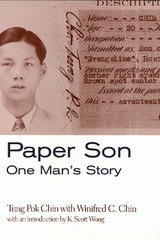
Paper Son
One Man's StoryTung Chin
Temple University Press, 2000
Chin's story begins in the early 1930s, when he followed the example of his father and countless other Chinese who bought documents that falsely identified them as children of Chinese Americans. Arriving in Boston and later moving to New York City, he worked and lived in laundries. Chin was determined to fit into American life and dedicated himself to learning English. But he also became an active member of key organizations -- a church, the Chinese Hand Laundrymen's Alliance, and the Chinese Consolidated Benevolent Association -- that anchored him in the community. A self-reflective and expressive man, Chin wrote poetry commenting on life in China and the hardships of being an immigrant in the United States. His work was regularly published in the China Daily News and brought him to the attention of the FBI, then intent on ferreting out communists and illegal immigrants. His vigorous narrative speaks to the day-to-day anxieties of living as a Paper Son as well as the more universal immigrant experiences of raising a family in modest circumstances and bridging cultures.
Historian K. Scott Wong introduces Chin's memoir, discussing the limitations on immigration from China and what is known about Exclusion-era Chinese American communities. Set in historical context, Tung Pok Chin's unique story offers and engaging account of a twentieth-century Paper Son.
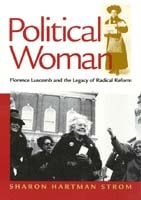
Political Woman
FlorenceSharon Strom
Temple University Press, 2001
Politcal Women counters the traditional narratives that place men at the center of political thinking and history. Showing how three generations of Luscomb's family had set the stage for her activism, this biography presents her story against the backdrop of Boston's politics and larger struggles for social justice. Luscomb participated in every significant social reform movement of her time -- from securing women's right to vote and supporting trade unionism to advocating an end to the war in Vietnam. Luscomb also ran for public office; she was narrowly defeated when she ran for Boston's city council in 1922. Although unsuccessful as a third-party candidate for Congress (in 1936 and 1950) and for Governor of Massachusetts (in 1952), she was one of the few women of her time to seek office. Independent, athletic, and spirited, she apparently never thought that traditional gender prescriptions applied to her. A practicing architect before the First World War, an exuberant hiker all her life, and a member in collective-living arrangements, Luscomb enjoyed a life of rich experiences and sustaining relationships.
In Florence Luscomb's biography, Sharon Hartman Strom suggests that although women were excluded from the activities and sites associated with conventional politics until recently, they did political work that gave purpose to their lives and affected political thinking in their communities, states, and ultimately the nation.
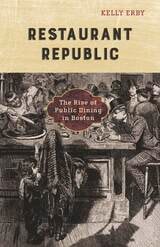
Restaurant Republic
The Rise of Public Dining in BostonKelly Erby
University of Minnesota Press, 2016
Before the 1820s, the vast majority of Americans ate only at home. As the nation began to urbanize and industrialize, home and work became increasingly divided, resulting in new forms of commercial dining.
In this fascinating book, Kelly Erby explores the evolution of such eating alternatives in Boston during the nineteenth century. Why Boston? Its more modest assortment of restaurants, its less impressive—but still significant—expansion in commerce and population, and its growing diversity made it more typical of the nation’s other urban centers than New York. Restaurants, clearly segmented along class, gender, race, ethnic, and other lines, helped Bostonians become more comfortable with deepening social stratification in their city and young republic even as the experience of eating out contributed to an emerging public consumer culture.
Restaurant Republic sheds light on how commercial dining both reflected and helped shape growing fragmentation along lines of race, class, and gender—from the elite Tremont House, which served fashionable French cuisine, to such plebeian and ethnic venues as oyster saloons and Chinese chop suey houses. The epilogue takes us to the opening, in 1929 near Boston, of the nation’s first Howard Johnson’s and that restaurant’s establishment as a franchise in the next decade. The result is a compelling story that continues to shape America.
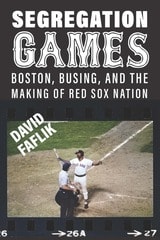
Segregation Games
Boston, Busing, and the Making of Red Sox NationDavid Faflik
University of Massachusetts Press, 2026
A cultural history of race, resistance, and representation in a city divided by politics and play
When outfielder Bernie Carbo joined the Red Sox in 1974, he brought with him a toy gorilla named Mighty Joe Young that became the team’s unofficial mascot for several players and many in the local press. This seemingly innocent stuffed animal was introduced within a baseball team notorious for its stubborn discrimination, and during a particularly fraught era of racial discord in Boston. That June, after years of activism from the city’s Black community, Judge W. Arthur Garrity Jr. ruled that Boston must address the segregation of its schools through redistricting and busing. The ensuing racial animus to these policies led some of the city’s white residents to throw bananas and chant monkey sounds at African American students as they integrated the predominantly white South Boston High School. In this agitated atmosphere, cultural symbols like the Red Sox’s Mighty Joe Young mirrored and amplified the heightened racial tensions of Boston’s busing crisis.
Situated at the intersection of US cultural and social history, Segregation Games examines the surprising ties in 1970s Boston between the racial segregation of the city’s schools and the racial controversies expressed on and off the field of “Red Sox Nation.” “I found out in the black community why they don’t come out [to Fenway Park],” explained Black player Reggie Smith of his experiences with the Red Sox and the city during this period. “The team was the last to get Black players, and some of the things I hear out in the stands make me sick.” To understand these connections, Faflik erases the lines between politics and sport, which routinely blurred in a city suffused with an anti-Black racism that was both deceptively subtle and fiercely overt.
Drawing upon deep archival research from sources that have largely been ignored, such as the Black press of the time, Faflik offers a carefully nuanced portrait of Boston’s cultural life at a pivotal moment in the city’s history.
Streets of Glory
Church and Community in a Black Urban NeighborhoodOmar M. McRoberts
University of Chicago Press, 2003
McRoberts finds, for example, that most of the churches in Four Corners are attended and run by people who do not live in the neighborhood but who worship there because of the low overhead. These churches, McRoberts argues, are communities in and of themselves, with little or no attachment to the surrounding area. This disconnect makes the churches less inclined to cooperate with neighborhood revitalization campaigns and less likely to respond to the immediate needs of neighborhood residents. Thus, the faith invested in inner-city churches as beacons of local renewal might be misplaced, and the decision to count on them to administer welfare definitely should be revisited.
As the federal government increasingly moves toward delivering social services through faith-based organizations, Streets of Glory must be read for its trenchant revisionist view of how churches actually work in depressed urban areas.
The Athens of America
Boston, 1825-1845Thomas H. O'Connor
University of Massachusetts Press, 2006
Many people are generally familiar with the fact that Boston was once known as “the Athens of America.” Very few, however, are clear about exactly why, except for their recollections of the famous writers and poets who gave the city a reputation for literature and learning.
In this book, historian Thomas H. O'Connor sets the matter straight by showing that Boston's eminence during the first half of the nineteenth century was the result of a much broader community effort. After the nation emerged from its successful struggle for independence, most Bostonians visualized their city not only as the Cradle of Liberty, but also as the new world's Cradle of Civilization.
According to O'Connor, a leadership elite, composed of men of prominent family background, Unitarian beliefs, liberal education, and managerial experience in a variety of enterprises, used their personal talents and substantial financial resources to promote the cultural, intellectual, and humanitarian interests of Boston to the point where it would be the envy of the nation. Not only did writers, scholars, and philosophers see themselves as part of this process, but so did physicians and lawyers, ministers and teachers, merchants and businessmen, mechanics and artisans, all involved in creating a well-ordered city whose citizens would be committed to the ideals of social progress and personal perfectibility.
To accomplish their noble vision, leading members of the Boston community joined in programs designed to cleanse the old town of what they felt were generations of accumulated social stains and human failures, and then to create new programs and more efficient institutions that would raise the cultural and intellectual standards of all its citizens. Like ancient Athens, Boston would be a city of great statesmen, wealthy patrons, inspiring artists, and profound thinkers, headed by members of the “happy and respectable classes” who would assume responsibility for the safety, welfare, and education of the “less prosperous portions of the community.”
Designed for the general reader and the historical enthusiast, The Athens of America is an interpretive synthesis that explores the numerous secondary sources that have concentrated on individual subjects and personalities, and draws their various conclusions into a single comprehensive narrative.
The Atlas of Boston History
Edited by Nancy S. Seasholes
University of Chicago Press, 2019
Edited by historian Nancy S. Seasholes, this landmark volume captures all aspects of Boston’s past in a series of fifty-seven stunning full-color spreads. Each section features newly created thematic maps that focus on moments and topics in that history. These maps are accompanied by hundreds of historical and contemporary illustrations and explanatory text from historians and other expert contributors. They illuminate a wide range of topics including Boston’s physical and economic development, changing demography, and social and cultural life. In lavishly produced detail, The Atlas of Boston History offers a vivid, refreshing perspective on the development of this iconic American city.
Contributors
Robert J. Allison, Robert Charles Anderson, John Avault, Joseph Bagley, Charles Bahne, Laurie Baise, J. L. Bell, Rebekah Bryer, Aubrey Butts, Benjamin L. Carp, Amy D. Finstein, Gerald Gamm, Richard Garver, Katherine Grandjean, Michelle Granshaw, James Green, Dean Grodzins, Karl Haglund, Ruth-Ann M. Harris, Arthur Krim, Stephanie Kruel, Kerima M. Lewis, Noam Maggor, Dane A. Morrison, James C. O’Connell, Mark Peterson, Marshall Pontrelli, Gayle Sawtelle, Nancy S. Seasholes, Reed Ueda, Lawrence J. Vale, Jim Vrabel, Sam Bass Warner, Jay Wickersham, and Susan Wilson
The Boston Renaissance
Race, Space, and Economic Change in an American MetropolisBarry Bluestone
Russell Sage Foundation, 2000
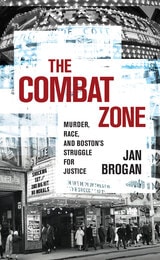
The Combat Zone
Murder, Race, and Boston's Struggle for JusticeJan Brogan
University of Massachusetts Press, 2021
At the end of the 1976 football season, more than forty Harvard athletes went to Boston's Combat Zone to celebrate. In the city's adult entertainment district, drugs and prostitution ran rampant, violent crime was commonplace, and corrupt police turned the other way. At the end of the night, Italian American star athlete Andy Puopolo, raised in the city's North End, was murdered in a stabbing. Three African American men were accused of the crime. His murder made national news and led to the eventual demise of the city's red-light district.
Starting with this brutal murder, The Combat Zone tells the story of the Puopolo family's struggle with both a devastating loss and a criminal justice system that produced two trials with opposing verdicts, all within the context of a racially divided Boston. Brogan traces the contentious relationship between Boston’s segregated neighborhoods during the busing crisis; shines a light on a court system that allowed lawyers to strike potential jurors based purely on their racial or ethnic identity; and lays bare the deep-seated corruption within the police department and throughout the Combat Zone. What emerges is a fascinating snapshot of the city at a transitional moment in its recent past.

The Golden Age of Boston Television
Terry Ann Knopf
University Press of New England, 2017
The Last Hurrah
A NovelEdwin O'Connor
University of Chicago Press, 2016
Not quite a roman á clef of notorious Boston mayor James Michael Curley, The Last Hurrah tells the story of Skeffington’s final campaign as witnessed through the eyes of his nephew, who learns a great deal about politics as he follows his uncle to fundraisers, wakes, and into smoke-filled rooms, ultimately coming—almost against his will—to admire the man. Adapted into a 1958 film starring Spencer Tracy and directed by John Ford (and which Curley tried to keep from being made), Edwin O’Connor’s opus reveals politics as it really is, and big cities as they really were. An expansive, humorous novel offering deep insight into the Irish-American experience and the ever-changing nature of the political machine, The Last Hurrah reveals political truths still true today: what the cameras capture is just the smiling face of the sometimes sordid business of giving the people what they want.
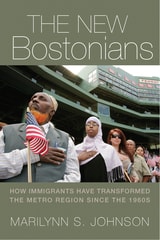
The New Bostonians
How Immigrants Have Transformed the Metro Area since the 1960sMarilynn S. Johnson
University of Massachusetts Press, 2015
How immigrants helped rebuild a city—and redefined what it means to be American
Among the most consequential pieces of Great Society legislation, the Immigration Act of 1965 opened the nation's doors to large-scale immigration from Africa, Asia, and Latin America. A half century later, the impact of the "new immigration" is evident in the transformation of the country's demographics, economy, politics, and culture, particularly in urban America.
In The New Bostonians, Marilynn S. Johnson examines the historical confluence of recent immigration and urban transformation in greater Boston, a region that underwent dramatic decline after World War II. Since the 1980s, the Boston area has experienced an astounding renaissance—a development, she argues, to which immigrants have contributed in numerous ways. From 1970 to 2010, the percentage of foreign-born residents of the city more than doubled, representing far more diversity than earlier waves of immigration. Like the older Irish, Italian, and other European immigrant groups whose labor once powered the region's industrial economy, these newer migrants have been crucial in re-building the population, labor force, and metropolitan landscape of the New Boston, although the fruits of the new prosperity have not been equally shared.
The Other Boston Busing Story
What's Won and Lost Across the Boundary LineSusan E. Eaton
Brandeis University Press, 2020
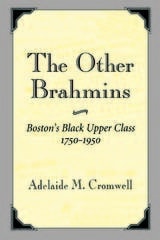
The Other Brahmins
Boston's Black Upper Class 1750-1950Adelaide Cromwell
University of Arkansas Press, 1995
Adelaide Cromwell’s pioneering work explores race and the social caste system in an atypical northern environment over a period of two centuries. Based on scholarly sources, interviews, and questionnaires, the study identifies those blacks in Boston who exercised political, economic, and social leadership from the end of the eighteenth century to the middle of the twentieth. The central focus is a comparison of black and white upper-class women in the 1940s.
This rare look at a black social microcosm not located in the South is seminal and timely. Because it concludes at a critical period in American history, The Other Brahmins paints a colorful backdrop for evaluating subsequent changes in urban sociology and stratification. In a groundbreaking study, Cromwell effectively challenges the simplistic notions of hierarchy as they pertain to race.
The Schoolmaster's Daughter
John Smolens
Michigan State University Press, 2019
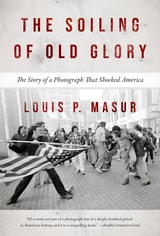
The Soiling of Old Glory
The Story of a Photograph That Shocked AmericaLouis P. Masur
Brandeis University Press, 2024
In 1976, Boston was bitterly divided over a court order to desegregate its public schools. Plans to bus students between predominantly white and Black neighborhoods stoked backlash and heated protests. Photojournalist Stanley Forman was covering one such demonstration at City Hall when he captured an indelible image: a white protester attacking a Black attorney with the American flag. A second white man grabs at the victim, appearing to assist the assailant.
The photo appeared in newspapers across the nation and went on to win the Pulitzer Prize. In The Soiling of Old Glory, esteemed historian Louis P. Masur reveals what happened the day of the assault and the ways these events reverberated long afterward. He interviews the men involved: Forman, who took the photo; Ted Landsmark, a Black, Yale-educated attorney and an activist; Joseph Rakes, the white protester lunging with the flag, a disaffected student; and Jim Kelly, a local politician who opposed busing, but who helped Landsmark to his feet after protesters knocked him to the ground. The photo, Masur discovers, holds more complexities than initially meet the eye. The flag never made contact with the victim, for example, and Kelly was attempting to protect Landsmark, not hurt him.
Masur delves into the history behind Boston’s efforts to desegregate the schools and the anti-busing protests that shook the city. He examines photography’s power to move, inform, and persuade us, as well as the assumptions we each bring to an image as viewers. And he delves into the flag, to explore how other artists and photographers have shaped, bolstered, or challenged its patriotic significance.
Gripping and deeply researched, The Soiling of Old Glory shows how a disturbing event, frozen on a film, impacted Boston and the nation. In an age of renewed calls for visual literacy and disagreements about the flag’s meaning, Masur’s history, now updated with a new foreword by Ted Landsmark and a new preface by the author, is as relevant as ever.
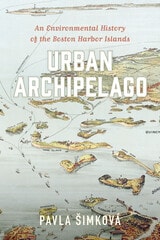
Urban Archipelago
An Environmental History of the Boston Harbor IslandsPavla Šimková
University of Massachusetts Press, 2021
In this book, Pavla Šimková reinterprets the Boston Harbor Islands as an urban archipelago, arguing that they have been an integral part of Boston since colonial days, transformed by the city's changing values and catering to its current needs. Drawing on archival sources, historic maps and photographs, and diaries from island residents, this absorbing study attests that the harbor islands' story is central to understanding the ways in which Boston has both shaped and been shaped by its environment over time.
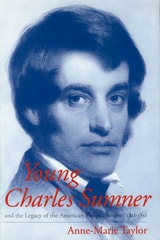
Young Charles Sumner and the Legacy of the American Enlightenment, 1811-1851
Anne-Marie Taylor
University of Massachusetts Press, 2001
In this book, Anne-Marie Taylor challenges that long-standing view, offering in its stead the portrait of a man animated more by principle than by impulse or ambition. According to Taylor, Sumner's reform-minded politics, including his fervent commitment to put an end to slavery, must be understood in the context of a young nation still struggling to live up to the Enlightenment ideals embraced by its founders and embodied in its Constitution.
Focusing on the first forty years of Sumner's life, before he took public office, Taylor traces the evolution of his character and thought among Boston's cultural elite. His belief in the virtues of cosmopolitanism, in the dignity of the human intellect and conscience, and in the possibility of a cultivated and just society, all find their roots in an education steeped in Enlightenment principles. At the same time, as a child of New England Puritanism and Revolutionary republicanism, Sumner was raised to believe in the moral obligation of the individual to work for the common good.
As Taylor shows in this richly drawn biography, much of the triumph and tragedy of Sumner's story—the energy of his idealism as well as the poignancy of his eventual disappointment— derives from the overpowering sense of duty and national destiny imbued by his upbringing.