Results by title
4 books match the query 'Botanical gardens'
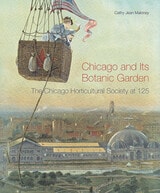
Chicago and Its Botanic Garden
The Chicago Horticultural Society at 125Cathy Jean Maloney
Northwestern University Press, 2015
Formed in 1890, during the heady days before the 1893 World’s Columbian Exposition, the Chicago Horticultural Society boasted members with names deeply rooted in Chicago history: Buckingham, McCormick, and Palmer, among others. Today, as it leads the Garden in a model public-private partnership with the Forest Preserves of Cook County, the Society’s horticultural practices have exceeded the vision of its founders.
Chicago and Its Botanic Garden: The Chicago Horticultural Society at 125 is a lushly illustrated and thoughtful history of the Society and its evolution from a producer of monumental flower and botanical shows, through a fallow period, to the opening in 1972 of the Chicago Botanic Garden, a living museum and world leader in horticulture, plant science and conservation, education, and urban agriculture. Author Cathy Jean Maloney combines meticulous scholarship with a flair for storytelling in a narrative that will delight everyone from casual strollers of the grounds to the volunteers, professionals, and scientists who compose the influential society.
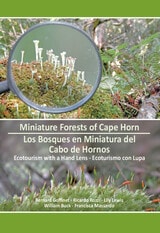
Miniature Forests of Cape Horn
Ecotourism with a Hand LensBernard Goffinet
University of North Texas Press, 2012
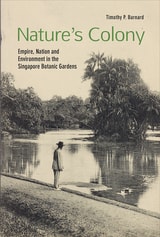
Nature's Colony
Empire, Nation and Environment in the Singapore Botanic GardensTimothy P. Barnard
National University of Singapore Press, 2017
Initially conceived to exploit nature for the benefit of empire, the Gardens were part of a symbolic struggle by administrators, scientists, and gardeners to assert dominance within Southeast Asia’s tropical landscape, reflecting shifting understandings of power, science, and nature among local administrators and distant mentors in Britain. Consequently, as an outpost of imperial science, the Gardens were instrumental in the development of plantation crops, such as rubber and oil palm, which went on to shape landscapes across the globe. Since the independence of Singapore, the Gardens have played a role in the “greening” of the country and have been named as Singapore’s first World Heritage Site. Setting the Gardens alongside the Royal Botanic Gardens, Kew, and botanic gardens in India, Ceylon, Mauritius, and the West Indies, Nature’s Colony provide the first in-depth look at the history of this influential institution.
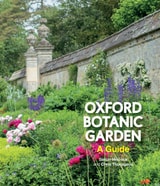
Oxford Botanic Garden
A GuideSimon Hiscock and Chris Thorogood
Bodleian Library Publishing, 2019
This guide explores Oxford Botanic Garden’s many historic and innovative features, from the walled garden to the waterlily pool, the greenhouses, the rock garden, the water garden and “Lyra’s bench,” made famous in Philip Pullman’s beloved His Dark Materials series. It also gives a detailed explanation of the Garden’s medicinal and taxonomic beds and special plant collections. Lavishly illustrated with specially-commissioned photographs, this book not only provides a fascinating historical overview but also offers a practical guide to Oxford Botanic Garden and its work today. Featuring a map of the site and a historic timeline, this book is a beautiful souvenir of the birthplace of botanical science in the UK.