Results by title
8 books match the query 'Braas, Nico'
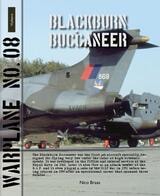
Blackburn Buccaneer
Nico Braas
Amsterdam University Press, 2023
The Blackburn Buccaneer was the first jet aircraft that was especially designed for very low flying under the radar at high subsonic speeds. It was developed in the fifties and entered service at the Royal Navy in 1962. Later, it also flew as an attack bomber at the R.A.F. and it even played a role during the Gulf War in 1991, before being retired in 1994 after an operational career that spanned three decades.
[more]

Boeing B-47 Stratojet
the cold war jet bomberNico Braas
Amsterdam University Press, 2023
Built by Boeing, designated as B-47 and named the Stratojet, this plane was quantum leap in aircraft development. Initially Boeing entered the unknown when they started this project, but soon it would be evident that Strategic Air Command would have its multi-engine jet bomber with a speed performance similar to the latest jet fighters...
[more]

Brewster Buffalo
Nico Braas
Amsterdam University Press, 2023
One of the lesser-known fighter aircraft of World War II was the Brewster Buffalo, or, using the U.S. Navy designation system, the F2A. By some historians the Buffalo is regarded as an outright failure, but this is a rating this stubby little fighter did not deserve.
This book presents an overview of the development and operational use of the Buffalo with many photos including a number not published before.
This book presents an overview of the development and operational use of the Buffalo with many photos including a number not published before.
[more]

Convair B-58 Hustler
cold war nuclear bomberNico Braas
Amsterdam University Press, 2023
When the B-58 Hustler bomber entered service in 1958 it was a very futuristic looking delta wing bomber, creating a lot of sensation. Intended as a successor of the B-47 Stratojet it could reach twice the speed of sound.
However, problems occurred during the development process and costs risings went so out of control that the whole project was almost cancelled a few times. Strategic Air Command was initially against ordering the B-58 for service, not only because of its complexity but also since they saw no advantage of a Mach 2 bomber over other types. Despite this the B-58 entered service at S.A.C. in 1960. It would have a relatively short operational career.
However, problems occurred during the development process and costs risings went so out of control that the whole project was almost cancelled a few times. Strategic Air Command was initially against ordering the B-58 for service, not only because of its complexity but also since they saw no advantage of a Mach 2 bomber over other types. Despite this the B-58 entered service at S.A.C. in 1960. It would have a relatively short operational career.
[more]
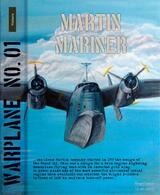
Martin Mariner
Nico Braas
Amsterdam University Press, 2023
In 1937 The Glen Martin company started with the design of the model I62. This was a design for a twin engine high-wing monoplane flying boat with an inverted gull wing. As power plant one of the most powerful air-cooled radial engines then available was selected: the Wright R-200-6 Cyclone of 1600 hp maximum take-off power.
[more]
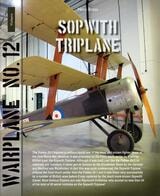
Sopwith Triplane
Nico Braas
Amsterdam University Press, 2022
The Sopwith Triplane was a British single seat fighter aircraft designed and manufactured by the Sopwith Aviation Company during the First World War. It has the distinction of being the first military triplane to see operational service.
[more]
Warplane 04
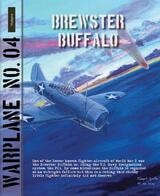
Brewster BuffaloNico Braas
Amsterdam University Press, 2017
One of the lesser-known fighter aircraft of World War II was the Brewster Buffalo, or, using the U.S. Navy designation system, the F2A. By some historians the Buffalo is regarded as an outright failure, but this is a rating this stubby little fighter did not deserve.
This book presents an overview of the development and operational use of the Buffalo with many photos including a number not published before.
This book presents an overview of the development and operational use of the Buffalo with many photos including a number not published before.
[more]

Warplane 06
Convair B-58 HustlerNico Braas
Amsterdam University Press, 2017
When the B-58 Hustler bomber entered service in 1958 it was a very futuristic looking delta wing bomber, creating a lot of sensation. Intended as a successor of the B-47 Stratojet it could reach twice the speed of sound.
However, problems occurred during the development process and costs risings went so out of control that the whole project was almost cancelled a few times. Strategic Air Command was initially against ordering the B-58 for service, not only because of its complexity but also since they saw no advantage of a Mach 2 bomber over other types. Despite this the B-58 entered service at S.A.C. in 1960. It would have a relatively short operational career.
However, problems occurred during the development process and costs risings went so out of control that the whole project was almost cancelled a few times. Strategic Air Command was initially against ordering the B-58 for service, not only because of its complexity but also since they saw no advantage of a Mach 2 bomber over other types. Despite this the B-58 entered service at S.A.C. in 1960. It would have a relatively short operational career.
[more]