Results by title
16 books match the query 'Bridging'
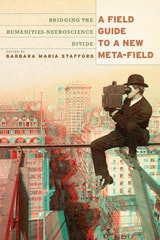
A Field Guide to a New Meta-field
Bridging the Humanities-Neurosciences DivideEdited by Barbara Maria Stafford
University of Chicago Press, 2011
Barbara Stafford is a pioneering art historian whose research has long helped to bridge the divide between the humanities and cognitive sciences. In A Field Guide to a New Meta-Field, she marshals a distinguished group of thinkers to forge a ground-breaking dialogue between the emerging brain sciences, the liberal arts, and social sciences.
Stafford’s book examines meaning and mental function from this dual experimental perspective. The wide-ranging essays included here—from Frank Echenhofer’s foray into shamanist hallucinogenic visions to David Bashwiner’s analysis of emotion and danceability—develop a common language for implementing programmatic and institutional change. Demonstrating how formerly divided fields are converging around shared issues, A Field Guide to a New Meta-Field maps a high-level, crossdisciplinary adventure from one of our leading figures in visual studies.
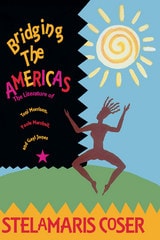
Bridging The Americas
The Literature of Paule Marshall, Toni Morrison, and Gayl JonesStelamaris Coser
Temple University Press, 1994
A literary study of three important black women writers, this book examines the "inter-American" characteristics in the work of Marshall, Morrison, and Jones, including detailed discussions of Morrison's Song of Solomon and Tar Baby, Jones's Corregidora and Song of Anninho, and Marshall's The Chose Place, The Timeless People.
Coser defines the inter-American characteristics in these authors' novels as a connection based on a common African heritage and a shared legacy of colonialism and racism. These three authors redefine the boundaries between the Americas, bridging the "extended Caribbean" that stretches from the U.S. Atlantic coast to Brazil. Their work reinterprets ethnic and sexual identity. Issues of race, class, and nationality overlap. History and identity are reinvented.
To explore the collective forms of resistance and cultural processes in Brazil, the Caribbean, and the United States, Coser also makes provocative connections between the visibility of black women writers and the popularity of male Latin American novelists like Carlos Fuentes and Gabriel Garcia Marquéz.
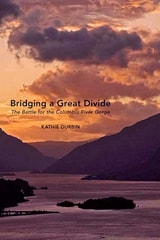
Bridging a Great Divide
The Battle for the Columbia River GorgeKathie Durbin
Oregon State University Press, 2013
In Bridging a Great Divide, award-winning environmental journalist Kathie Durbin draws on interviews, correspondence, and extensive research to tell the story of the major shifts in the Gorge since the Act’s passage. Sweeping change has altered the Gorge’s landscape: upscale tourism and outdoor recreation, gentrification, the end of logging in national forests, the closing of aluminum plants, wind farms, and a population explosion in the metropolitan area to its west. Yet, to the casual observer, the Gorge looks much the same as it did twenty-five years ago.
How can we measure the success of the Columbia River Gorge National Scenic Area Act? In this insightful and revealing history, Durbin suggests that the answer depends on who you are: a small business owner, an environmental watchdog group, a chamber of commerce. The story of the Columbia River Gorge National Scenic Area is the story of the Pacific Northwest in microcosm, as the region shifts from a natural-resource-based economy to one based on recreation, technology, and quality of life.
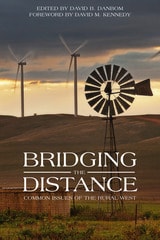
Bridging the Distance
Common Issues of the Rural WestDavid B. Danbom
University of Utah Press, 2015
The essays in Bridging the Distance are fresh, informative, and insightful examinations of the complex problems facing the rural West. This is a book that will spur both conversations and the search for solutions.
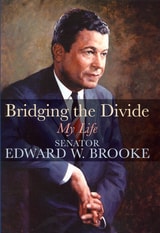
Bridging the Divide
My LifeEdward W. Brooke
Rutgers University Press, 2006
President Lyndon Johnson never understood it. Neither did President Richard Nixon. How could a black man, a Republican no less, be elected to the United States Senate from liberal, Democratic Massachusetts-a state with an African American population of only 2 percent?
The mystery of Senator Edward Brooke's meteoric rise from Boston lawyer to Massachusetts attorney general to the first popularly elected African American U.S. senator with some of the highest favorable ratings of any Massachusetts politician confounded many of the best political minds of the day. After winning a name for himself as the first black man to be elected a state's attorney general, as a crime fighter, and as the organizer of the Boston Strangler Task Force, this articulate and charismatic man burst on the national scene in 1966 when he ran for the Senate.
In two terms in the Senate during some of the most racially tormented years of the twentieth century, Brooke, through tact, personality, charm, and determination, became a highly regarded member of "the most exclusive club in the world." The only African American senator ever to be elected to a second term, Brooke established a reputation for independent thinking and challenged the powerbrokers and presidents of the day in defense of the poor and disenfranchised.
In this autobiography, Brooke details the challenges that confronted African American men of his generation and reveals his desire to be measured not as a black man in a white society but as an individual in a multiracial society. Chided by some in the white community as being "too black to be white" and in the black community as "too white to be black," Brooke sought only to represent the people of Massachusetts and the national interest.
His story encompasses the turbulent post-World War II years, from the gains of the civil rights movement, through the riotous 1960s, to the dark days of Watergate, with stories of his relationships with the Kennedys, Martin Luther King Jr., Lyndon Johnson, Richard Nixon, Henry Kissinger, Colin Powell, and future senator Hillary Clinton. Brooke also speaks candidly of his personal struggles, including his bitter divorce from his first wife and, most recently, his fight against cancer.
A dramatic, compelling, and inspirational account, Brooke's life story demonstrates the triumph of the human spirit, offering lessons about politics, life, reconciliation, and love.
Bridging the Gap
Perspectives on Nationally Competitive ScholarshipsSuzanne McCray
University of Arkansas Press, 2019
Bridging the Gaps
College Pathways to Career SuccessJames E. Rosenbaum
Russell Sage Foundation, 2017
The authors find that sub-baccalaureate credentials—associate degrees and college certificates—can improve employment outcomes. Young adults who complete these credentials have higher employment rates, earnings, autonomy, career opportunities, and job satisfaction than those who enroll but do not complete credentials. Sub-BA credentials can be completed at community college in less time than bachelor’s degrees, making them an affordable option for many low-income students.
Bridging the Gaps shows that when community colleges overemphasize bachelor’s degrees, they tend to funnel resources into remedial programs, and try to get low-performing students on track for a BA. Yet, remedial programs have inconsistent success rates and can create unrealistic expectations, leading struggling students to drop out before completing any degree. The authors show that colleges can devise procedures that reduce remedial placements and help students discover unseen abilities, attain valued credentials, get good jobs, and progress on degree ladders to higher credentials.
To turn college-for-all into a reality, community college students must be aware of their multiple credential and career options. Bridging the Gaps shows how colleges can create new pathways for non-traditional students to achieve success in their schooling and careers.
Bridging the Gaps
Integrating Archaeology and History in Oaxaca, Mexico; A Volume in Memory of Bruce E. BylandDanny Zborover
University Press of Colorado, 2015
Bridging the Gaps: Integrating Archaeology and History in Oaxaca, Mexico does just that: it bridges the gap between archaeology and history of the Precolumbian, Colonial, and Republican eras of the state of Oaxaca, Mexico, a cultural area encompassing several of the longest-enduring literate societies in the world.
Fourteen case studies from an interdisciplinary group of archaeologists, anthropologists, ethnohistorians, and art historians consciously compare and contrast changes and continuities in material culture before and after the Spanish conquest, in Prehispanic and Colonial documents, and in oral traditions rooted in the present but reflecting upon the deep past. Contributors consider both indigenous and European perspectives while exposing and addressing the difficulties that arise from the application of this conjunctive approach.
Inspired by the late Dr. Bruce E. Byland’s work in the Mixteca, which exemplified the union of archaeological and historical evidence and inspired new generations of scholars, Bridging the Gaps promotes the practice of integrative studies to explore the complex intersections between social organization and political alliances, religion and sacred landscape, ethnic identity and mobility, colonialism and resistance, and territoriality and economic resources.
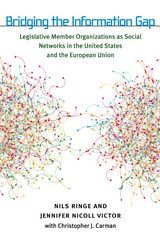
Bridging the Information Gap
Legislative Member Organizations as Social Networks in the United States and the European UnionNils Ringe and Jennifer Nicoll Victor with Christopher J. Carman
University of Michigan Press, 2013
Legislative member organizations (LMOs)—such as caucuses in the U.S. Congress and intergroups in the European Parliament—exist in lawmaking bodies around the world. Unlike parties and committees, LMOs play no obvious, predefined role in the legislative process. They provide legislators with opportunities to establish social networks with colleagues who share common interests. In turn, such networks offer valuable opportunities for the efficient exchange of policy-relevant—and sometimes otherwise unattainable—information between legislative offices. Building on classic insights from the study of social networks, the authors provide a comparative overview of LMOs across advanced, liberal democracies. In two nuanced case studies of LMOs in the European Parliament and the U.S. Congress, the authors rely on a mix of social network analysis, sophisticated statistical methods, and careful qualitative analysis of a large number of in-depth interviews.
Bridging the Interpretive Abyss
Reading the New Testament after the Cultural Studies TurnLuis Menéndez-Antuña
SBL Press, 2025
Bridging the Multimodal Gap
From Theory to PracticeSantosh Khadka
Utah State University Press, 2018
After an introductory section reviewing the theory literature, chapters present research on implementing multimodal composition in diverse contexts. Contributors address starter subjects like using comics, blogs, or multimodal journals; more ambitious topics such as multimodal assignments in online instruction or digital story telling; and complex issues like assessment, transfer, and rhetorical awareness.
Bridging the Multimodal Gap translates theory into practice and will encourage teachers, including WPAs, TAs, and contingent faculty, to experiment with multiple modes of communication in their projects.
Contributors: Sara P. Alvarez, Steven Alvarez, Michael Baumann, Joel Bloch, Aaron Block, Jessie C. Borgman, Andrew Bourelle, Tiffany Bourelle, Kara Mae Brown, Jennifer J. Buckner, Angela Clark-Oates, Michelle Day, Susan DeRosa, Dànielle Nicole DeVoss, Stephen Ferruci, Layne M. P. Gordon, Bruce Horner, Matthew Irwin, Elizabeth Kleinfeld, Ashanka Kumari, Laura Sceniak Matravers, Jessica S. B. Newman, Mark Pedretti, Adam Perzynski, Breanne Potter, Caitlin E. Ray, Areti Sakellaris, Khirsten L. Scott, Rebecca Thorndike-Breeze, Jon Udelson, Shane A. Wood, Rick Wysocki, Kathleen Blake Yancey
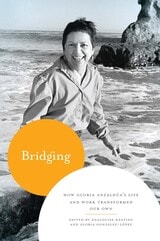
Bridging
How Gloria Anzaldúa's Life and Work Transformed Our OwnEdited by AnaLouise Keating and Gloria González-López
University of Texas Press, 2011
The inspirational writings of cultural theorist and social justice activist Gloria Anzaldúa have empowered generations of women and men throughout the world. Charting the multiplicity of Anzaldúa's impact within and beyond academic disciplines, community trenches, and international borders, Bridging presents more than thirty reflections on her work and her life, examining vibrant facets in surprising new ways and inviting readers to engage with these intimate, heartfelt contributions.
Bridging is divided into five sections: The New Mestizas: "transitions and transformations"; Exposing the Wounds: "You gave me permission to fly in the dark"; Border Crossings: Inner Struggles, Outer Change; Bridging Theories: Intellectual Activism with/in Borders; and "Todas somos nos/otras": Toward a "politics of openness." Contributors, who include Norma Elia Cantú, Elisa Facio, Shelley Fisher Fishkin, Aída Hurtado, Andrea Lunsford, Denise Segura, Gloria Steinem, and Mohammad Tamdgidi, represent a broad range of generations, professions, academic disciplines, and national backgrounds. Critically engaging with Anzaldúa's theories and building on her work, they use virtual diaries, transformational theory, poetry, empirical research, autobiographical narrative, and other genres to creatively explore and boldly enact future directions for Anzaldúan studies.
A book whose form and content reflect Anzaldúa's diverse audience, Bridging perpetuates Anzaldúa's spirit through groundbreaking praxis and visionary insights into culture, gender, sexuality, religion, aesthetics, and politics. This is a collection whose span is as broad and dazzling as Anzaldúa herself.
Chiricahua Mountains
Bridging the Borders of WildnessText by Ken Lamberton; Photographs by Jeff Garton
University of Arizona Press, 2003
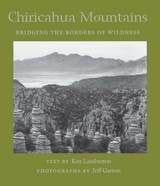
Lamberton shares insights about the geology, habitats, and diversity of wildlife in a place of such isolation that species must either adapt or become extinct. The Chiricahuas are one link in a chain of mountains connecting the Rockies to the Sierra Madre Occidental in Mexico, and some Madrean species reach the northernmost extension of their ranges here: birds like sulphur-bellied flycatchers, mammals like jaguarundis, and trees like the Apache pine. But this is not an untraveled wilderness. We learn why the Chiricahuas are so popular with birders, who flock to these mountains from around the world in the hopes of spotting some of the nearly four hundred avian species found here. We also learn something of the Chiricahua's rich human culture, from Apache warriors to European settlers.
Gracing the text are more than a dozen black-and-white photographs by Jeff Garton that offer views of the Chiricahuas different from those usually found in tourist brochures: landscapes and riparian settings, rock formations and plant studies that give readers a lasting impression of the beauty and tranquility of this wilderness. Together words and images convey an intimate view of one of the Southwest's most exotic locations—stronghold, paradise, and everlasting island in the vast and rolling desert.
Composition and Literature
Bridging the GapEdited by Winifred Bryan Horner
University of Chicago Press, 1983
Divided Waters
Bridging the U.S.-Mexico BorderHelen Ingram, Nancy K. Laney, and David M. Gillilan
University of Arizona Press, 1995
These "Thin Partitions"
Bridging the Growing Divide between Cultural Anthropology and ArchaeologyJoshua Englehardt
University Press of Colorado, 2016
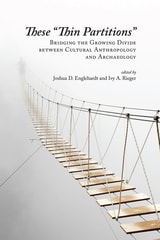
In case studies highlighting the benefits of interdisciplinary collaboration, contributors argue that anthropologists and archaeologists are simply not “speaking the same language” and that the division between fields undermines the field of anthropology as a whole. Scholars must bridge this gap and find ways to engage in interdisciplinary collaboration to promote the health of the anthropological discipline. By sharing data, methods, and ideas, archaeology and cultural anthropology can not only engage in more productive debates but also make research accessible to those outside academia.
These “Thin Partitions” gets to the heart of a well-known problem in the field of anthropology and contributes to the ongoing debate by providing concrete examples of how interdisciplinary collaboration can enhance the outcomes of anthropological research.
Contributors: Fredrik Fahlander, Lilia Fernández Souza, Kent Fowler, Donna Goldstein, Joseph R. Hellweg, Derek Johnson, Ashley Kistler, Vincent M. LaMotta, John Monaghan, William A. Parkinson, Paul Shankman, David Small