Results by title
4 books match the query 'Brother'

Comrade or Brother?
A History of the British Labour MovementMary Davis
Pluto Press, 2009
Critical and iconoclastic, Comrade or Brother? traces the history of the British Labour Movement from its beginnings at the onset of industrialisation through its development within a capitalist society, up to the end of the twentieth-century. Written by a leading activist in the labour movement, the book redresses the balance in much labour history writing. It examines the place of women and the influence of racism and sexism as well as providing a critical analysis of the rival ideologies which played a role in the uneven development of the labour movement.
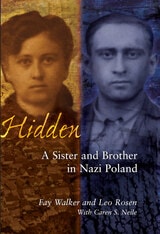
Hidden
A Sister and Brother in Nazi PolandFay Walker
University of Wisconsin Press, 2002
Of the Rosenbluth family, only the older children, Faiga and Luzer, had gone into hiding before the SS rounded up the Jews of Kanczuga, Poland. Hidden is Faiga and Luzer’s story, a memoir whose intimate and quiet particularity makes the incomprehensible enormity of the Holocaust immediate, human, and devastatingly real.
In alternating first-person narratives, Faiga (Fay) and Luzer (Leo) take readers into their very different but inextricably linked experiences in Nazi-occupied Poland. Faiga, the once-dignified young lady from a good home with servants and a seat by the eastern wall of the synagogue, spends two years wandering the perilous countryside, hoping to be taken for a peasant. Mere miles away, knowing nothing of his sister’s fate, Luzer, the leather wholesaler’s only son, lies silent all day in the stifling dark corner of a barn, where the smell of the cows’ warm hides are a piquant reminder of his lost world. Hidden deftly summons that world, as the familiar comforts and squabbles of life in a well-to-do, religious Jewish family are slowly overwhelmed by the grim news coming out of Germany. We follow Faiga and Luzer through the early forebodings and deprivations of the war, into hiding among righteous Poles and erstwhile neighbors-turned-betrayers, and finally, at war’s end, back once more into the world—but not necessarily into safety. Told in a confident, clear, and unsentimental prose, this is a story of heroism and tragedy writ large and small, of two young people coming of age in a world in chaos and then trying to return to "normal" after experiences as unimaginable as they are unforgettable.
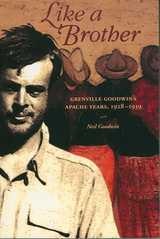
Like a Brother
Grenville Goodwin’s Apache Years, 1928-1939Neil Goodwin
University of Arizona Press, 2004
Assembled by Goodwin's son Neil, who never knew his father, these writings are gathered in thematic chapters that extend Neil Goodwin's earlier work, The Apache Diaries, and shed light on Grenville Goodwin's deepening understanding of the Apache people and their culture, and of the wrenching problems which reservation life forced on them. In two of the chapters Neil tells how he retraced his father's search for the Sierra Madre Apache, re-discovering abandoned Apache campsites and conveying even more personally than his father's diaries what was for both father and son the adventure of a lifetime. Other chapters trace Goodwin's interest in children of the Sierra Madre Apaches who were captured in Mexican raids on these camps during the early decades of the twentieth century. The full stories of the lives of three of these children are for the first time pieced together from newly gathered research.
Grenville was quiet, self-effacing and rarely revealed his inner life, but one chapter affords a closer look: a portrait of his marriage to Neil's mother, Jan. Her diary entries, juxtaposed with her vivid poetry and her paintings and drawings, illuminate her relationship with Grenville and throw his elusive personality into deeper relief than his own writings do. Here too are letters from Goodwin's Apache friends that paint a powerful and poignant portrait of their daily lives and of their relationship with him. Goodwin's daily diary excerpts relate his own experiences on the San Carlos Apache reservation from 1928 to 1936: what was happening at the store, how the cattle were doing, who was in jail, and thousands of other details that give readers a sharp sense of what the reservation was like in the 1930s. As these writings also show, Goodwin was powerfully drawn to Apache spirituality and became steeped in their sacred knowledge. His simple description of a day in the life of an Apache family captures the expression of this spirituality in the rhythms of everyday life, whether greeting the rising sun, curing an injury, plowing the earth, or simply being good to one's family.
More than half a century after his death, Grenville Goodwin continues to be regarded as one of the most enigmatic and romantic figures in American anthropology. Like a Brother gives us a fuller understanding of the man and his work as it broadens our knowledge of Apache history and culture.
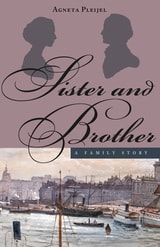
Sister and Brother
A Family StoryAgneta Pleijel
Gallaudet University Press, 2018
Helena showed early musical talent and, trained by her father, was a gifted singer. She lived in Paris for a time and enjoyed popular success. She fell in love with a musician but was plunged into despair when he died from cholera. Her father persuaded her to give up singing and marry a cold industrialist, who was one of the wealthiest men in Sweden, in order to provide financial support for the family. Helena struggled in the loveless marriage and battled depression throughout her life.
Despite their disparate lives, Albert and Helena faced similar struggles with communication, autonomy, and self-determination. Albert’s story traces the development of his own sense of identity as well as the development of Swedish Deaf culture, while Helena’s life reflects the silencing and oppression endured by women. In Sister and Brother, Pleijel’s literary treatment of their lives sheds light on the cultural and social norms that shaped the experiences of deaf people and women in the 19th century.