Results by title
4 books match the query 'Brunei'
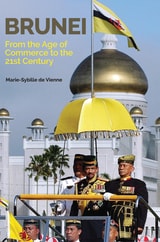
Brunei
From the Age of Commerce to the 21st CenturyMarie-Sybille de Vienne
National University of Singapore Press, 2015
Today home to some 393,000 inhabitants and comprising 5,765 square kilometers in area, Brunei first appears in the historical record at the end of the 10th century. After the Spanish attack of 1578, Brunei struggled to regain and expand its control on coastal West Borneo and to remain within the trading networks of the South China Sea. It later fell under British sway, and a residency was established in 1906, but it took the discovery of oil in Seria in 1929 before the colonial power began to establish the bases of a modern state.
Governed by an absolute monarchy, Bruneians today nonetheless enjoy a high level of social protection and rule of law. Ranking second (after Singapore) in Southeast Asia in terms of standards of living, the sultanate is implementing an Islamic penal code for the first time of its history. Focusing on Brunei’s political economy, history and geography, this book aims to understand the forces behind Brunei’s to-and-fro of tradition and modernisation.
Language Use and Language Change in Brunei Darussalam
Mis Sea#100Peter W. Martin
Ohio University Press, 1996
The oil-rich sultanate of Brunei Darussalam is located on the northern coast of Borneo between the two Malaysian states of Sarawak and Sabah. Though the country is small in size and in population, the variety of language use there provides a veritable laboratory for linguists in the fields of Austronesian linguistics, bilingual studies, and sociolinguistic studies, particularly those dealing with language shift.
This useful reference is divided into three sections: one on varieties of the Malay language used in the country, one on other indigenous languages, and one on the role and form of the English used there. Contributors to the collection include Bruneian scholars as well as established experts in the fields of Austronesian linguistics, sociolinguistics studies, and the description of new varieties of English.

Language, Power, and Ideology in Brunei Darussalam
Mis Sea#99Geoffrey C. Gunn
Ohio University Press, 1996
Report On Brunei In 1904
Mis Sea#74M.S.H. Mcarthur
Ohio University Press, 1987